
Once a kid hits eleven or twelve, bobbing for apples starts to feel like an activity for someone else’s little sibling. Tweens and teens still want the costumes and the candy — they just want games that don’t feel like they were built for a kindergarten class.
The trick is picking activities that let them be a little competitive, a little grossed out, and a little in charge of their own fun. Below are 23 Halloween party games that work for a backyard full of neighborhood kids or a living room packed with best friends, split by the kind of energy each one brings to the party.
Games That Get Everyone Moving
These are the ones that get kids out of their chairs and yelling across the yard. Save them for when the group still has energy to burn.
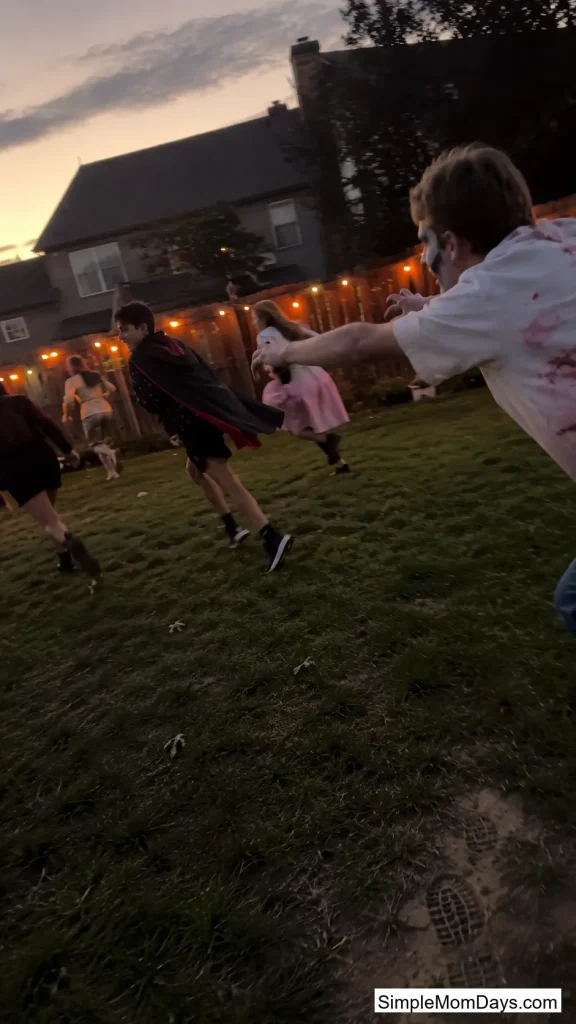
1. Zombie Apocalypse Tag
Pick two or three kids to start as zombies and send everyone else running. Zombies can only lurch — arms out, no running — while the humans sprint to stay clear. Anyone tagged joins the horde until one lone survivor is left standing.
The slow-zombie rule is what makes this work for a mixed group. A ten-year-old cousin has just as good a shot at outrunning a shuffling zombie as a sixteen-year-old, so nobody sits out because they’re “too little” or “too old.” It also turns a plain backyard into fifteen straight minutes of screaming and laughing without a single prop.
Play it right as the sun goes down for the best effect — the fading light does half the work of making it spooky. Mark the yard’s edges with cones or glow sticks so the game doesn’t spill into the street.
2. Ghost in the Graveyard
One player hides somewhere in the dark while everyone else counts at home base. Whoever finds the “ghost” first has to shout the game’s name and sprint back before getting tagged — and whoever gets caught takes over as the ghost next round.
It’s really hide-and-seek wearing a costume, but the chase-back element gives it a jolt that plain hide-and-seek doesn’t have. Tweens who’d roll their eyes at “hide and seek” will go all-in on a game that ends in a dead sprint through the dark.
Set clear boundaries before the first round — a backyard fence line or a specific block works well — and agree on a signal ahead of time so no one keeps hiding after the game’s actually over.

3. Haunted Obstacle Relay
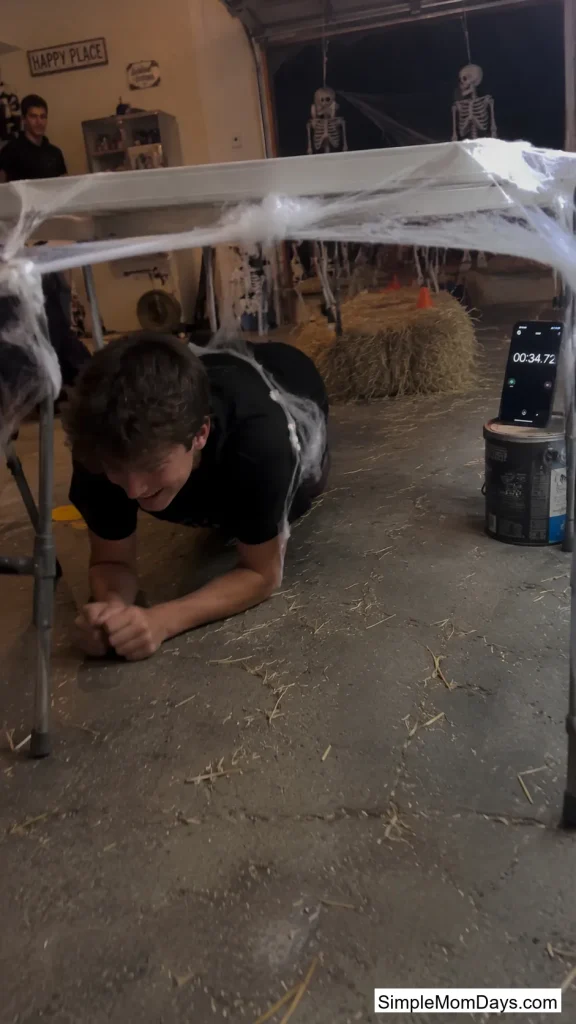
Turn the yard or garage into a mini haunted course: crawl under a table, hop over a hay bale, duck through hanging strands of fake cobweb. Split into teams and race the clock, one runner at a time.
What makes this better than a straight footrace is that every station forces a different kind of movement, so the fastest runner in the group doesn’t automatically win. A kid who’s quick on their feet but clumsy under a table ends up dead even with one who’s the opposite.
Five or six stations is plenty — more than that and the line waiting to go gets restless. A stopwatch on a phone and a whiteboard for team times is really all the extra gear this needs.
4. Blindfolded Cobweb Maze
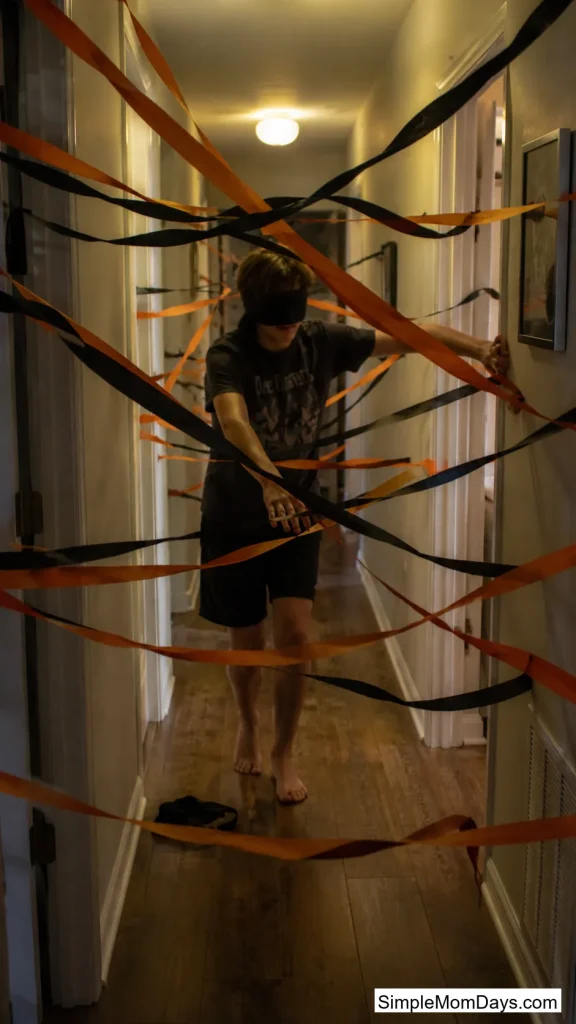
String crepe paper across a hallway in a zigzag pattern, then send players through blindfolded, one at a time. Touch the paper and they freeze until they can feel their way back on track.
The blindfold is the whole trick here. Without it, ducking under a few paper strands is nothing. With it, kids end up stumbling around like actual mummies, which is exactly the kind of chaos that gets everyone laughing from the sidelines.
Time each run and post the fastest one on a scoreboard. A hallway with a couple of turns works better than a straight room — the twists are what actually slow people down.
5. Red Light, Dead Night
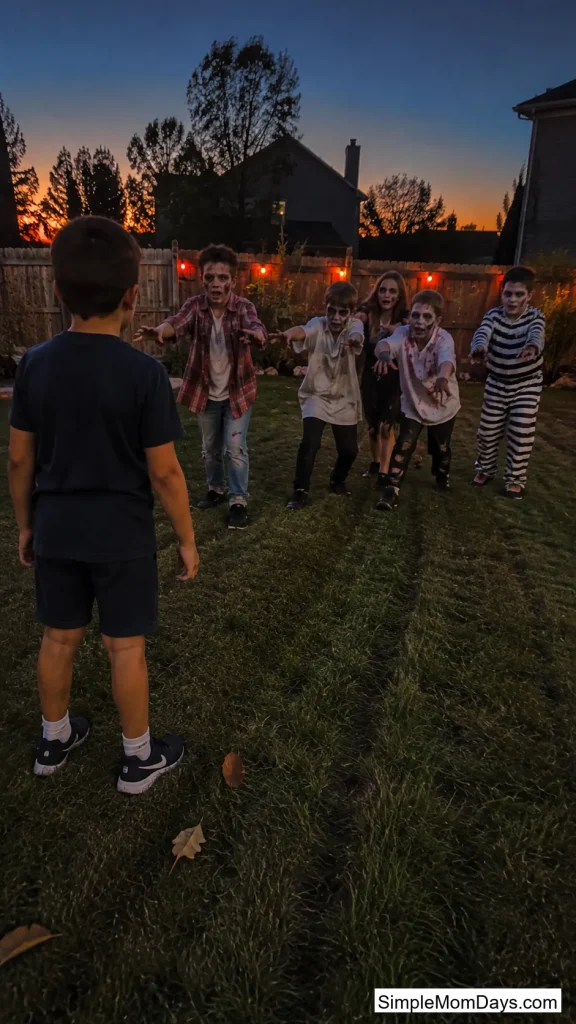
One “survivor” stands with their back turned at one end of the yard. Everyone else is a zombie horde lined up at the other end. Shout “dead night” and the horde creeps forward; shout “red light” and anyone still moving is out.
It’s red light, green light with a body count, and the reversal — zombies chasing instead of racing to a finish line — makes it feel like a different game entirely to kids who think they’ve outgrown the original. Not knowing when the survivor will spin around does most of the work.
Play continues until a zombie either reaches the survivor or the whole horde gets caught moving. Either way, that player becomes the new survivor for the next round.
Mystery, Deduction, and Brainpower
Give the group a puzzle to work through together and the whole tone of the party shifts — quieter, more focused, and just as intense in its own way.
6. DIY Murder Mystery Dinner
Assign each guest a character, a motive, and an alibi before the party starts, then let them loose to grill each other over snacks until someone names the killer. Free printable scripts are easy to find online, or you can write a short one yourself in an afternoon.
Tweens and teens tend to take these roles more seriously than you’d expect. Give a normally quiet kid a character with a big secret and watch them commit to the bit all night. It also gives shy guests a built-in reason to talk to people they don’t know well.
Budget an hour for a group of eight to ten. Dim the lights, put on a low instrumental playlist, and let people stay in character through the whole meal for the best effect.

7. Werewolf or Mafia
Everyone gets a secret role — villager, werewolf, or a special part like the seer — and the group has to talk out who’s lying each round before the werewolves pick off another villager. One Night Ultimate Werewolf is the easiest version to grab off a shelf and learn in five minutes.
This is one of the rare games that gets better with a bigger group. Ten or twelve players sitting in a circle, all suspicious of each other, produces a lot more genuine arguing and bluffing than four or five ever will.
A round runs about ten minutes once everyone knows the rules, so it’s easy to squeeze in three or four back to back without anyone getting bored of it.

8. Guess Your Character
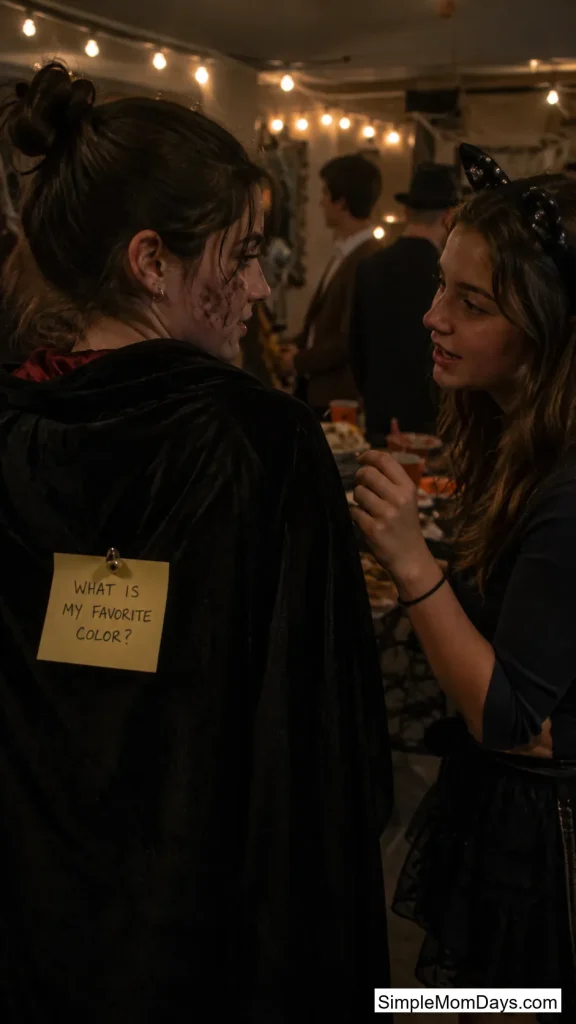
Pin a Halloween character’s name to each guest’s back without letting them see it — a witch, a vampire, Frankenstein’s monster, whatever fits the theme. Everyone wanders around asking each other yes-or-no questions, trying to figure out who they’re supposed to be.
The appeal is that it forces conversation between kids who might not normally talk. Someone has to walk up to a guest they barely know and ask if their character is undead, and by the third question they’re usually laughing about something else entirely.
Give it fifteen minutes and let whoever guesses their character first get first pick of the candy bowl. No materials needed beyond sticky notes and a marker.
9. Locked-Box Escape Challenge
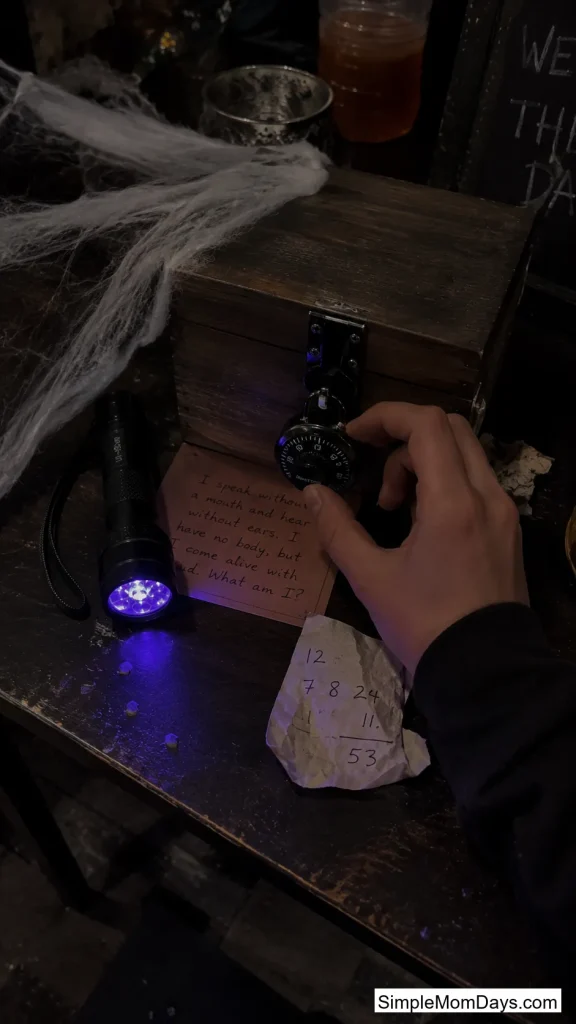
Hide a series of clues around one room, each one leading to the next, with the final clue unlocking a combination lock on a box of candy or small prizes. A blacklight flashlight and a message written in invisible lemon-juice ink makes for a genuinely satisfying reveal.
Unlike most party games, this keeps a group working toward the same goal instead of competing against each other, which changes the whole mood of the room. Teens especially tend to get quiet and focused in a way they don’t for louder games.
Budget close to an hour to build it the first time, though a second party using the same clues takes ten minutes to reset. Cap the puzzle count around five or six so it doesn’t drag.
Minute-to-Win-It Style Challenges
Sixty seconds on a timer turns almost anything into a party game. These four fit the Halloween theme without needing much beyond what’s already in the house.
10. Witch’s Brew Broom Relay
Set a bowl of “potion ingredients” — dried beans, pom-poms, plastic spiders, whatever’s on hand — at one end of the room and an empty cauldron at the other. Players run back and forth with a spoon, moving one item at a time, and for an extra layer, a broom held between their knees the whole way.
The broom is what turns an easy spoon relay into something genuinely funny to watch. Most kids can carry a spoon steady for a few steps; almost nobody can also waddle with a broom clamped between their legs without spilling everything.
Sixty seconds is the standard round, and teams of two work better than solo runs since someone always needs a hand refilling the spoon.

11. Jack Stack
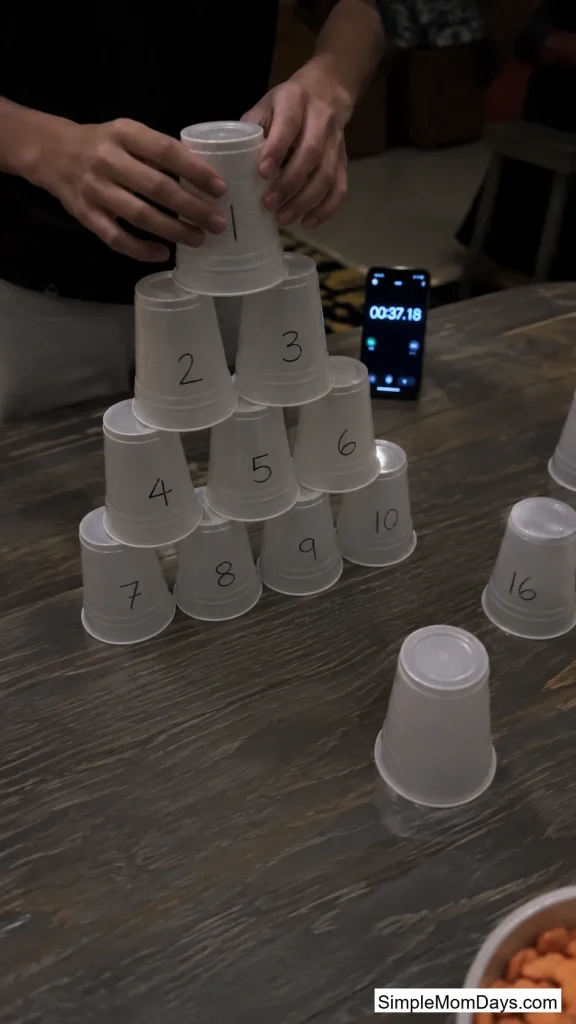
Number a stack of plastic cups one through ten and scramble them into a random pile. Players have one minute to sort them into a numbered pyramid, then flatten the pyramid back into a single stack — in the correct order both times.
It looks simple until the timer starts. The stacking part alone takes most people longer than they expect, and keeping the numbers in sequence while racing the clock trips up even kids who are usually steady under pressure.
A set of ten cups costs next to nothing, and marking them with a permanent marker makes them reusable for next year’s party too.
12. Ghost-Face Pumpkin Bowling
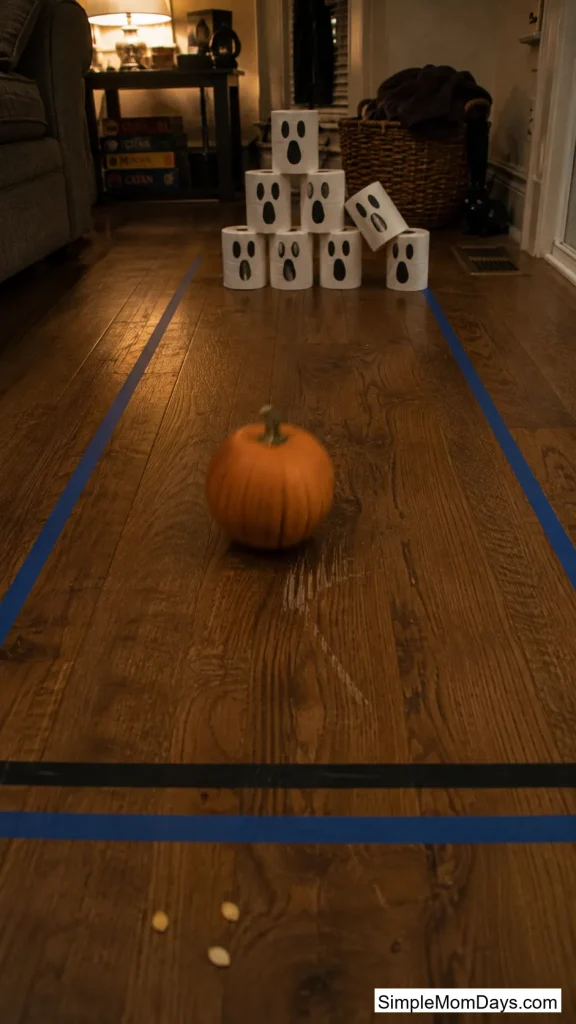
Draw spooky faces on a few empty toilet paper rolls and stack them in a triangle, bowling-pin style. Hand each player a small pumpkin to roll down a short lane and knock the pins down within the minute.
A real pumpkin doesn’t roll straight, which is exactly what makes this funnier than regular bowling. Half the fun is watching a perfectly aimed throw curve sideways at the last second and miss everything.
Reset the pins between turns and score by pins knocked down rather than a strict win-or-lose format, so younger tweens mixed in with older teens still have a shot at winning a round.
13. Blindfolded Worm Dig
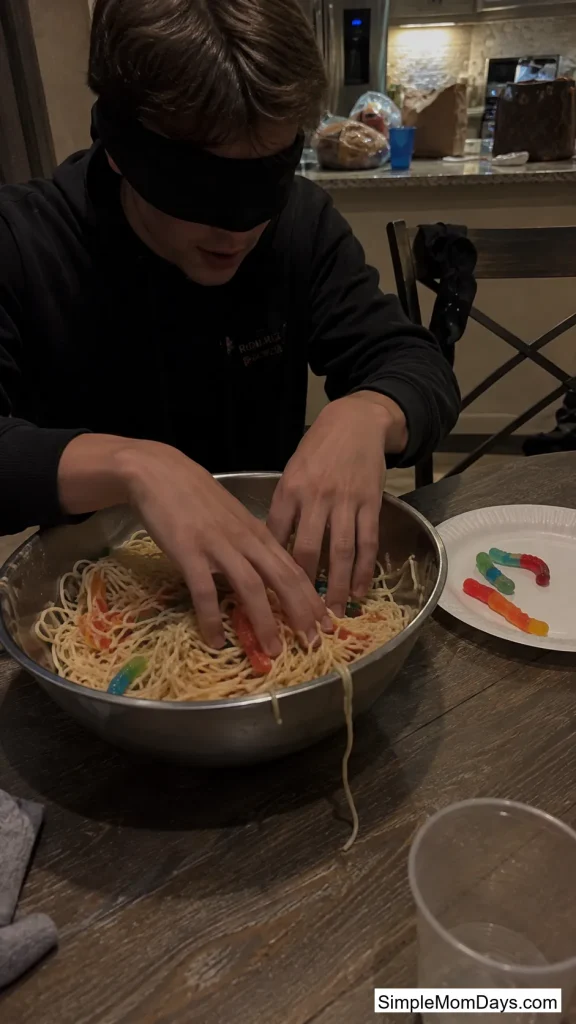
Fill a bowl with cold, cooked spaghetti and mix in a handful of gummy worms. Blindfold each player and give them one minute to pull out every gummy worm by feel alone, leaving the noodles behind.
The cold, slippery texture is what sells this one. Most kids can’t tell a gummy worm from a noodle by touch after the first few seconds, and the guessing turns into genuine hesitation and shrieking. It’s messier than most minute-to-win-it games, so it plays best outside or over a tarp.
Count the worms pulled rather than requiring a perfect sort, since a strict pass-or-fail version usually ends in nobody winning at all.
Gross-Out and Dare Games
Tweens and teens have a soft spot for anything genuinely disgusting, as long as it’s the fake kind. These lean into that on purpose.
14. Vaseline Cheeseball Dive
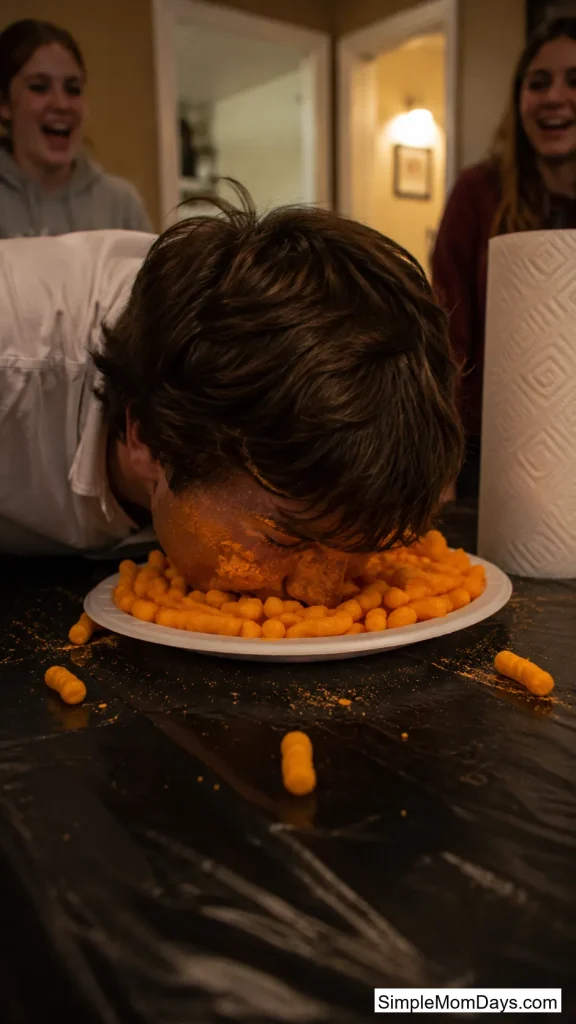
Smear a thin layer of Vaseline over each player’s face, then set a plate of cheese puffs in front of them. On “go,” everyone dives face-first into their plate — no hands allowed — and whoever ends up with the most cheese puffs stuck to their face after thirty seconds wins.
It’s a genuinely silly image, and that’s the entire point. There’s no way to look dignified doing this, which is exactly why it tends to be the moment everyone’s still talking about a week later.
Keep a stack of napkins and a mirror nearby for the after-photos, and have plain water handy for anyone who wants the Vaseline off before it gets in their hair.
15. Mystery Potion Taste Test
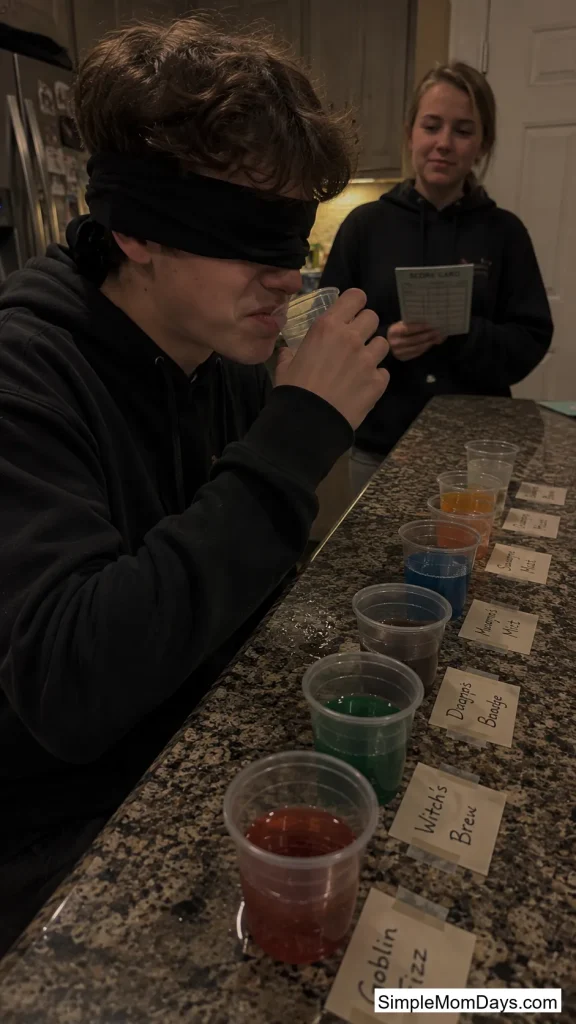
Mix a handful of non-alcoholic drinks — sparkling water, fruit punch, root beer, iced tea — into small unmarked cups with spooky names like “goblin fizz” or “swamp water.” Blindfold each taster and have them guess what’s actually in their cup.
The trick is combining flavors that don’t obviously belong together, so even a drink kids already know tastes unfamiliar in a new mix. Scoring correct guesses keeps it competitive instead of just a random taste test with no winner.
Stick to drinks everyone can safely have — there’s no need to make anything look or taste bad, since the mystery does all the work on its own.
16. Egg Roulette
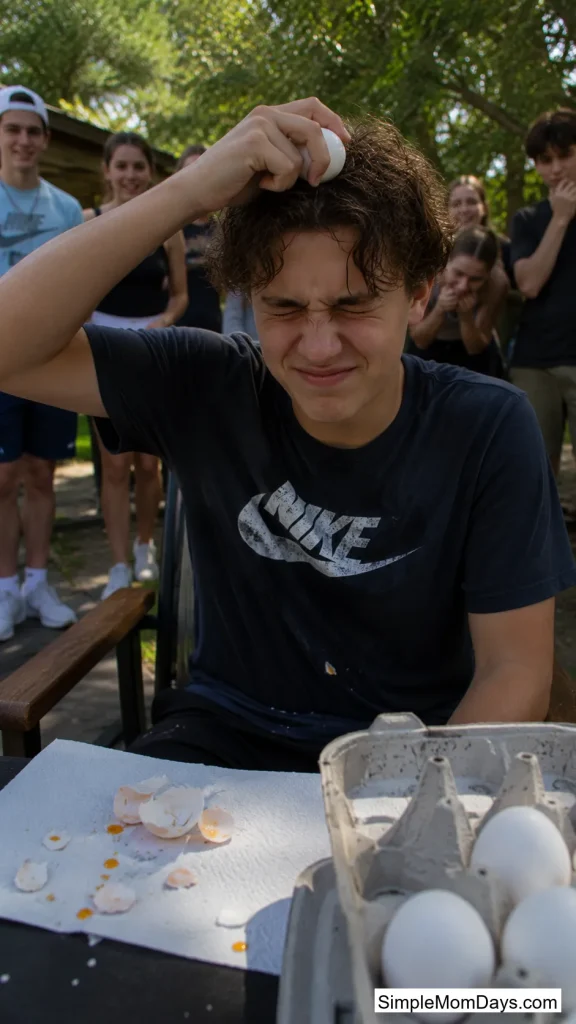
Hard-boil a dozen eggs and slip one raw egg into the carton without telling anyone which one. Players take turns picking an egg and cracking it against their own forehead, hoping they don’t end up with the raw one.
The odds are genuinely in each player’s favor — eleven out of twelve chances are a hardboiled dud — which is what makes people brave enough to keep playing round after round. The one player who does get the raw egg becomes the story of the party.
Keep a towel handy and let the “loser” pick the next round’s snack as a consolation prize. This one plays best outside or somewhere easy to clean.
17. Dare Balloon Pop
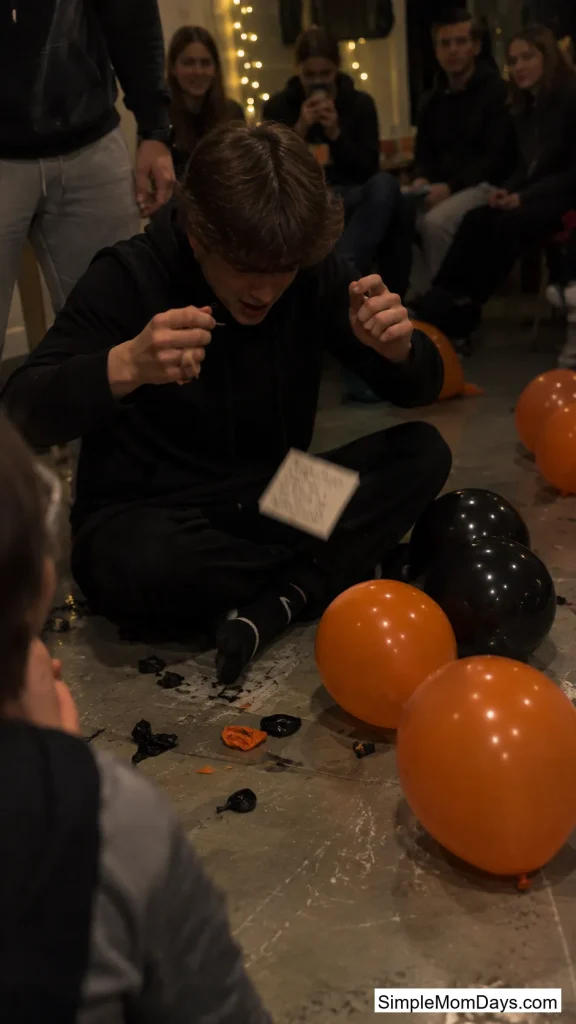
Write a dare on a slip of paper — do the worm, talk in an accent for the next five minutes, let someone draw on your face — and stuff one into each balloon before blowing it up. Players take turns popping a balloon and following through on whatever dare falls out.
Balloons make the dares feel less personal than a straight truth-or-dare circle, since nobody’s picking on anyone specific — the dare is just whatever comes out of the balloon they happened to grab. That takes the awkward edge off for tweens who’d clam up in a face-to-face dare game.
Keep the dares silly rather than embarrassing, and let anyone swap a dare they’re truly not comfortable with for a backup from a spare balloon.
Creative and Competitive Showdowns
Some kids would rather build or perform than run around, and these give them a spotlight without turning the party into a talent show.
18. Blind-Judged Pumpkin Carving
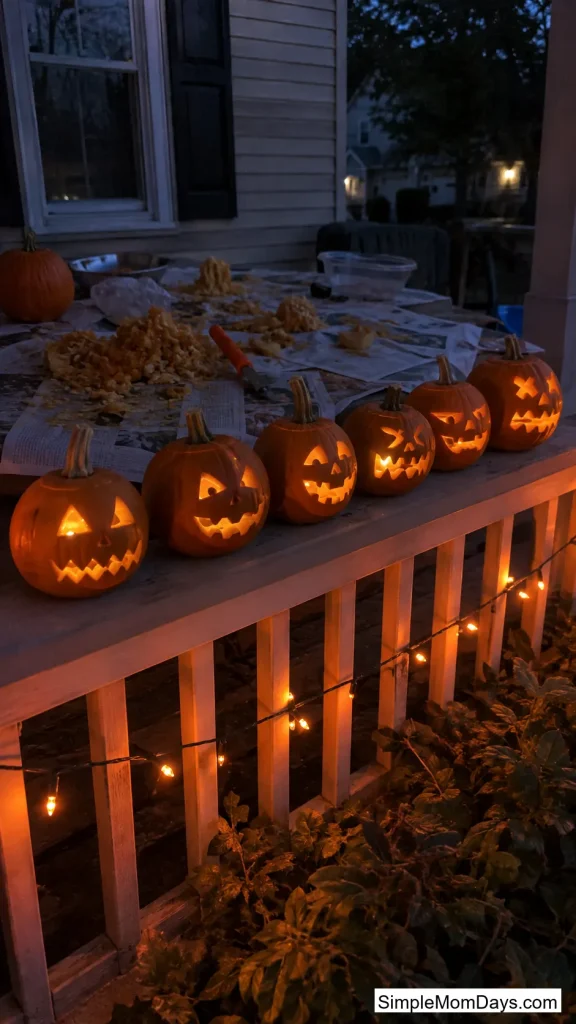
Hand every guest a small pumpkin, a safe carving kit, and fifteen minutes, then have them carve without telling anyone whose pumpkin is whose. Line the finished jack-o’-lanterns up and let the group vote before revealing who made what.
Judging blind changes the whole dynamic — nobody’s voting for their best friend’s pumpkin out of loyalty, so the actual winner tends to be a genuine surprise. It also means a shy kid’s carving gets judged purely on the work itself.
Mini pumpkins under five dollars each keep this affordable for a big group, and a simple carving kit with a scoop and small serrated blade is safer than a full-size kitchen knife.
19. Monster Makeover Race
Split into teams of three or four and give each team a bag of face paint, fake blood, and costume scraps. One team member volunteers to be the canvas, and the rest of the team has ten minutes to turn them into the scariest monster they can manage.
The time pressure is what makes this better than a normal makeup session — there’s no time to be precious about it, so teams end up improvising with whatever’s in the bag. A crooked set of vampire fangs applied in a panic is usually funnier than a perfect one.
Judge on scare factor rather than technical skill, and let the “monster” from each team walk the room for a final vote before anyone washes their face off.

20. Horror Scene Reenactment
Assign small groups a well-known horror or Halloween movie scene and give them ten minutes to rehearse a version they can perform for the rest of the party. No props are required, though a bedsheet ghost or a cardboard tombstone never hurts.
Watching a group of teens overact a scene everyone already knows tends to land bigger laughs than an unscripted improv game would, since the audience is in on the reference from the first line. It also works well as a lower-energy activity slotted in after something more physical.
Three or four groups of three is the right size — much bigger and the rehearsal time drags before anyone gets to perform.

21. Halloween Charades, Team Draw
Write Halloween-specific words and phrases on slips of paper — a specific movie monster, a type of candy, a Halloween tradition — and split into two teams. One player acts it out silently while their team guesses against a sixty-second timer, then the next team goes.
The Halloween theme narrows the guessing pool just enough to keep it fast without making it too easy, which is the balance that keeps a charades game fun past the first few rounds. Specific prompts work better than vague ones — “Dracula” plays very differently than just “vampire.”
Twenty or so slips is enough for a full round with both teams getting equal turns.
Wind-Down Games to Close Out the Night
Once the sugar rush wears off, these two are a good way to bring the energy back down before parents start arriving.
22. Pass-the-Flashlight Ghost Story
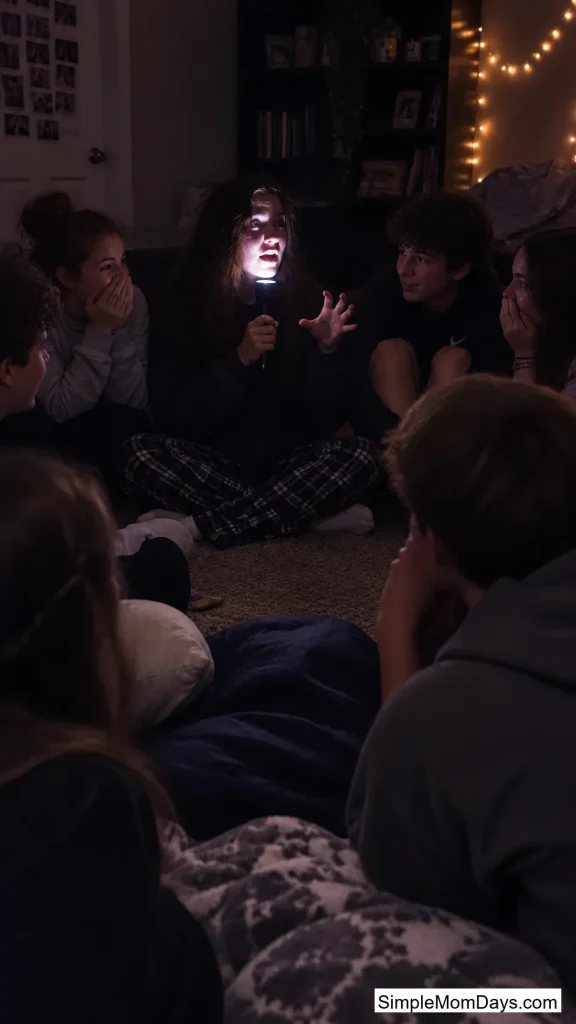
Turn off the lights, sit everyone in a circle, and start a ghost story with just a sentence or two before passing the flashlight to the next person, who has to continue it. Keep going around until the story reaches some kind of ending — or falls apart laughing.
There’s no winning or losing here, which makes it a nice change of pace after a night of competitive games. It also tends to surprise people — a quiet kid who hasn’t said much all party sometimes takes the story in the most unexpectedly dark direction.
Hold the flashlight under someone’s chin while they talk for the classic campfire effect, and let anyone pass if they draw a blank rather than putting them on the spot.
23. Most Likely To: Halloween Edition
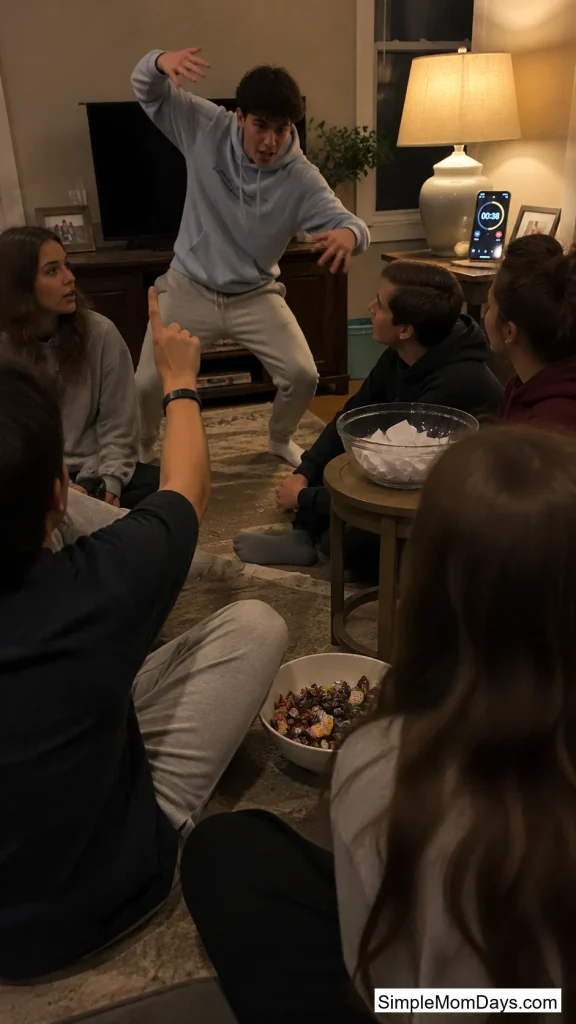
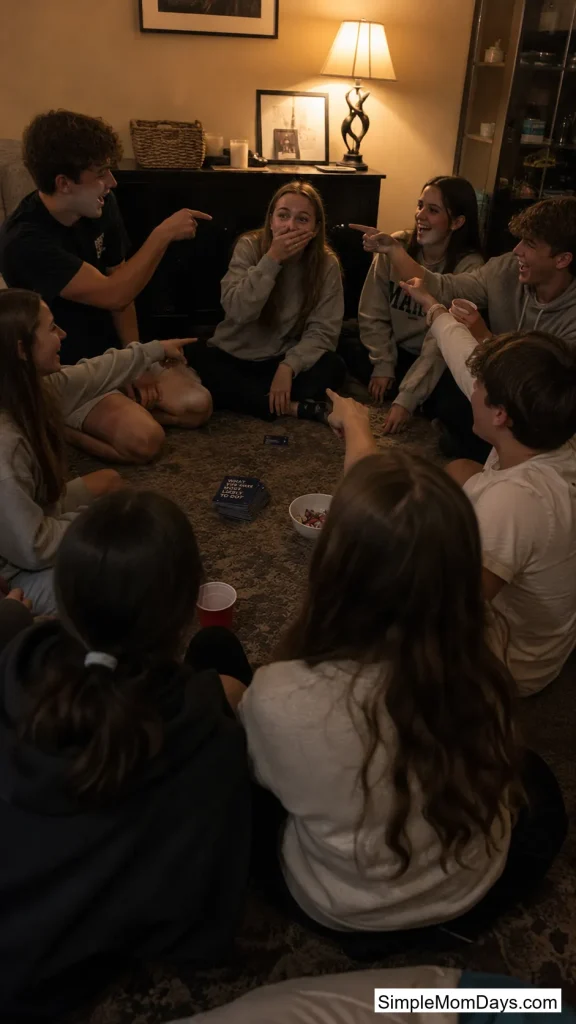
Read out a Halloween-flavored scenario — most likely to survive a zombie apocalypse, most likely to scream at a jump scare, most likely to accidentally befriend a ghost — and have everyone point at who they think fits, all at the same time on the count of three.
The simultaneous pointing is what makes it work. Nobody has time to soften their answer or vote strategically, so the results tend to be blunt and funny rather than diplomatic.
Fifteen or twenty scenarios is plenty for a solid round, and it works well as a closing game since it needs zero setup and everyone can play sitting right where they are.
Final Thoughts
A good Halloween party for this age group usually mixes at least one game from each of these categories — something active, something that makes people think, something gross, and something to unwind with at the end. Pick five or six total rather than trying to run through all 23 in one night, and let the group’s own energy tell you when it’s time to switch from screaming across the yard to something quieter.