A scavenger hunt solves the specific problem of a house full of keyed-up kids and nowhere for that energy to go. It also happens to be one of the cheapest Halloween activities out there — most of these need paper, tape, and a pen, not a trip to the store.
Some of these work as a stand-alone afternoon activity, some are built for a party or classroom, and a few are made for the walk to trick-or-treat itself so the wait between houses doesn’t drag. Pick based on the ages in the room and how much time you’ve actually got to set it up.
Indoor Rainy-Day Hunts
These keep everything contained to the house, which matters if the weather’s uncooperative or it’s already dark by the time everyone’s home from school.
1. Room-by-Room Haunted House Tour
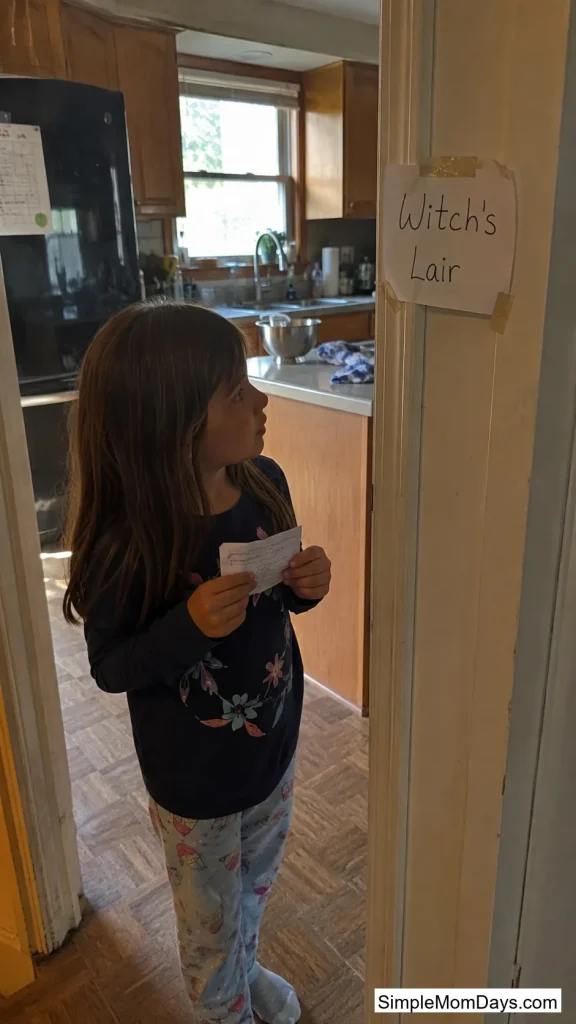
Assign each room in the house a spooky identity — the kitchen becomes a witch’s lair, the bathroom turns into a mad scientist’s lab — and hide a clue in each one that points to the next room’s new name.
Kids have to figure out which room matches which description before they can move on, which adds a layer of thinking beyond just finding a piece of paper.
This works well for a mixed-age group since older kids can help younger siblings puzzle out the trickier room names.
2. Halloween I-Spy Bingo Cards
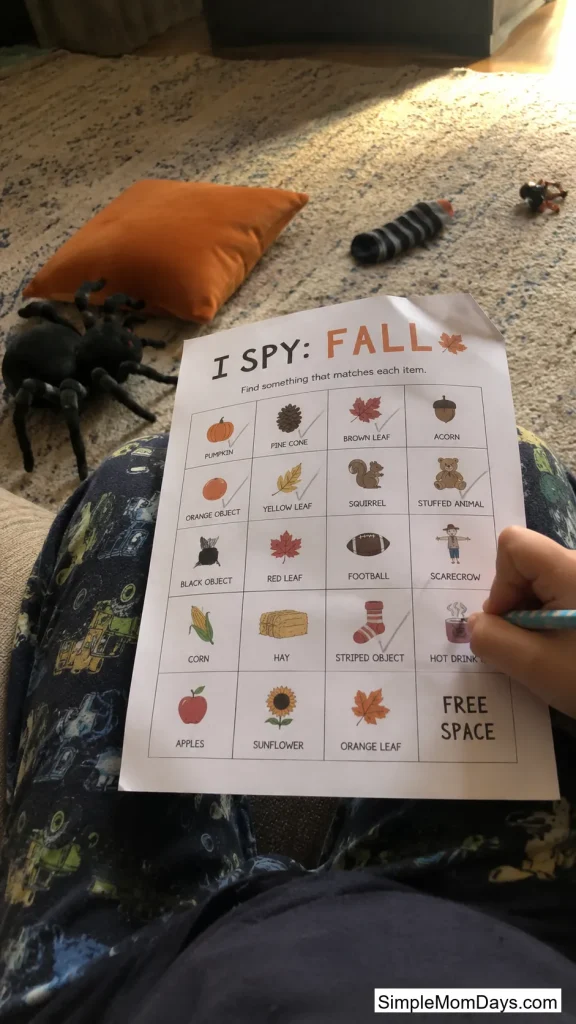
Draw a simple grid and fill each square with something findable around the house — something orange, a book with a black cover, a stuffed animal that could pass for spooky, a spider if you’ve got fake ones out.
Kids check off squares as they spot each item instead of physically moving anything, which keeps the house from getting torn apart mid-hunt.
First to get a full row calls bingo, or just let everyone finish their own card at their own pace if you’d rather skip the competition.
3. Cotton-Ball Cobweb Trail
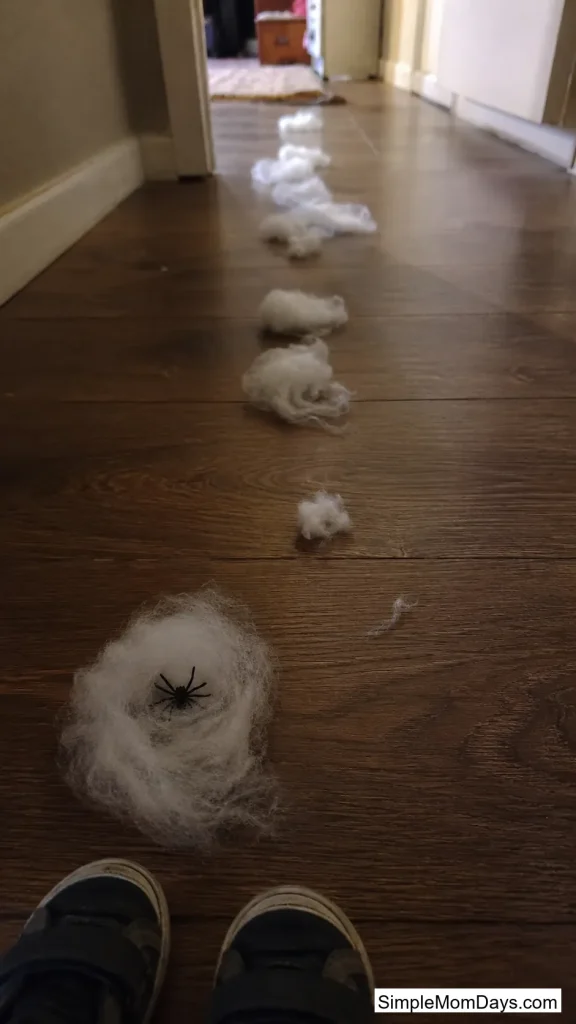
Pull apart cotton balls into loose, web-like clumps and leave a trail of them from room to room, ending at a small prize. Tuck a plastic spider into a few of the clumps along the way for extra effect.
The visual trail means even a child who can’t read yet can follow it without help, since there’s nothing to decode — just clumps to spot and follow.
This one takes about five minutes to set up and just as long to clean up afterward.
4. Balloon Pop Clue Hunt
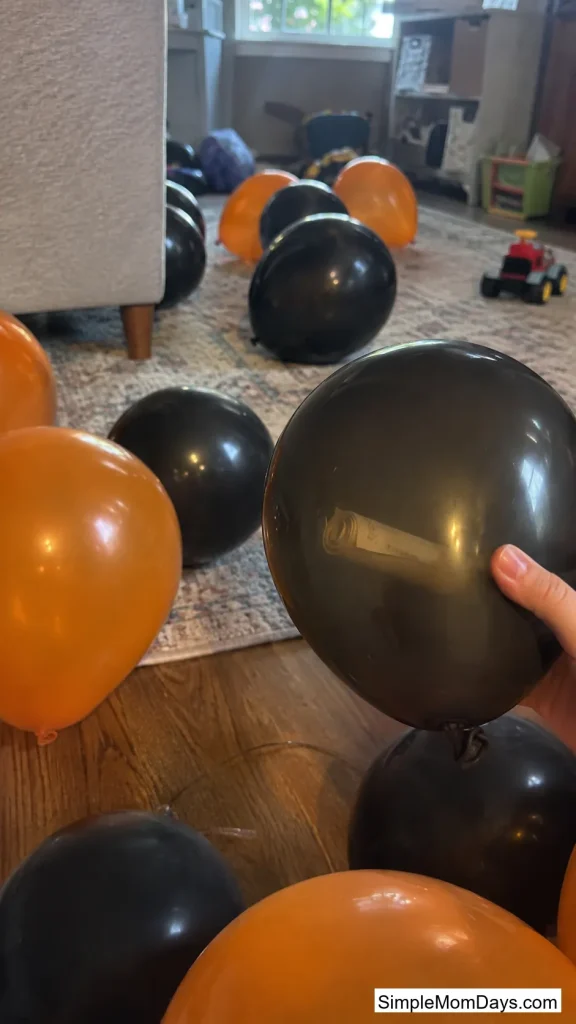
Write each clue on a small strip of paper, roll it up, and stuff it inside a balloon before inflating and tying it off. Hide the balloons around the house and let kids pop one at a time to get their next clue.
The popping adds a genuinely fun physical element on top of the searching, and most kids will ask to do this one again long after Halloween is over.
Use black and orange balloons if you want it to read as Halloween-themed at a glance, though any color works.
Backyard and Neighborhood Hunts
Get everyone outside for these, whether that means the yard, the sidewalk, or an actual walk around the block.
5. Pumpkin Patch Number Hunt
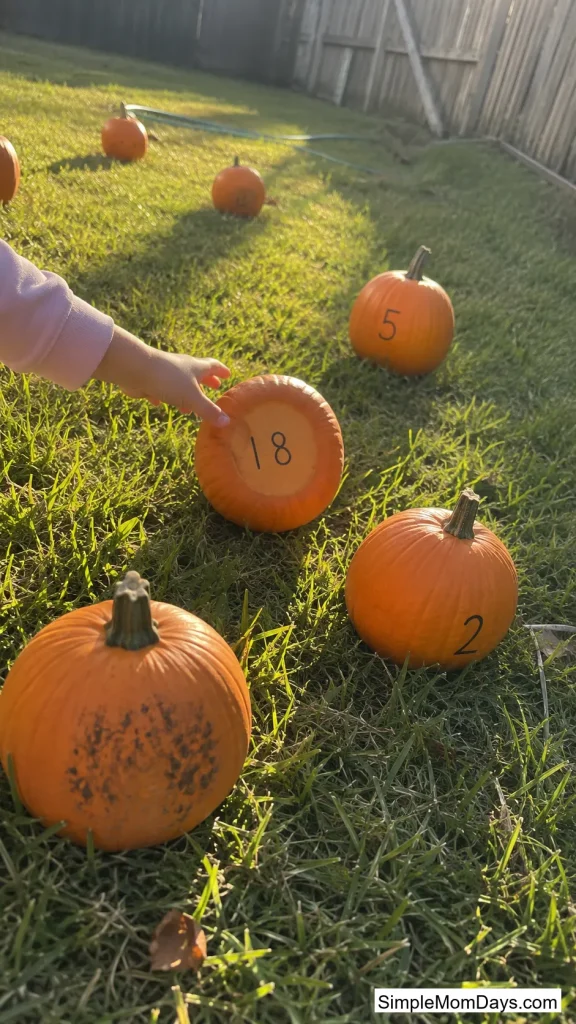
Scatter a handful of small pumpkins or gourds around the yard, each one marked on the bottom with a number written in marker. Kids collect them all, add up the numbers, and the total becomes the “combination” to unlock a prize box or bag.
This works especially well for kids who are just starting to add multi-digit numbers, since it turns math practice into something that doesn’t feel like homework.
For younger kids who aren’t adding yet, swap the numbers for letters that spell out a Halloween word instead.
6. Décor Spotting Checklist
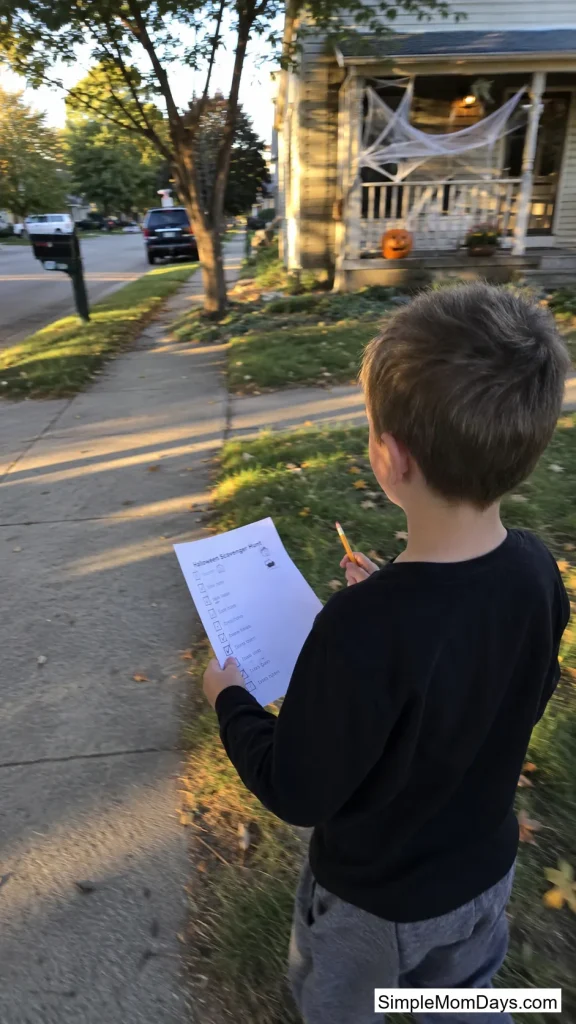
Print a simple list of things to spot around the neighborhood — a carved pumpkin, a fake spiderweb, a skeleton, an inflatable decoration — and have kids cross items off as you walk or drive past them.
This turns an ordinary walk to trick-or-treat, or even just a drive to school during October, into something with a bit of a game attached.
Whoever spots the most from the list by the time you’re done wins, if anyone’s keeping score.
7. Leaf and Nature Scavenger List
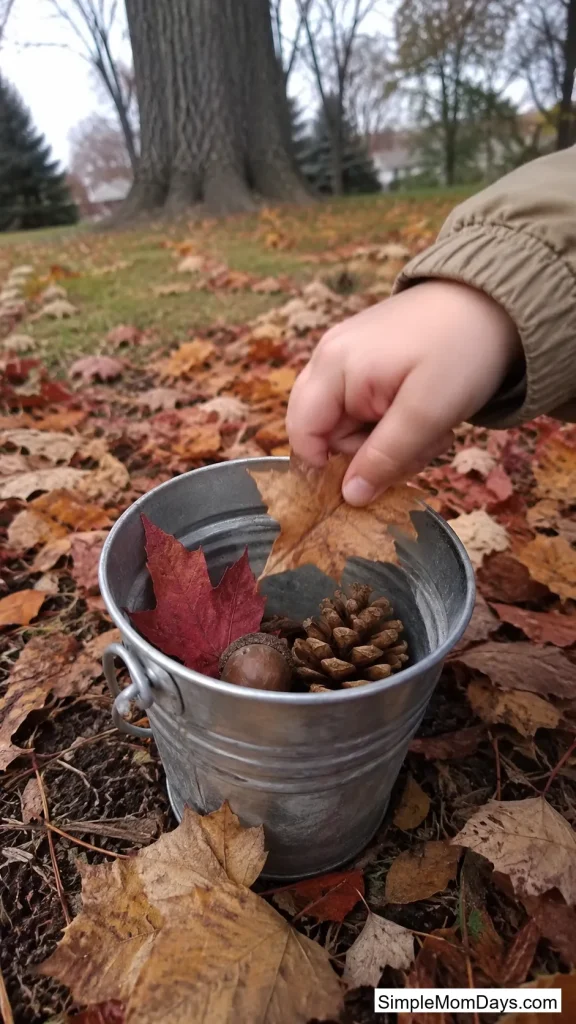
Mix actual fall nature finds with Halloween touches on one list — a red leaf, an acorn, a pinecone, a real spiderweb, something black, something that crunches underfoot.
This one gets kids looking closely at things they’d normally walk right past, and it works just as well in a park as it does in your own yard.
Bring a small bag or bucket for collecting the natural items, since most kids will want to keep what they find.
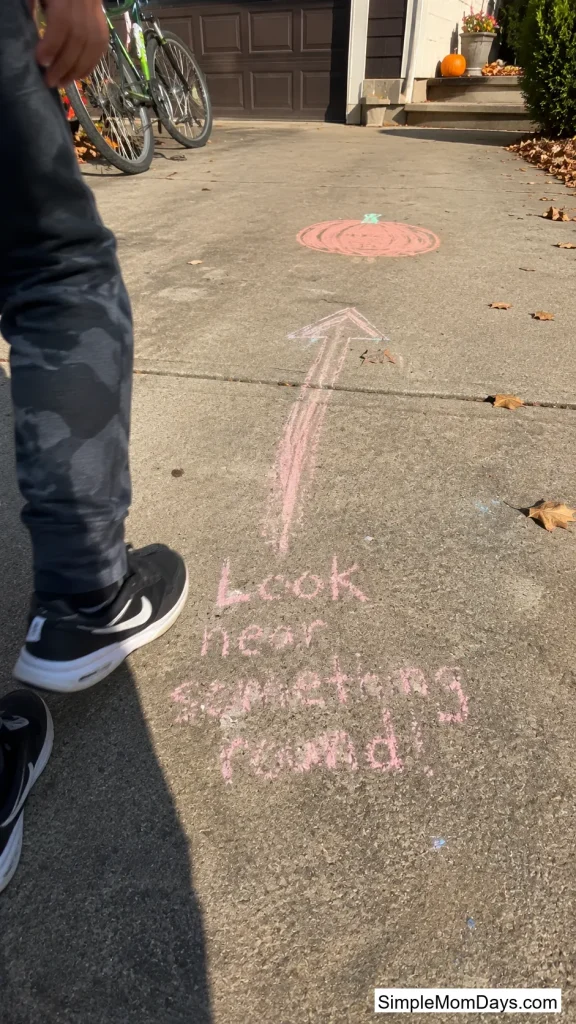
8. Sidewalk Chalk Clue Trail
Draw arrows and short clues directly on the sidewalk or driveway in chalk, leading from one spot to the next around the outside of the house. A pumpkin drawn at the very end marks the finish.
Because everything’s drawn right on the ground, there’s nothing to lose or blow away, and it’s easy enough that even a preschooler can follow the arrows without much help.
Rain will wash it away by the next day, so this one works best as a same-day activity rather than something set up in advance.
Riddle and Clue-Based Hunts for Readers
These need kids who can read on their own, or at least sound out short rhymes, which makes them a good fit for elementary-age kids who want more of a challenge.
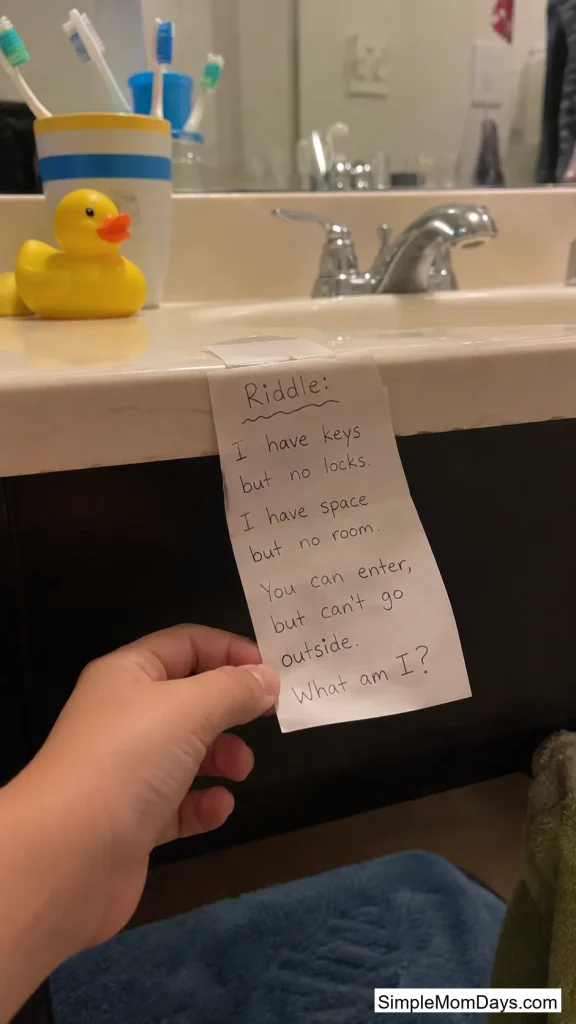
9. Rhyming Room Riddles
Write each clue as a short rhyme that hints at the next hiding spot without naming it outright — something like a line about where dishes get washed, pointing toward the sink. Kids read the rhyme, guess the room, and go find the next one hidden there.
Rhyming clues take a little longer to write than plain ones, but they turn the hunt into something kids talk about wanting to repeat next year.
Keep a cheat sheet for yourself listing which clue goes where — it’s easy to lose track once you’ve hidden six or seven of them around the house.
10. Monster-Themed Clue Story
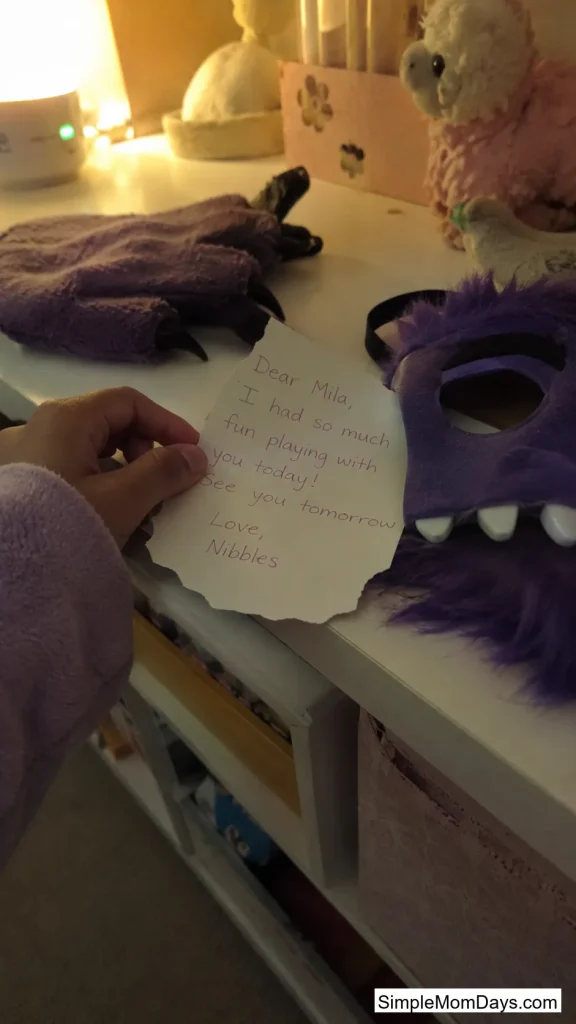
Frame the whole hunt around a story — a friendly monster who lost his favorite things around the house and needs help finding them before nightfall. Each clue is written in the monster’s voice and describes the next lost item.
Giving the hunt a character and a reason for existing makes it feel like more than a chore disguised as a game, and kids tend to stay more invested clue to clue.
A quick costume piece — a mask, a pair of gloves — left at the final spot as “the monster’s” makes for a fun payoff at the end.
11. Spell-the-Word Letter Hunt
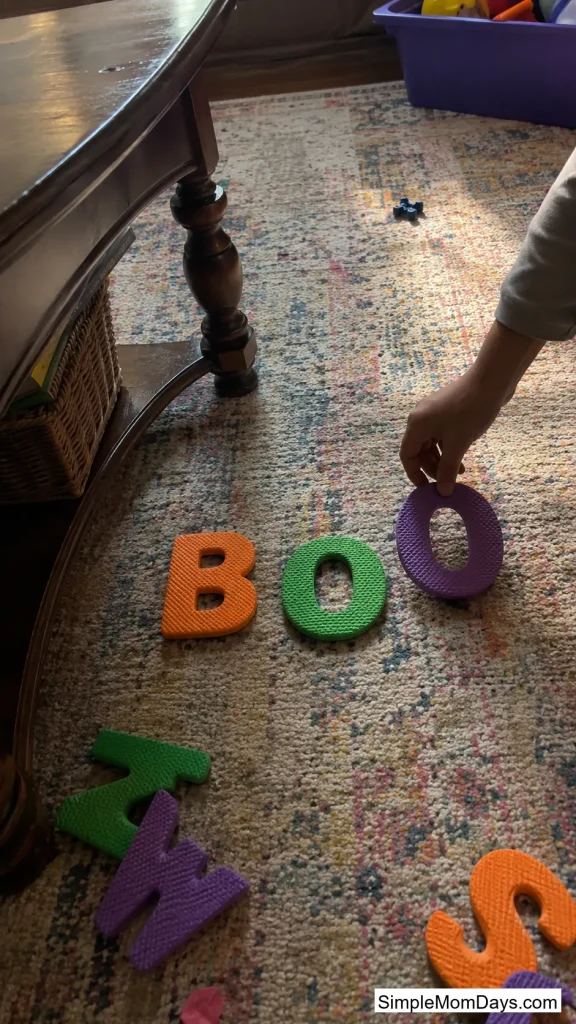
Hide foam or paper letters around the house or yard that spell out a Halloween word like BOO or SPOOKY. Kids collect every letter, then have to figure out how to arrange them correctly before the hunt counts as finished.
For older kids, use a longer word and toss in a couple of extra decoy letters that don’t belong, which stretches the challenge out longer.
This one doubles as sneaky spelling practice without anyone noticing that’s what’s happening.
12. Picture-Clue Hunt for Emerging Readers
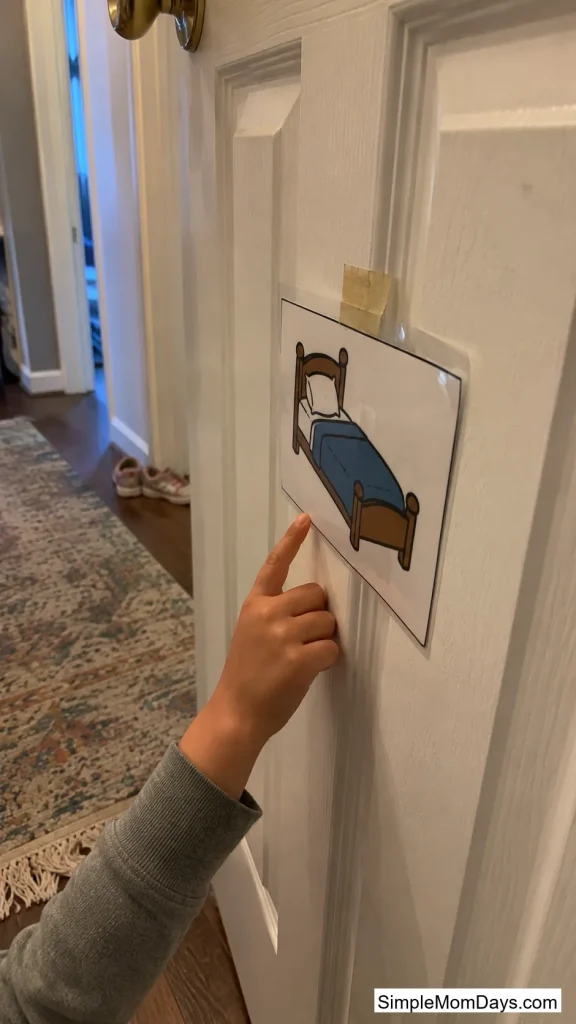
Swap written clues for simple drawings or printed pictures of the next hiding spot — a picture of a bed for the bedroom, a toothbrush for the bathroom. Kids match the picture to the room instead of sounding out words.
This bridges the gap for kids who are just past the toddler stage but aren’t confident readers yet, so they can do the hunt mostly on their own.
Laminate the picture cards if you plan on reusing this same set for a birthday or another holiday later in the year.
Hunts for Toddlers and Preschoolers
Skip the reading and the multi-step clues entirely for this age group — the goal is finding things, not decoding anything.
13. Balloon-Marked Treasure Spots
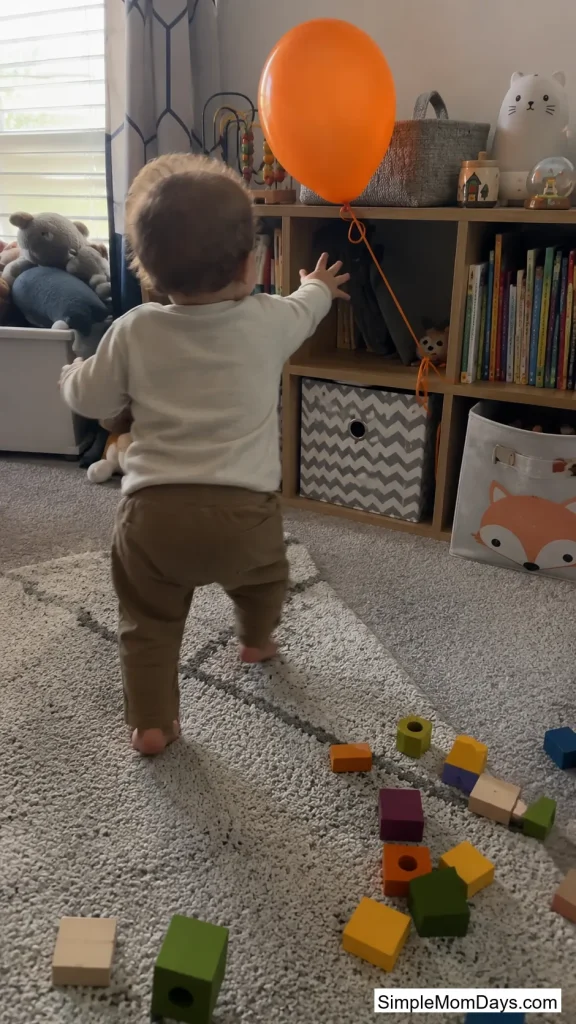
Tie a balloon to or near each hiding spot instead of relying on a clue at all. Toddlers can see the balloons from across the room and toddle straight toward them without needing anyone to read anything out loud.
Every stop comes with two rewards built in — the hidden item and a balloon to carry around afterward, which as far as a toddler’s concerned is basically a bonus prize.
Keep the hiding spots low and obvious; this age group loses interest fast if the search drags on.
14. Color-Matching Pumpkin Hunt
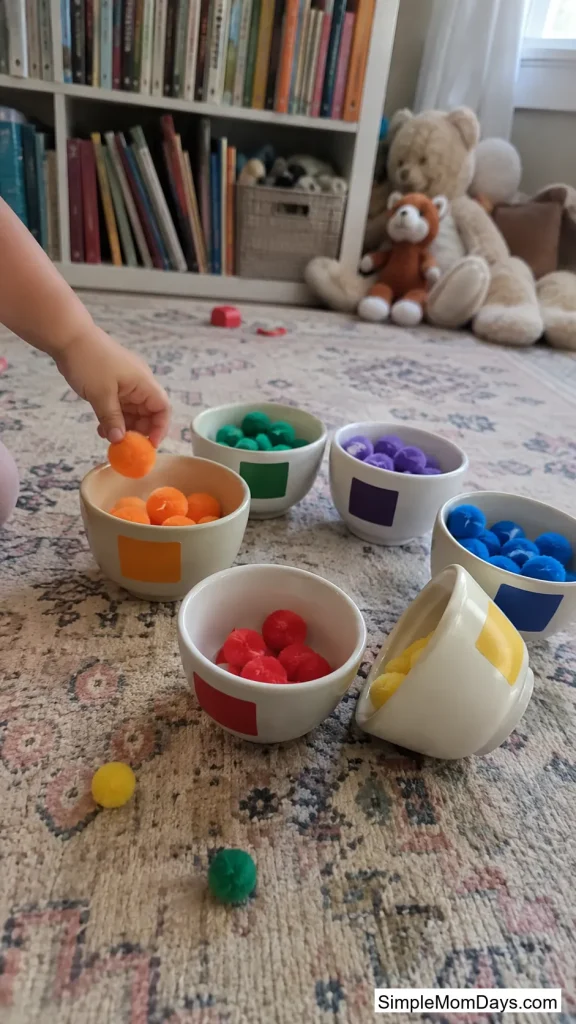
Set out several bowls, each labeled with a different color, and hide small colored pom-poms, blocks, or plastic shapes around the room. Toddlers collect the pieces and sort them into the matching bowl.
This one leans more into color recognition than searching skill, which makes it a good option for kids right at the edge of being too young for a “real” scavenger hunt.
Keep the pieces large enough that they’re not a choking risk for a toddler who still puts things in their mouth.
15. Name-Letter Candy Hunt
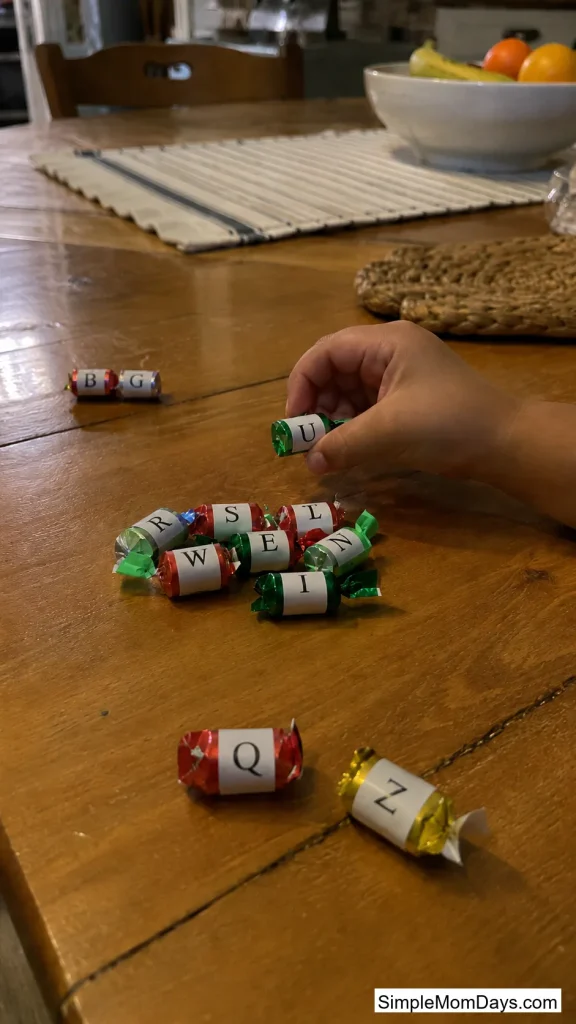
Tape individual letters to small treats and hide them around the room, mixing in a few letters that don’t belong to any name in the group. Kids collect and search for the letters that spell their own name.
Watching them figure out what to do with a letter that isn’t theirs is half the fun — some will trade with a sibling, and some will hide it somewhere new just to keep playing.
This works well for a small group of siblings or friends with different-length names, since it naturally paces itself to each kid’s own name.
16. Texture Bin Monster Dig
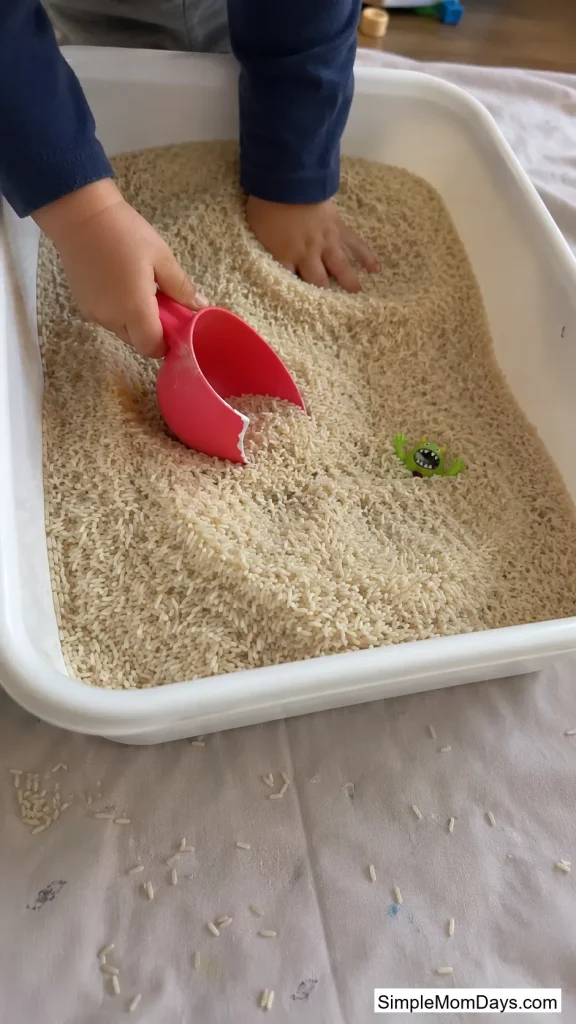
Fill a large bin with dry rice, beans, or shredded paper and bury a handful of small plastic toys or Halloween trinkets inside. Let toddlers dig through with their hands or a small scoop to find them.
This skips searching the house entirely and turns the hunt into a sensory activity, which works well on a day when you need something that keeps little hands busy in one contained spot.
Lay a sheet or towel underneath first — bins like this scatter their filling everywhere no matter how careful the digging is.
Halloween Party and Classroom Hunts
Built for a group setting where you’ve got more kids than usual and a little more room to spread the activity out.
17. Costume Photo Scavenger Hunt
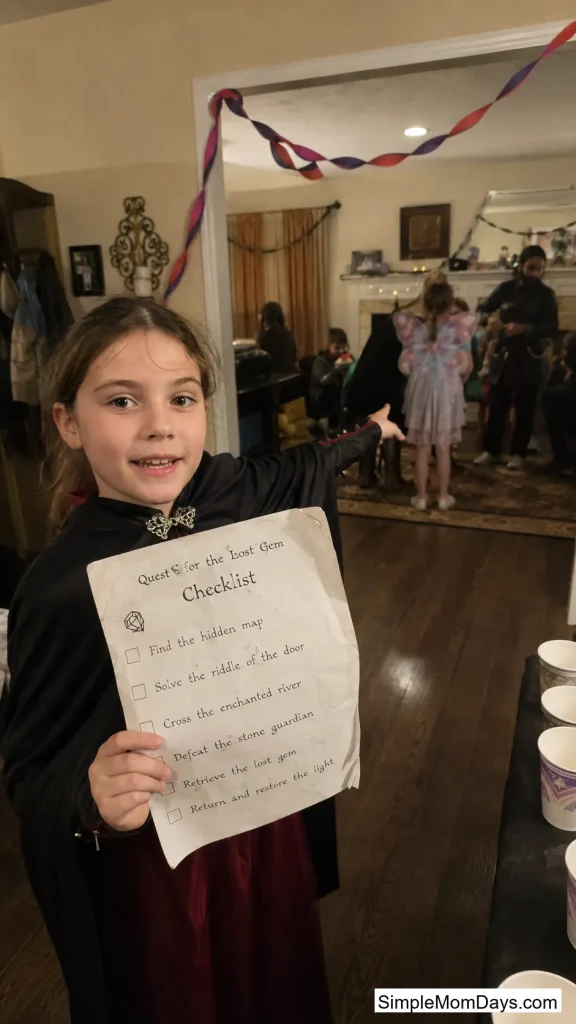
Hand out a list of costume details to spot among the group — someone wearing a cape, a costume with wings, anyone dressed as something that used to be alive, a costume with face paint. Kids take photos or check items off as they spot them on other guests.
This gets kids talking to each other and looking closely at everyone’s costume instead of clustering off into the same small group all party long.
It works especially well at a party with a wide age range, since spotting costume details doesn’t require any particular skill level to play.
18. Team Candy Bowl Dash
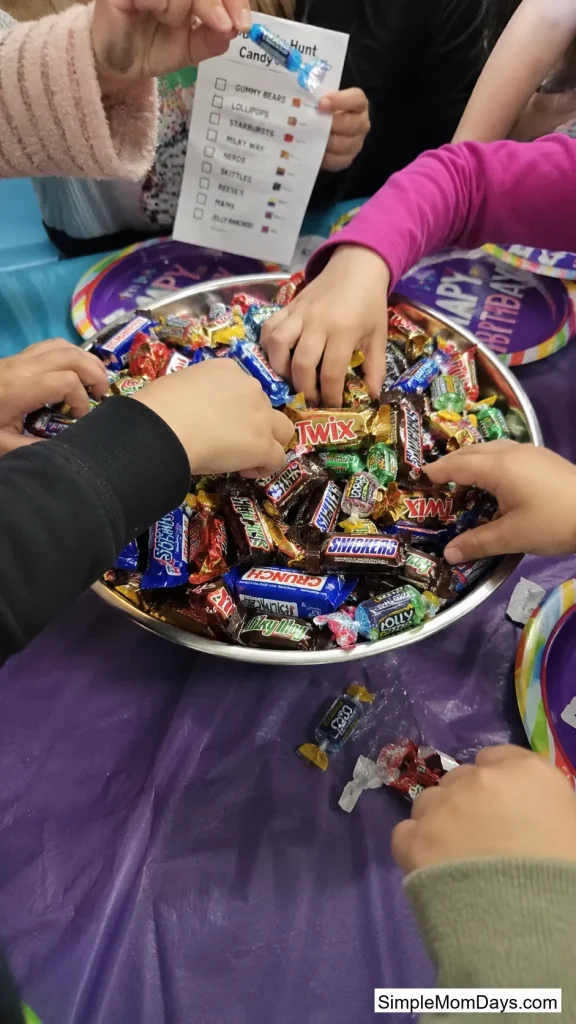
Fill a large bowl or bin with a mix of small wrapped candies, then hand each kid a list of specific ones to dig out — a certain wrapper color, a specific shape, one particular candy by name. On “go,” everyone digs through the same bowl looking for their list.
Because everyone’s searching the same pile at once, this has a lot more energy and noise than a hunt spread around a room, which makes it a good fit for a party that needs a burst of activity.
Keep a non-candy version ready with small trinkets instead, in case anyone in the group has allergies.
19. Cauldron Ingredient Hunt
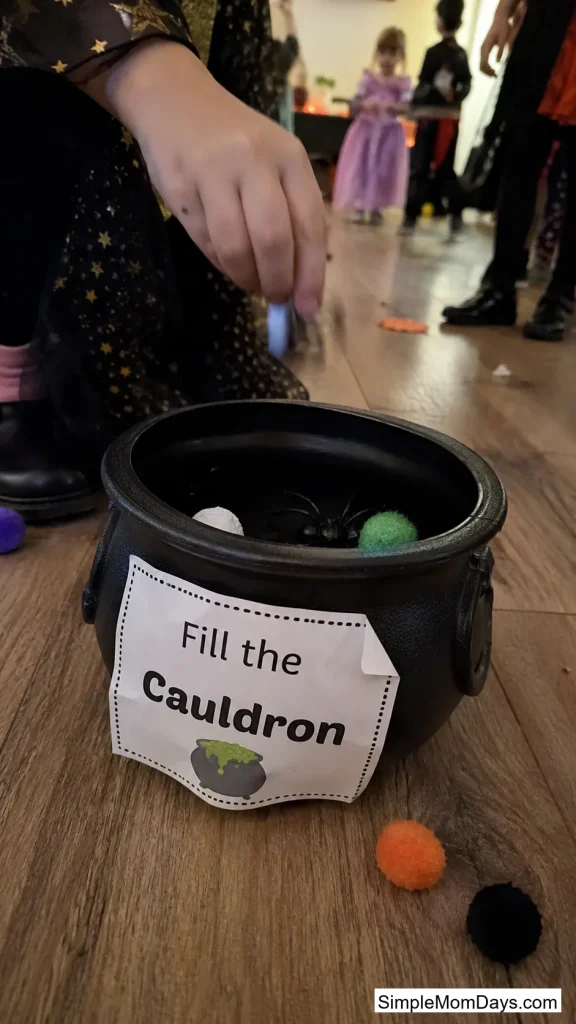
Break the group into small teams and give each one a list of “potion ingredients” to collect — a plastic spider for eight legs, a cotton ball for cloud fluff, a green pom-pom for goblin toes. Tag each item’s real-world stand-in and hide them around the party space.
The first team to gather every ingredient and drop them into their own cauldron or bucket wins the round.
Naming each item something silly instead of calling it by its plain name is what makes this version stick with kids longer than a plain checklist would.
Nighttime and Flashlight Hunts
Save these for after dark, or at least somewhere you can shut out enough light to make the glow-in-the-dark effect worth it.
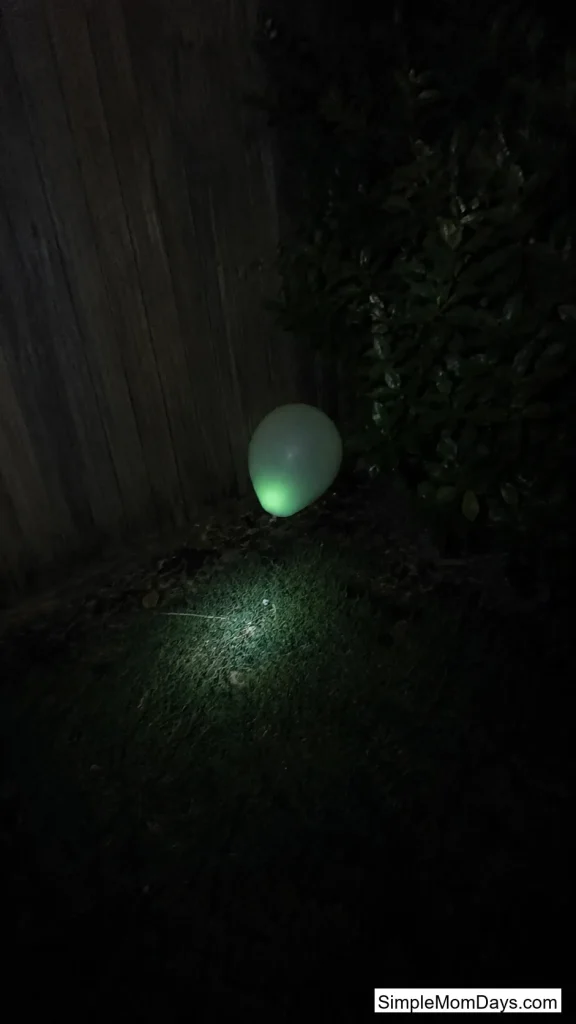
20. Glow-Stick Ghost Hunt
Crack a glow stick and drop it inside a white balloon so the whole balloon lights up from within, then hide a handful of these “ghosts” in dark corners of the yard or house. Turn off the lights and send kids off with nothing but the glow to guide them.
The soft light makes each ghost easy enough to spot from a distance but still gives the hunt a genuinely spooky feel once the room goes dark.
This works indoors just as well as outside, so weather isn’t a factor either way.
21. Reflective Tape Flashlight Hunt
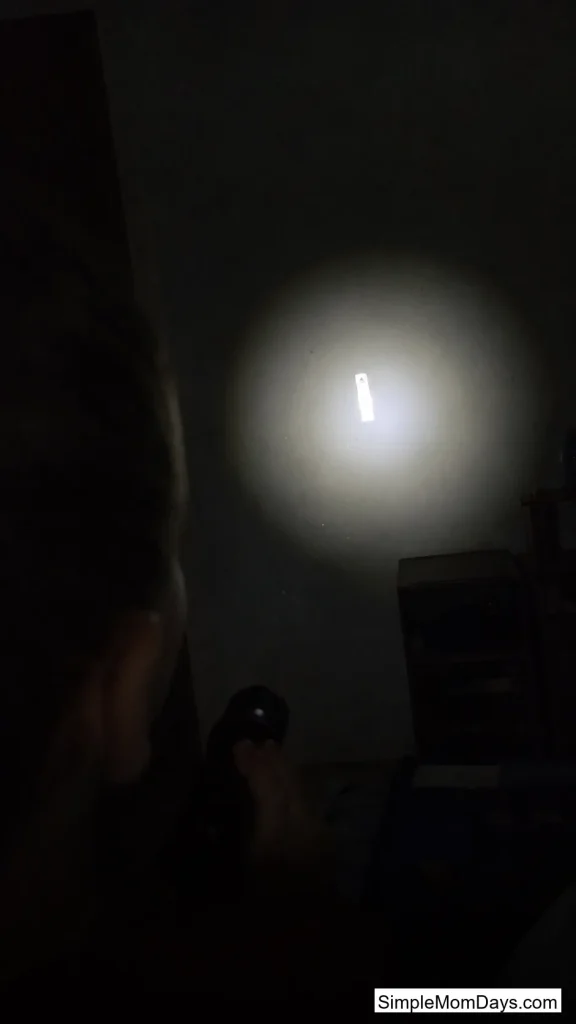
Stick small strips of reflective tape in a handful of spots around a dark room or yard, then hand out flashlights and let kids sweep the beam around until something flashes back at them. Each reflective spot marks a hiding place for a small prize.
The flashlight beam does a lot of the work here, catching the reflective tape from across a room in a way that makes each find feel like a genuine discovery.
Even closets and bathrooms work for this one if you darken them enough, so it doesn’t need to be full nighttime outside to pull off.
However you set it up, a scavenger hunt buys you the thing every parent actually wants on Halloween — a stretch of time where the kids are occupied, moving, and having fun without needing you to referee every five minutes.