

June 19th rolls around every year. Most families want to do something — something that feels real, not just performative. But when you have kids in the picture, “meaningful” and “actually fun” have to live in the same sentence.
So what do you do with a six-year-old who wants to run around, and a twelve-year-old who’ll roll their eyes at anything that feels like homework? You find the sweet spot. That’s exactly what this list is — 21 ideas that teach, celebrate, and keep kids genuinely engaged from morning to sunset on Freedom Day.
Fun Craft Activities That Double as History Lessons
1. Make a Juneteenth Flag from Scratch
Give kids red, black, and green construction paper, scissors, and glue. Have them build the Pan-African flag from pieces they cut themselves. While they work, explain what each color represents — red for the blood of ancestors, black for the people, green for the land of Africa.
Older kids can tackle the official Juneteenth flag — the blue, red, and white design with a star burst. Let them look up what the burst symbolizes and explain it back to you. When they can teach it, they own it.

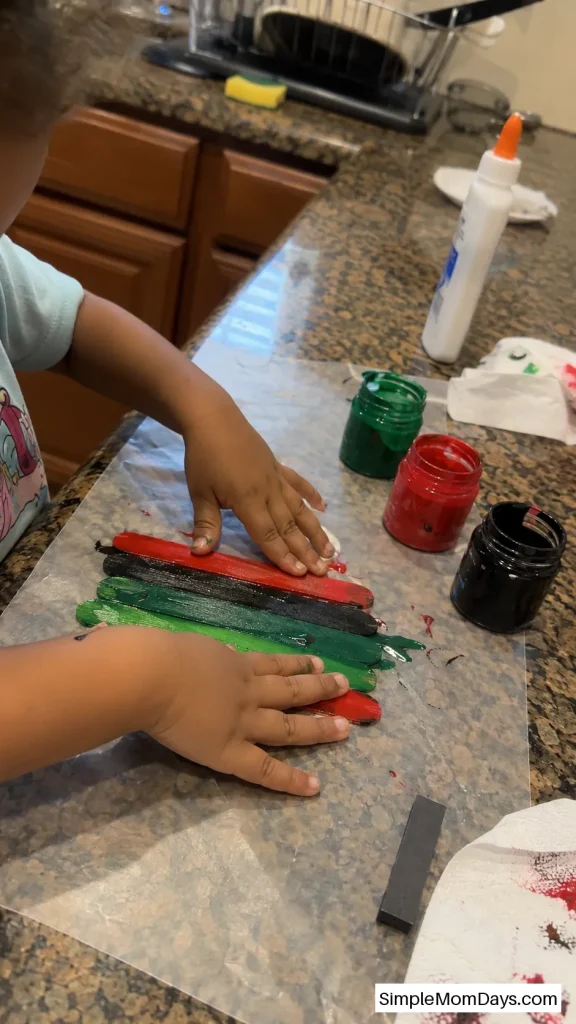
2. Popsicle Stick Flag Magnets
This one works for toddlers and kindergarteners. Paint popsicle sticks in Juneteenth colors, arrange them into a flag shape, glue a magnet strip on the back. Done in 20 minutes, sticks to the fridge all summer.
The process matters more than the product here. While little hands paint, you talk. Keep it simple: “A long time ago, people weren’t free. Today we celebrate because freedom finally came.”
3. Juneteenth Suncatchers
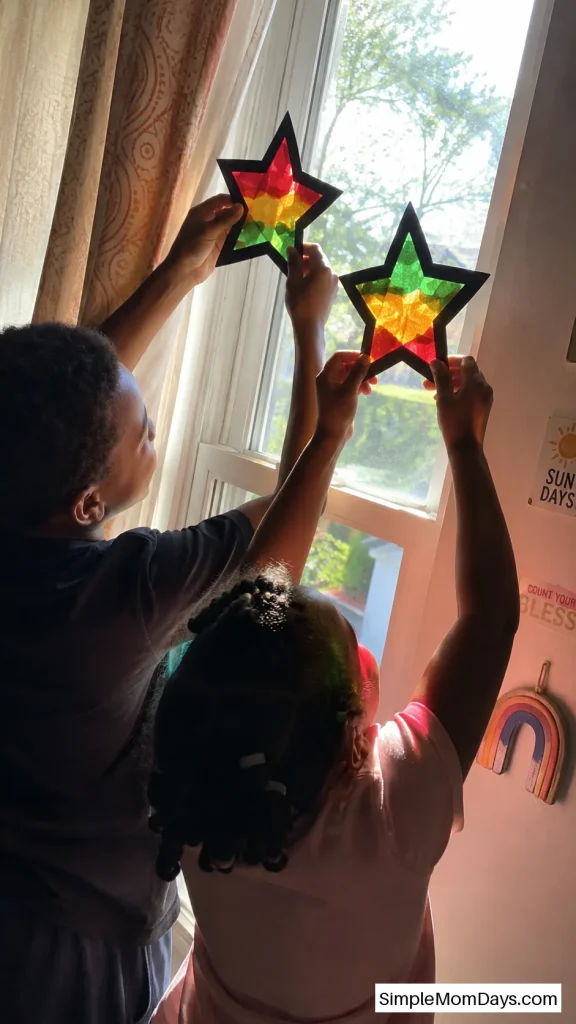
Cut shapes — stars, fists, doves — out of black cardstock. Let kids fill the cutouts with torn pieces of colored tissue paper layered over contact paper. Hang them in a sunny window. The light comes through in red, black, and green.
This works especially well in classrooms or group settings. Twenty kids, twenty suncatchers, twenty conversations happening at once.
Food Activities That Connect Kids to Juneteenth Tradition
4. Cook Red Foods Together
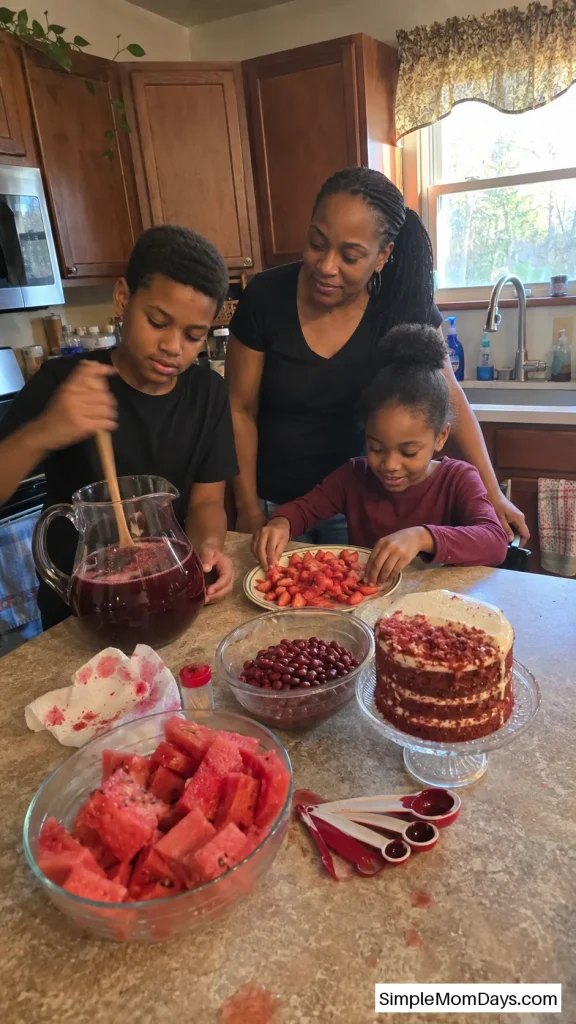
Red food has deep roots in Juneteenth celebrations, traced back to West African traditions. Watermelon, strawberries, red velvet cake, hibiscus tea, red beans — all of it lands on the table for a reason.
Get kids in the kitchen. Let them wash strawberries, stir the cake batter, pour the drinks. A nine-year-old who made the red punch herself remembers why it’s red. That’s the lesson, delivered without a worksheet.
5. Host a “Freedom Feast” Picnic
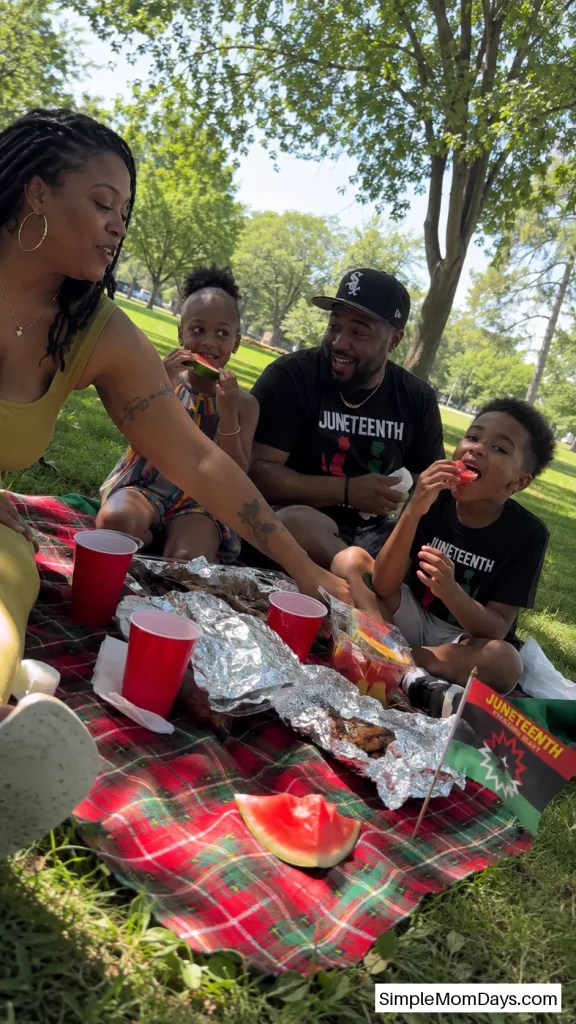
Pack a basket with traditional Juneteenth foods and head to a park, a backyard, or even the living room floor with a blanket. Put on some music — early blues, gospel, or soul — and eat together.
Tell the kids this is what families did on June 19th in Texas over 150 years ago. They gathered, cooked big meals, and celebrated with the people they loved. That tradition is still alive right now, in your blanket-on-the-floor picnic.
6. Red Velvet Cupcake Decorating Station
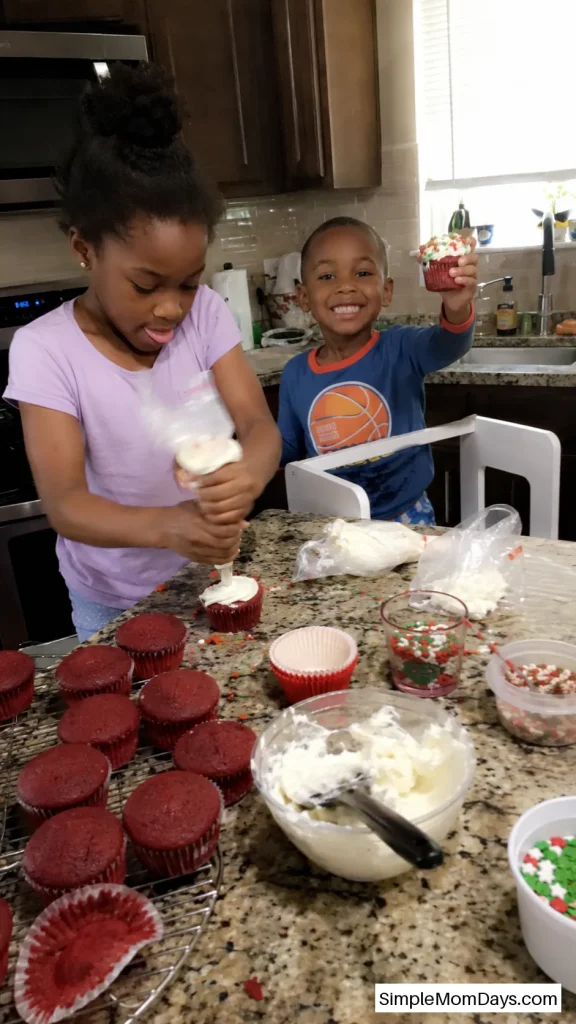
Bake a batch of plain red velvet cupcakes the night before. Set out white frosting, red and green sprinkles, and small star-shaped candies. Let kids decorate their own.
It’s simple, it’s festive, and it gives younger kids something tactile to do while the older ones help the little ones pipe frosting. The end result looks like a Juneteenth table spread — because it is one.
Educational Activities That Don’t Feel Like School
7. Read-Aloud Time with the Right Books
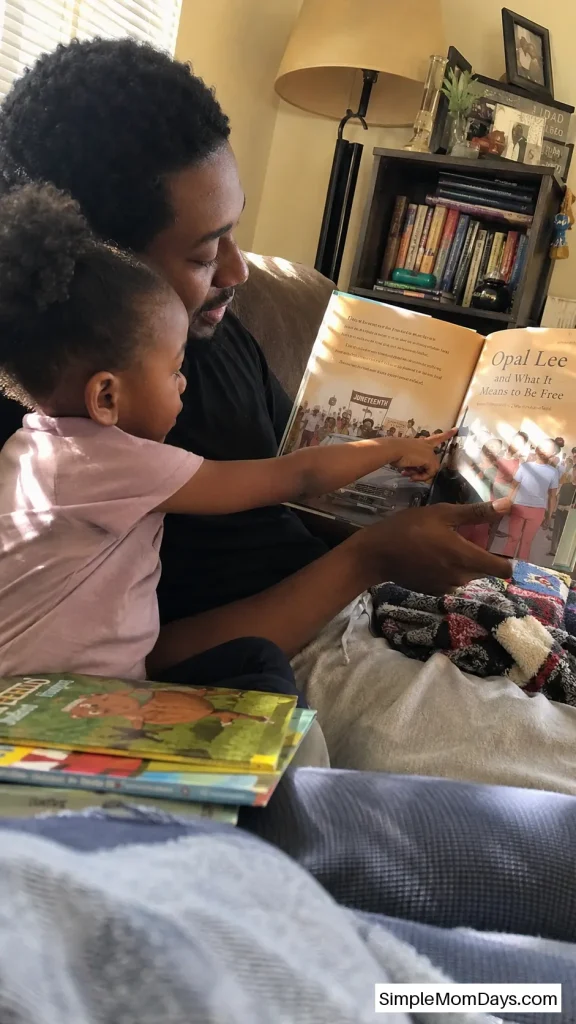
A few picture books do more work than a lecture. All Different Now by Angela Johnson tells Juneteenth through a child’s eyes. Opal Lee and What It Means to Be Free tells the story of the woman who spent decades pushing to make Juneteenth a federal holiday — Opal Lee herself didn’t stop until she was 94.
Read one book aloud. Ask one question afterward: “What surprised you?” Listen to what comes back.
8. Build a Freedom Timeline on the Wall
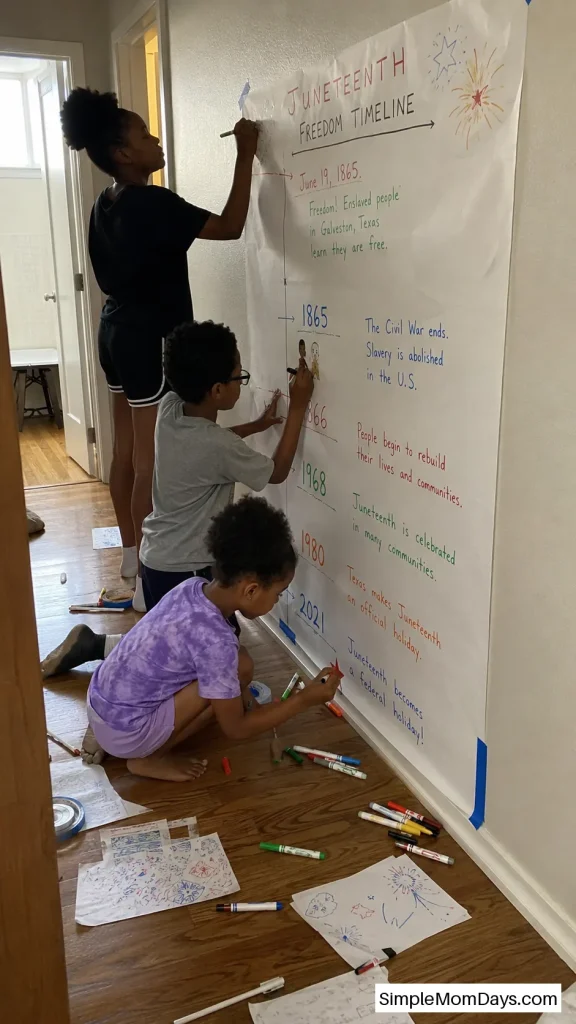
Roll out butcher paper on a long wall or the floor. Give kids markers and a short list of dates. Let them draw, write, and illustrate each moment. The timeline stays up all week — every time they walk past it, they read a piece of history.
- 1619 — First enslaved Africans arrive in Virginia
- 1863 — Emancipation Proclamation signed
- 1865 — Juneteenth
- 1870 — 15th Amendment (right to vote for Black men)
- 1964 — Civil Rights Act
- 2021 — Juneteenth becomes a federal holiday
9. “Freedom Hero” Research Cards
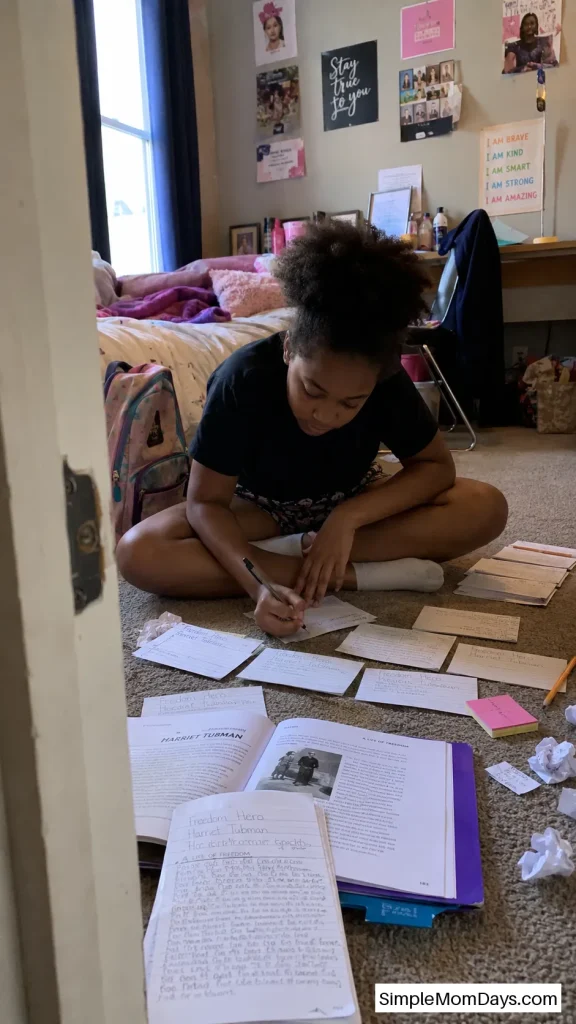
Each kid picks one person from Black American history — Harriet Tubman, Ida B. Wells, Frederick Douglass, John Lewis, Opal Lee. They write three facts on an index card: who the person was, what they did, why it mattered.
Share the cards at dinner. Pin them to a board. By the end of the day, your family has covered eight to ten freedom heroes without anyone sitting through a slide presentation.
10. Design an Award Show on Paper
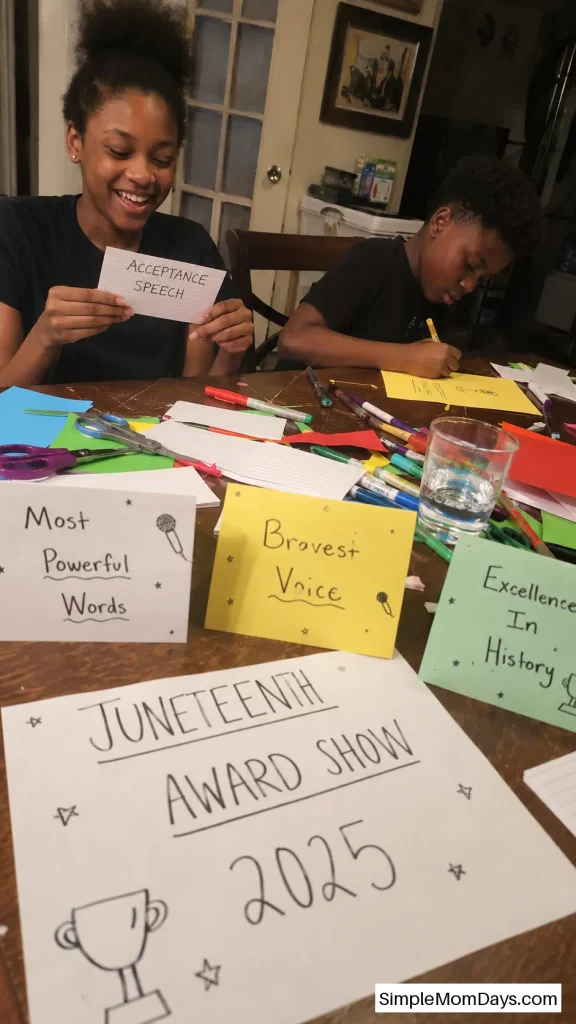
This idea comes from teachers who use it in classrooms, but it works just as well at home. Kids create award categories — “Most Determined,” “Bravest Voice,” “Changed the Most Laws” — and assign historical figures to each one.
Let them write a two-sentence acceptance speech in that person’s voice. A thirteen-year-old writing Frederick Douglass’s acceptance speech for “Most Powerful Words” will spend time actually reading about Douglass to get it right.
Music and Performance Activities
11. Teach Freedom Songs
Sit down with your kids and listen to “Lift Every Voice and Sing” — often called the Black national anthem. Then listen to “We Shall Overcome.” Then pull up something more recent — any song your family connects with from the last few years.
Talk about how music carried people through hard times. Ask kids which song they’d write if they wanted people to feel hopeful. Some will laugh. Some will actually try. Both reactions are fine.
12. Put On a Mini Juneteenth Talent Show
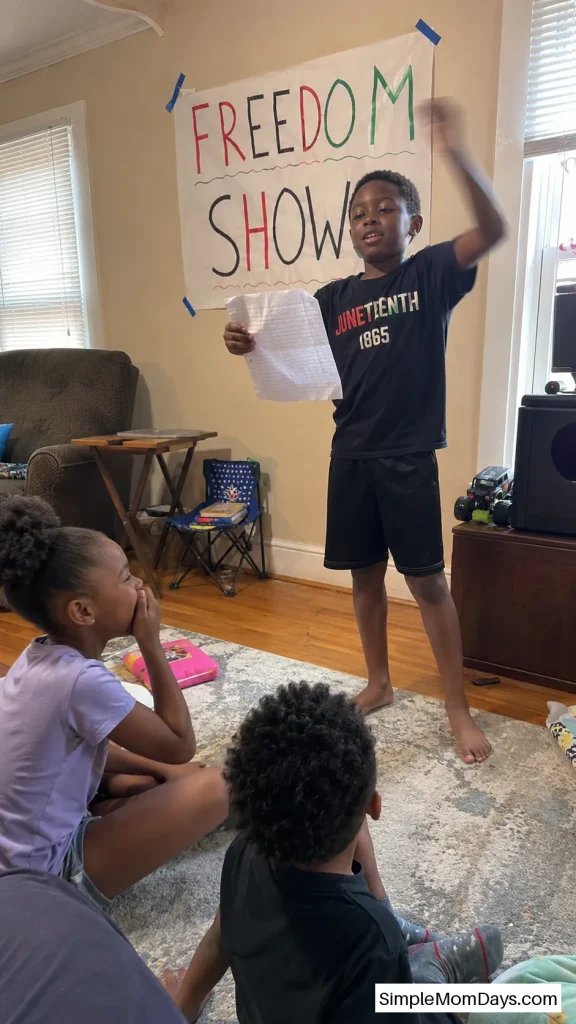
This works great if you have multiple kids or cousins together. Each kid performs something — a poem they wrote, a spoken word piece about freedom, a dance, a song, a dramatic reading from a Juneteenth story.
Give them 30 minutes to prepare. The performances will be chaotic and wonderful. The preparation is where the learning happens.
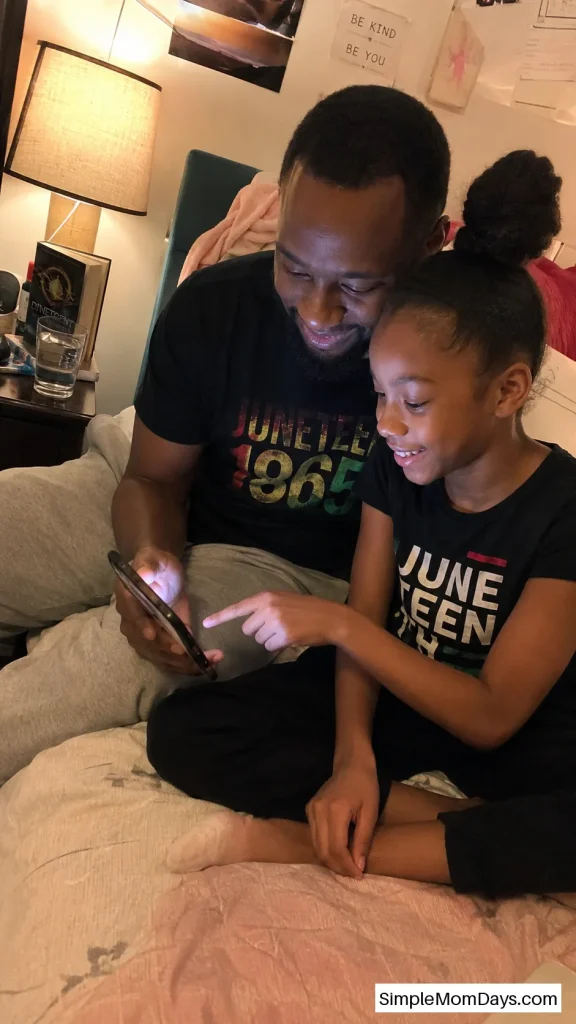
13. Make a Juneteenth Playlist Together
Sit with your kids and build a Juneteenth playlist on whatever streaming platform you use. Let them pick songs that feel like freedom, joy, or strength to them. Mix in older choices — Nina Simone, Sam Cooke, Mahalia Jackson.
By the time the playlist is done, you’ve had a real conversation about music, identity, and what freedom sounds like in different eras.
Community and Outdoor Activities
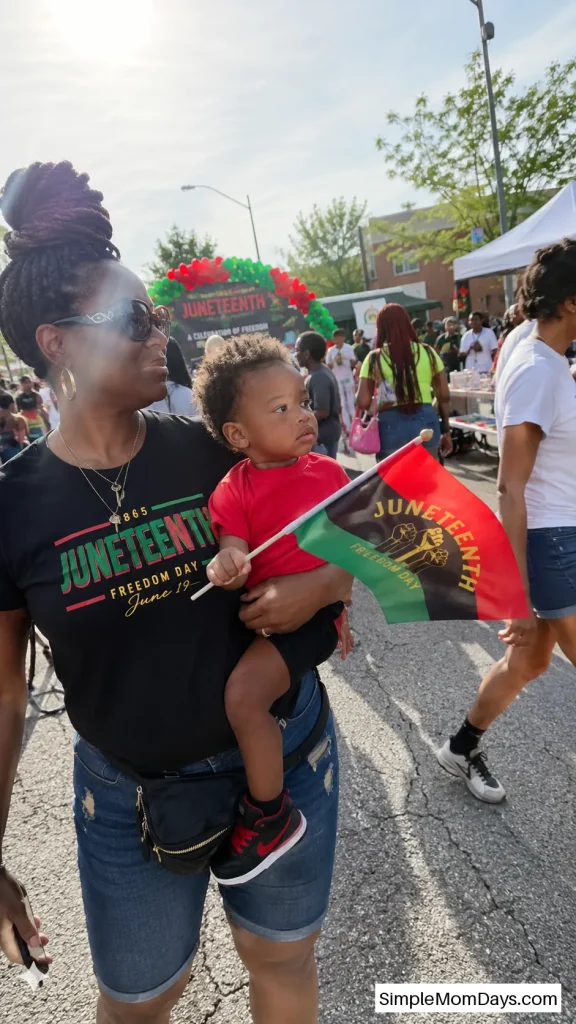
14. Attend a Local Juneteenth Event
Most cities now host community Juneteenth events in June — festivals, parades, cultural fairs. Search your city’s parks department or local Black cultural organizations. Many of these are free.
Kids who see Juneteenth celebrated publicly, loudly, and joyfully — with music and food and community — get a different understanding than one they’d get from a book alone. Both matter. The community event makes it real.
15. Start a Neighborhood Freedom Walk
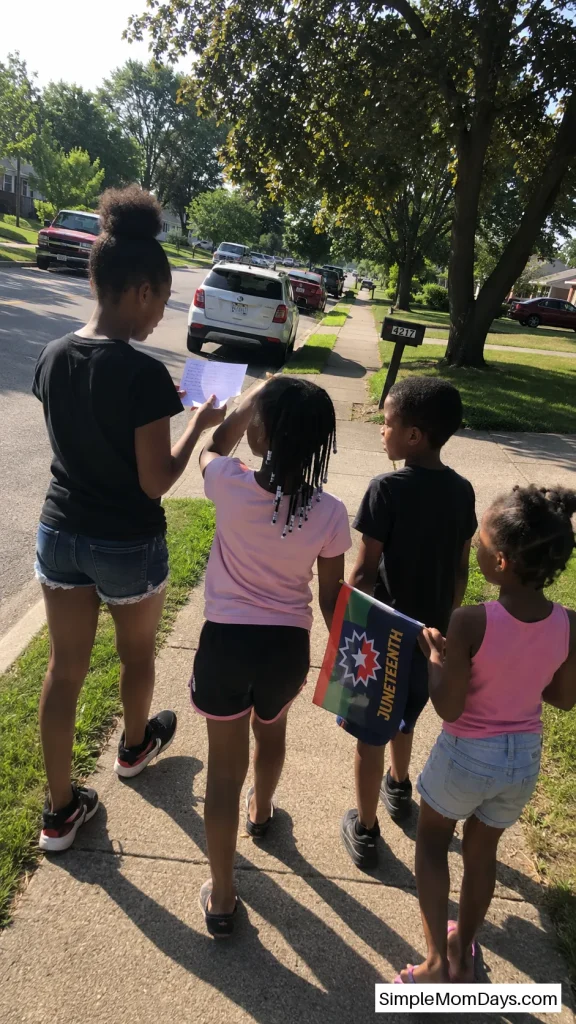
Map out a walking route in your neighborhood and pause at three spots. At each stop, one kid reads aloud one fact about Juneteenth history. End the walk at a park or ice cream shop.
It sounds simple because it is. A ten-minute walk with three reading stops gives kids two things at once: fresh air and history they actually spoke aloud.
16. Plant a Freedom Garden
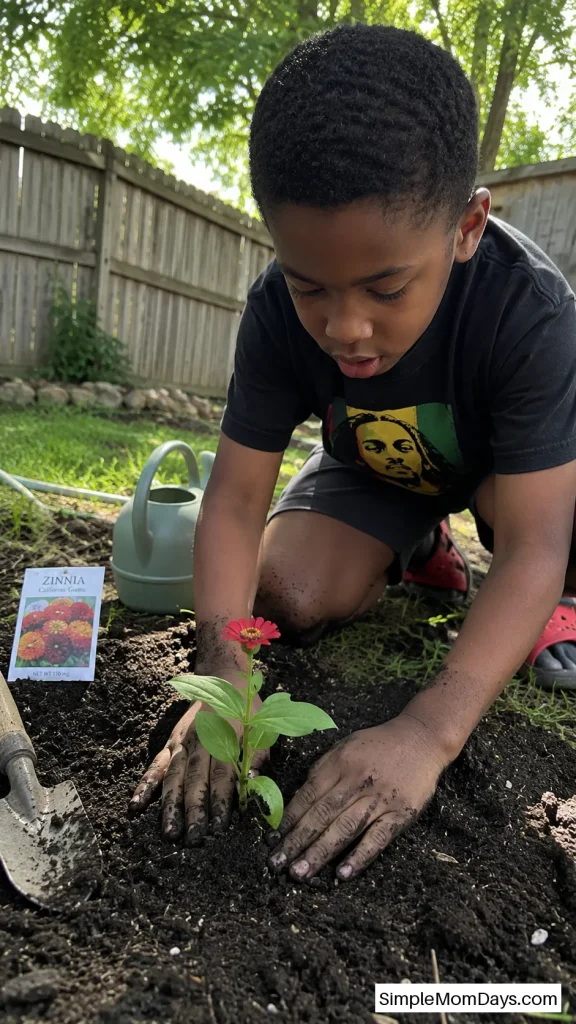
Buy seeds for red flowers — red zinnias, red salvia, red geraniums. Let kids plant them in pots or a small garden bed on Juneteenth. Water them through the summer.
When the flowers bloom in July and August, the kids remember why they planted them. You can even put a small card in the pot that says what the red symbolizes.
Creative and Storytelling Activities
17. Write a Juneteenth Journal Entry from 1865
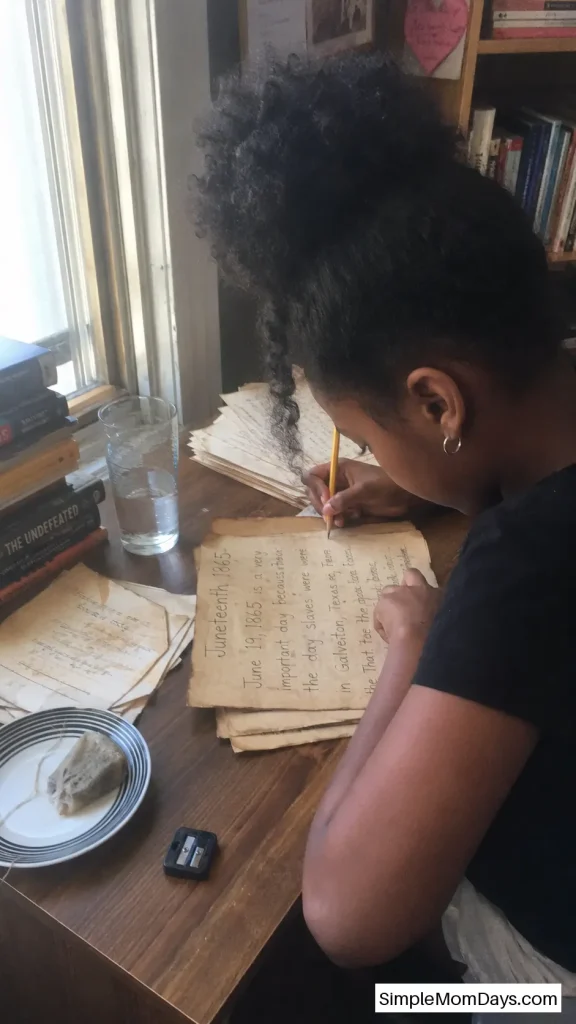
Give each kid a piece of paper aged with a wet tea bag and let it dry. Then ask them to write a journal entry from the perspective of someone in Galveston, Texas on June 19, 1865 — hearing the news for the first time.
What did they feel? What did they do first? Who did they tell? This puts kids inside the story instead of outside it.
18. Create a Family Freedom Book
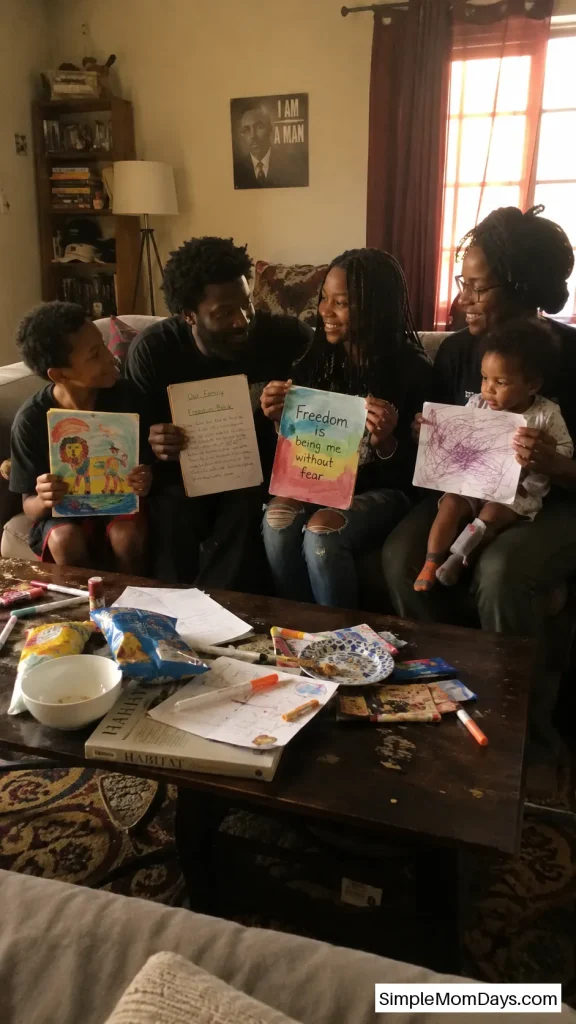
Give every family member — including adults — one page. Each person illustrates and writes what freedom means to them personally. Staple the pages together into a family book.
Read it aloud together. Put it somewhere visible. Bring it out every Juneteenth and add new pages as the kids grow and their answers change.
19. Record an Oral History Interview
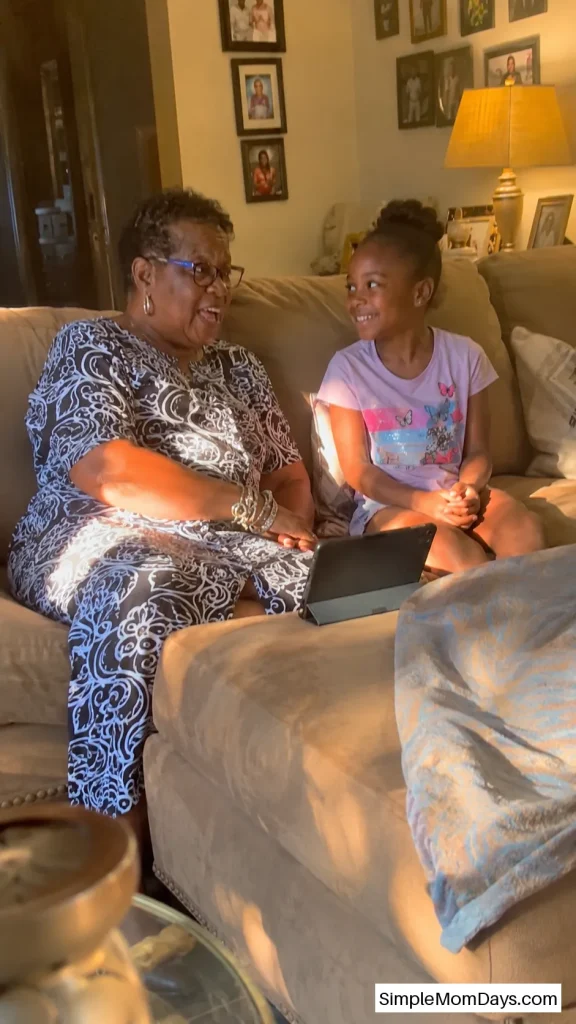
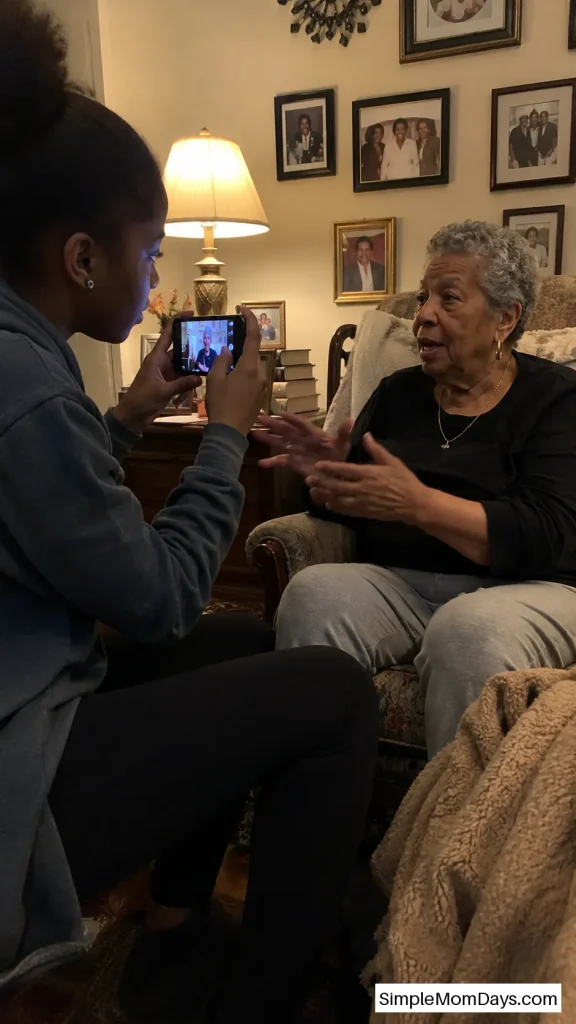
If there are older relatives in your family — grandparents, great-aunts, great-uncles — have kids interview them on video. Ask questions like: “What do you remember about civil rights growing up?” or “What does Juneteenth mean to your generation?”
Store the video somewhere safe. That footage becomes a family document. Kids who record those conversations at ten years old will watch them at thirty and understand something about their family that can’t be found in any book.
20. Build a Juneteenth Sensory Bin for Toddlers
Fill a shallow bin with red and black beans, small plastic stars, and pieces of red, black, and green fabric. Let toddlers dig through it with their hands.
Add small flags and toy figures. Narrate what they’re touching: “That’s a red star — it means hope.” Sensory play at age two builds associations that stay. You’re not teaching history yet. You’re building a foundation.

Wrapping Up the Day with Intention
21. Do a Gratitude Circle at Sunset
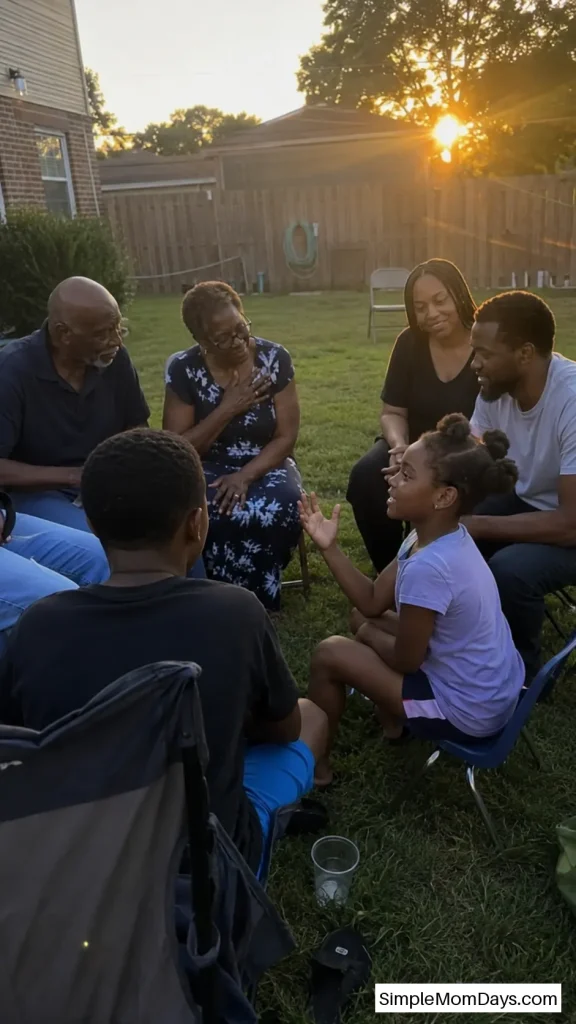
As the day winds down, sit in a circle — family, friends, whoever’s there. Go around and have each person finish one sentence: “Today I’m grateful for my freedom to ____.”
Kids say things like “play outside” and “go to school” and “eat whatever I want.” Those answers are right. That’s the point. Freedom is in the ordinary things. When you say it out loud, you remember it.
A Few Things Worth Keeping in Mind
Not every idea on this list fits every family. Some of you have a house full of toddlers. Some have teenagers who need a different kind of engagement. Pick three to five ideas that fit your kids’ ages and your family’s energy.
The goal isn’t to cover all 21. The goal is to make June 19th feel different from any other Thursday in June. Cook something red. Read one book. Ask one good question. That’s enough to start. The more you do it every year, the more your kids carry it forward — not because you told them to, but because it became part of how they grew up.
That’s what a real tradition looks like.