
This post contains Amazon affiliate links. As an Amazon Associate, I earn from qualifying purchases at no extra cost to you. I only recommend products I'd genuinely suggest to a friend.
The first year I volunteered to decorate our school’s third-grade hallway, I showed up with four bags of cobwebs, a staple gun, and absolutely no idea that hanging anything from a ceiling tile is a code violation in most districts. A very patient custodian named Ray explained this to me at 7:15 in the morning while I stood on a folding chair.
So here’s the thing nobody tells you on Pinterest: school hallways have rules. Most corridors cap paper decorations at 10 to 20 percent of the wall surface if the building isn’t sprinklered. Nothing goes on ceiling tiles, sprinkler heads, or exit signs. Nothing within 36 inches of a door frame. And the walls are usually painted cinder block, which laughs at Scotch tape.
These 23 ideas work inside those limits. Some are floor-based, some hang from string lines instead of tiles, some use the windows nobody thinks about. All of them survive a fire inspection and a week of sixth graders brushing past them.
⚡ IN A HURRY?
Quick Picks for Hallway Decorating Day
Short on time? These are the essentials worth grabbing — everything else in the post is inspiration, but start here.
- Mavalus Tape — the one adhesive that actually grips painted cinder block and still peels off without taking the paint with it.
- Halloween Window Clings — go on glass instead of walls, so they don’t count against your paper coverage limit at all.
- Black Light LED Bars — the fastest way to transform a corridor, since lighting changes everything and adds zero combustible material.
- Flame-Retardant Crepe Paper — read the label, buy the treated kind, and your streamers stop being the thing that gets your display taken down.
- Fluorescent Poster Board — glows hard under black light and cuts into any shape a class of kids can trace.
- Heavy-Duty Velcro Strips — leave one half on the wall all season and swap displays out in seconds instead of re-taping everything.
Start With Light, Not Paper
Lighting does more per dollar than anything you can staple up, and it doesn’t touch your coverage percentage. These three ideas change the whole feel of a corridor before you’ve hung a single sheet.
1. Black Light the Whole Corridor
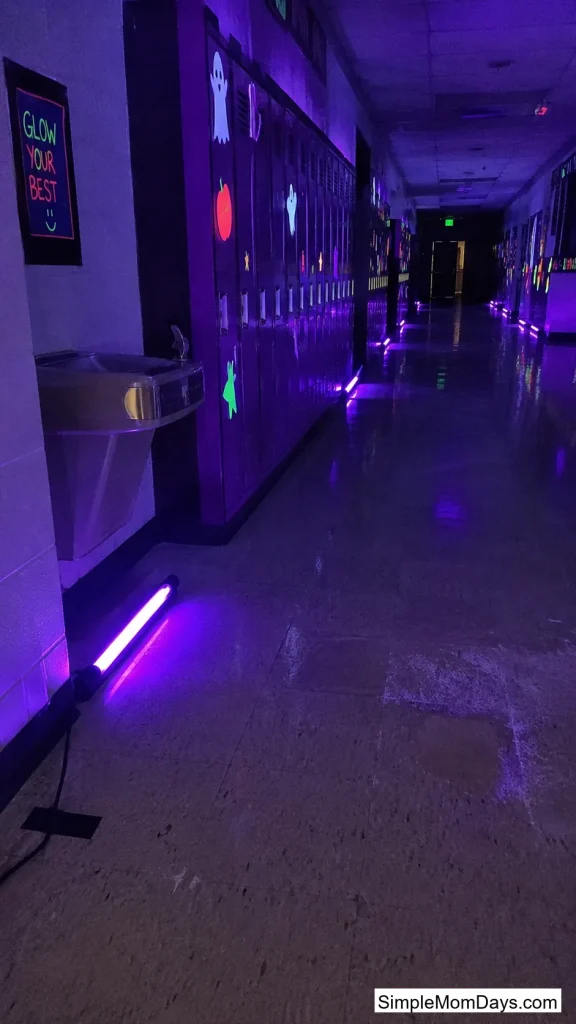
Plug LED black light bars into existing outlets every fifteen feet or so and turn off the overheads for the party or the trunk-or-treat night. Anything white or neon in the hallway lights up like it’s radioactive. Kids’ shoelaces glow. Their teeth glow.
The reason this beats a wall of decorations: you’re changing the entire space, not one section of it. A hallway with six posters is a hallway with six posters. A hallway under black light is a different building.
Tape the cords down along the baseboard with gaffer tape, not across the walking path. Bars run around $15 each and you’ll want three or four for a standard corridor.
2. Green Gel Over the Exit Sign Glow
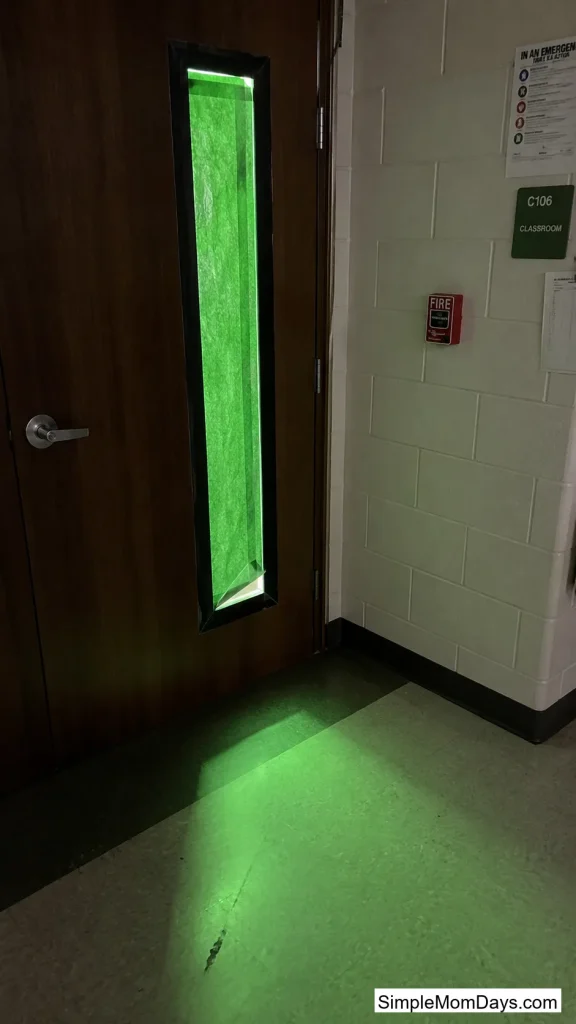
You can’t cover an exit sign, and you shouldn’t. But the light spilling from a bank of windows or a door glass panel is fair game — tape theatrical color gel to the inside of the glass and the whole corridor takes on a sick green wash.
A sheet of gel runs a couple dollars at any stage supply shop, and it’s the single cheapest way to make a fluorescent-lit school hall look like a laboratory that’s gone wrong.
3. Flashlight Shadow Puppets on the End Wall
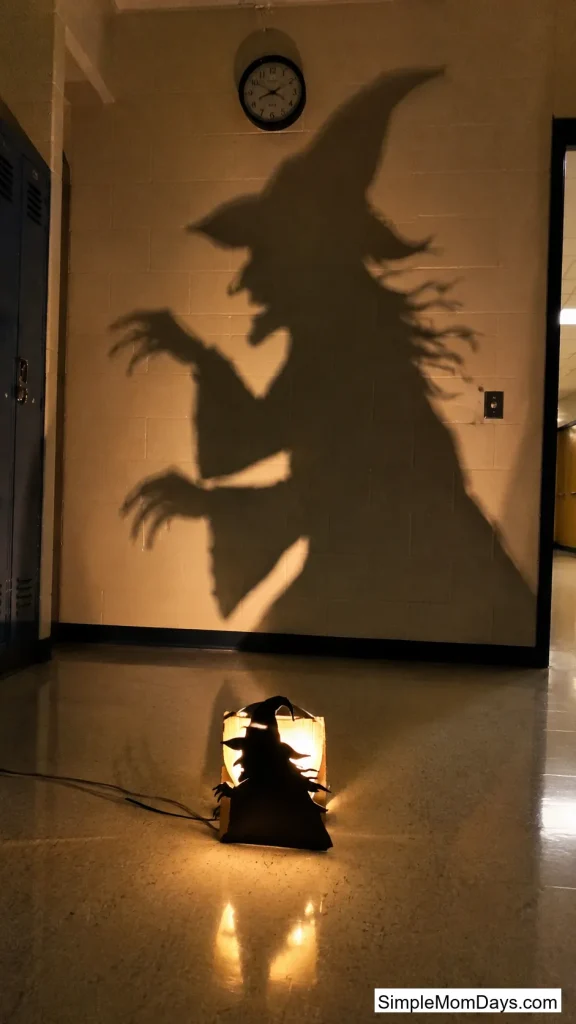
Set a clip lamp on the floor at one end of the hall, aimed at a bare wall, and stick cardboard cutouts of bats or a witch’s silhouette in front of it. The shadow projects six feet tall.
What makes this work in a school specifically is that the cutout is nowhere near the wall it’s decorating. Nothing’s attached to anything. The shadow does all the work, and a shadow has never violated a fire code.
Use the Floor — Nobody Else Does
Every decorating guide fights over wall space while the biggest surface in the hallway sits empty. Floor decor doesn’t count toward wall coverage, and kids interact with it constantly.
4. A Painter’s Tape Spiderweb in the Corner
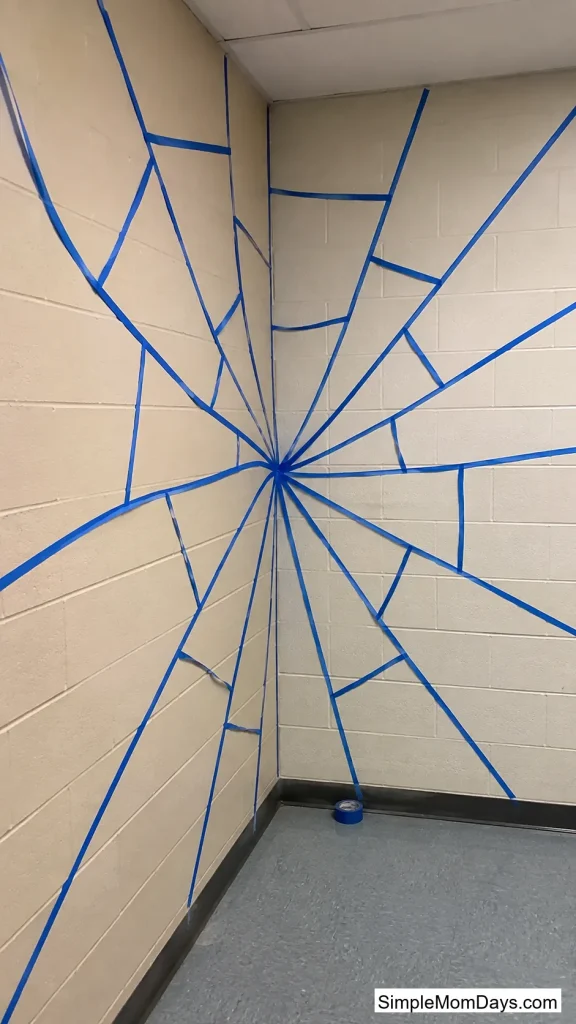
Run strips of blue painter’s tape from the floor up the corner where two walls meet, radiating out like a web, then connect them with shorter cross strips. It takes about twenty minutes and a single roll.
It reads as a giant web from thirty feet away, it costs under $6, and it comes off clean in November. One of the few decorations that genuinely improves the more sloppily you do it.
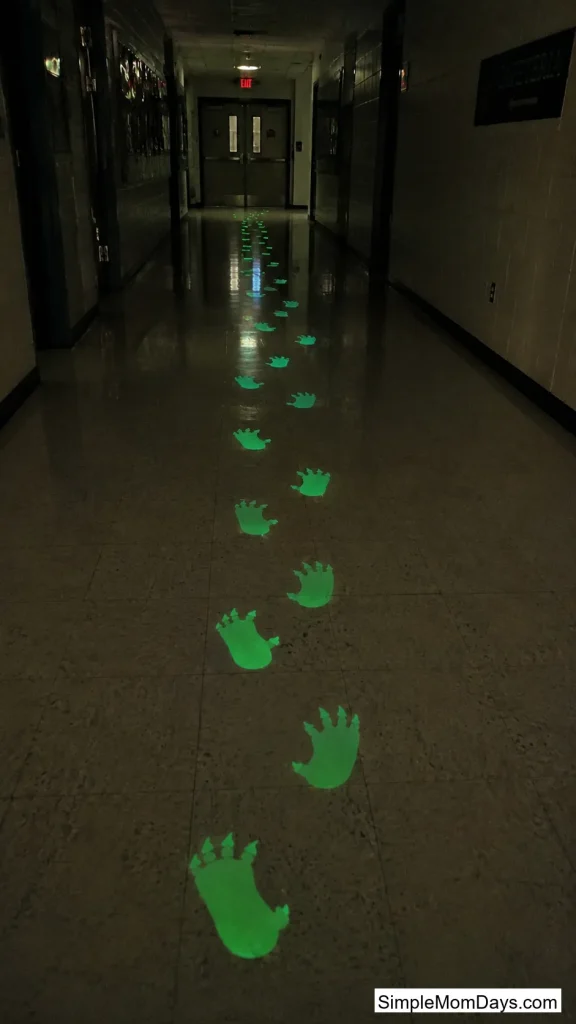
5. Glow Tape Footprints Leading to the Cafeteria
Cut monster footprints from glow-in-the-dark tape and stick them down the center of the hall in a wandering path. Under normal lights they’re barely there. Under black light or after the lights drop, they’re a trail.
Little kids will follow them without being asked. That’s the whole appeal — it’s a decoration that also moves traffic where you want it during a busy event night.
6. Pumpkin Patch Along the Baseboard
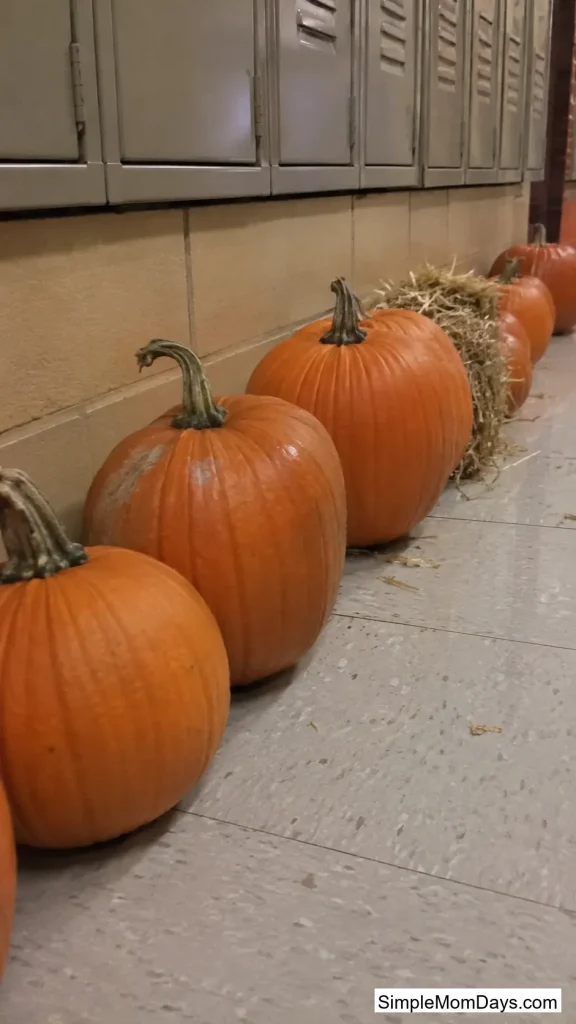
Line real or foam pumpkins in a row against the wall at floor level, tucked in tight so nothing sticks into the walking lane. Add a few bales of straw if your custodian is feeling generous.
Real pumpkins are the move here — they cost a dollar or two each at a farm stand, they smell right, and no fire code on earth restricts a gourd. Just plan for who’s hauling them out.
7. A Tape Hopscotch With Bats
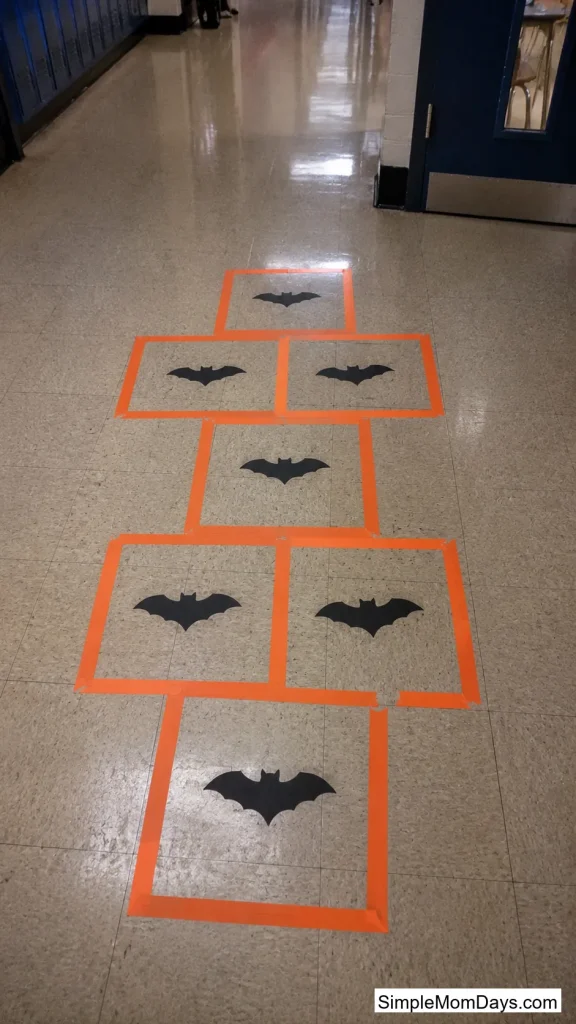
Lay out a hopscotch grid in orange tape and put a bat or spider cutout in each square instead of numbers. Elementary hallways with a line of kids waiting to walk to lunch will use it constantly.
Cheap, sturdy, and it gives the antsy kids something to do while their class lines up. Teachers will thank you more for this one than for anything on the wall.
Windows Are Free Real Estate
Classroom door glass, interior windows, display cases — glass isn’t wall, and it’s the loophole every decorating committee forgets. Check your school’s window rules first, since some limit coverage for visibility reasons.
8. Window Cling Ghost Migration
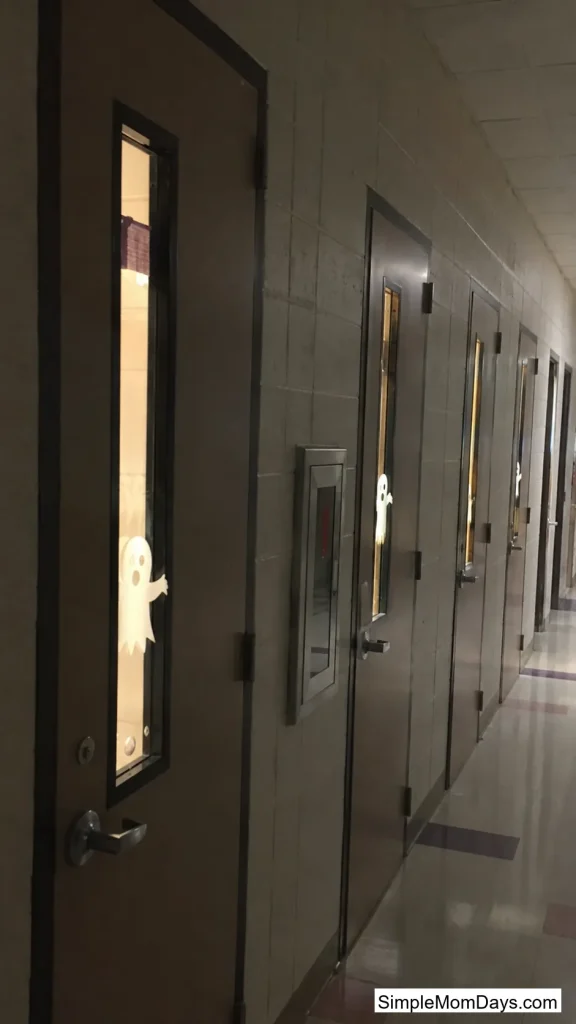
Stick the same ghost cling on every door window down the length of the hall, each one turned a slightly different direction, like they’re drifting somewhere as a group.
Repetition across a long corridor does something a single big display can’t. A kid walking to the nurse’s office passes eleven ghosts, all going the same way. It’s a little unsettling in the best way, and it takes ten minutes.
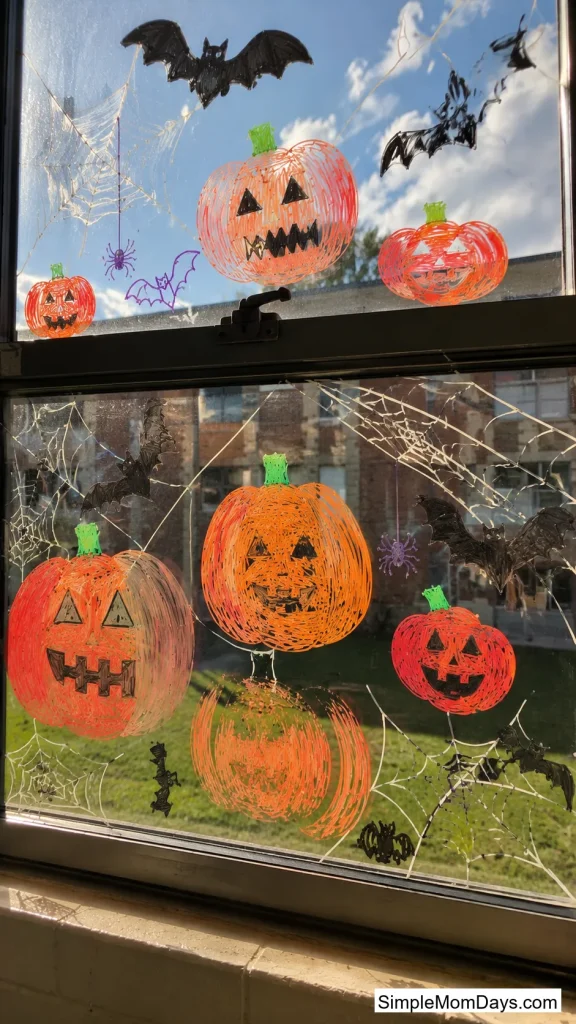
9. Liquid Chalk Marker Stained Glass
Hand a set of liquid chalk markers to a class and let them draw directly on interior window glass — pumpkins, webs, bats, whatever. Wipes off with a damp cloth.
The chaos is the point. Twenty-eight kids drawing on windows produces something no adult would design, and the drawings are always the thing parents photograph.
10. Silhouettes in the Trophy Case
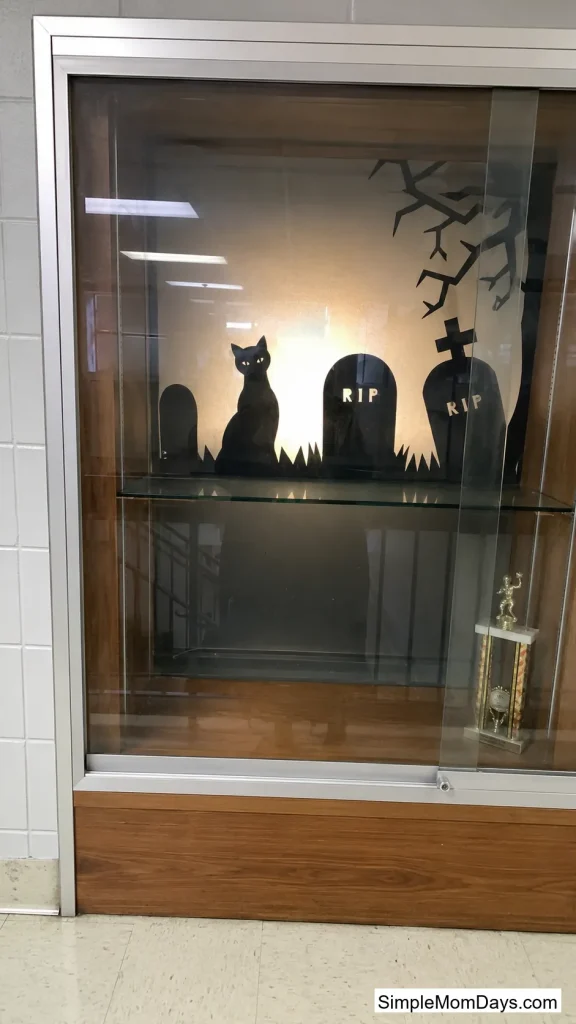
If your hallway has a display case, black paper cutouts against the back panel with a single light source behind them make a shadow-box scene. A haunted skyline, a row of headstones, a lone cat.
The case is already enclosed and already there. You’re not attaching anything to a wall, and the glass keeps 400 kids from touching it.
Hang It Without Touching the Ceiling
Ceiling tiles, sprinkler pipes, and light fixtures are all off limits, which kills the classic “bats hanging from above” look. Here’s how to get the same effect legally.
11. A Fishing Line Run Between Existing Anchors
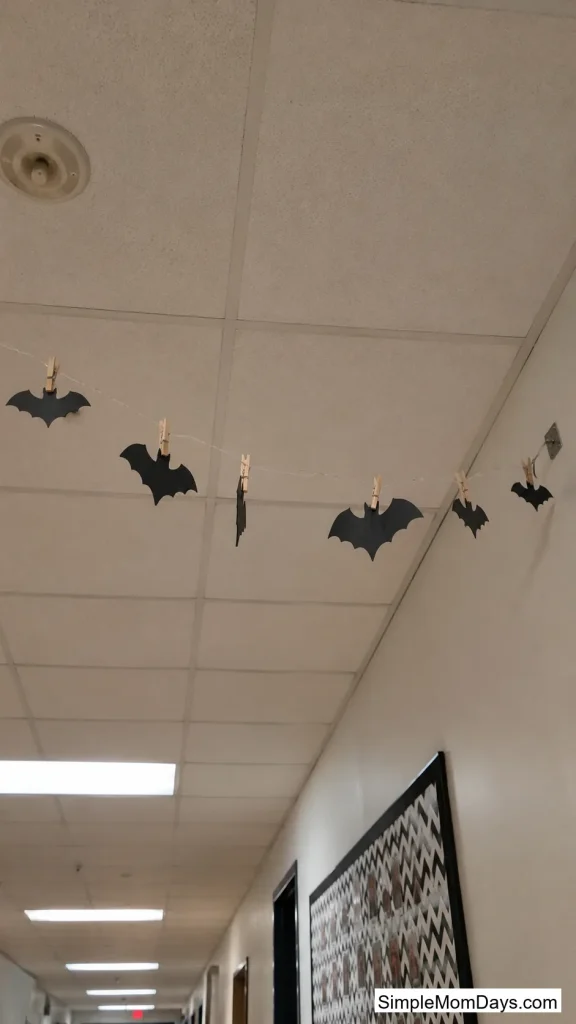
String clear fishing line wall-to-wall at the top of a corridor, tied to existing hardware — a bracket, a window frame, an anchor that’s already installed. Clip lightweight cutouts along it with mini clothespins.
Ask your custodian to point out which anchors are load-bearing and approved. Ray showed me two in our hallway I’d never noticed in three years. This is the workaround that makes overhead decor possible at all, so it’s worth the conversation.
12. Bats Climbing Up, Not Hanging Down
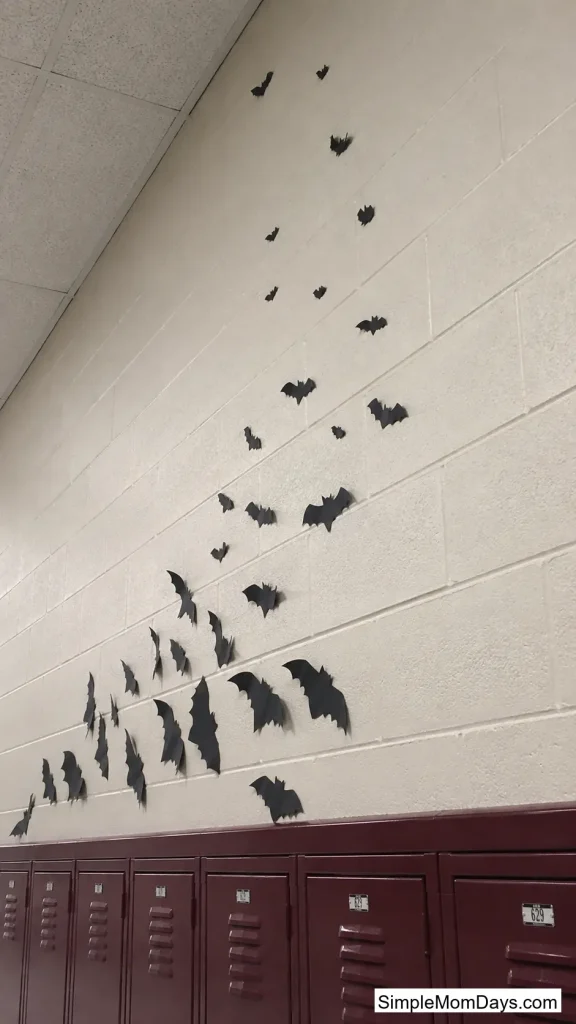
Flip the whole idea. Instead of bats descending from above, run a swarm of black cutouts up the wall diagonally, biggest at the bottom, shrinking toward the ceiling as if they’re flying off.
Scattered placement also spreads out your paper coverage, which is exactly what corridor codes want — most rules specifically prohibit concentrating material in one dense block.
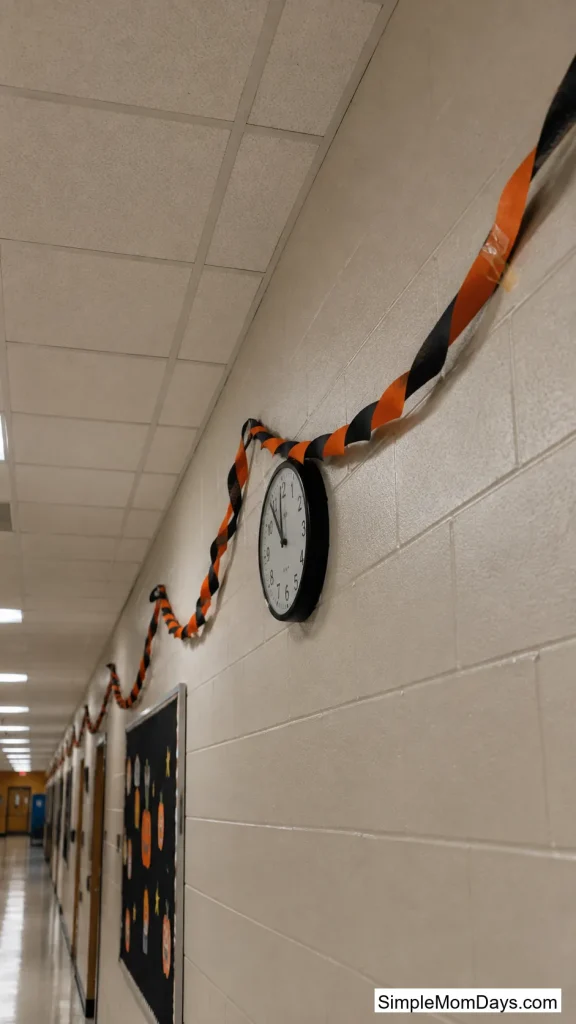
13. Crepe Paper Draped Along the Wall Line
Twist flame-retardant crepe streamers and run them horizontally along the wall just below ceiling height, secured with Mavalus tape every few feet, dipping slightly between anchor points.
You get the swoop and movement of overhead streamers while everything stays on the wall where it’s allowed. Buy the treated kind and check the label — regular party-store crepe is exactly what gets displays pulled down.
Let the Kids Make It
Student-made decor is cheaper, more interesting to look at, and turns the hallway into something families actually stop and study on conference night.
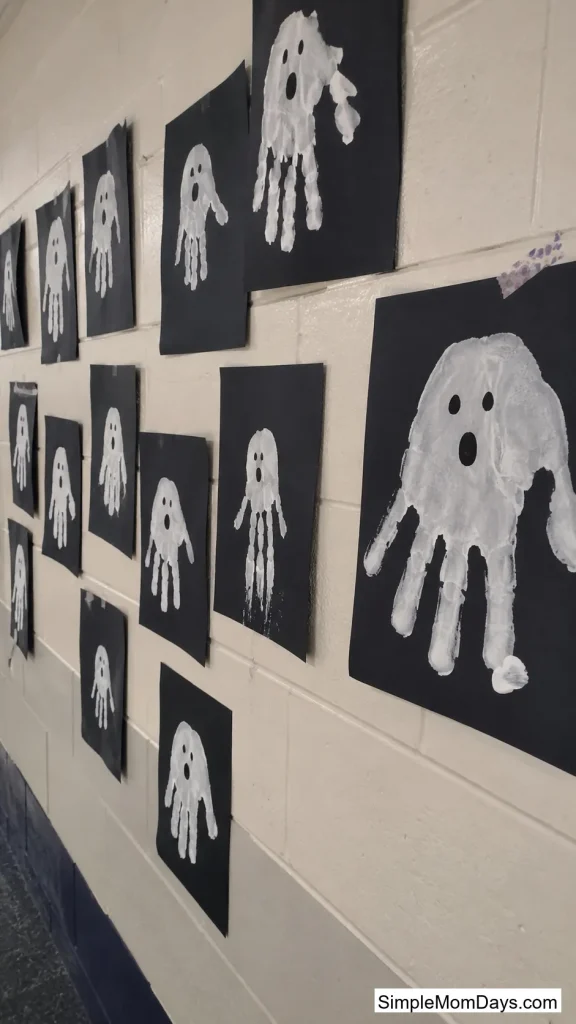
14. A Handprint Ghost Gallery
White paint, black paper, one handprint per kid, fingers pointing down so the palm becomes a ghost’s head and the fingers become the wavy bottom. Two dot eyes and a mouth.
Every parent finds their kid’s hand. Every single one. It’s the same reason handprint turkeys never die — the decoration is a snapshot of how big their child was in October of that year.
15. Monster Portrait Wall
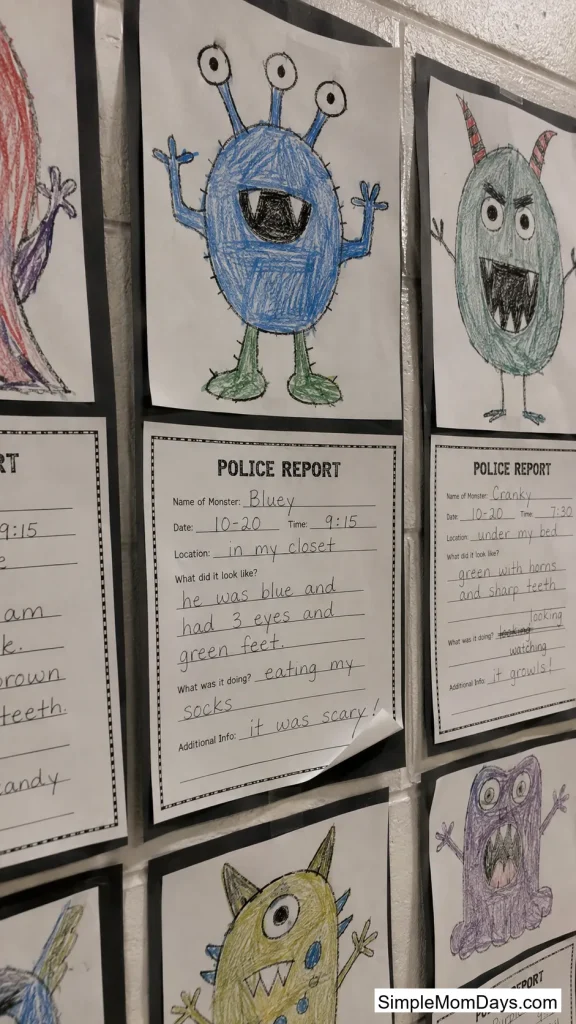
Each student draws a monster and writes a two-sentence “police report” describing it: where it was last seen, what it eats, why it’s wanted. Post both together.
The writing is what makes people stop. Adults skim decorations but they will absolutely read a third grader’s report explaining that her monster is wanted for stealing all the left shoes.
16. Fluorescent Cut-Out Constellation
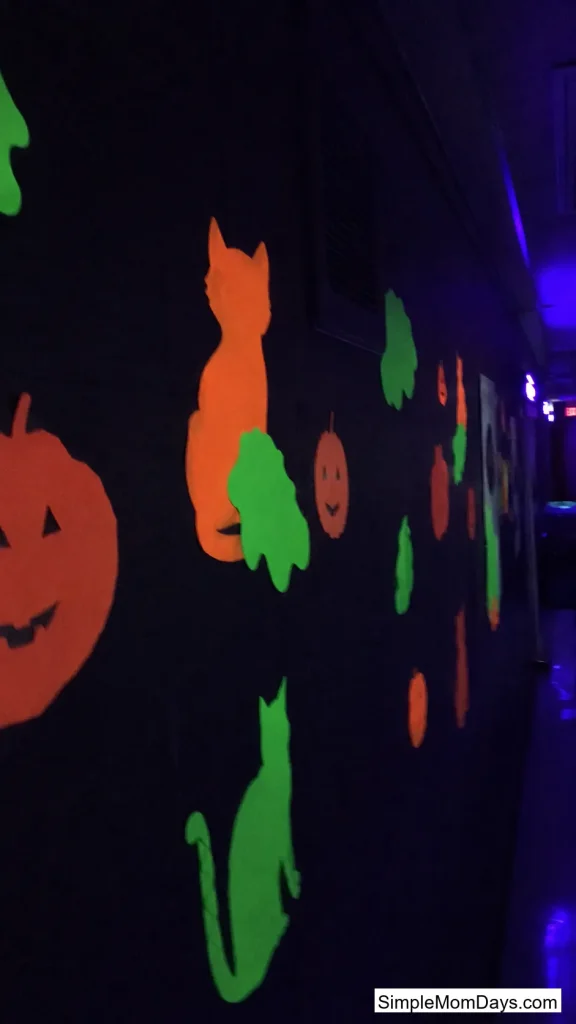
Give each class a stack of neon poster board and have them cut freehand shapes — pumpkins, cats, blobs, whatever they land on. Scatter them at varying heights along the hall.
They glow under black light, so this pairs directly with idea #1. A hallway of kid-cut shapes lit up in neon looks intentional in a way that a bought decoration never quite does.
17. The Paper Chain Snake
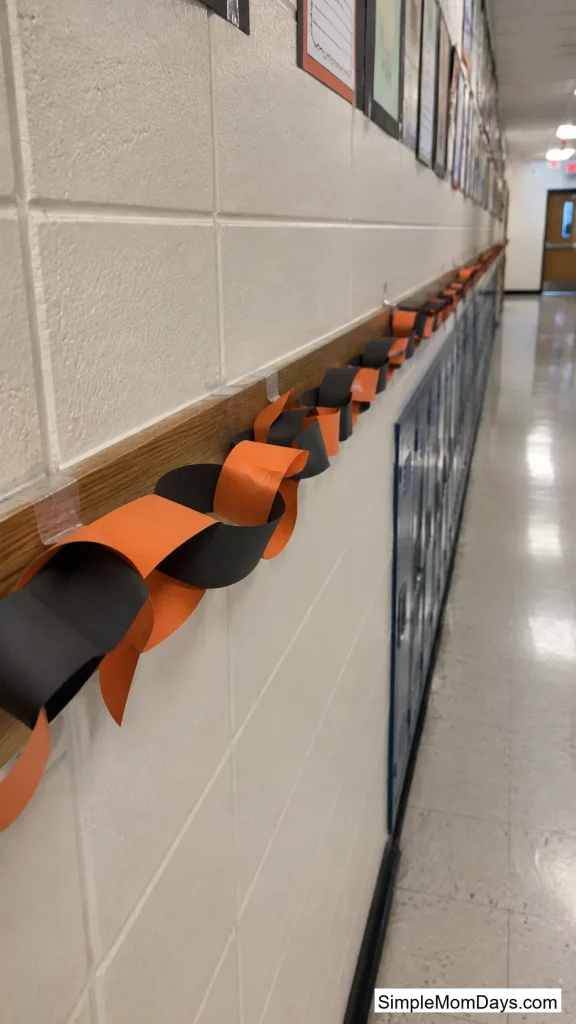
Standard construction paper chain in orange and black, but built by every class contributing a section, then run along the wall at chair-rail height for the entire corridor length.
Kindergarteners do the loops badly. Fifth graders do them precisely. You can see the grade change as you walk, which nobody plans but everybody notices.
Themes Worth Stealing
A theme gives volunteers a decision framework so you’re not debating every choice. These four hold up better than a generic spooky pile.
18. Cereal Box Monster Mash
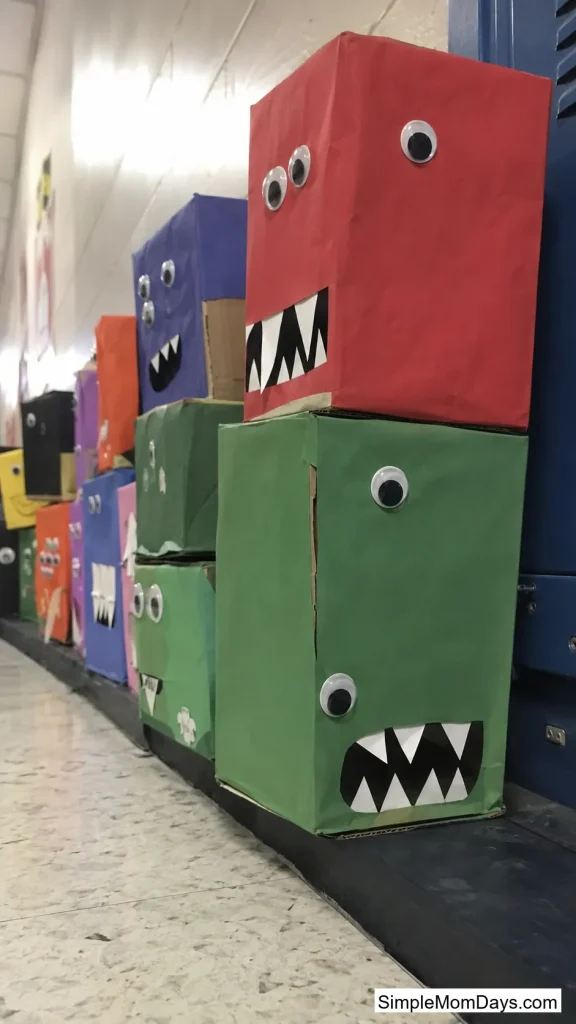
Ask families to send in empty cereal boxes, then cover each in paper and turn it into a monster with googly eyes and teeth. Stack them into a wall along the base of the hallway.
Costs nothing, uses trash, and the boxes stack into a genuinely tall structure. Recycling day handles teardown.
19. Book Character Costume Wall
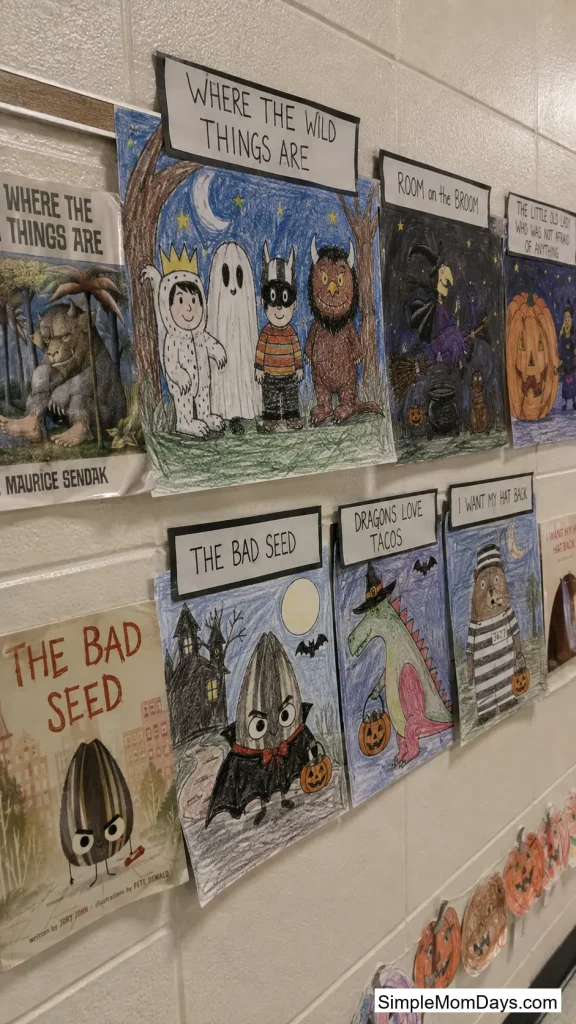
Every class picks a book and posts a scene from it with characters in Halloween costume. Ties the display to reading, which matters if your district is skittish about Halloween as a holiday.
This is the one that gets approved when “Halloween” itself is a problem. It’s a literacy display that happens to have a witch in it.
20. Nightmare Before Christmas Corridor
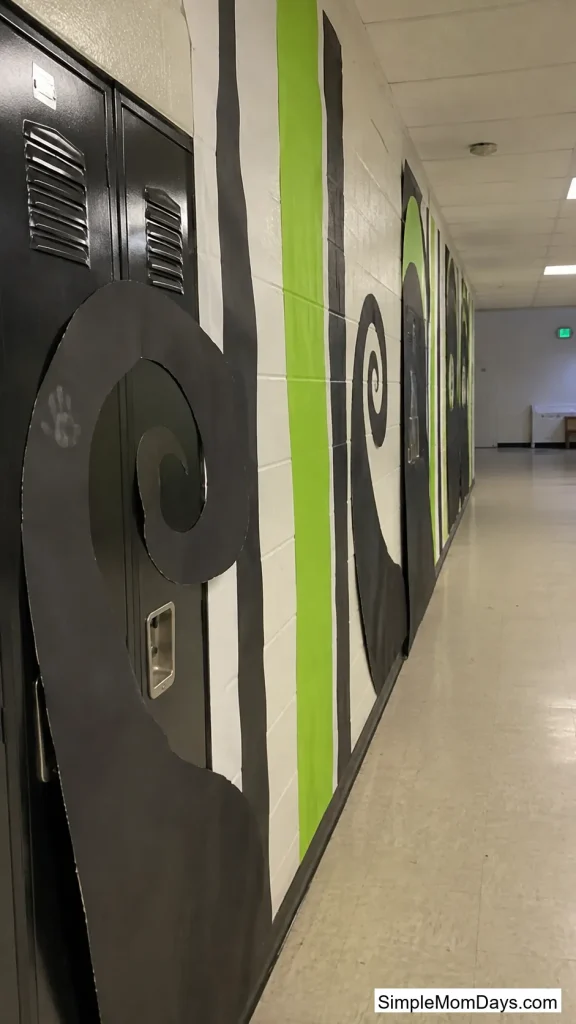
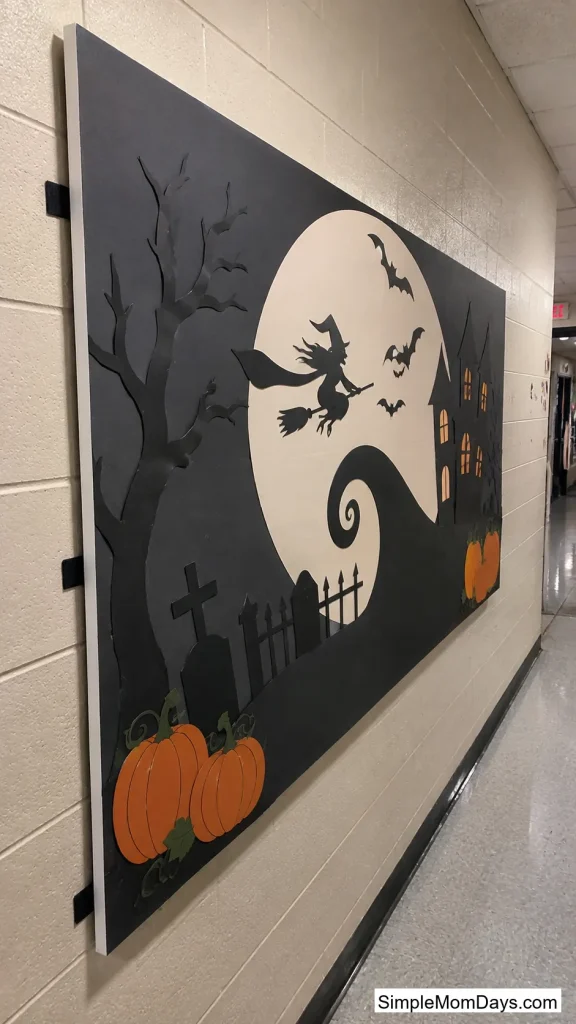
Curly spiral hills, thin striped shapes, black and white with acid green accents. The color palette is what carries it — you don’t need any of the actual characters.
Everything in that visual language is made of simple angular cutouts, so a parent volunteer with a box cutter and an hour can produce most of it.
21. Under the Sea, But Wrong
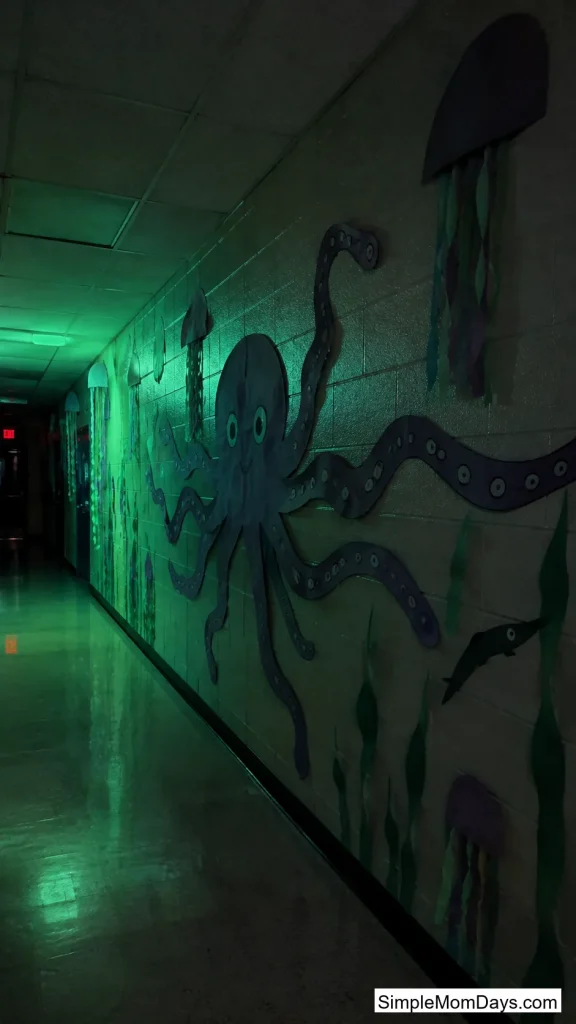
Jellyfish, eels, and an octopus in murky greens and purples, lit low. Nobody does aquatic Halloween, which is precisely why it works.
Skip the shipwreck cliché. What sells it is the lighting — dim, greenish, slightly moving if you can rig a fan. The hallway feels submerged before anyone identifies why.
The Stuff That Saves You on Decorating Day
Two practical ideas that aren’t decorations at all, plus the thing to do before you buy anything.
22. Build It on Panels, Not on the Wall
Assemble your display on large sheets of poster board or foam board at home, then mount the finished panels with Velcro strips. Four anchor points per panel.
You decorate in your living room instead of on a folding chair at 7 a.m., the panels come down in one piece, and next year you unfold them from a closet instead of starting over. This one change is the difference between a two-hour install and a two-day ordeal.
23. Walk the Hall With Your Custodian First
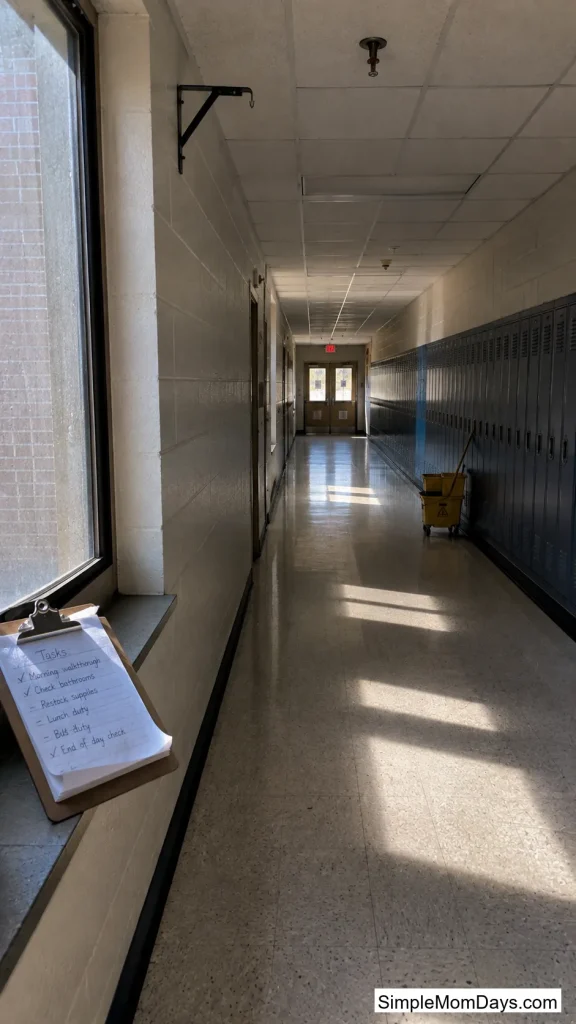
Before buying anything, walk the corridor with whoever maintains it. Ask what percentage coverage your building allows, whether it’s sprinklered, which anchors are usable, and what got flagged last year.
Fifteen minutes here saves the entire project. A sprinklered building may allow up to 50 percent wall coverage; a non-sprinklered corridor might cap you at 10. That’s not a small difference — it’s the difference between the display you planned and the display you’re allowed to have.
Final Thoughts
The hallways that work aren’t the ones with the most stuff. They’re the ones where the lighting changed, the kids made half of it, and nothing had to come down mid-week because someone taped a ghost to a sprinkler pipe.
Start with the custodian walk, buy the right tape, and build on panels you can reuse. Everything after that is just cutting shapes.