
Kwanzaa runs from December 26 to January 1, right when the toys are out of their boxes and everyone is a little restless. A few hands-on projects give those seven days a shape kids can follow.
Dr. Maulana Karenga created the holiday in 1966 to celebrate African American family, community and culture. Each day centers on one of seven principles, called the Nguzo Saba.
Whether your family has celebrated for years or your kids are learning about it for the first time, start with one or two ideas below. Nobody needs to do all 25.
Crafts for the Kwanzaa Table
The table holds the holiday’s main symbols, and children can make several of them. These five are good to finish before December 26.
1. Woven Grocery Bag Mkeka
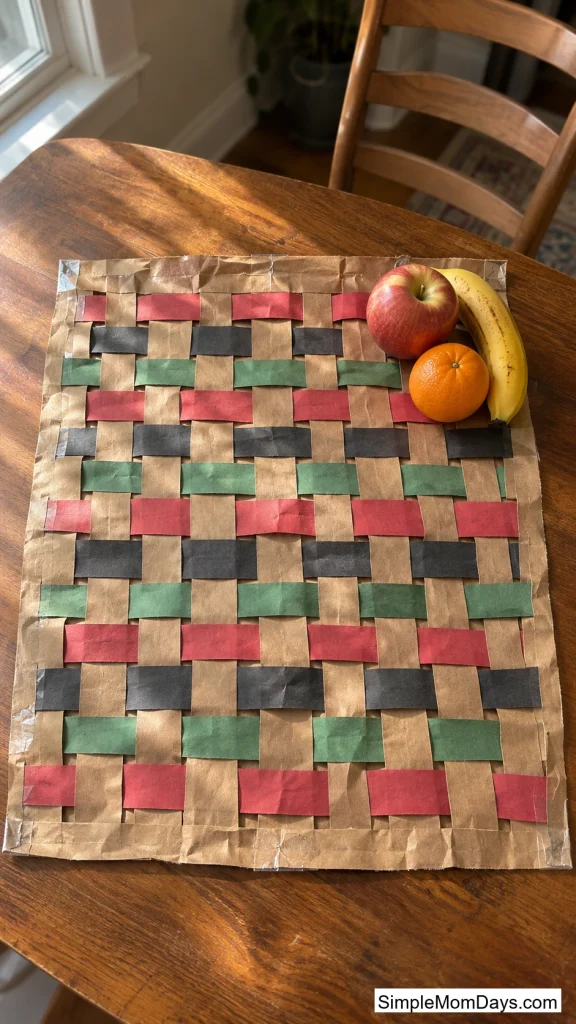
The mkeka is the mat that everything else sits on, and it stands for tradition and history. A brown grocery bag turns into a sturdy one.
Cut the bag flat, slit it every inch while leaving a border, then weave in strips of red, black and green paper. Tape the strip ends on the back.
Kids can write one family memory on each strip before weaving it in. Next year you can unroll the mat and read them again.
2. Cardboard Tube Kinara With Paper Flames
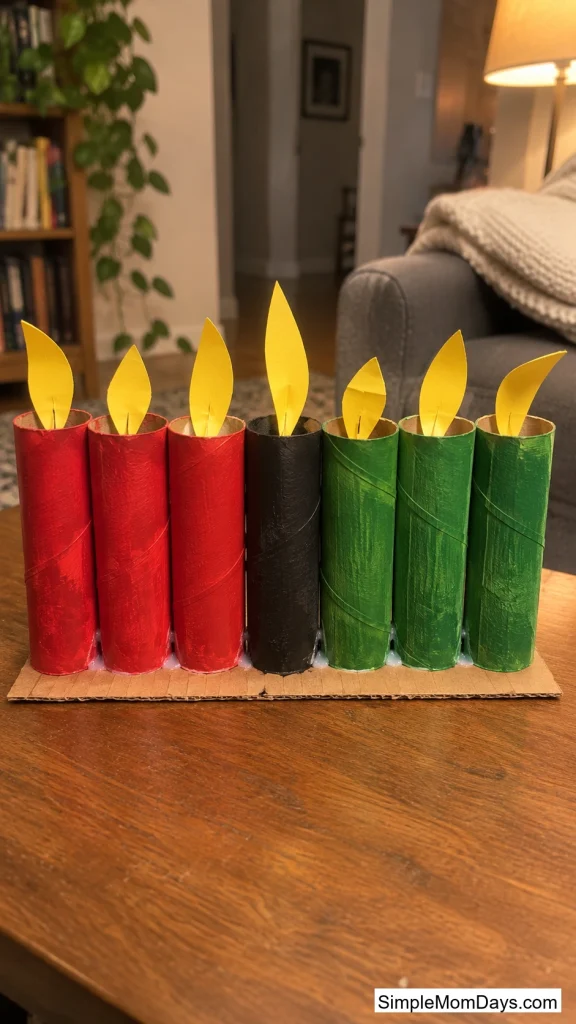
Seven toilet paper rolls glued to a strip of cardboard make a kinara that little hands can use safely. Paint one tube black, three red and three green.
The black candle goes in the middle, red ones on the left and green ones on the right. Make seven yellow paper flames that slide into a slit at the top of each tube.
Each evening a child adds one flame, starting with black and then alternating red and green from the outer edges inward. There’s no fire, so even a two-year-old can take a turn.
Save the tubes in a shoebox afterward. The flames are the only part that usually needs replacing.
3. Salt Dough Handprint Kinara
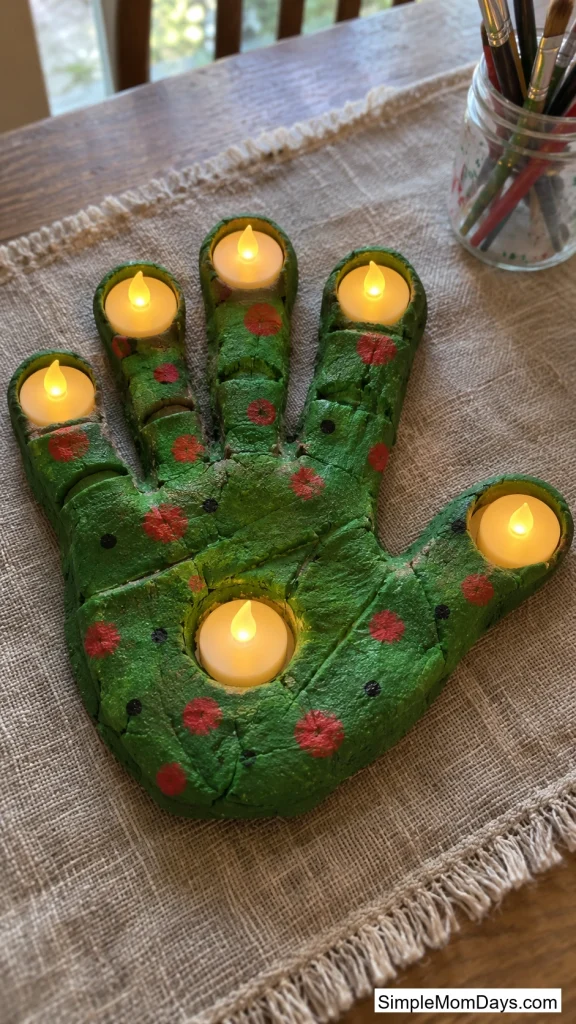
Press a child’s whole hand into a thick round of salt dough, then push a battery tea light base into each fingertip and thumb. Add two more wells in the palm to reach seven.
Mix two cups of flour, one cup of salt and about three quarters of a cup of water. Bake at 200°F for two to three hours, until the center feels hard.
Once painted, it records how small that hand was this year. Write the name and date on the bottom.
Use flameless tea lights only, since painted dough and open flame are a poor match.
4. Thumbprint Muhindi Corn
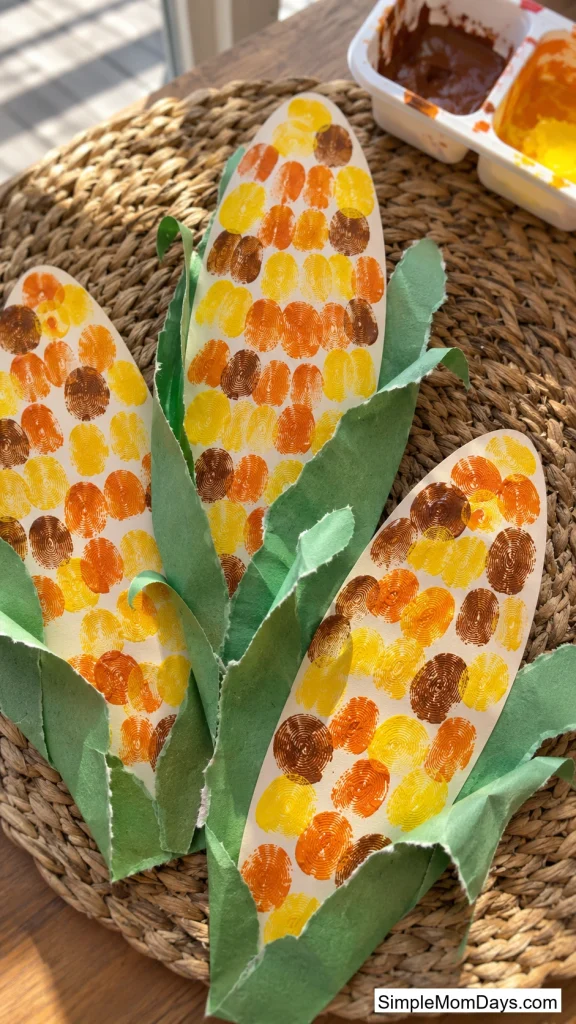
Muhindi is the ear of corn, and families traditionally set out one for each child. Draw a cob shape on cardstock for every kid in the house.
Dip thumbs in yellow, orange and brown washable paint and fill the cob with rows of prints. Glue torn green paper husks along both sides.
Cut the finished ears out and lay them on the mkeka. Homes without young children still set out an ear, so grown-ups can make one too.
5. Painted Family Unity Cup
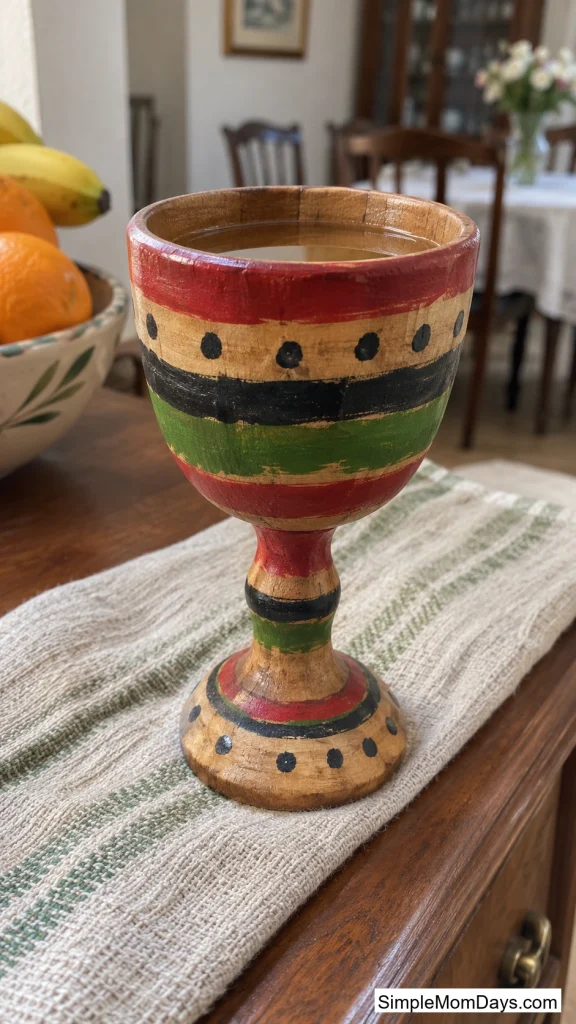
The kikombe cha umoja is the shared cup used to honor ancestors during the celebration. A plain wooden or ceramic goblet from a craft store works well.
Let each family member paint one band or symbol around the outside with acrylics. Keep paint away from the rim and the inside.
Fill it with water or juice when your family pours libation and takes a symbolic sip. Wash it gently by hand so the artwork lasts.
Expect to spend a few dollars on a wooden blank. Give it a full day to dry before the first night.
Activities Built Around the Seven Principles
The principles can sound big to a six-year-old. Each of these turns one or more of them into something to do.
6. Principle-a-Night Question Jar
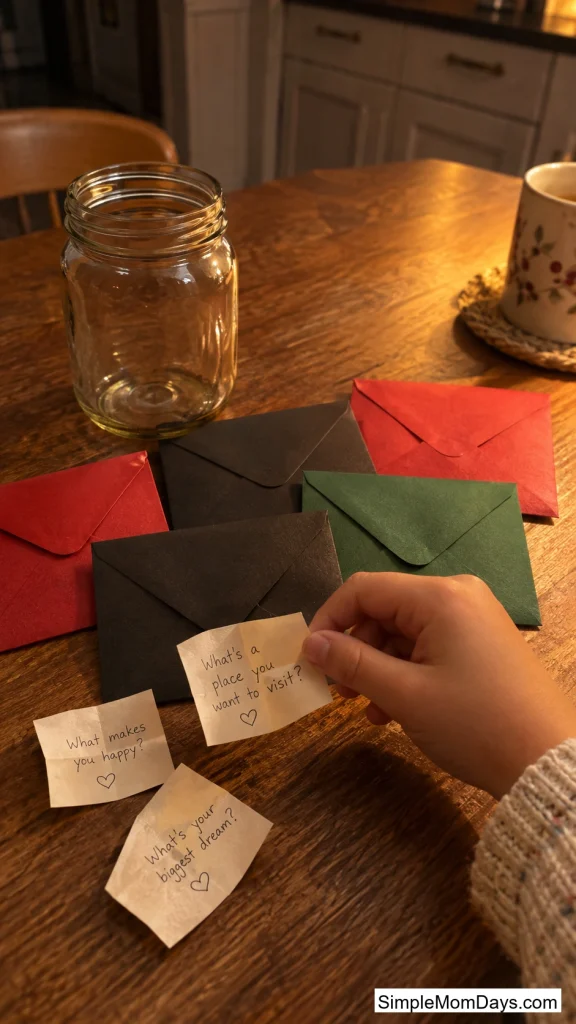
Write two or three simple questions for each principle on slips of paper and sort them into seven envelopes. Open one envelope a night after the candle is lit.
For Umoja, which means unity, try “When did our family feel like a team this year?” For Imani, or faith, ask “Who is someone you believe in?”
Everyone answers, adults included. Kids talk much more freely once they’ve heard a parent go first.
7. Ujima Group Mural
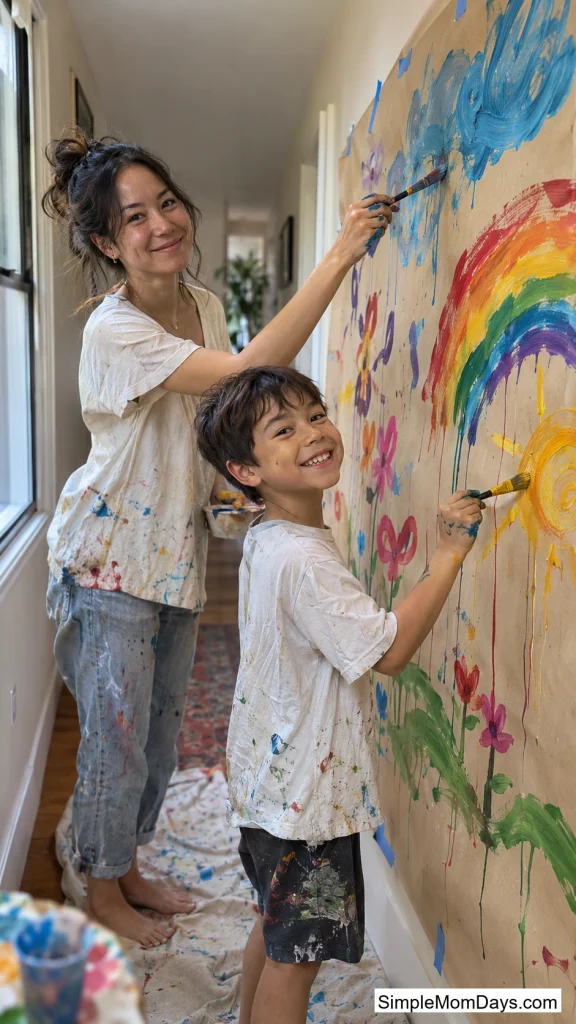
Ujima means collective work and responsibility, so make one picture that nobody can finish alone. Tape a long sheet of butcher paper to the wall.
Give each person a job: one draws outlines, one paints the sky, one glues on details. Swap jobs halfway through.
The rule is that you ask before changing someone else’s part. That small rule does more teaching than a speech about cooperation.
Set aside about an hour and cover the floor first.
8. Ujamaa Kids’ Market
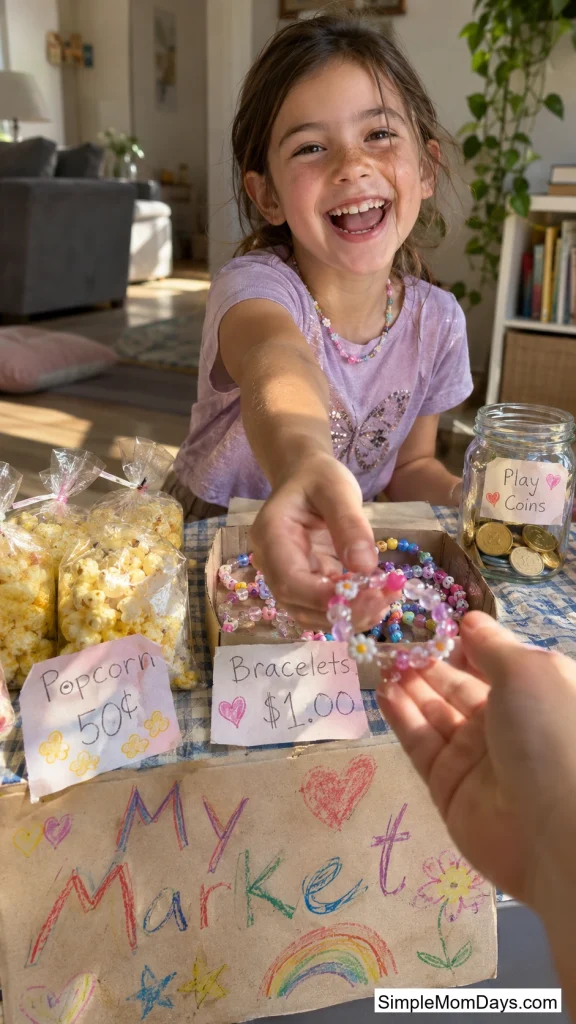
Ujamaa is cooperative economics, and a pretend market makes it easy to grasp. Children set up a table with drawings, bracelets or snack bags and hand out play money.
Run one round where each seller keeps their own coins, then a second where everyone pools them to buy something for the whole group. Ask which felt better and why.
Follow it up by visiting a Black-owned bookstore, bakery or shop in your area if you can. Your child gets to see the principle with a real counter and a real owner.
9. Habari Gani Greeting Game
“Habari gani?” is Swahili for “What’s the news?” During Kwanzaa, the answer is the principle of the day.
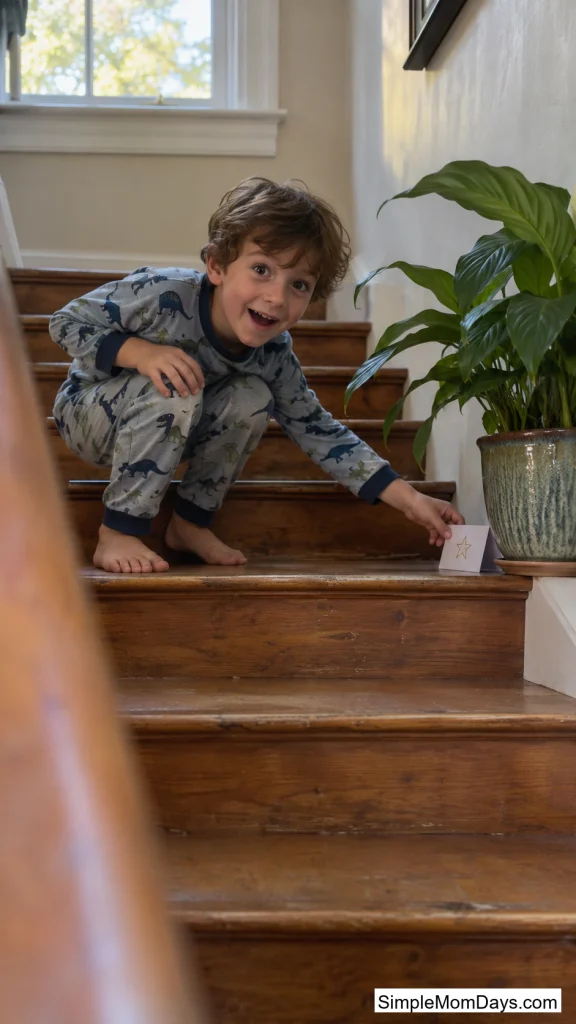
Hide a card with the day’s word somewhere in the house each morning. Whoever finds it gets to ask the question at breakfast, and everyone else answers.
By the end of the week, many kids can say several of the seven words from sheer repetition. It takes two minutes a day.
10. Nia Purpose Flags
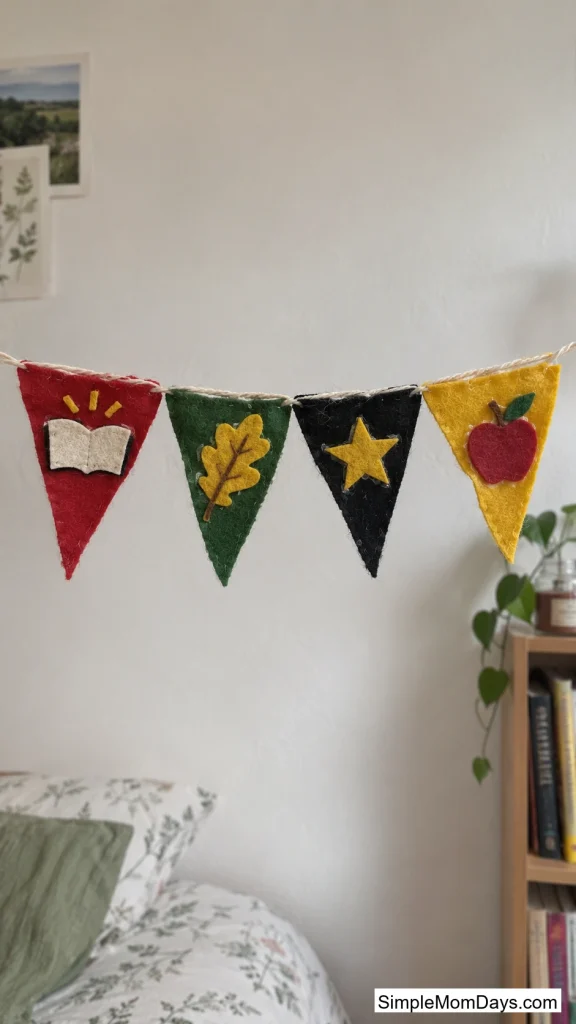
Nia means purpose. Give each child a felt triangle and ask them to picture one way they want to help other people next year.
They can cut shapes to show it, such as a book for reading to a younger cousin or a leaf for caring for plants. Glue the flags to a long piece of yarn.
Hang the string where it will stay up into January. It’s easier to remember a goal you walk past every day.
If your child likes this kind of reflection, our gratitude crafts and activities for families use a similar make-and-talk approach.
Art Projects Inspired by African Traditions
These projects borrow from specific places, so name them as you work. Pull up a map and let your child find each one.
11. Foam Adinkra Stamps
Adinkra symbols come from the Akan people of Ghana, and each one carries a meaning. Sankofa, for example, is about going back to fetch what you need from the past.
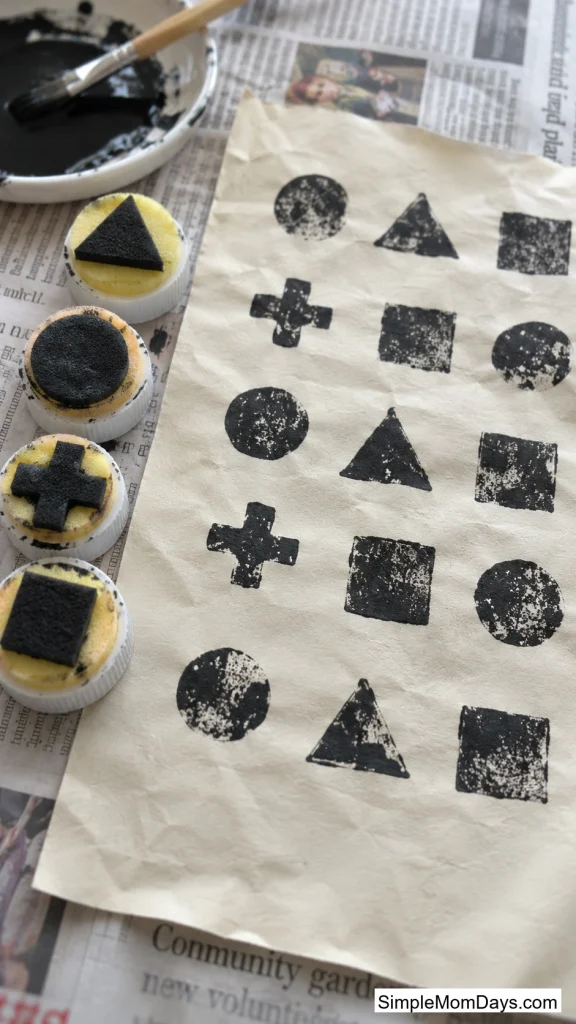
Draw a simple symbol on craft foam, cut it out and stick it to a bottle cap or cardboard square. Brush on a thin coat of paint and press onto paper or cloth.
Dwennimmen, the ram’s horns, stands for strength with humility. Have kids pick a symbol for its meaning first and its shape second.
12. Paper Kente Bookmarks
Kente is a woven cloth from Ghana, closely tied to the Asante and Ewe peoples. Real kente is made in narrow strips that are sewn together, which makes a bookmark a nice size to copy it.
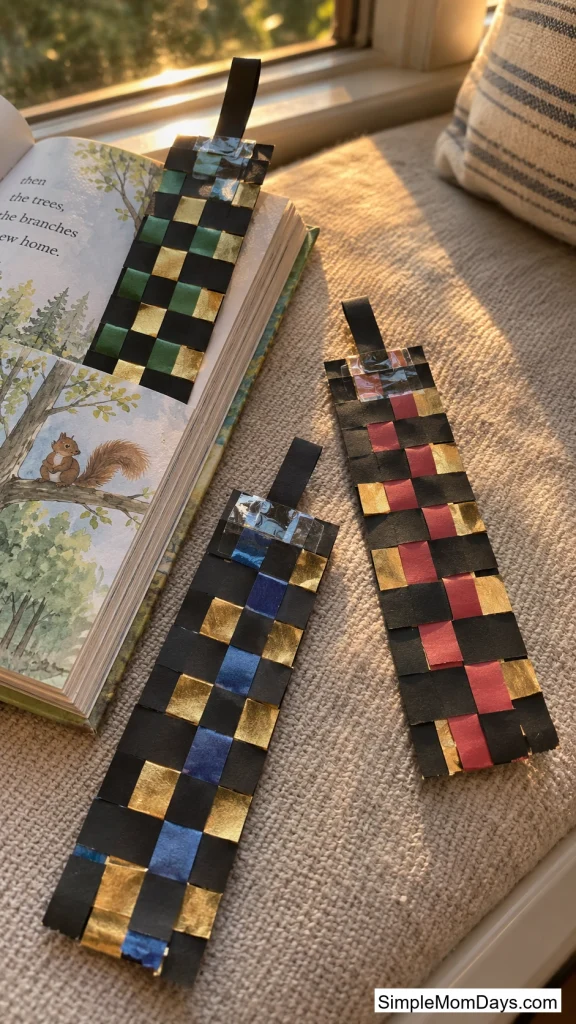
Slit a rectangle of black cardstock lengthwise, then weave thin strips of gold, green, red and blue across it. Push each row snug against the last.
Cover the finished piece with clear tape so it survives a backpack. Ages five and up can manage the weaving with wider strips.
Allow 20 minutes per bookmark.
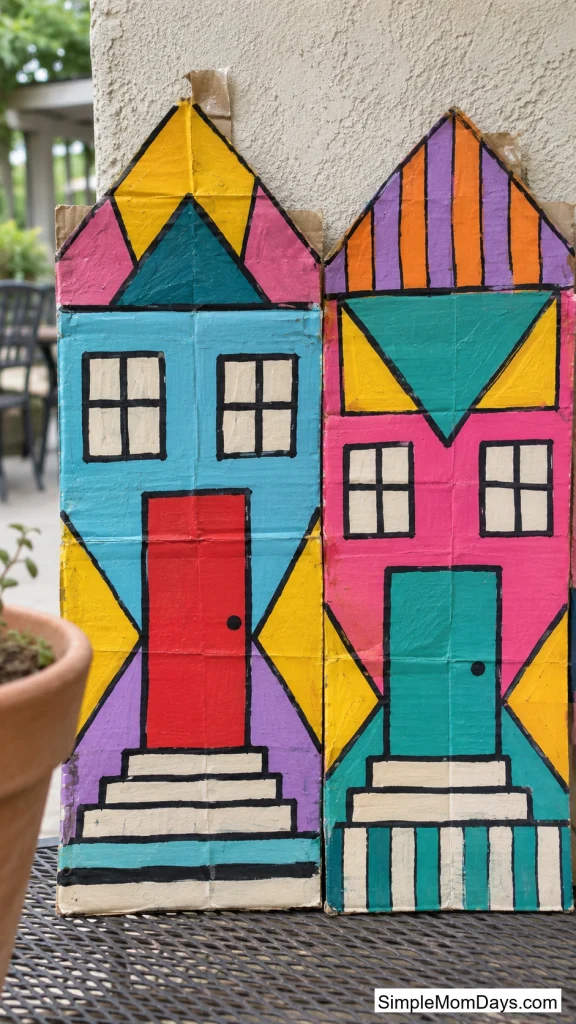
13. Ndebele-Style Painted Cardboard Houses
Ndebele women in South Africa are known for painting bold geometric designs on the walls of their homes. Flatten a cereal box, turn it plain side out and draw a house front.
Use a ruler to divide it into triangles, steps and stripes. Fill the shapes with bright paint and outline each one in thick black marker.
Painter’s tape helps younger children get crisp edges. Peel it off while the paint is still slightly damp.
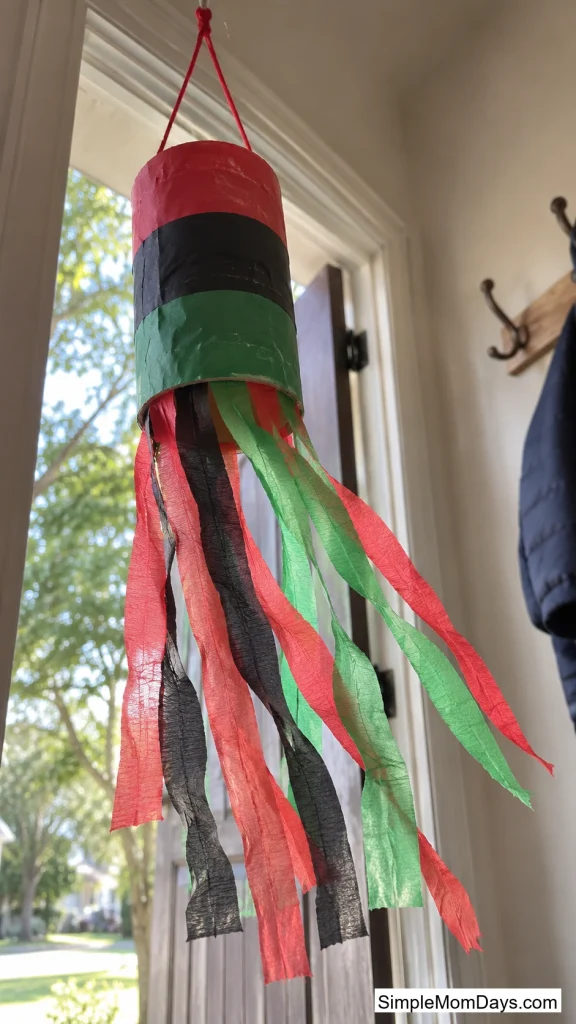
14. Bendera Flag Windsock
The bendera is the red, black and green flag that many families display during Kwanzaa. Black stands for the people, red for their struggle and green for the future.
Wrap bands of colored paper around an oatmeal canister with both ends removed. Staple crepe paper streamers to the bottom and tie yarn across the top.
Hang it indoors near a doorway where it will move when people walk by. It takes about half an hour.
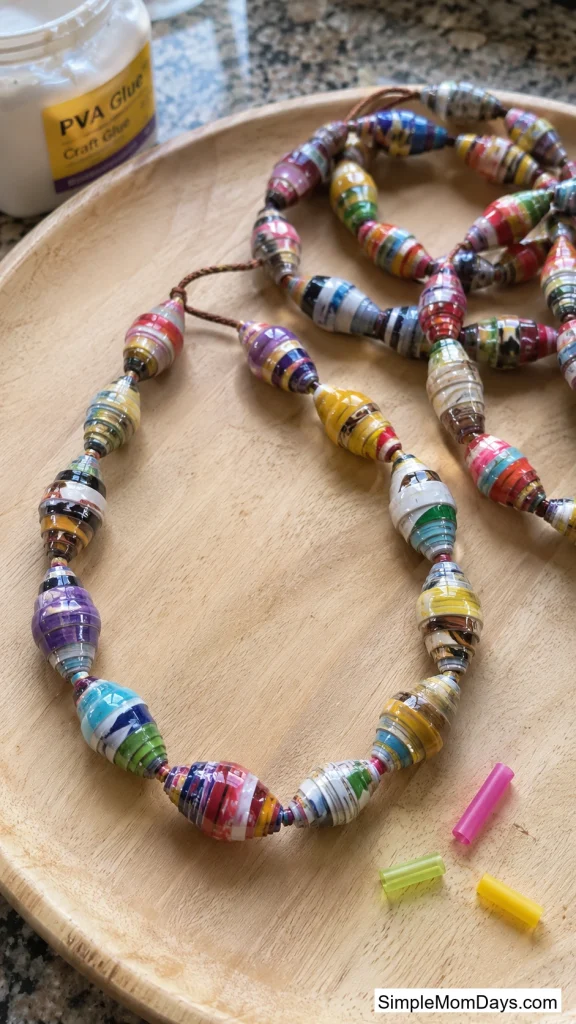
15. Rolled Paper Bead Necklaces
Old magazines and gift wrap become beads with nothing more than a straw and a glue stick. Cut long skinny triangles from the pages.
Starting at the wide end, roll each triangle tightly around a piece of drinking straw and glue the tip down. Brush on a little white glue for shine and let them dry.
String the beads in a repeating pattern of the child’s choosing. This one suits Kuumba, the creativity principle celebrated on December 31.
Music, Stories and Games
Some of the best parts of the week need very little glue. Save these for evenings when the table is already full of drying paint.
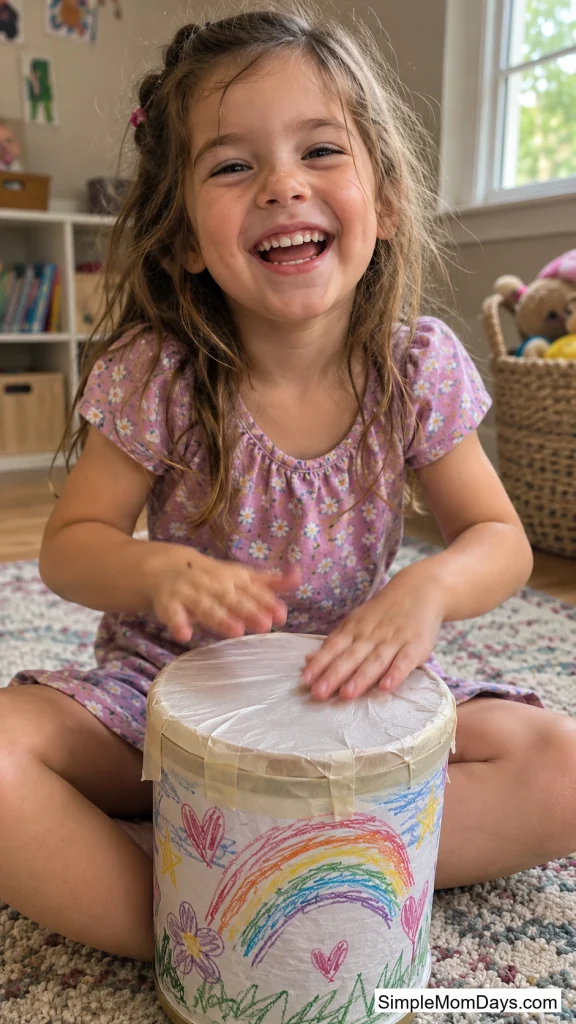
16. Coffee Can Drum Circle
Stretch two layers of packing tape or a cut balloon over an empty coffee can and secure it with a rubber band. Wrap the sides in paper that kids have decorated.
Sit in a circle and have one person tap a short rhythm for the others to echo. Pass the lead around so everyone gets a turn.
Check the can for sharp edges before you start. Oatmeal canisters are a softer choice for toddlers.
17. Elder Interview Story Night
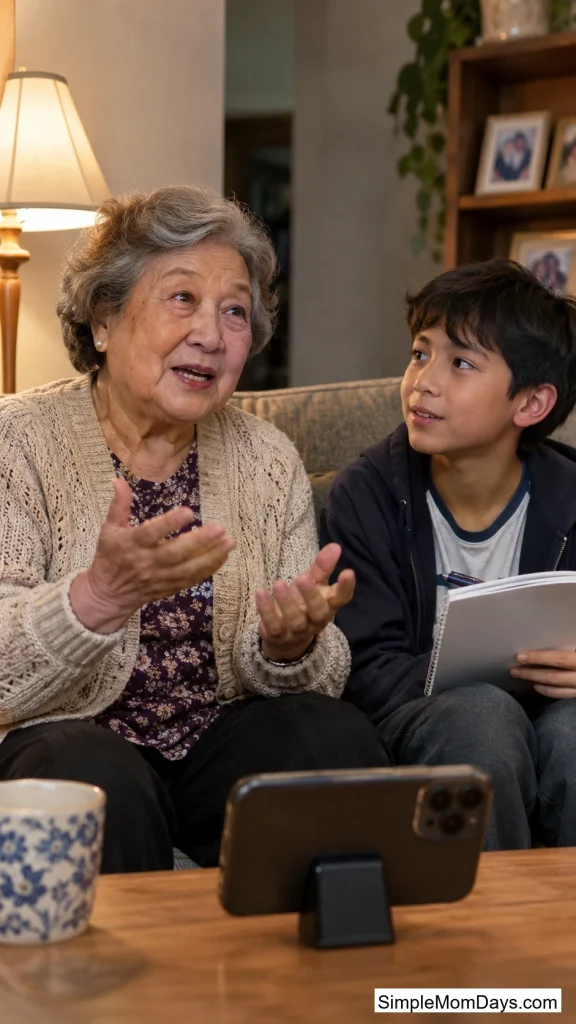
Invite a grandparent, aunt or longtime family friend to answer questions your child has written. A video call counts.
Good starters include “What did you play when you were my age?” and “Who taught you to cook?” Record the answers on a phone, with permission.
Children hear their own history from someone who lived it. Keep the file somewhere safe and add to it each December.
Twenty minutes is plenty for younger listeners.
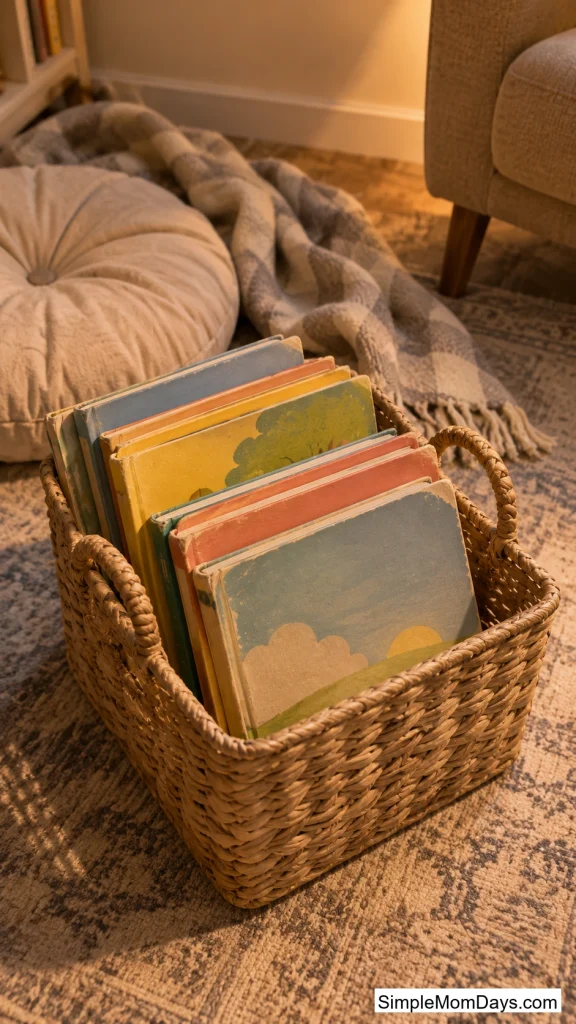
18. Kwanzaa Read-Aloud Basket
Fill a basket with picture books and read one each night. Try “My First Kwanzaa” by Karen Katz, “Li’l Rabbit’s Kwanzaa” by Donna L. Washington and “Seven Spools of Thread” by Angela Shelf Medearis.
Your library may have all three, so place holds early in December. After reading, ask which principle showed up in the story.
“Seven Spools of Thread” follows brothers who must work together, so it pairs neatly with a weaving project. Read it just before the bookmarks or the mkeka.
19. Egg Carton Oware
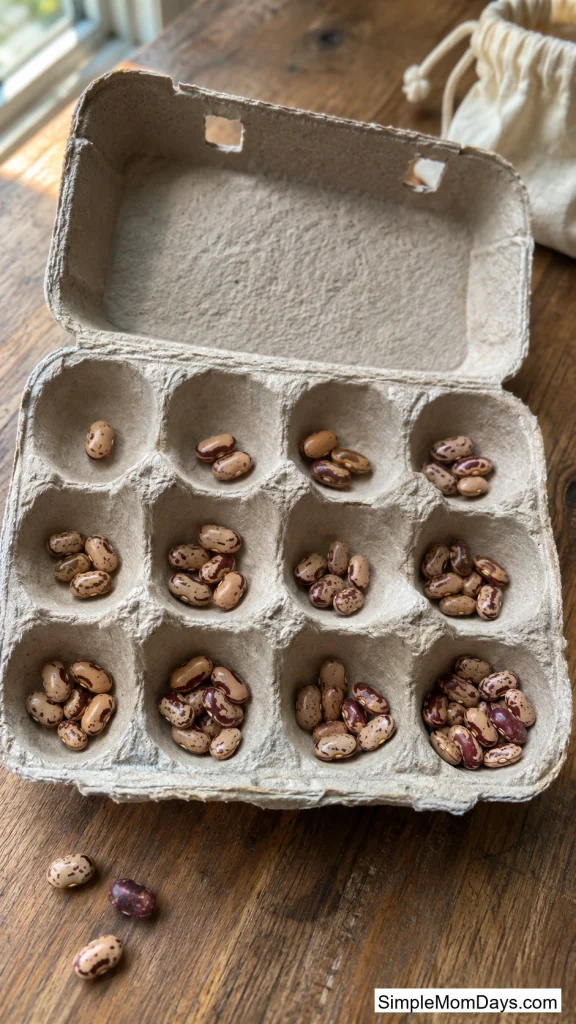
Oware is a counting game played in Ghana, part of the large mancala family found across Africa. A 12-cup egg carton and 48 dried beans are all you need.
Put four beans in each cup, with six cups per player. On your turn, scoop one of your cups and drop the beans one at a time, counterclockwise.
If your last bean makes a total of two or three on your opponent’s side, you capture them. The player with the most beans wins.
Skip the beans for children under three and use this one with ages six and up.
Easy Recipes for the Karamu Feast
The karamu is the feast usually held on December 31. Children can measure, stir and toss for all three of these, with an adult handling the heat.
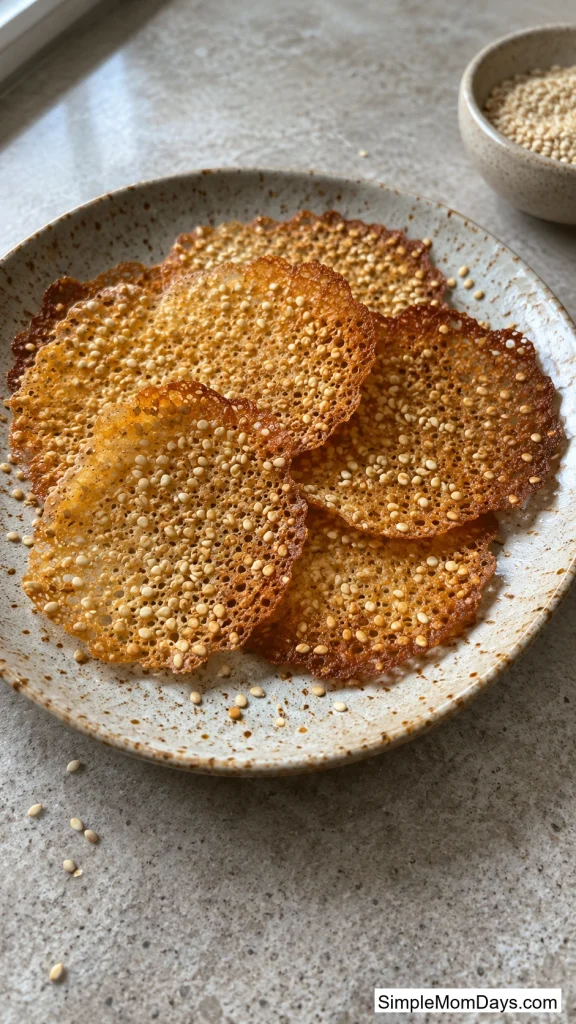
20. Crisp Benne Wafers
Benne is a word for sesame, a seed brought to the American South by enslaved West Africans. These thin cookies are a tasty way to start that conversation.
Toast the sesame seeds first, then cream butter and brown sugar and stir in the rest. Drop small spoonfuls far apart and bake at 350°F for 8 to 9 minutes.
Let them firm up on the pan before lifting, or they’ll tear. Use an alcohol-free vanilla flavoring in place of regular extract.
Quick facts: Total 30 min · Makes 36 wafers · Make ahead: 3 days, airtight · Swap: plant-based butter sticks for butter
Get the full recipe: Benne Wafers from King Arthur Baking
21. West African Fruit Salad
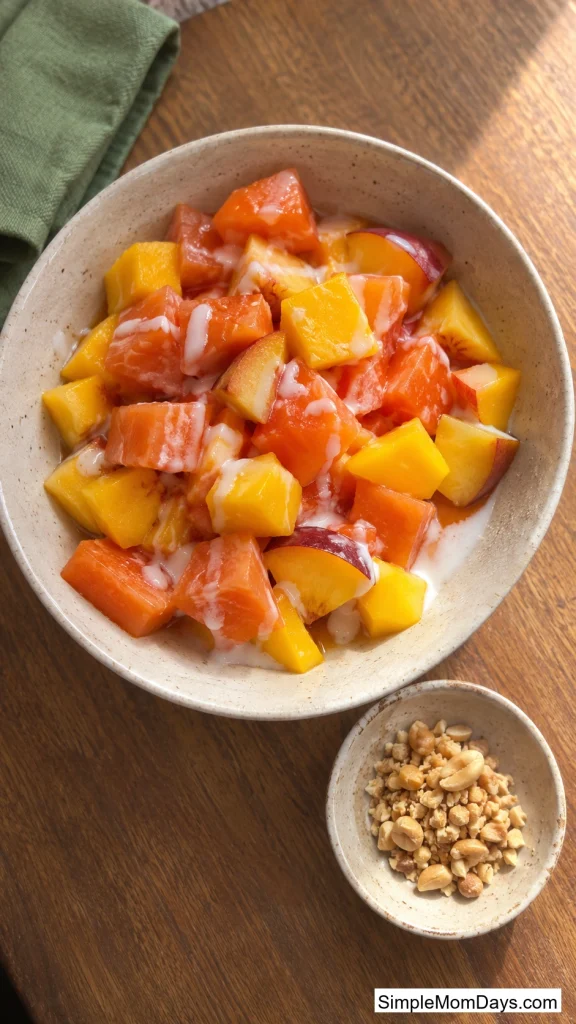
Papaya, mango and peach get a splash of coconut milk and a little honey. It’s bright next to the heavier dishes.
An adult can halve the fruit and remove the pits, then kids cube the soft pieces with a butter knife. Toss everything in one big bowl.
Add the chopped peanuts at the table so guests with allergies can skip them. Fruit also echoes the mazao, the crops on the Kwanzaa table.
Quick facts: Total 10 min · Serves 4 · Make ahead: cut fruit a few hours early · Swap: toasted coconut for peanuts
Recipe to follow: West African Fruit Salad from Washington SNAP-Ed
22. South African Sweet Potato Fritters
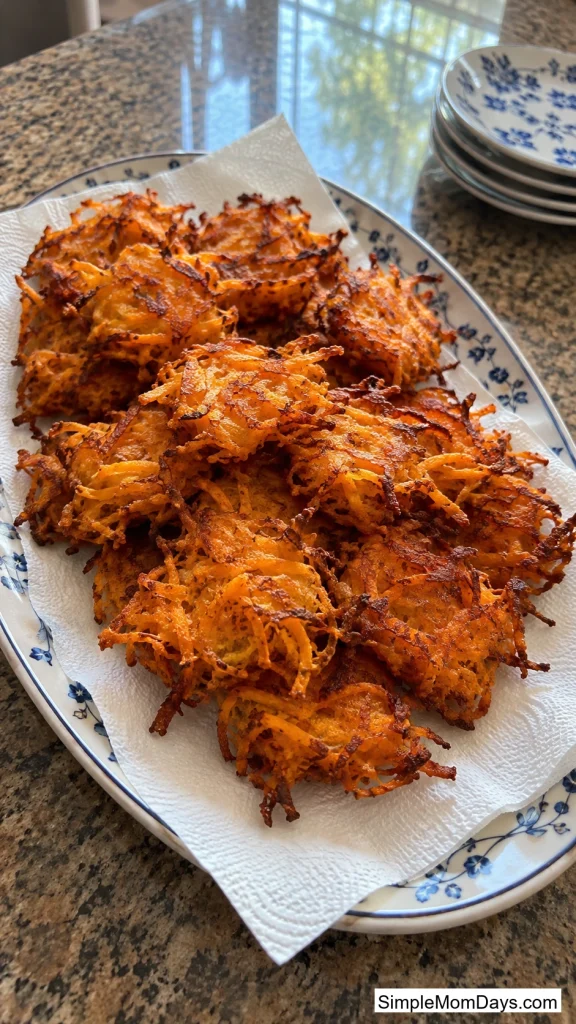
Grated sweet potato, flour and egg fry into little golden bites. They go fast, so make extra.
Soak the grated potato in boiling water for 15 minutes and drain it well before mixing the batter. An adult should fry spoonfuls at 375°F for 3 to 5 minutes, turning once.
Children can grate with a box grater guard or stir the batter. Keep them well back from the hot oil.
Quick facts: Total 40 min · Serves 6 to 8 · Swap: canola oil for peanut oil
See the recipe: South African Sweet Potato Fritters from Food Network
Handmade Zawadi and Giving Back
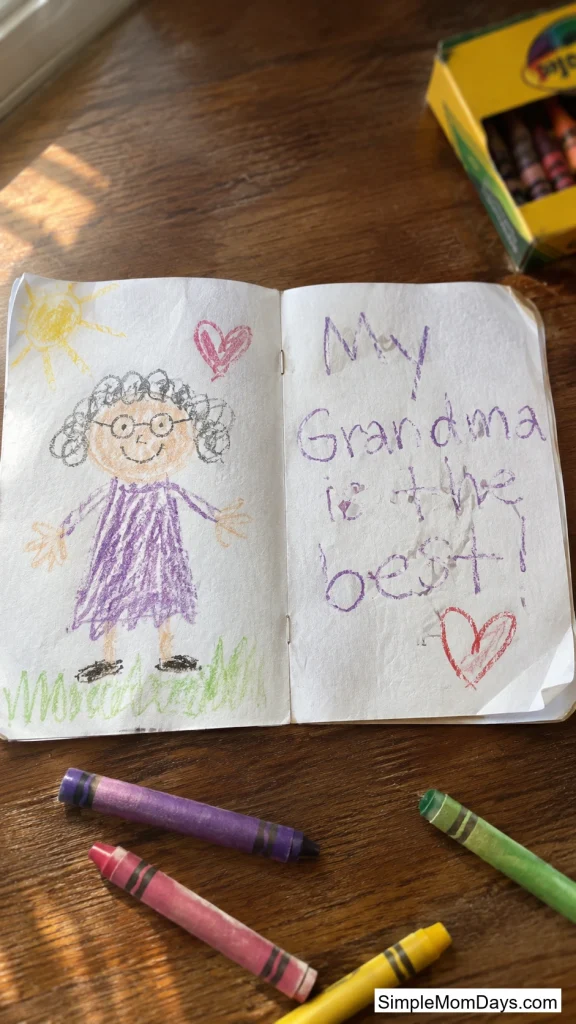
Zawadi are gifts, often handmade or educational, and many families open them on January 1. The last idea turns the giving outward.
23. Folded Family History Book
Stack four sheets of paper, fold them in half and staple along the crease. Your child now has a 16-page book to fill.
Give each spread to one relative, with a drawing, a favorite food and one thing that person is good at. Copy in a quote from the story night if you held one.
A book and a nod to heritage are both traditional kinds of zawadi, and this covers the two at once. Wrap it in the paper left over from your stamp printing.
24. Kuumba Seed Pot Gift
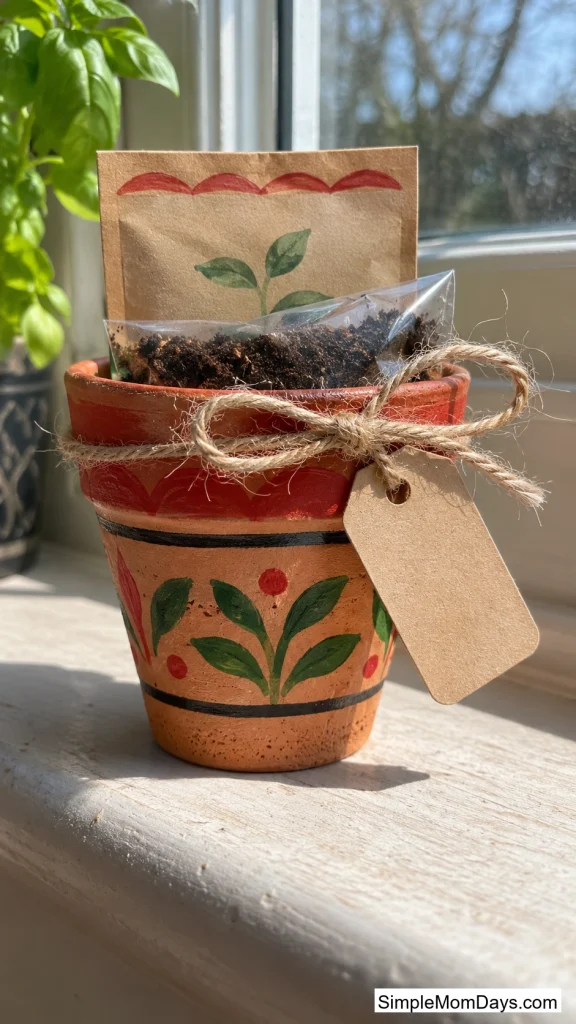
Paint a small terracotta pot with patterns, then tuck a seed packet and a bag of soil inside. Herbs such as basil grow well on a sunny windowsill.
Seal the paint with a coat of outdoor craft glue so watering won’t lift it. Tie on a tag with planting steps in the child’s handwriting.
The gift keeps going after the holiday is over. Pots and seeds usually cost just a few dollars.
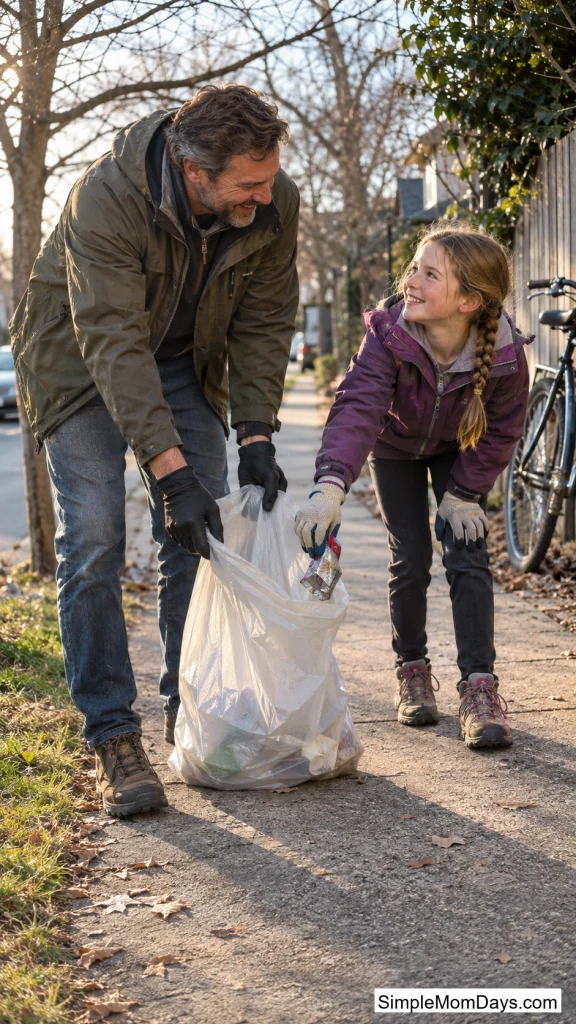
25. Leave-It-Better Neighborhood Project
The Kuumba principle asks people to leave their community more beautiful than they found it. Pick one small job your family can finish in an afternoon.
You might collect litter with gloves and a bag, shovel a neighbor’s walk or fill a box for a food pantry. Let your child choose from two or three options.
Take a before and after photo. Kids can see exactly what changed because of them.
Make the Week Your Own
Pick one craft for the table, one thing to cook and one story to hear. That’s a full week for most families with young children.
For more things to make over winter break, try our easy crafts for kids or these New Year crafts. Our list of New Year’s Eve activities for kids also helps fill the afternoon of the 31st.