
Sixth graders walk in with elementary habits and middle school nerves, and the room has to work for both. They are too old for cartoon border trim but still need to know exactly where to put a backpack.
These 21 setups come from the practical side of teaching: where desks go, where papers land, and what the walls do all year. Pick the few that match your room size and your schedule instead of trying them all in August.
Most cost under $40 or use furniture and supplies you already have. A few take an afternoon, and a few take ten minutes.
Layouts That Suit Eleven-Year-Olds
Furniture placement sets the tone before you say a word. Start here, because every other idea depends on the floor plan.
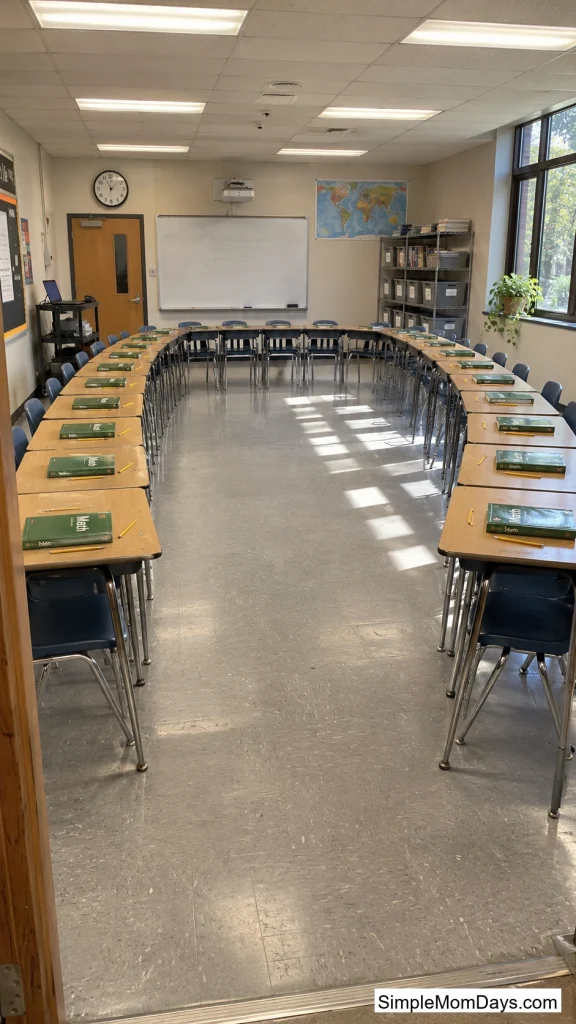
1. Horseshoe Desk Layout With a Center Aisle
Arrange desks in a wide U with the open end facing the whiteboard, and leave a walkway down the middle. You can reach any student in a few steps, and nobody sits behind a taller kid’s head.
Put students who need extra check-ins on the inside curve closest to where you usually stand. If you have more than 26 kids, add a second row behind the U and keep the aisle clear.
The shape works well for discussions because students see faces instead of the backs of heads. It does eat floor space, so tape the layout down with painter’s tape for a trial run before you move any furniture.
2. Table Pods With Rolling Whiteboard Dividers
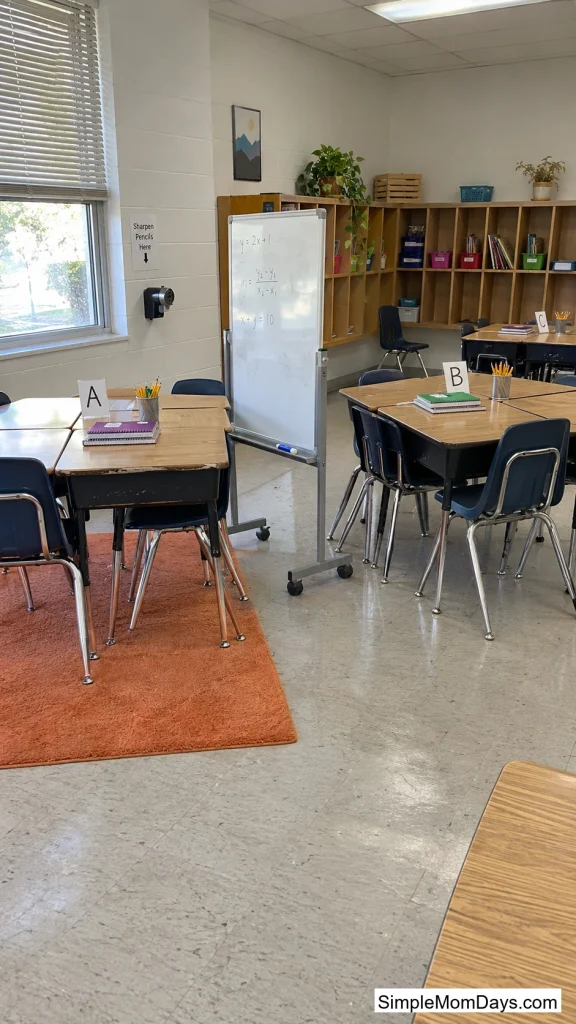
Group four desks or two tables into pods, then park a small rolling whiteboard between neighboring pods. The board works as a divider during independent work and flips around for group problem solving.
A 24 by 36 inch magnetic whiteboard on a stand usually runs $35 to $60. Two or three are enough to split a typical classroom into zones.
Sixth graders get chatty in groups, so the divider cuts sightlines without sending anyone to a corner. Give each pod a letter and write it on the back of its board so you can call groups quickly.
The boards also give you extra writing space during a lesson, which saves you from erasing the main whiteboard midway through an example.
3. A Door-Side Landing Zone for Backpacks
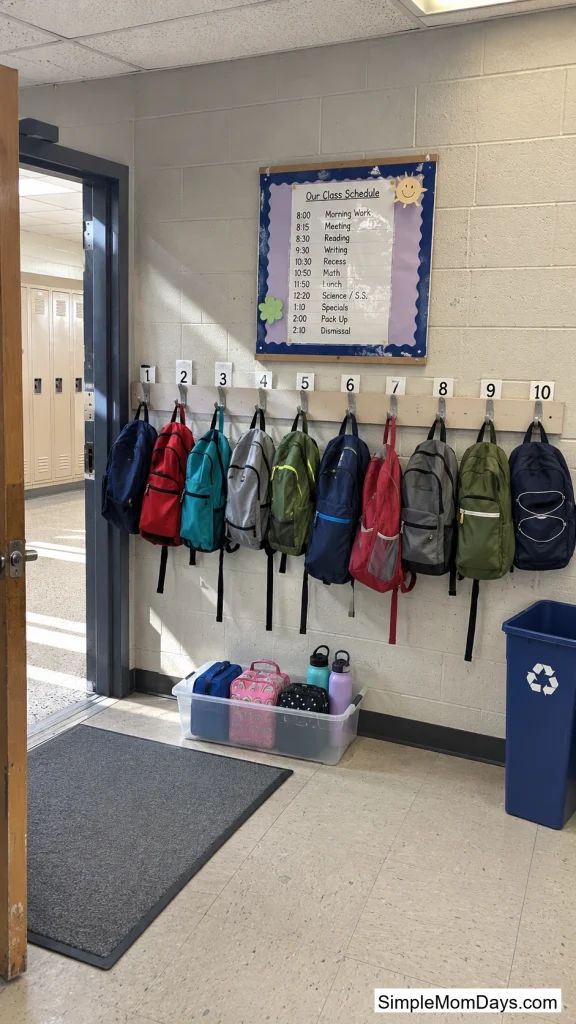
Set aside the wall nearest the door for a row of hooks or cubbies at student shoulder height. Sixth graders carry bigger bags than younger kids, and a bag in the aisle is a trip hazard.
Number the hooks to match your roster so every student has an assigned spot. Ask your custodian before drilling into walls, or use a freestanding coat rack for lighter loads.
Add a shallow bin underneath for lunch bags and water bottles. Mornings get calmer when kids know exactly where to drop everything before heading to their seats.
Seating Options That Keep Kids Moving
Eleven-year-olds can’t sit still for fifty minutes, and forcing it costs you more than a few wobbly stools ever will.
4. Wobble Stools at the Back Counter
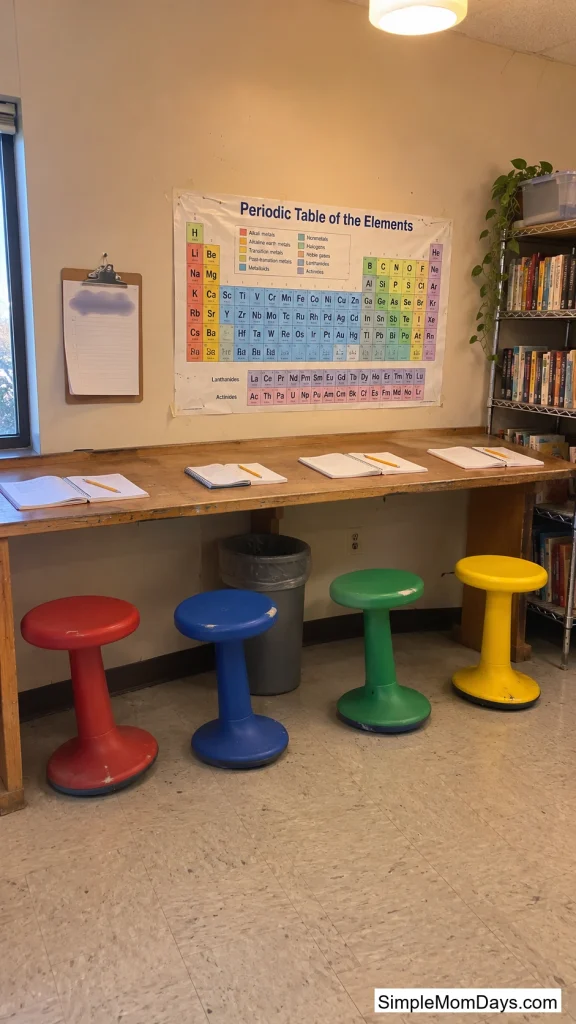
Line a counter or tall table at the back of the room with three or four wobble stools. Students who need to move can drift there for independent work without leaving the lesson.
Rocking stools usually cost $25 to $45 each, so start with a few instead of outfitting the whole room. Set one rule: if the wobbling distracts a neighbor, the student goes back to a regular chair.
Keep a sign-up clipboard or a rotating schedule so the same two kids don’t claim the stools every day. Fairness matters a lot at this age.
5. Standing Desk Rail Along the Window
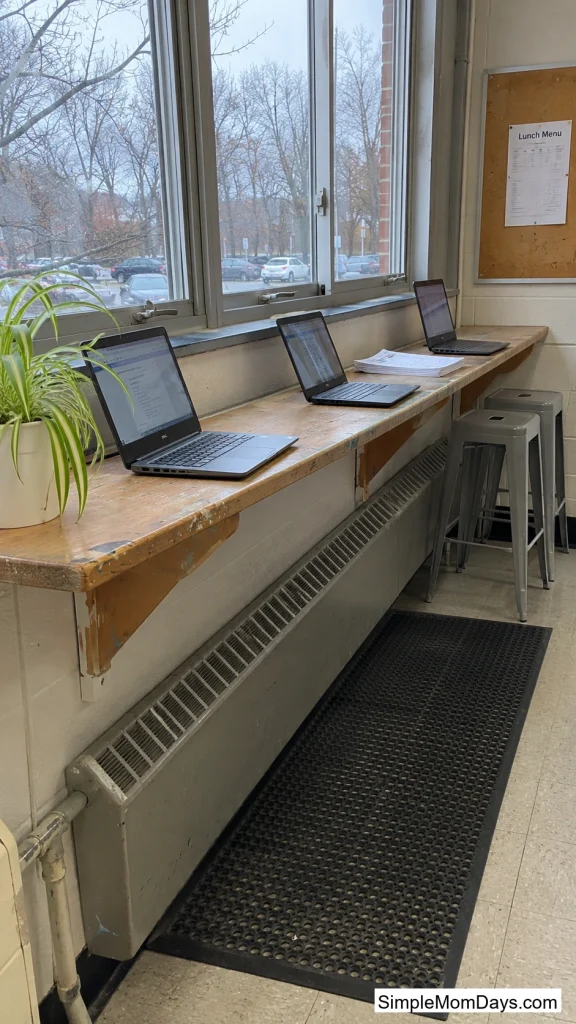
Mount a wide shelf or a repurposed countertop board along a window wall so students can stand to work there. A ledge between 36 and 40 inches tall suits most sixth graders, but check it against your tallest and shortest kids.
Add a strip of rubber matting underneath if the budget allows, or a cheap yoga mat cut to size. Students tend to stay at the ledge for ten or fifteen minutes, which is enough to reset their energy.
The natural light helps, and the spot doubles as a quiet place to finish a quiz away from the group. Keep a couple of tall stools nearby for kids who want to switch halfway.
6. Low Reading Nook With Floor Cushions and a Rug
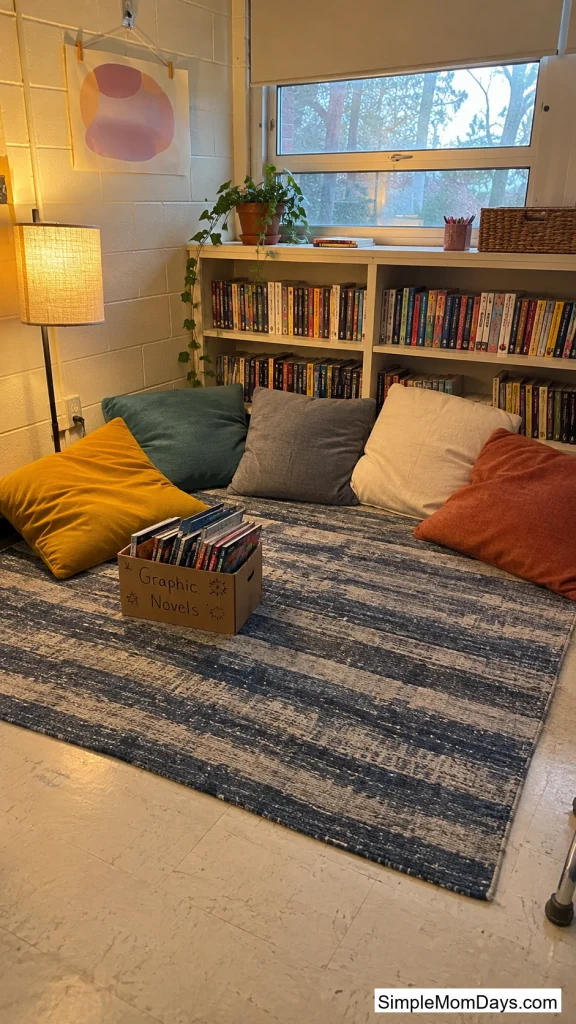
Clear a corner and lay down a 5 by 8 foot rug, then add four or five floor cushions. Sixth graders still love sprawling on the floor with a book, even if they won’t say so.
Pick a rug in a solid or muted pattern, since bright kid prints read as babyish at this age. A low bookshelf behind the cushions gives the nook a clear back wall.
Limit it to four students at a time with a clothespin sign or a number card. The cap keeps it quiet and makes the spot feel like a privilege.
Shake out the cushions on Fridays, since they collect more dust than you would guess.
Walls and Bulletin Boards They Won’t Roll Their Eyes At
Cartoon borders lose their charm by sixth grade. These wall ideas treat students like the almost-teenagers they are.
7. A Locker-Style Bulletin Board
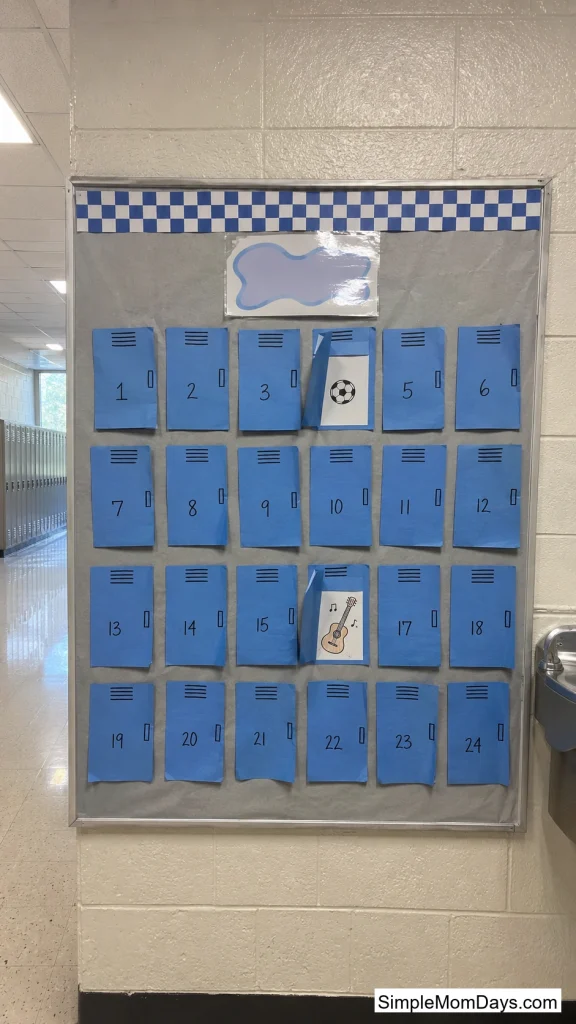
Cover a bulletin board with gray or blue paper and cut a locker door for each student out of construction paper. Each door has a folded flap that opens to a small drawing or a list of the student’s favorite things.
Sixth graders are about to start using real lockers, and the board plays on that. Add a vent slit and a number to each door with a marker so it looks the part.
Hang it near the entrance so families see it on back-to-school night. Swap the flap contents at the semester break so the board doesn’t go stale.
8. A Rotating Work Clothesline
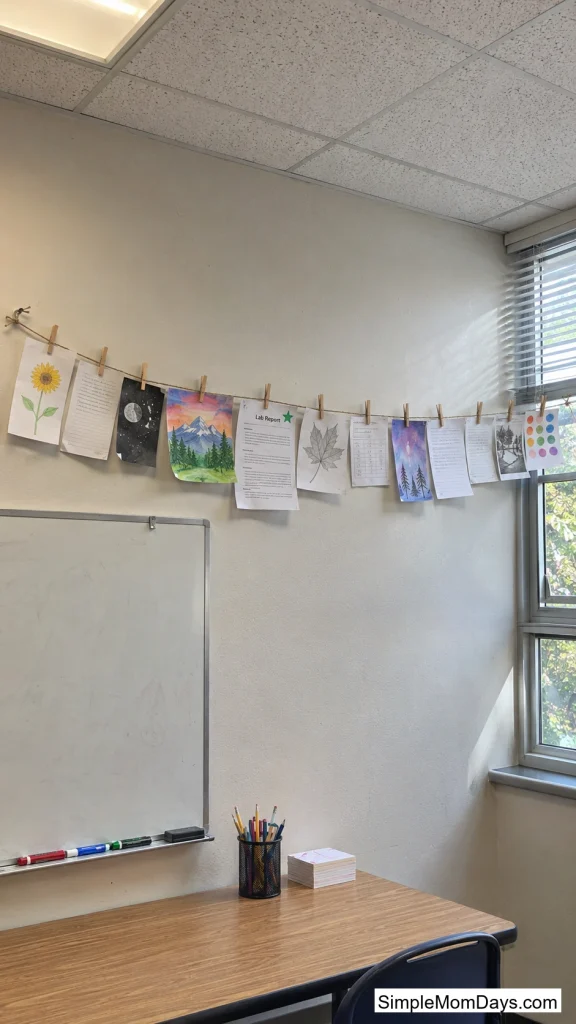
Stretch a length of twine across one wall and clip student work to it with mini clothespins. Use binder clips for thicker papers like lab reports.
Aim for four or five pieces per week, chosen by the students themselves instead of by you. Kids often pick differently than you would, and a short index card explaining the choice makes the display more interesting.
The line comes down in a minute, which matters if another class uses your room. Fifty feet of twine costs a couple of dollars and a pack of clothespins a few more.
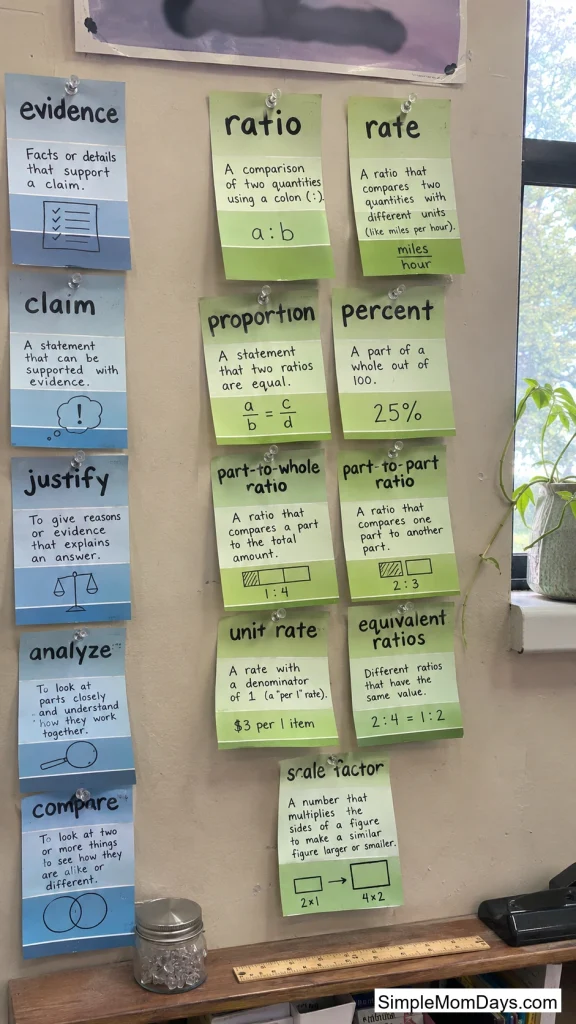
9. Subject Word Wall on Paint-Chip Strips
Collect free paint chip strips from a hardware store and write a vocabulary word at the top of each one, with its definition and a quick sketch on the lighter shades below. Arrange the strips by unit.
A ladder of shades shows how ideas build, such as ratio, rate and unit rate in math or claim, evidence and reasoning in science. Students add to the strips as they learn the words.
Thick marker keeps the words readable from the back row. The strips cost nothing, and a new color scheme is one trip to the hardware store away.
Organization That Survives October
Sixth graders lose papers at a remarkable rate. A system that runs without you saves a lot of daily nagging.
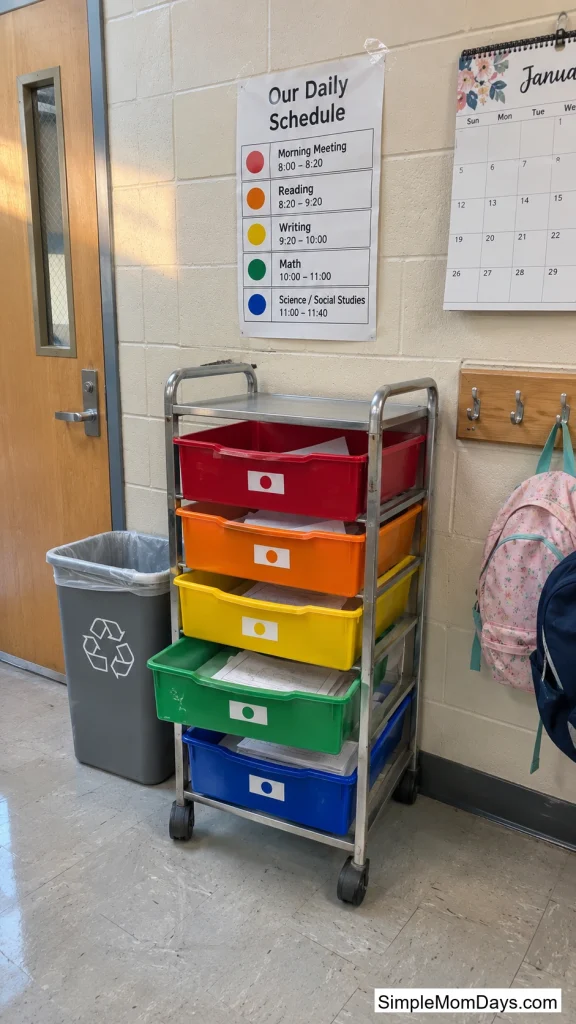
10. Color-Coded Class Period Bins
If you teach multiple sections, give each class period a plastic bin in its own color. Turned-in papers, make-up work and spare handouts all go in that bin.
Match the color on the bin, the folder labels and a small dot on the daily schedule. A substitute can read the room in a minute.
Stack the bins on a rolling cart or a tiered shelf near the door. Turn-in takes seconds, and your grading piles stay sorted by period.
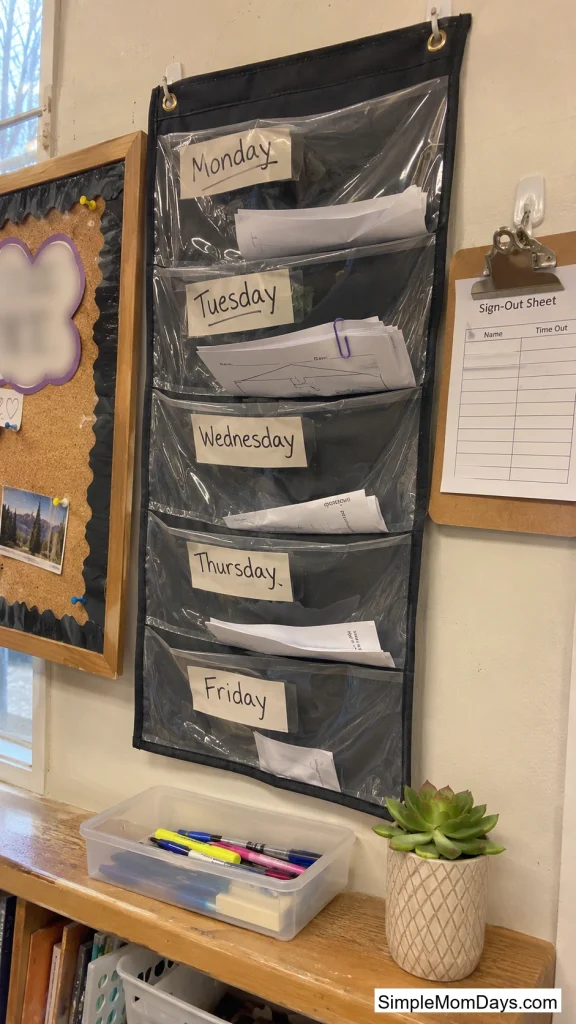
11. A Weekday Pocket Chart for Absent Work
Hang a pocket chart or a hanging file organizer labeled with the days of the week. Tuck that day’s handouts into the matching pocket each morning.
A student who missed Tuesday checks the Tuesday pocket and grabs what they need without asking. It adds about ninety seconds to your morning routine.
Put a clipboard beside it where students write their name when they take something. You can see who has caught up without chasing anyone.
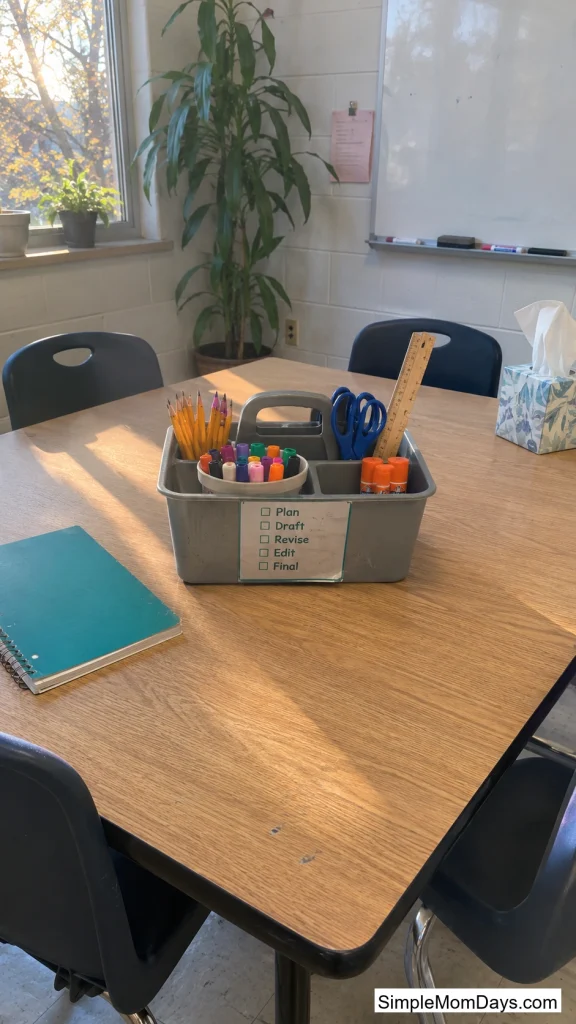
12. Table Supply Caddies With a Check-Out Chart
Give each table a caddy loaded with pencils, markers, scissors, glue sticks and a ruler. A plastic tote or a cleaned-out cleaning bucket works fine.
Name a supply captain at each table whose job is a quick end-of-class count. If a pair of scissors goes missing, you know which caddy to check.
Tape a laminated checklist inside the caddy so everyone knows what belongs there. Refills come from a shelf that only you or the captains visit, so supplies last through the semester.
Restock on Monday mornings before kids arrive. It keeps the week from starting with a scavenger hunt for a sharpened pencil.
Learning Corners With a Purpose
A corner earns its floor space when it does one specific job. These three each have one.
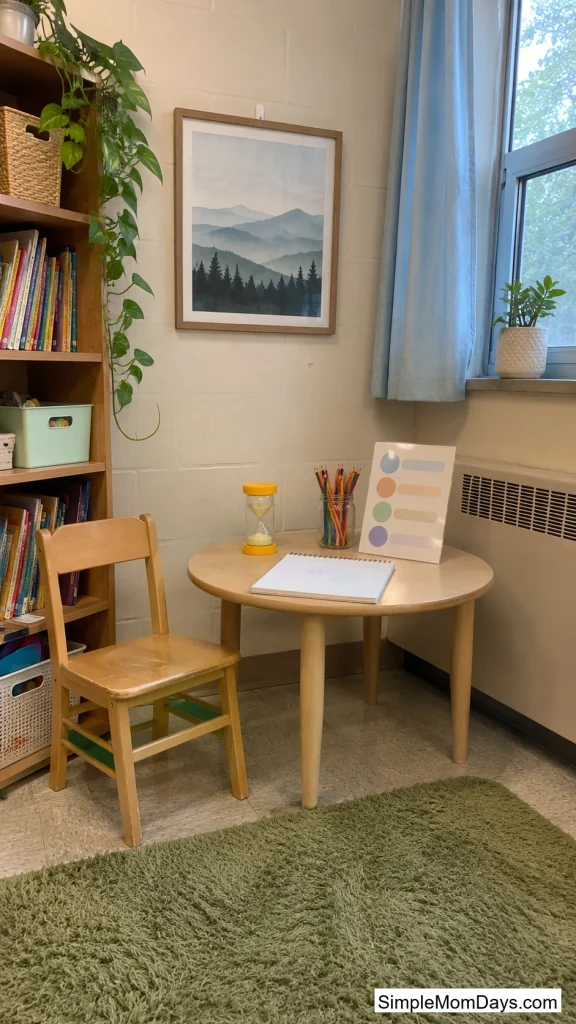
13. A Quiet Reset Corner With a Sand Timer
Set a single chair, a small table and a three-minute sand timer in a corner away from the door. Students who feel overwhelmed can step there without announcing it to the room.
Stock the table with a drawing pad, a few colored pencils and a laminated card of breathing steps. Keep it simple, since sixth graders will ignore anything that looks like a kindergarten calm-down kit.
Teach the rules on day one: the timer runs once, the student returns, and each visit is private. You can check in with the student afterward instead of in front of the class.
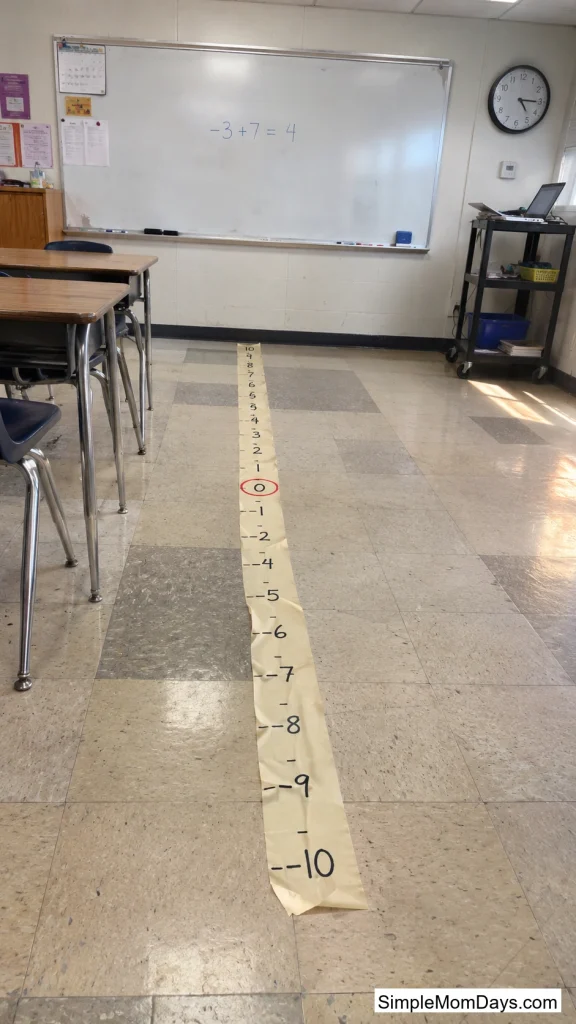
14. A Floor Number Line for Negative Numbers
Run a strip of masking tape on the floor in front of the whiteboard, marked from -10 to 10, with a tick for each integer. Negative numbers are new to most sixth graders, and walking them out sticks better than staring at a worksheet.
Ask a volunteer to start at 3 and move 7 spaces left. Watching someone land on -4 settles an argument faster than any explanation.
Use it again for temperature, elevation and bank balance problems. Test a small piece of tape on your floor first, since some surfaces pull up finish when the tape comes off.
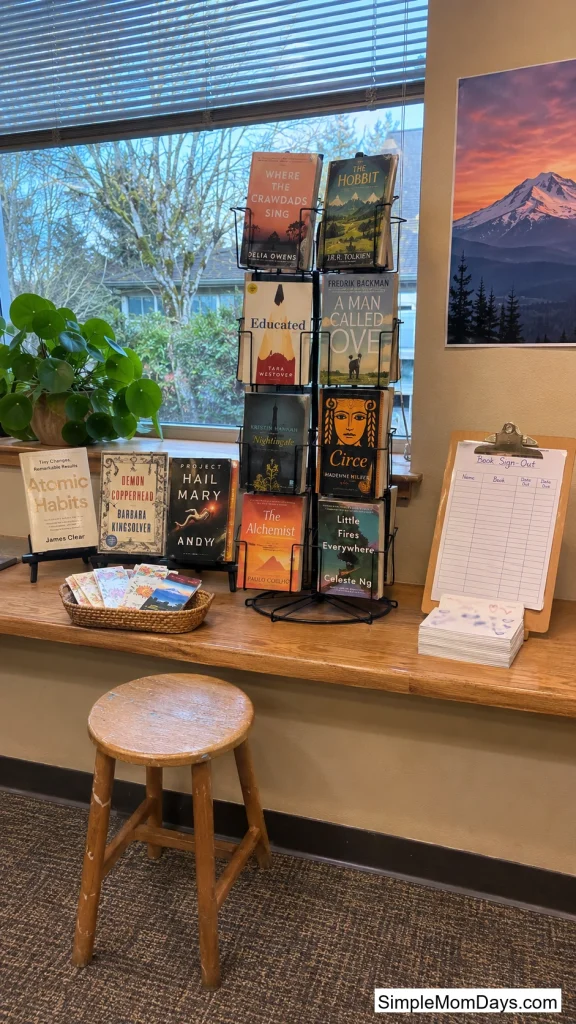
15. A Front-Facing Book Display With a Sign-Out Clipboard
Put a few books on a spinner rack or a window ledge with the covers facing out instead of the spines. Sixth graders really do judge books by their covers, and a face-out display gets more of them checked out.
Rotate the picks every two weeks, mixing graphic novels, short fiction and a nonfiction title on a topic the class has asked about. Let students write one-line recommendations on index cards tucked beside each book.
A clipboard with a simple name and title log keeps track of who has what. It also shows you which reader hasn’t picked anything up lately, so you can nudge them toward something.
Teacher Space and Tech
The adult corner of the room matters too, and so does the gear that keeps the day moving.
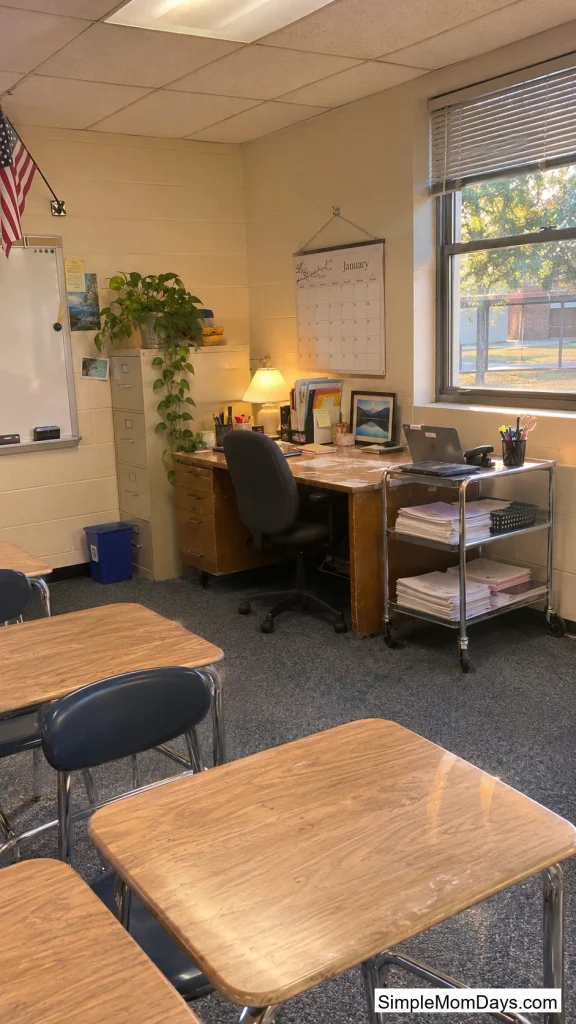
16. A Teacher Desk in the Back Corner With a Rolling Cart
Move your desk out of the front and into a back corner, where you can see the whole room without blocking the board. Then keep your daily materials on a three-tier rolling cart that goes wherever you teach.
Load the cart with the day’s handouts, a stapler, a pen cup and a tablet or laptop. You can park it beside a pod, roll it to the front for a mini-lesson, or slide it out of the way.
Students notice that you’re mobile, and fewer of them drift off when you might walk past at any second. A basic metal utility cart runs around $40 to $70.
17. A Numbered Charging Station for Chromebooks
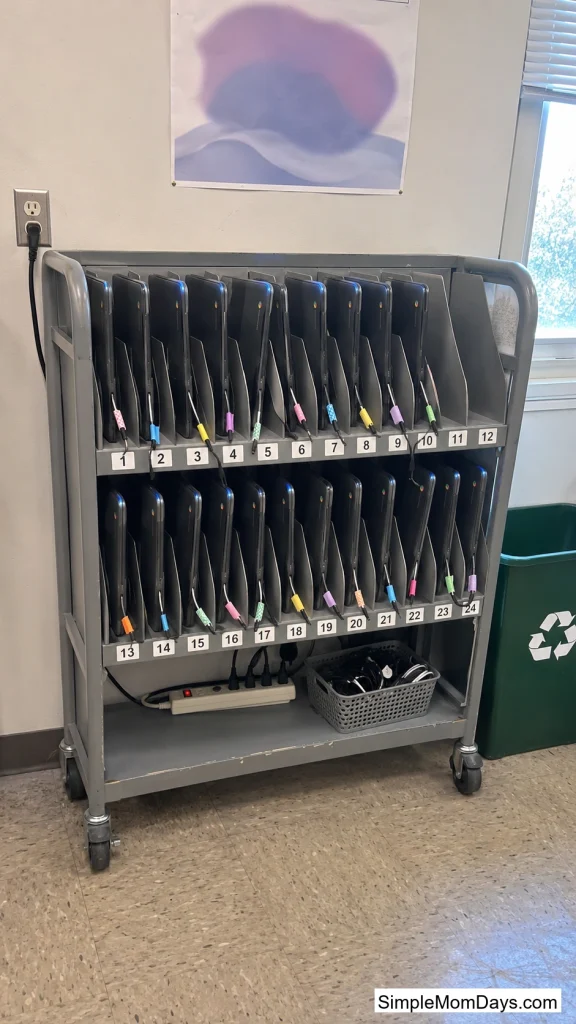
If your class uses laptops or tablets, set up a charging cart or a power strip on a low shelf, with numbered slots matching the devices. Students return each device to its own number.
A gap in the numbers at the end of the day tells you at a glance what’s missing. It also keeps cords from tangling into a knot.
Put a strip of colored washi tape on each cord end that matches the slot number. Kids plug in on their own, and nobody asks you where the charger goes.
18. A Daily Agenda Board Beside the Door
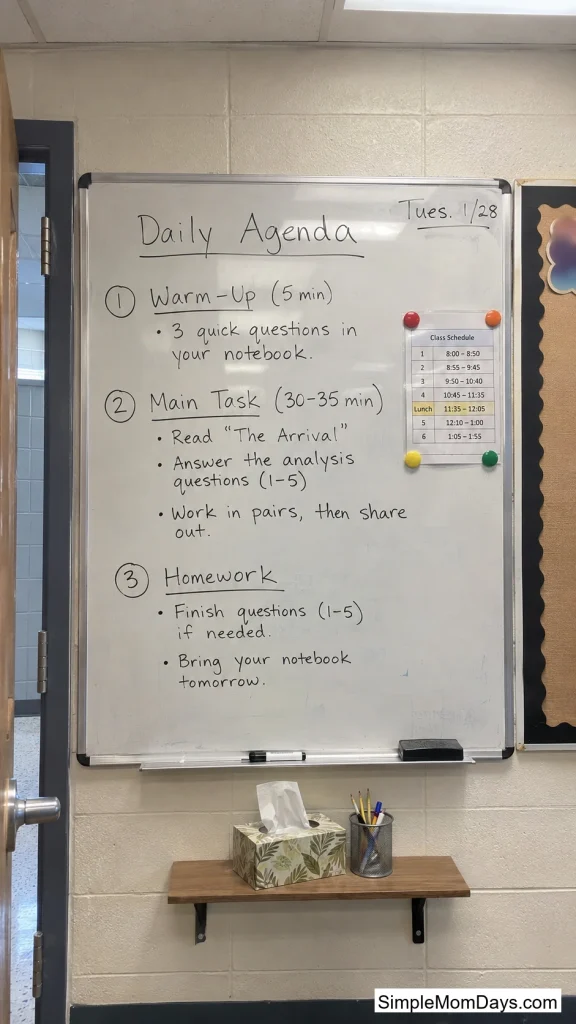
Dedicate one whiteboard panel near the door to the day’s agenda, written in the same order every morning. List the warm-up, the main task and any homework due.
Sixth graders moving between classes all day want a predictable picture of what’s coming. When they walk in and see it, they start the warm-up without waiting for instructions.
Use magnets in the same colors as your period bins so each class has its own row. Rewriting takes about two minutes, and it can be a student job.
Community Touches That Build Ownership
A room feels like theirs when students had a hand in it. These three give them that without costing much.
19. A Student Job Chart With Real Roles
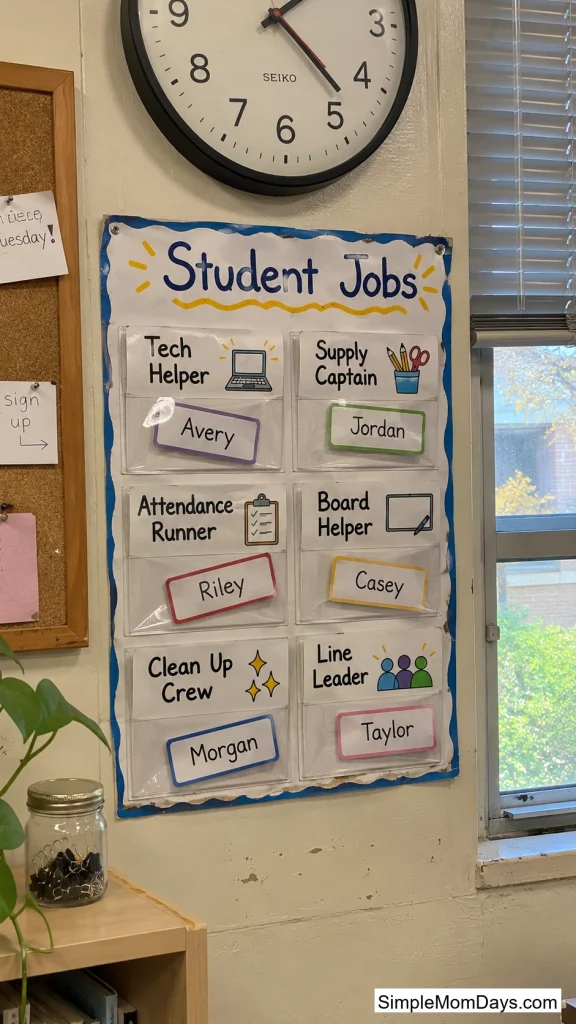
Skip the line leader and board eraser and use jobs that feel useful to an eleven-year-old: tech helper, supply captain, attendance runner and materials manager.
Make a chart with a pocket for each job and a name tag that moves every two weeks. Rotation matters, because the same kid doing the same job gets bored and everyone else feels left out.
Let students apply for the job they want with a two-sentence note. It teaches them to ask for responsibility, and it takes you very little time to read.
20. A Question Parking Lot Wall
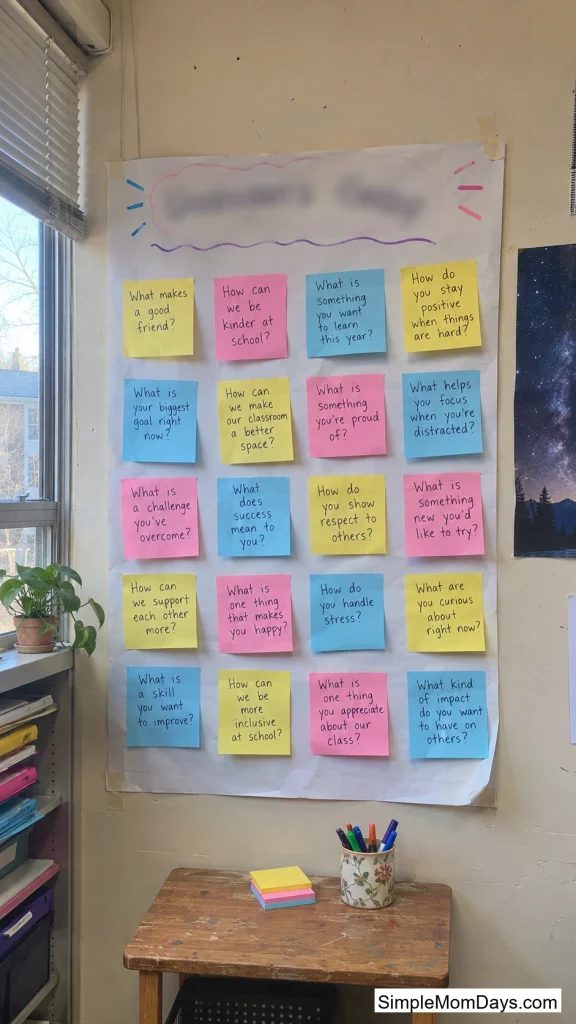
Tape a poster-size sheet of chart paper to a wall and title it the Question Parking Lot. When a student has a question that’s off topic or too big for the moment, they write it on a note square and park it there.
Pick two or three notes at the end of the week and answer them out loud. A question about why we use base 10 or how glaciers move takes four minutes and can become the best part of Friday.
The wall also tells you what students wonder about, which gives you ideas for later lessons. Shy kids often prefer writing a question down to raising a hand.
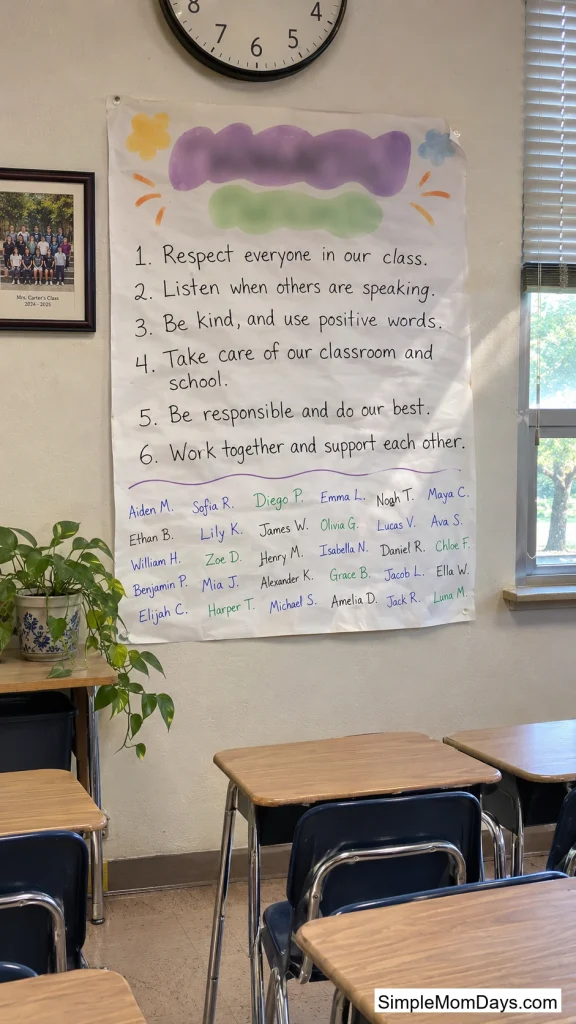
21. A Class Constitution Poster Everyone Signs
In the first week, run a short discussion on what makes the room work, then boil the answers down to five or six agreements on a big sheet of poster board. Each student signs at the bottom with a fine-tip marker.
Sixth graders follow rules they wrote far better than rules handed to them. When someone breaks one, you can point to the poster and their own signature.
Hang it where everyone can see it, and revisit it after winter break. If the class votes to change an agreement, have everyone initial the new version.
Snap a photo of the signed poster in case it gets damaged over the year.
Start Small and Adjust
You don’t need all 21. Choose two or three that solve your biggest daily annoyance, whether that’s papers on the floor or kids who can’t sit still, and set them up before the first day.
Watch the room for two weeks, then move things around. Sixth graders will show you what works by how they actually use the space.
For comparison with younger rooms, the kindergarten setup ideas and wall decorations show a different approach.