
Twenty kids are showing up in an hour and the only plan so far is cake and a piñata. That’s usually the moment games get treated as an afterthought, thrown together last minute with whatever’s sitting in the garage.
The good news is that’s usually enough. Most of what makes a backyard birthday game actually work is a rope, some chalk, a bag of balloons, or nothing at all — not a rented bounce house or a pile of expensive props.
This list groups games by energy level and age range, so you can build out a full afternoon instead of scrambling between rounds. Skip around based on how many kids are coming, how hot it is outside, and how much cleanup you’re up for.
Relay Races That Get Everyone Moving
These work best in teams of three or four and need almost nothing beyond a stretch of open grass and a finish line.
1. Wheelbarrow Race
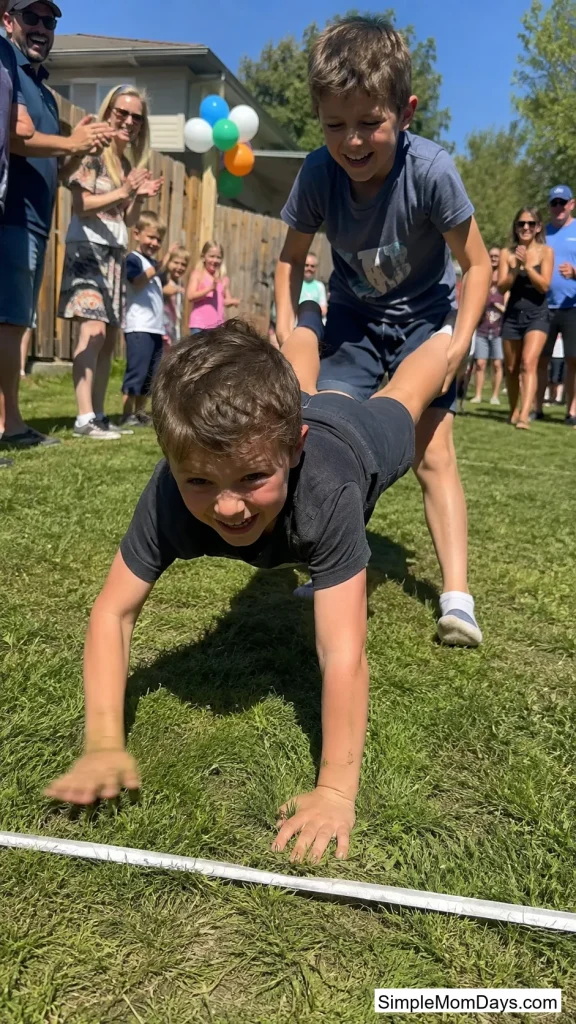
Pair kids up so one holds their partner’s ankles while the other walks on their hands, both racing to a marker and back before the next pair takes off.
It’s harder than it looks for anyone under ten, so let younger kids do a modified version where the “wheelbarrow” crawls on hands and knees instead of straight arms.
No supplies needed beyond a marked start and finish line. Works best for ages 7 and up on soft grass rather than pavement.
2. Egg-and-Spoon Relay
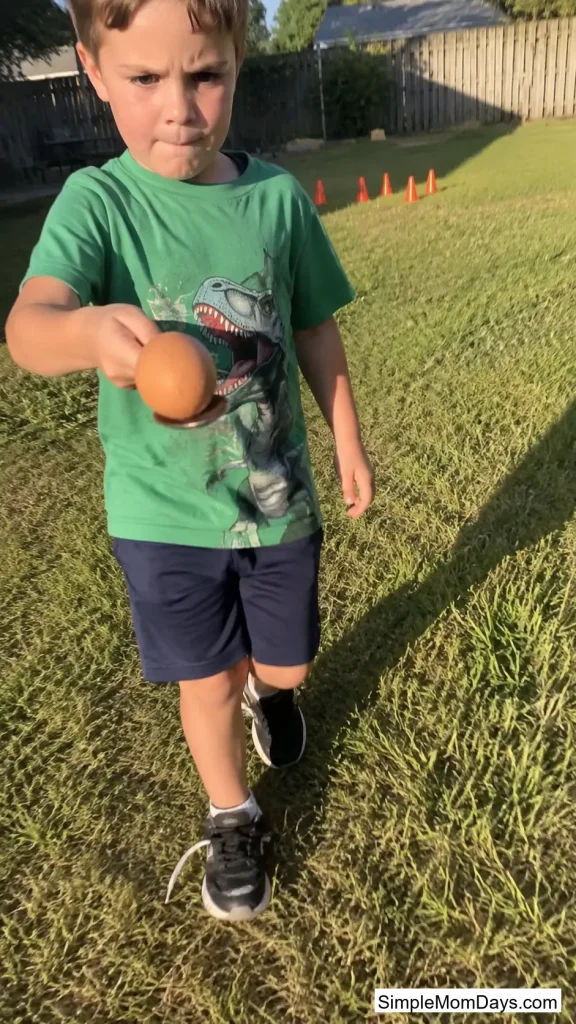
Each racer balances a hard-boiled egg (or a golf ball, if cracked eggs aren’t part of the plan) on a spoon and walks it to a cone and back without dropping it.
The tension comes from watching a kid speed-walk in a full panic trying not to drop the egg two feet from the finish line. Drop it, and they have to go back and start that leg over.
A dozen eggs and a handful of spoons costs next to nothing, and golf balls make it a mess-free version for younger kids.
3. Back-to-Back Balloon Relay
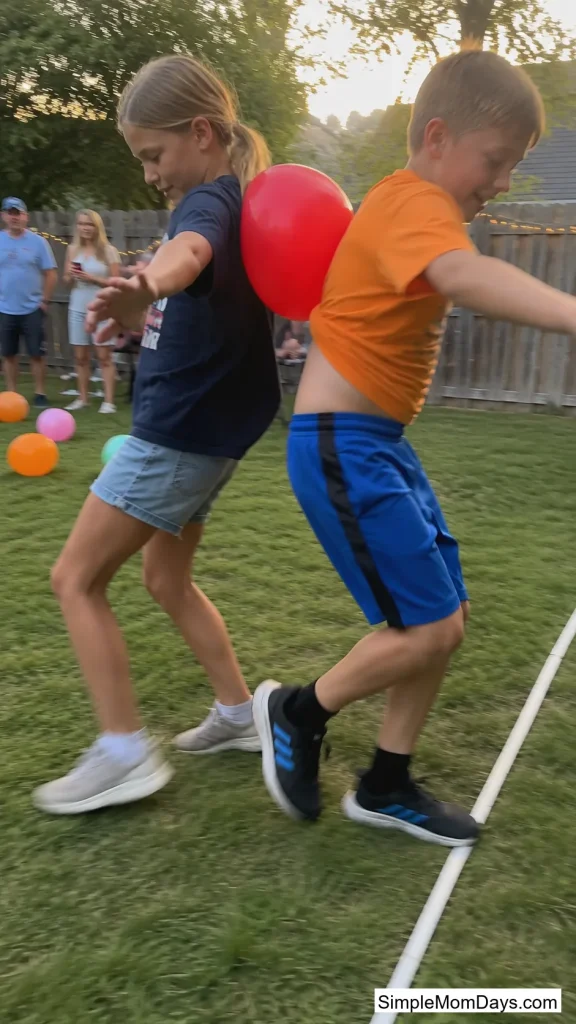
Partner kids up back-to-back with an inflated balloon squeezed between them, and have each pair shuffle sideways to a finish line and back without letting the balloon drop or pop.
It forces actual teamwork, since neither kid can see where they’re going without the other one calling out directions, which turns into its own kind of comedy.
A bag of balloons covers several rounds, and it works well as a quieter option between higher-energy games.
4. Potato Sack Race
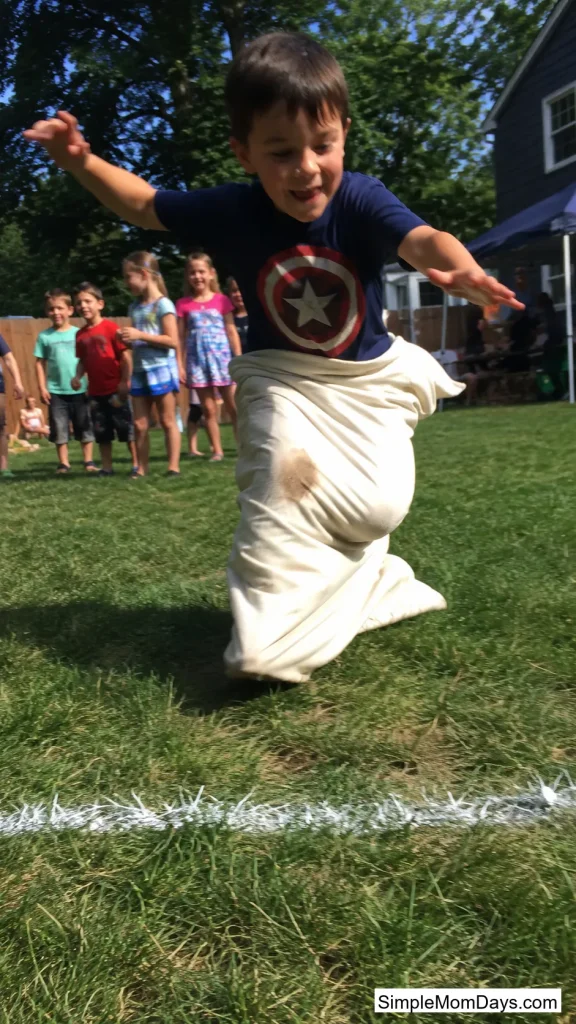
Give each kid a pillowcase or feed sack to step into and hop to the finish line, either one racer at a time or as a full group heat.
It’s a genuine field-day classic for a reason. The wobbling and inevitable face-plants are half the entertainment, and it scales easily whether five kids show up or twenty-five.
Old pillowcases work fine if you don’t own actual burlap sacks, and it suits ages 5 and up.
Water Games for Hot-Weather Parties
Warn parents ahead of time so kids show up in swimsuits, and keep a stack of towels by the back door for when it’s over.
5. Sponge Tag
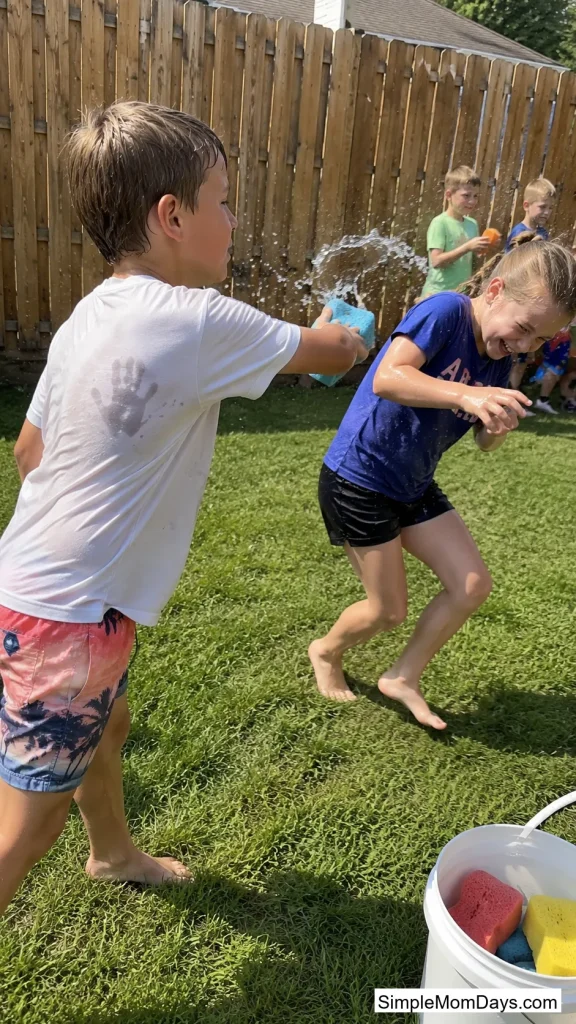
Soak a few sponges in a bucket of water and designate one or two kids as “it.” Getting tagged with a wet sponge means a kid is out, or switches roles with whoever tagged them.
It’s a gentler, less messy alternative to water balloons since nothing pops or leaves plastic scraps in the grass, and sponges can be re-soaked instantly for endless rounds.
Works well for younger kids who might be nervous about the sting of a water balloon. A few dollars in sponges covers the whole party.
6. Frozen Balloon Dig
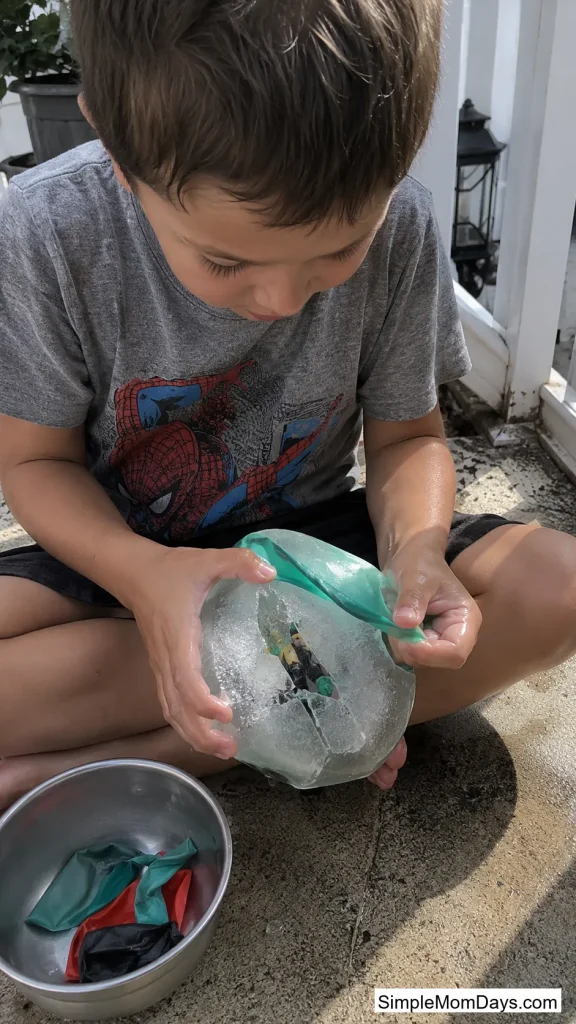
Freeze small toys inside water-filled balloons the night before, then let each kid pick one to peel and dig through with a spoon or their hands to find the surprise inside.
It’s less of a race and more of a slow, satisfying activity, which makes it a good option for winding the energy down between bigger games.
Freeze a batch a day or two ahead so nothing’s rushed last minute. Works for a wide age range since kids can go at their own pace.
7. Water Balloon Piñata
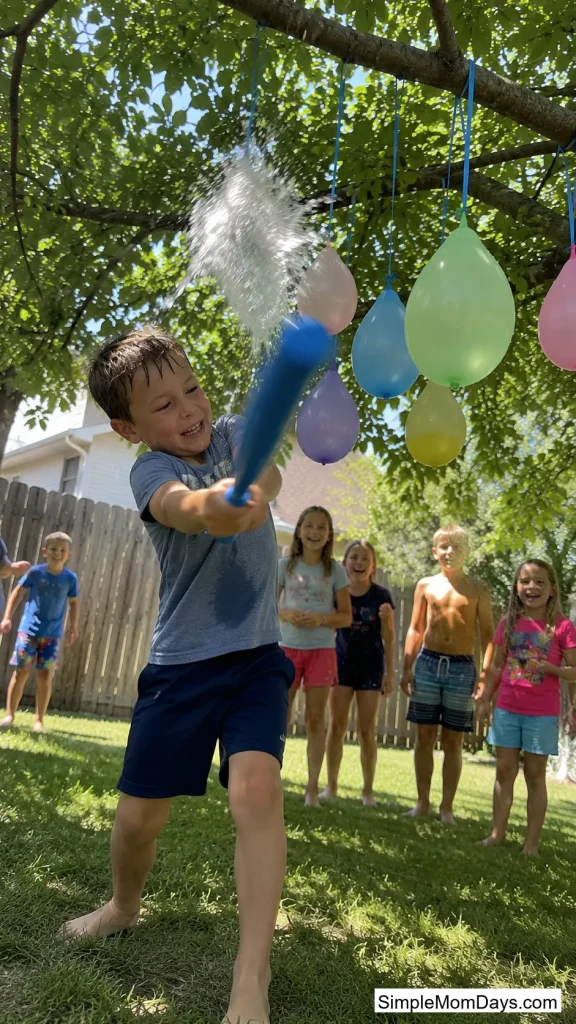
Hang a cluster of water balloons from a low tree branch and let kids take turns swinging a plastic bat at them, blindfolded or not depending on age.
The unpredictability of when a balloon actually bursts, versus just swinging wildly through empty air, keeps the whole group watching and cheering for each turn.
Tie balloons in clusters of two or three so there’s a decent chance of contact. Best for a yard with at least one sturdy low branch.
8. Musical Water Balloons
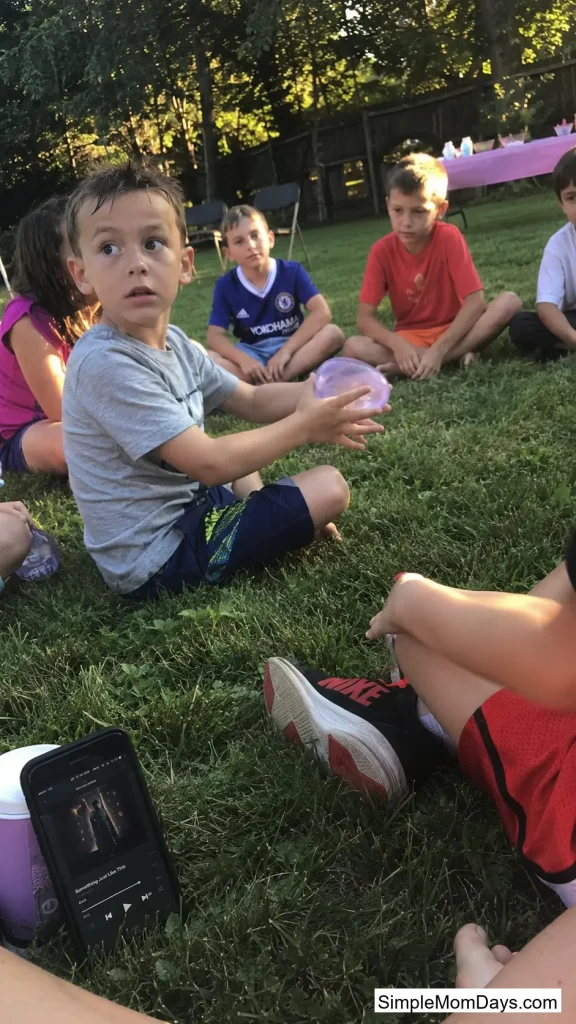
Sit everyone in a circle and pass a water balloon around while music plays. When it stops, whoever’s holding it is out, or for a wetter version, has to pop it over their own head.
It’s musical chairs with higher stakes, and the anticipation of the music cutting off keeps kids passing faster and faster each round.
Use a phone speaker for music, and keep a bucket of extra balloons nearby since a few will pop early by accident.
Classic Yard Games With a Twist
These don’t need much explaining, since most kids have played some version of them before, which makes them an easy way to keep things moving without a long rules briefing.
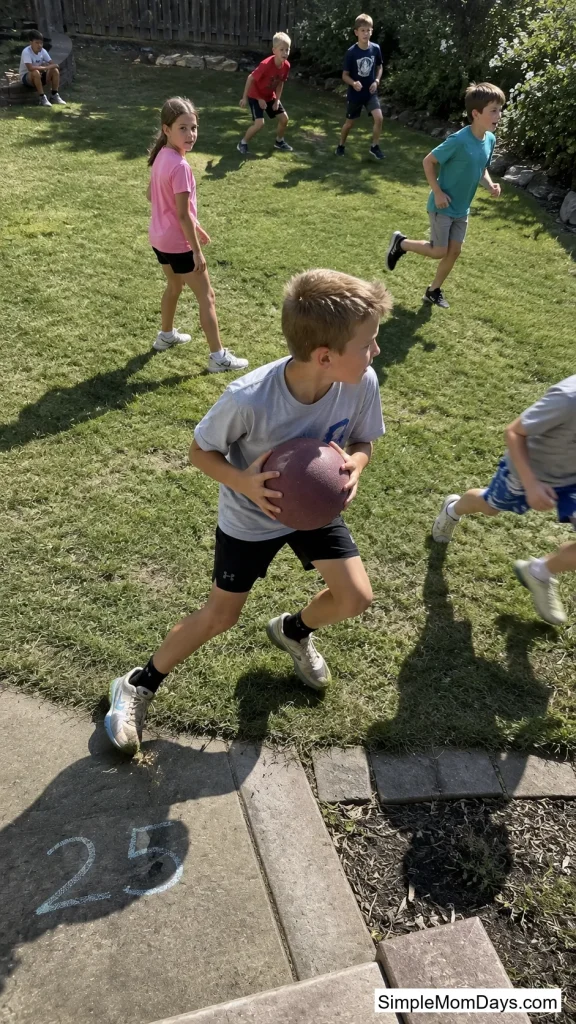
9. SPUD
Assign every kid a number, then toss a ball in the air and call one out. That kid grabs the ball while everyone else scatters, then freezes the group in place once they’ve got it and takes four steps toward the nearest player to try to hit them below the waist.
Getting hit, or missing a throw, adds a letter toward spelling S-P-U-D, and whoever spells it out first is eliminated. It rewards both speed and a decent throwing arm, so mixed-age groups tend to stay competitive.
All that’s needed is one soft ball. Works best with at least six kids so there’s real chaos when everyone scatters.
10. Shark and Minnows
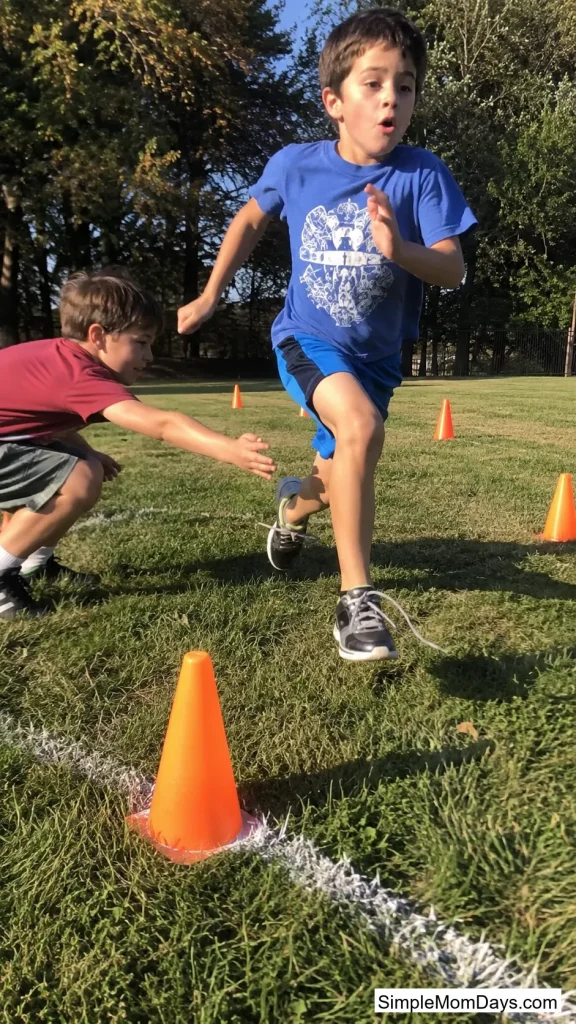
Mark off a rectangle with cones, pick one or two kids to be “sharks” in the middle, and have the rest line up as “minnows” trying to run across without getting tagged.
Tagged minnows freeze in place as “seaweed,” reaching out to tag anyone who runs past without being able to move their feet, so the playing field gets more chaotic with every round.
No equipment beyond cones or chalk to mark boundaries. Works well for a wide age range since younger kids can play minnow while older kids take shark duty.
11. Capture the Flag
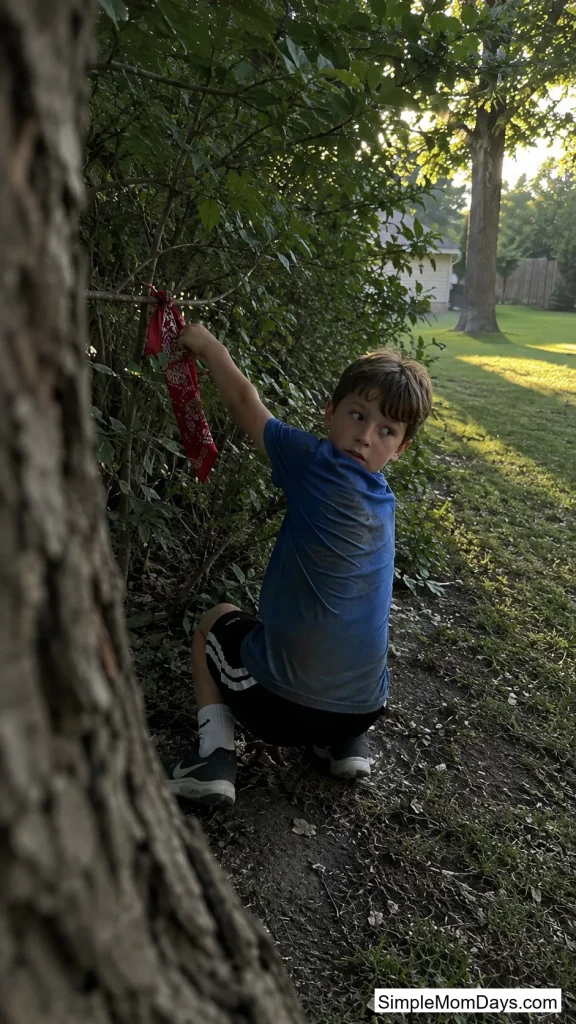
Split into two teams, each hiding a flag (a bandana or small object works fine) somewhere in their half of the yard, then send everyone to sneak into enemy territory and grab it without getting tagged.
It rewards strategy as much as speed, since a team that just charges in usually gets picked off before they even spot the flag. Older kids tend to get genuinely invested in guarding their own side.
Needs a decently sized yard or a park nearby, and works best for ages 8 and up given the strategy involved.
12. Human Ring Toss
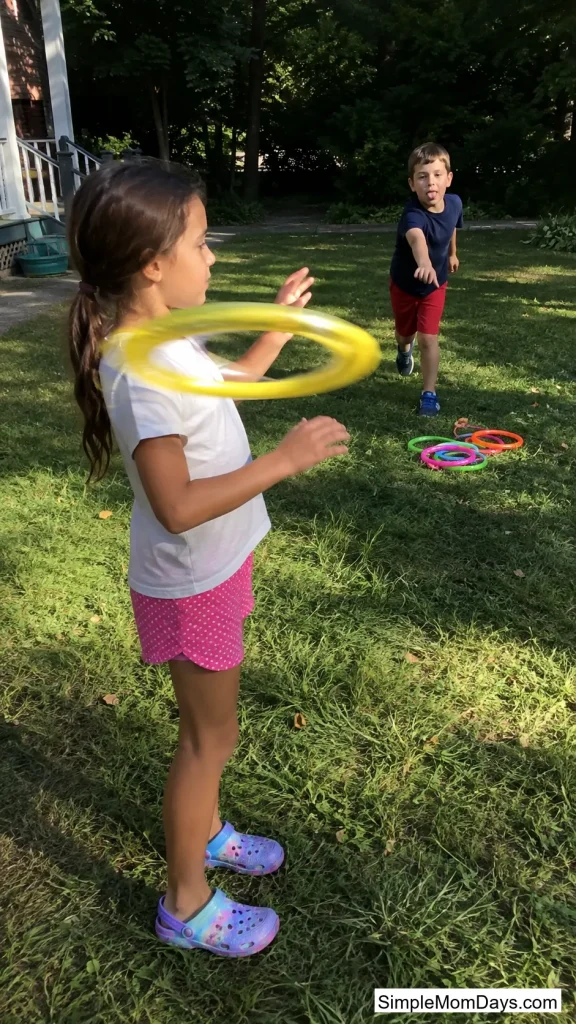
Have a kid stand still while teammates try to toss pool rings or hula hoops over their head and shoulders from a set distance away.
Turning a person into the target instead of a peg flips the usual ring toss game on its head, and kids find it endlessly funny to be the “post” for a few rounds.
A set of pool rings costs under $15 and doubles as a pool toy after the party’s over.
Obstacle Course and Balance Challenges
These take a bit more setup than the others, but most of it comes from things already sitting in the garage.
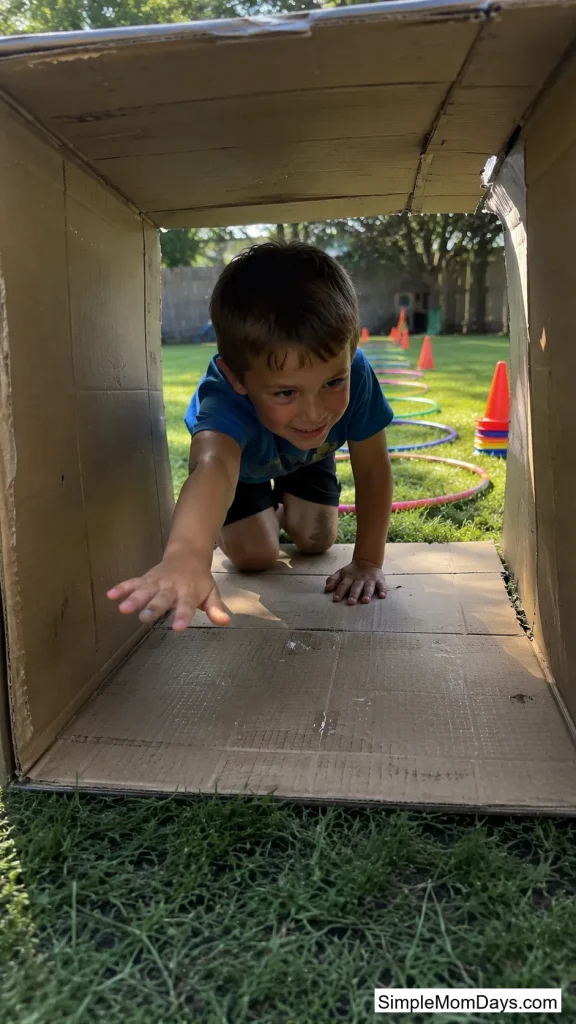
13. DIY Household Obstacle Course
Build a course out of whatever’s around: a cardboard box tunnel, a line of hula hoops to hop through, a blanket-draped chair crawl, and a row of cones to weave between.
Letting kids help design the course ahead of time tends to make them more invested in running it, and it keeps the whole thing flexible enough to adjust mid-party if a section turns out too easy or too hard.
Costs nothing if it’s built from items already at home, and works for almost any age once the difficulty of each station is scaled accordingly.
14. Hot Lava Crossing
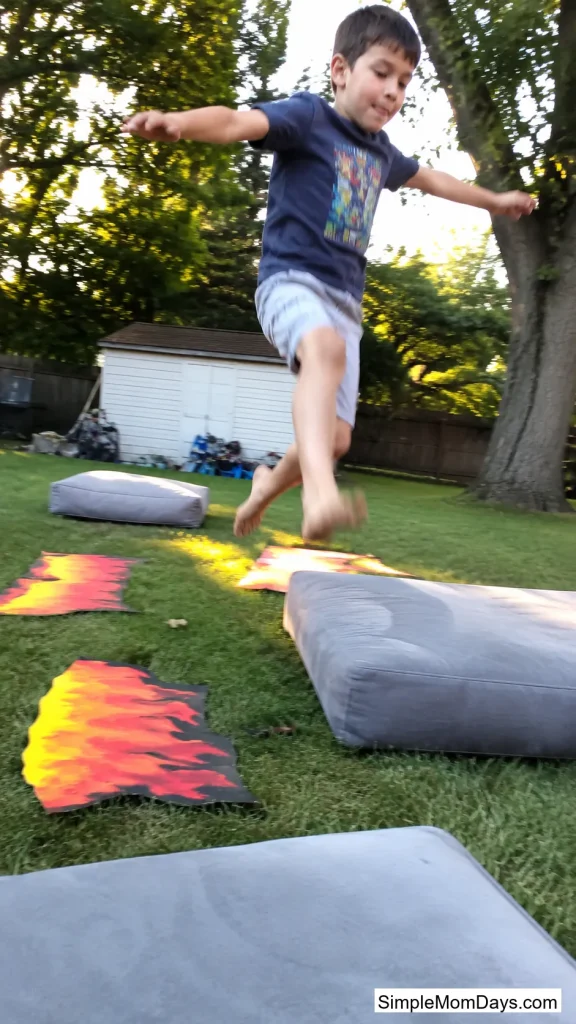
Scatter cushions, stepping stones, or pieces of cardboard across the yard and challenge kids to get from one side to the other without touching the “lava” ground in between.
The wobbling and mid-air scrambling to find the next safe spot is what makes it funny to watch, and it’s easy to make harder by spacing the pieces further apart for older kids.
Works with items already lying around the house. Best for a group of six or fewer at a time so there’s no pileup waiting for a turn.
15. Bean Bag Balance Beam Walk
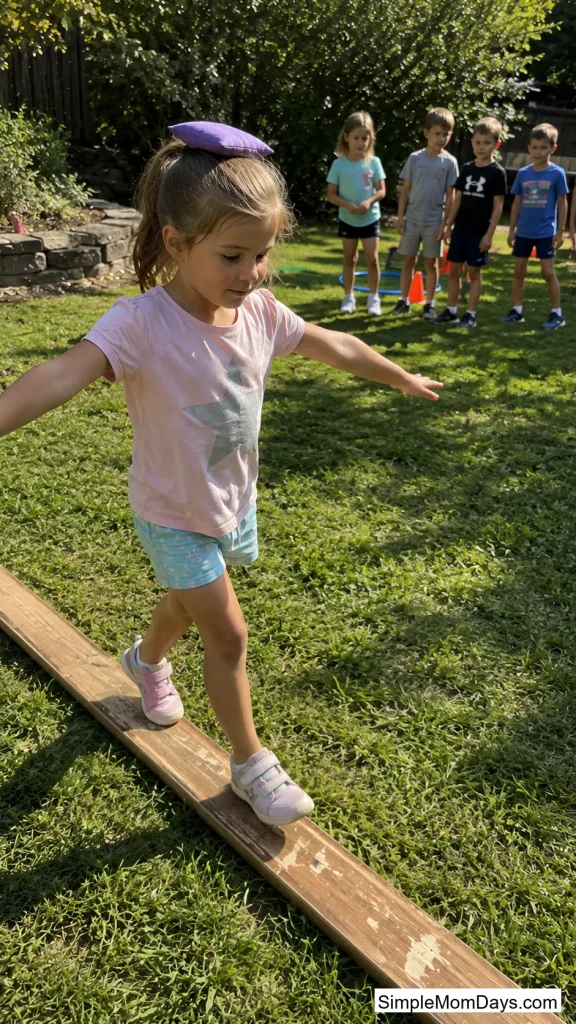
Lay a plank or a strip of tape on the ground as a balance beam, and have each kid walk across it while balancing a bean bag or small book on their head.
It’s a quieter, lower-energy game that works well for younger kids or as a breather between the games that involve running and yelling.
A 2×4 plank or a strip of painter’s tape works fine. Suits ages 4 and up since balance is the main skill being tested, not speed.
Carnival-Style Target Games
Set two or three of these up side by side so kids can rotate through like a mini fair instead of waiting in one long line.
16. Balloon Dart Board
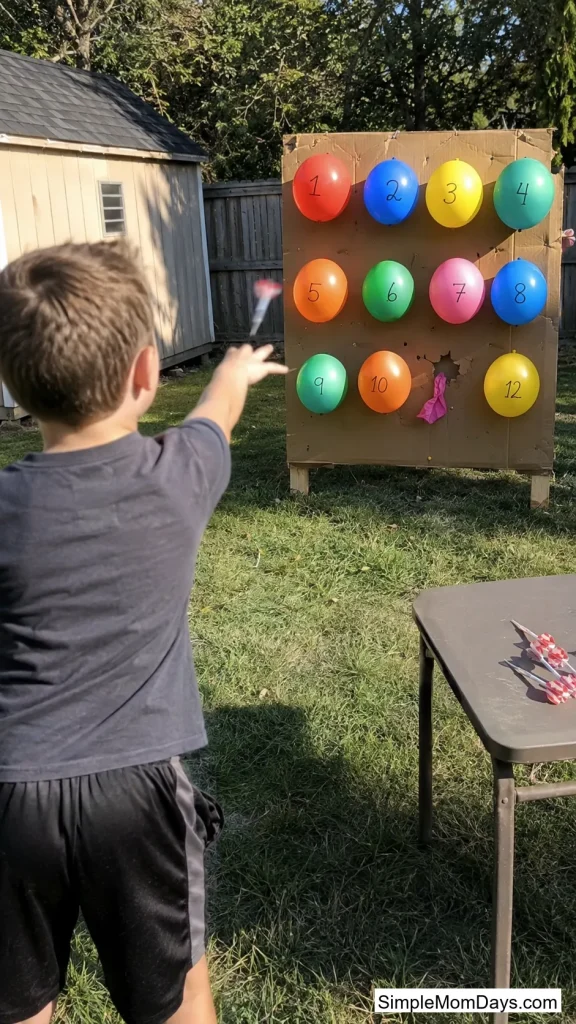
Tape a grid of inflated balloons to a large piece of cardboard, write a point value on each one with a marker, and let kids take turns tossing darts or throwing bean bags at the board.
The satisfying pop of a direct hit makes this one of the loudest, most re-playable stations at the party, and tallying up points gives it a bit of friendly competition without needing teams.
A bag of balloons and some cardboard is the whole setup. Use soft-tip darts or bean bags instead of sharp ones for younger kids.
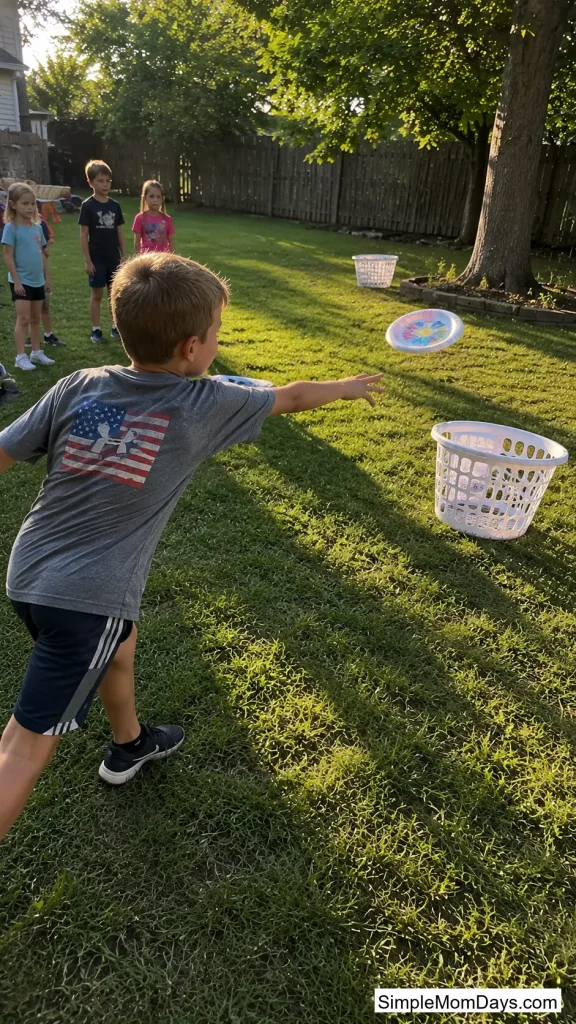
17. Paper Plate Frisbee Golf
Set up a mini course using buckets or laundry baskets as targets, and give each kid a paper plate to fly (or a real frisbee, if there’s one lying around) toward each hole.
It moves at a relaxed pace compared to the running games, which makes it a good option to keep quieter kids engaged without pushing them into anything too physical.
Paper plates cost almost nothing and can be decorated ahead of time as part of the party activity itself.
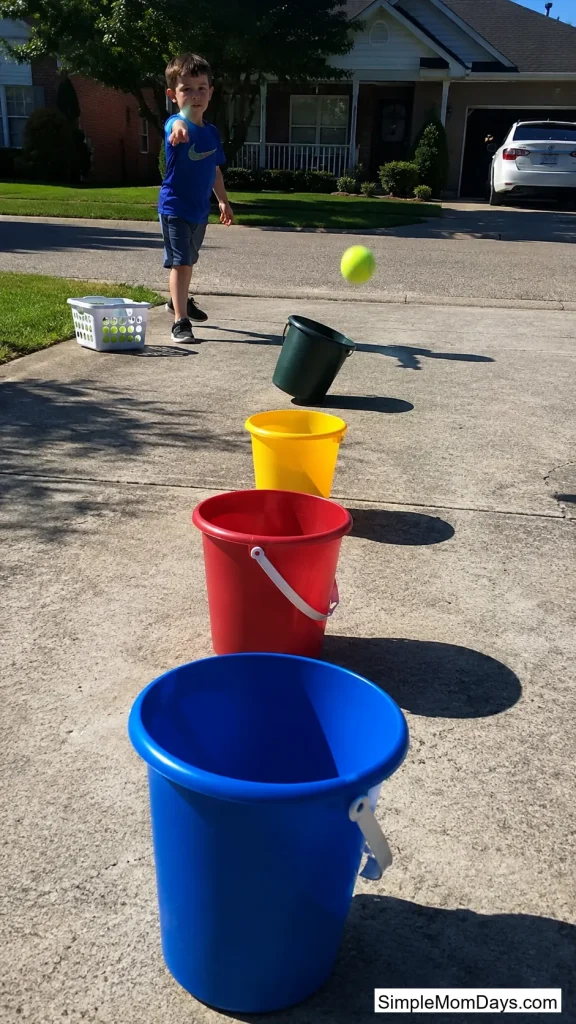
18. Bucket Ball Toss
Line up a few buckets at different distances and let kids toss balls in, scoring more points for buckets farther away.
It’s simple enough for even the youngest guests to join in, and setting up multiple buckets means several kids can play at once instead of waiting their turn.
Works with any balls already lying around the house — tennis balls, bouncy balls, even rolled-up socks in a pinch.
Giant Backyard Versions of Classic Games
These take a little more setup ahead of time, but they double as decor while kids aren’t actively playing them.
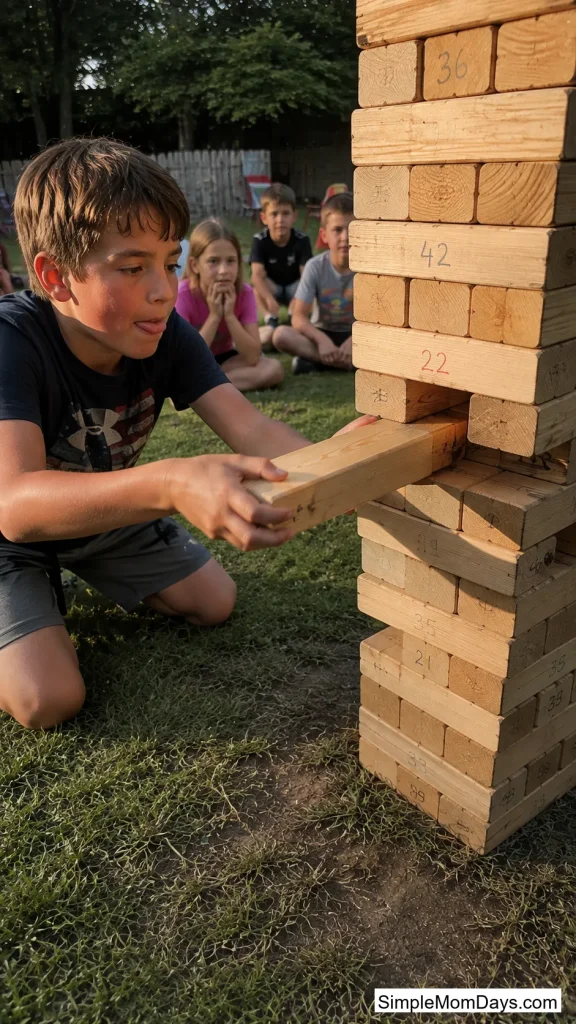
19. Giant Jenga
Stack oversized wooden blocks into a tower and take turns pulling one out from lower down to place on top, trying not to be the one who topples it.
Watching a tower of two-by-fours wobble is somehow funnier than the tabletop version, and it works as well for adults hovering nearby as it does for the kids playing.
A set runs $40 to $60, or can be built from cut lumber for less. Best for ages 6 and up who can handle the blocks safely.
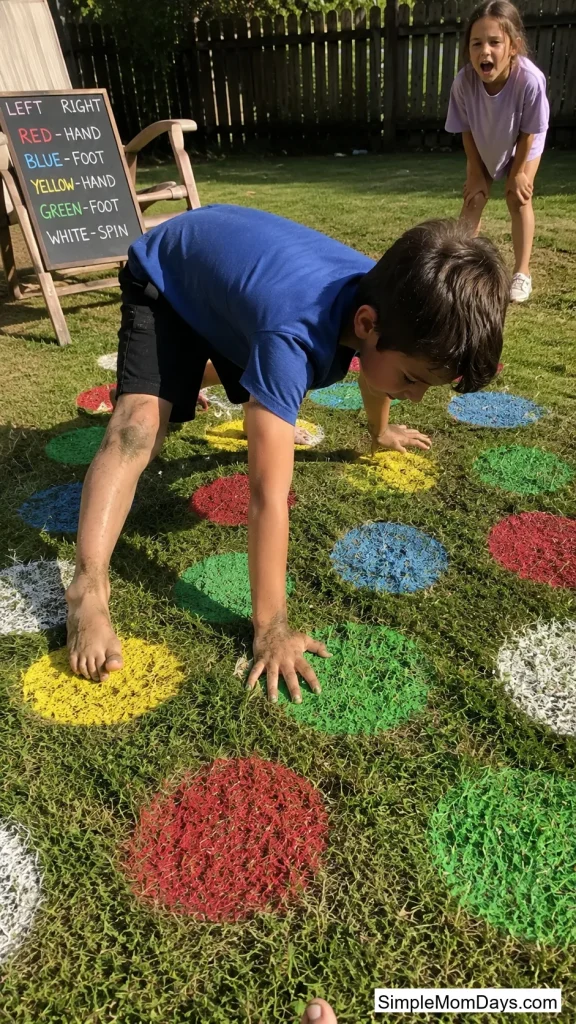
20. Backyard Lawn Twister
Paint or tape colored circles directly onto the grass in a Twister-style grid, then call out hand-and-foot combinations for kids to contort into.
The outdoor version removes the worry of a torn plastic mat, and grass gives a softer landing than a garage floor when someone inevitably tumbles over.
Washable outdoor spray paint or chalk works for a temporary setup. Suits ages 5 and up depending on flexibility.
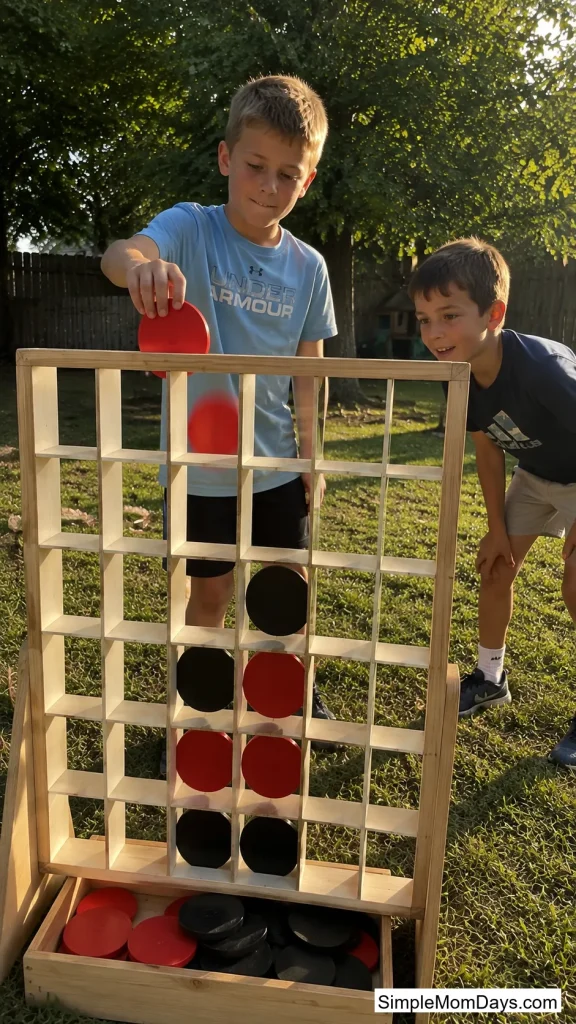
21. Giant Connect Four
Build or rent an oversized version of the classic vertical grid game and let kids drop giant discs in, trying to connect four in a row before the other team does.
It slows the pace down compared to the running games, giving kids a strategy-focused option to rotate into when they need a break from being out of breath.
A basic wooden set can be built for under $50, and it holds up well as a permanent backyard fixture long after the party ends.
Final Thoughts
Pick a handful from each energy level rather than trying to run through all 21 in one afternoon. A rotation of one relay, one water game, and one quieter balance challenge tends to cover the whole range of kids showing up, from the ones who want to run laps to the ones happy to sit and dig through a frozen balloon.