


The candy bowls are full, the decorations are up, and twelve kids in costume are standing in your living room with nothing to do until the pizza arrives. That gap is where a Halloween party either turns into a memory or turns into chaos.
Most “best Halloween games” lists recycle the same handful of ideas — apple bobbing, a pin-the-spider poster, a pillowcase race. Those aren’t bad, but if you’ve hosted more than one Halloween party, your guests have already played them. This list leans toward games you probably haven’t run before, mixed in with a few classics that got a real twist instead of just a new name.
Every game below uses stuff you likely already have or can grab cheap, and each one tells you roughly what age it fits so you’re not stuck refereeing a game that’s too babyish for your 10-year-olds or too fast-paced for your preschoolers.
Classic Games With a Halloween Twist
These borrow the bones of games kids already know how to play, so there’s zero learning curve, but the Halloween rules change how they actually feel.
1. Zombie Footsteps
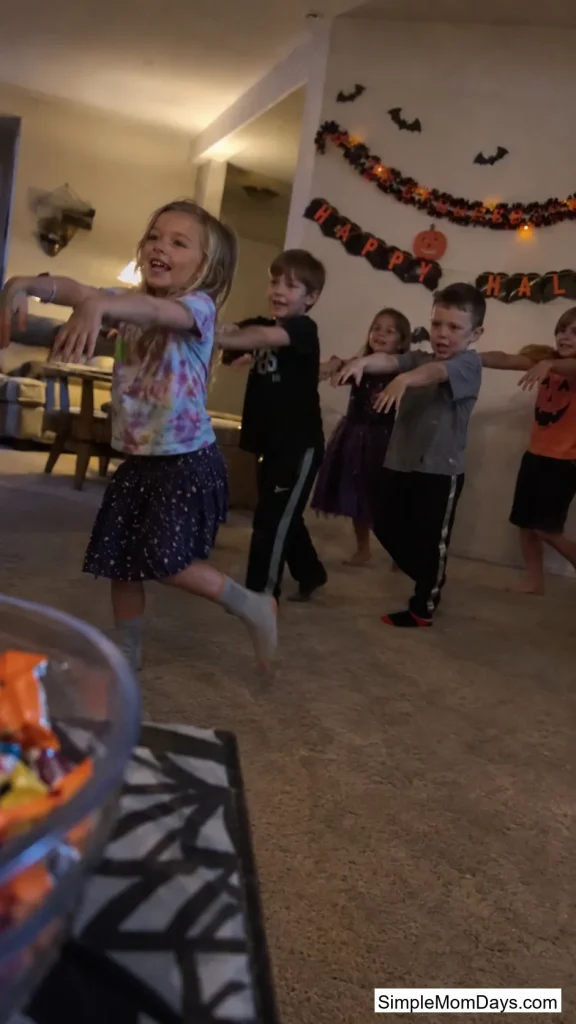
One adult stands at the front of the room facing away, with a small pile of candy at their feet. The kids line up at the far wall and creep toward the candy like zombies — slow, shuffling steps, arms out. Whenever the adult spins around, everyone has to freeze mid-shuffle.
Anyone caught still moving gets sent back to the start line. It’s Grandma’s Footsteps, but the zombie shuffle makes freezing genuinely hard, so even kids who are “out” a few times stay entertained watching everyone else wobble.
Works well for ages 5 and up, needs zero setup, and runs 10-15 minutes depending on group size.
2. Giants, Wizards, Trolls
Split the group into two teams standing at opposite ends of the room. Each team huddles and secretly picks one of three characters — giants beat trolls, trolls beat wizards, wizards beat giants, like rock-paper-scissors but with your whole body.
Both teams line up, count to three together, then act out their choice at the same time: giants stomp and roar, wizards cast a spell with jazz hands, trolls crouch and growl. Whichever team “loses” has to run back to their wall before the winning team tags them.
This one gets loud fast, so it’s better for a backyard or a big open room than a crowded living room. Best for ages 6 and up.

3. Wink of Doom
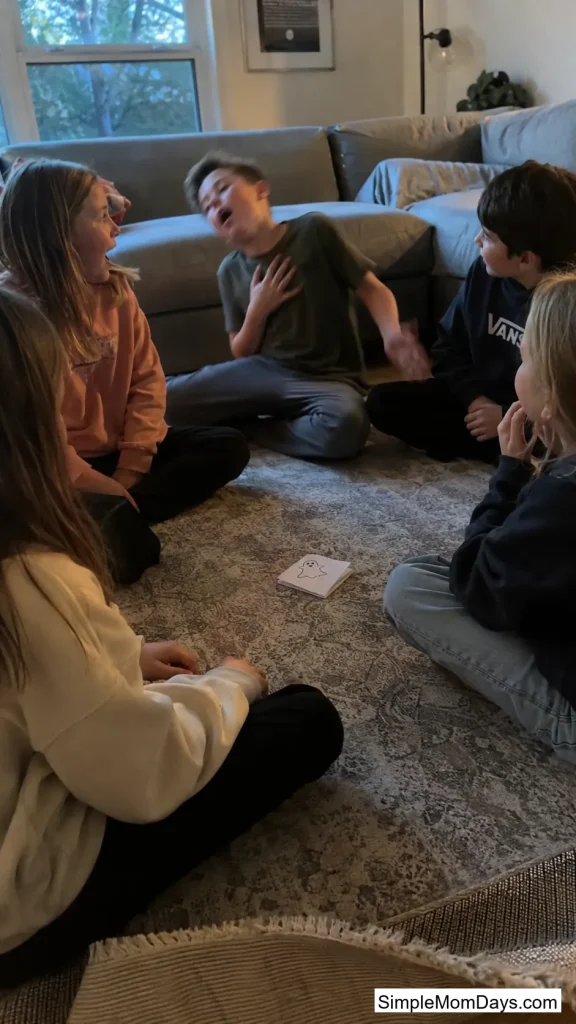
Everyone sits in a circle. One player is secretly the “ghost” (picked by drawing a card or a folded slip of paper with a ghost drawn on it). The ghost eliminates people by catching their eye and winking at them — no one else can see it happen.
Once winked at, a player has to count to five in their head, then collapse dramatically wherever they’re sitting. The rest of the group tries to figure out who the ghost is before everyone’s been “haunted.” It rewards kids who are good at reading faces, which usually isn’t the same group who wins the running games.
Best for ages 7 and up, since younger kids tend to blurt out the ghost’s identity by accident.
Quiet Guessing and Trivia Games
Good for right after a sugar crash, or for mixed ages where you want everyone sitting down and talking instead of running.
4. Whispered Warning
Line the kids up single file. Whisper a spooky phrase into the first kid’s ear — something like “the pumpkin has three eyes” — and have them pass it down the line, whispering it exactly once to the next person.
The last kid says out loud what they heard, and it’s almost never what you started with. Compare the garbled version to the original and let the group guess where it went wrong. This needs nothing but a group of kids and takes about five minutes per round, so it’s an easy filler while you’re waiting on food or the next activity.

5. Haunted Family Feud
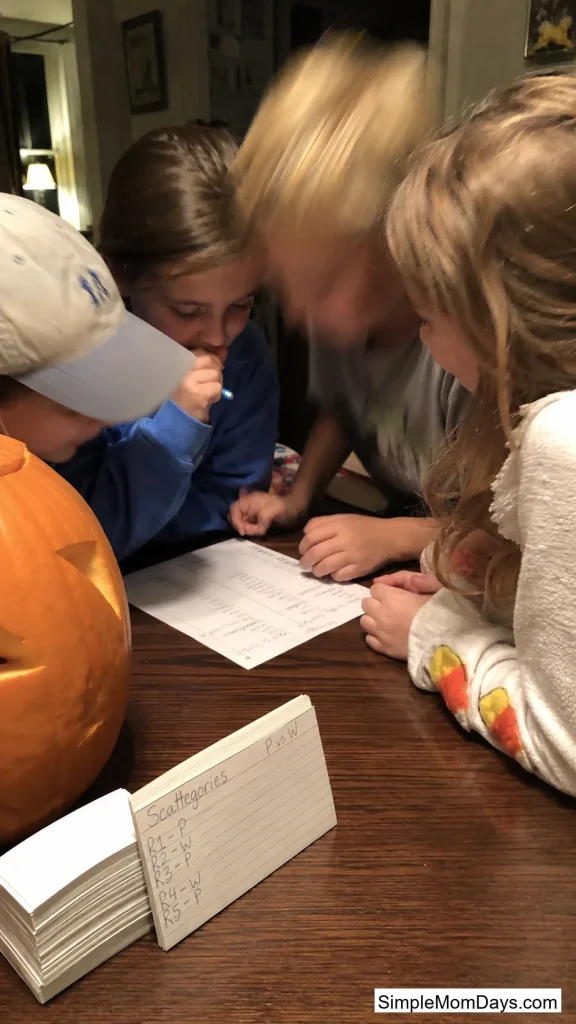
Split into two teams of four or five and write out Halloween-themed prompts ahead of time — “name something in a haunted house,” “name a Halloween candy,” “name something a witch owns.” One adult plays host and reads the prompts.
Teams huddle and try to guess the most popular answer, Family Feud-style, with points for guesses that match what most people would say. It works because kids get to argue strategy with their team before answering, which turns into its own kind of fun separate from the actual game.
Best for ages 8 and up who already understand the show’s format; younger kids can play but usually need an adult walking them through each round.
Toss and Aim Challenges
Simple target games that work as a rotating station if you’ve got more than one activity going at once.
6. Eyeball Cup Toss
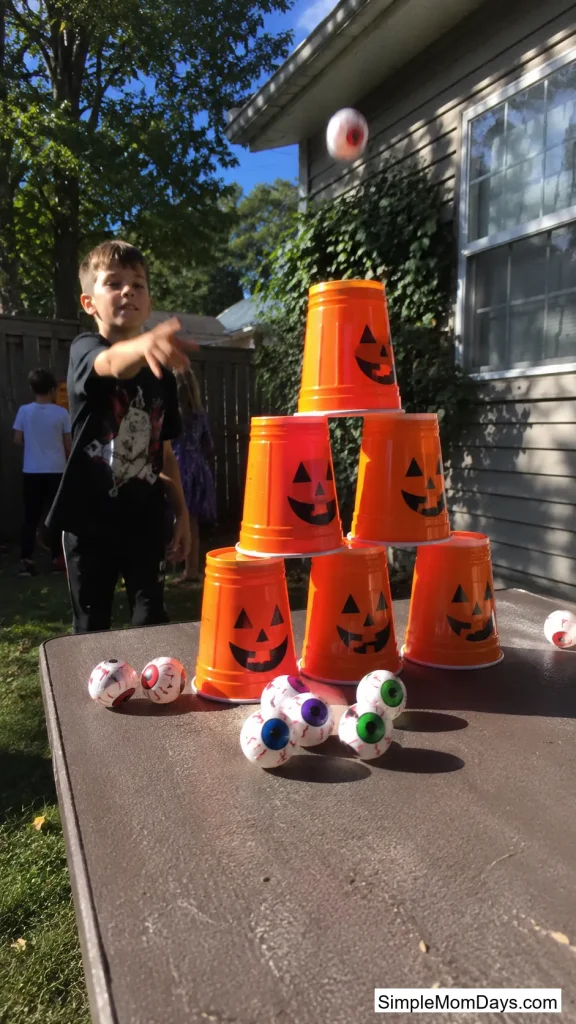
Set up a small pyramid of plastic cups and give each kid a handful of plastic eyeballs (craft stores sell bags of them for a couple dollars around October). They take turns tossing eyeballs into the cups from a marked line, scoring more points for cups farther back.
Swap in a lightweight foam ball if you can’t find plastic eyeballs — the point is the toss-and-score rhythm, not the exact prop. Keep the line close for kids under 6 and move it back for older ones so everyone’s actually challenged.
7. Spiderweb Bean Bag Toss
Draw or tape a big spiderweb pattern onto a piece of cardboard or a bedsheet hung against a wall, then cut or mark different-sized holes worth different points — smaller holes near the center score higher. Kids toss bean bags or rolled-up socks through the holes.
It plays like a homemade cornhole board and holds attention because kids want another turn to beat their own score, not just to beat their friends. A stack of five bean bags per kid keeps the line moving without long waits between turns.

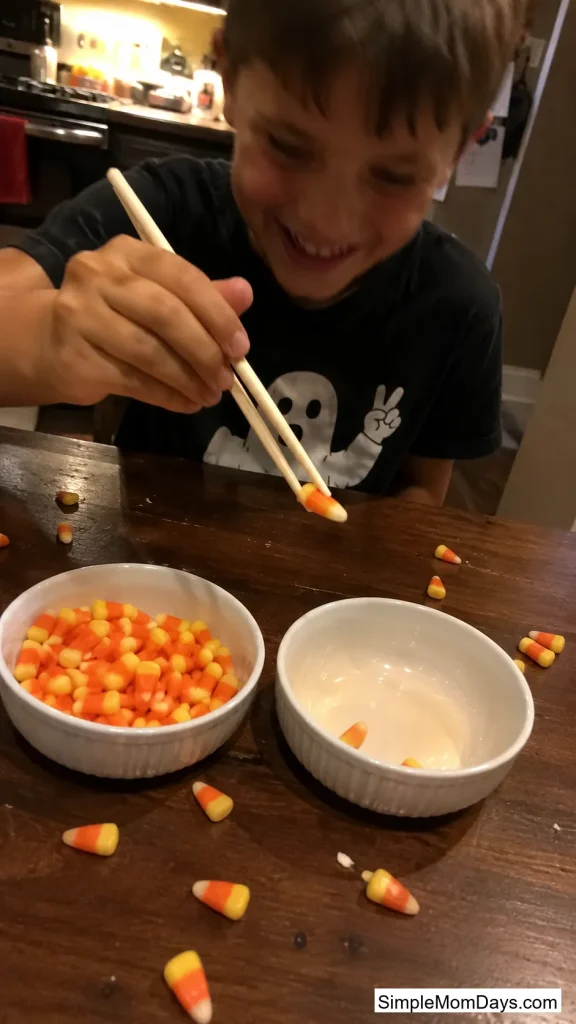
8. Candy Corn Chopstick Challenge
Give each kid two bowls — one full of candy corn, one empty — and a pair of chopsticks. On “go,” they’ve got 60 seconds to move as many pieces as they can from the full bowl to the empty one using only the chopsticks.
Kids who’ve never held chopsticks before end up laughing at themselves more than actually competing, which takes the pressure off. Hand younger kids two forks instead if chopsticks feel impossible — the timed, frantic energy is the same either way.
Races and Relays
These need a little more floor space but burn off the energy that builds up after twenty minutes of sitting-down games.
9. Broomstick Pumpkin Sweep
Give each kid a small broom (a toy broom or even a dustpan brush works) and a mini pumpkin or an orange balloon. On “go,” they sweep their pumpkin across the room to a finish line without touching it with their hands.
Lay down a zigzag path with tape or pool noodles to make it trickier for older kids, or keep it a straight line for younger ones. It’s a low-cost relay that turns something as ordinary as a broom into the whole game.

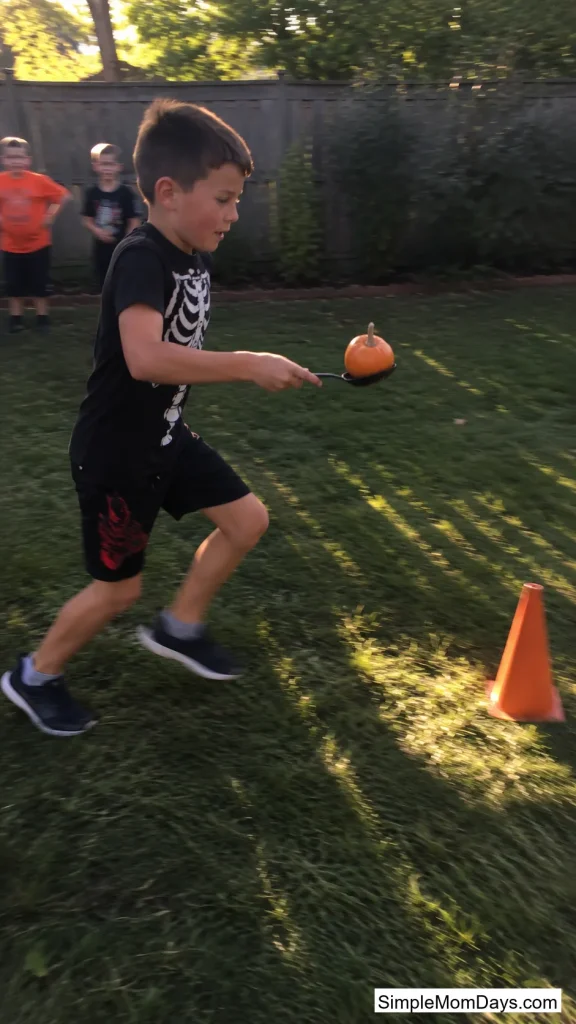
10. Pumpkin Spoon Relay
Split into teams and give the first runner on each team a large spoon with a mini pumpkin balanced on top. They race to a cone and back without dropping it, then hand the spoon to the next teammate.
A dropped pumpkin means going back a few steps, not starting completely over, which keeps younger kids from getting discouraged mid-race. Swap the mini pumpkin for a golf ball or a small orange if pumpkins aren’t in your budget this year.
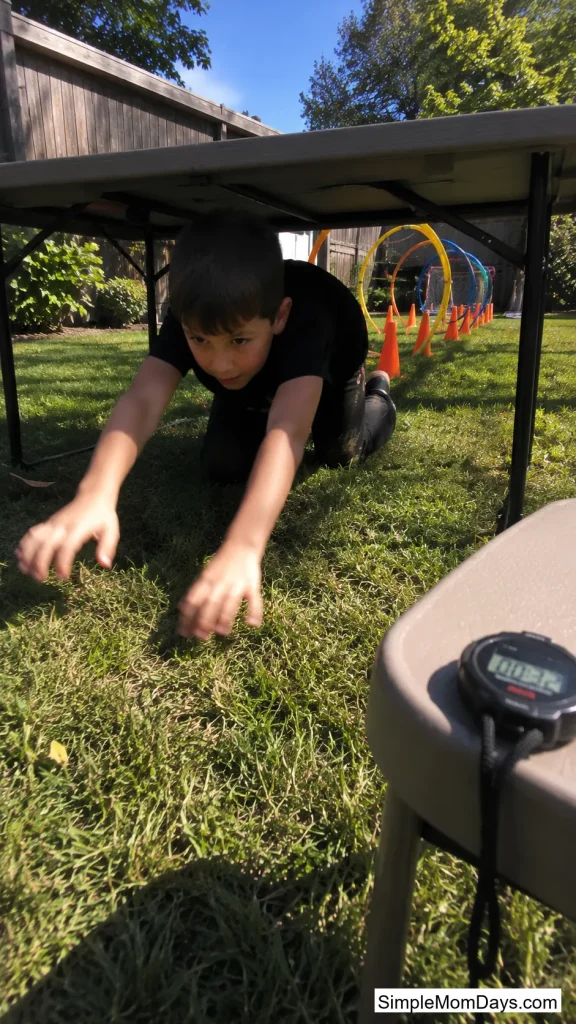
11. Zombie Crawl Obstacle Course
Set up a short course using cones, hula hoops, and a low table or two — kids have to crawl under, hop through, and weave around each obstacle while shuffling like zombies the whole way, arms stretched out and groaning.
Time each kid or team and post the fastest times somewhere visible; the moaning and stiff-armed crawling make even a simple backyard setup feel like an event. This one runs best outdoors or in a garage where a little mess doesn’t matter.
Hands-In Sensory Games
These are the ones kids talk about for weeks afterward — a little gross, entirely optional for squeamish guests, and worth doing outside or over an easy-to-wipe floor.
12. Skeleton Bone Dig
Break a cheap plastic skeleton decoration into its separate pieces and bury them in a bin of dry rice, dried beans, or potting soil. Give each kid a small garden trowel or a plastic spoon and set a timer.
Whoever finds the most bones — or the team that reassembles a full skeleton first — wins. It’s quiet enough to run alongside a louder game happening across the room, which makes it a good station if you’re rotating small groups through different activities.

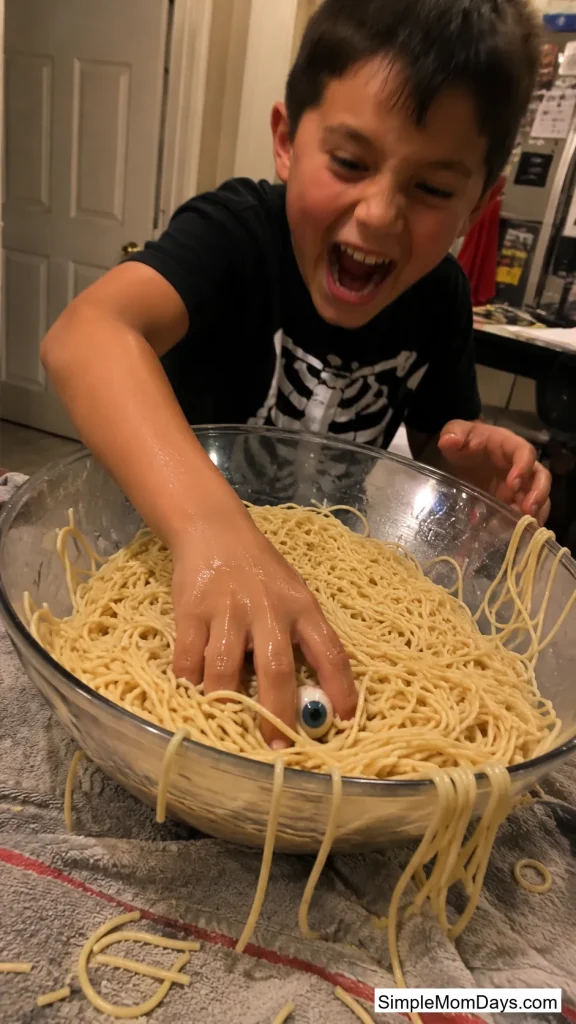
13. Spaghetti Eyeball Dive
Cook a big pot of spaghetti, let it cool, and mix in a handful of plastic eyeballs or peeled grapes. Kids reach in with bare hands and try to find every eyeball in 60 seconds.
The cold, slippery noodles get more reactions than the actual eyeballs do — most kids shriek on the first touch and dig in anyway. Lay towels down first, because noodles end up on the floor no matter how careful everyone is.
14. Mystery Guts Boxes
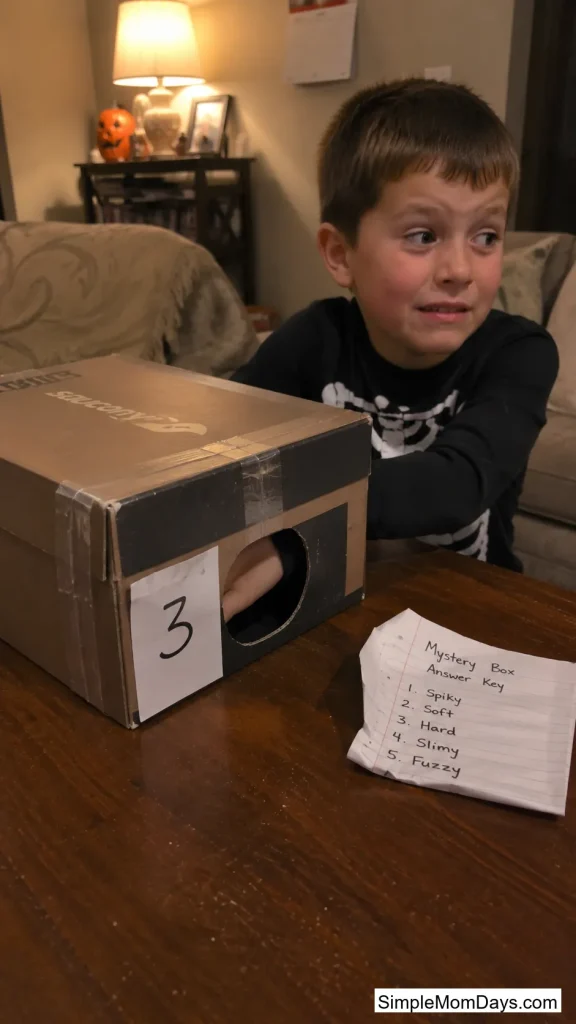
Cut a hand-sized hole into the side of a few shoeboxes and fill each one with a different squishy or textured item — cold cooked pasta for “brains,” peeled grapes for “eyeballs,” damp yarn for “guts.” Kids reach in one at a time and guess what they’re touching before peeking.
Label each box with a number instead of what’s inside, and keep a written answer key nearby so you can settle arguments once everyone’s had a turn. This works well as a rotating station for smaller groups of three or four at a time rather than the whole party at once.
Craft-Turned-Competition Games
Same materials as a normal Halloween craft table, but with a scoreboard attached, so kids who get bored of coloring quietly stay engaged.
15. Memory Match Card Duel
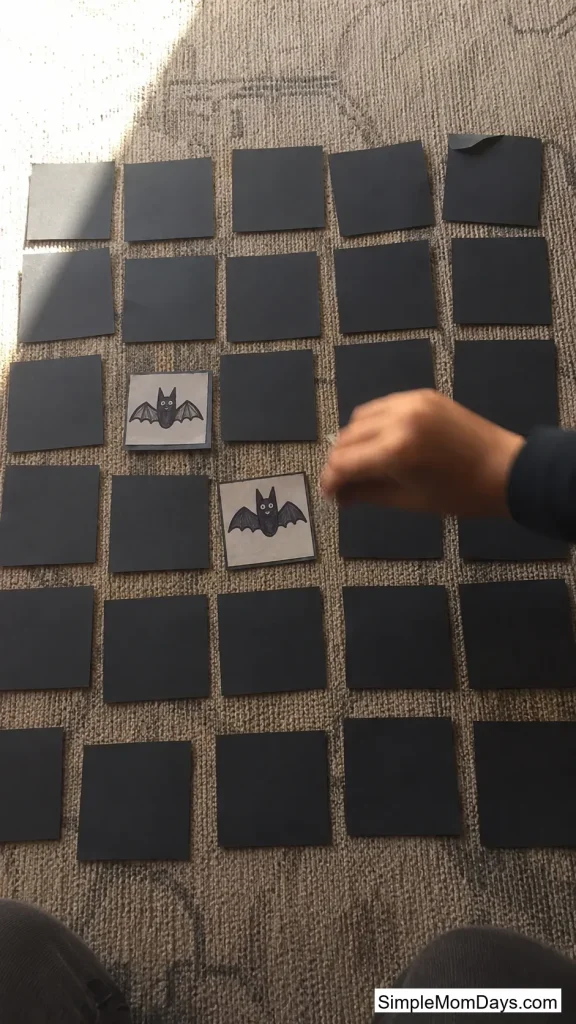
Cut 20 matching squares of card stock and draw simple Halloween images on each pair — a bat, a pumpkin, a ghost — using two of each design. Lay them face-down in a grid and let kids take turns flipping two cards at a time, keeping any pairs they match.
Because you make the cards yourself, you control the difficulty by how many pairs you include — ten pairs for younger kids, twenty for a group that wants more of a challenge. Whoever holds the most pairs when the grid clears out wins.
16. Monster Face Block Race
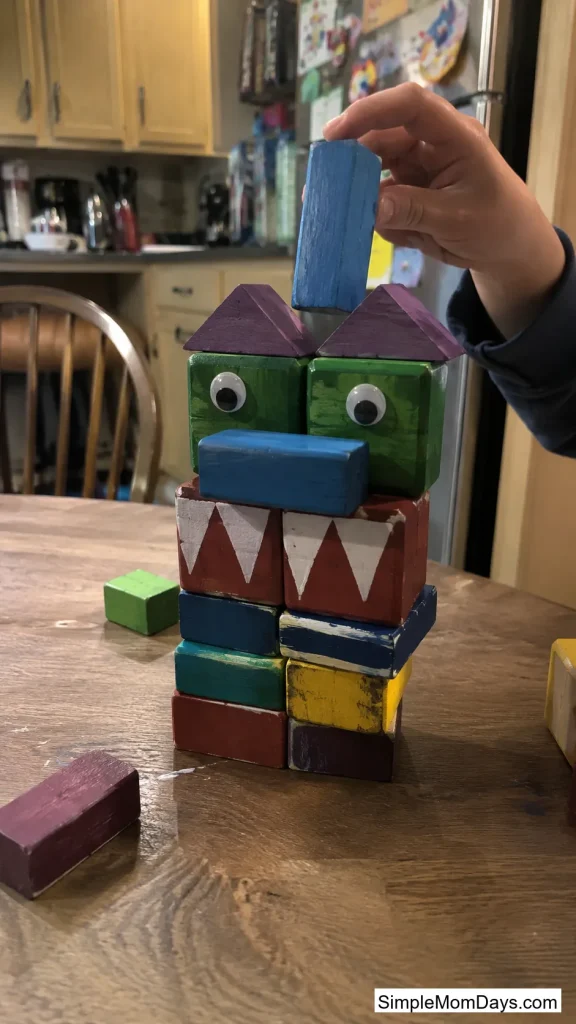
Paint a stack of wooden or foam blocks with different monster features ahead of time — googly eyes, jagged teeth, bolts, scars — enough for several full “faces.” Split kids into small teams and race to build the silliest complete monster face out of their pile before time runs out.
Let the group vote on categories afterward, like ugliest monster or most likely to be friendly, instead of a single overall winner. It spreads out the fun instead of leaving only one team feeling like they won something.
17. Dress-Up-the-Grown-Up Challenge
Give each small team of kids fifteen minutes and a pile of household items — scarves, hats, aluminum foil, safety-pinned fabric scraps — to design a costume for one willing adult. No glue, no cutting up real clothes, just what’s on hand.
The adult has to wear whatever gets built for the rest of the party, which turns into its own running joke as the night goes on. Kids who don’t usually love craft time tend to get pulled in once there’s a real person to dress up instead of a piece of paper.

Music and Movement Games
Quick to set up, easy to stop and restart if attention wanders, and good for filling gaps between bigger activities.
18. Skeleton Freeze Dance
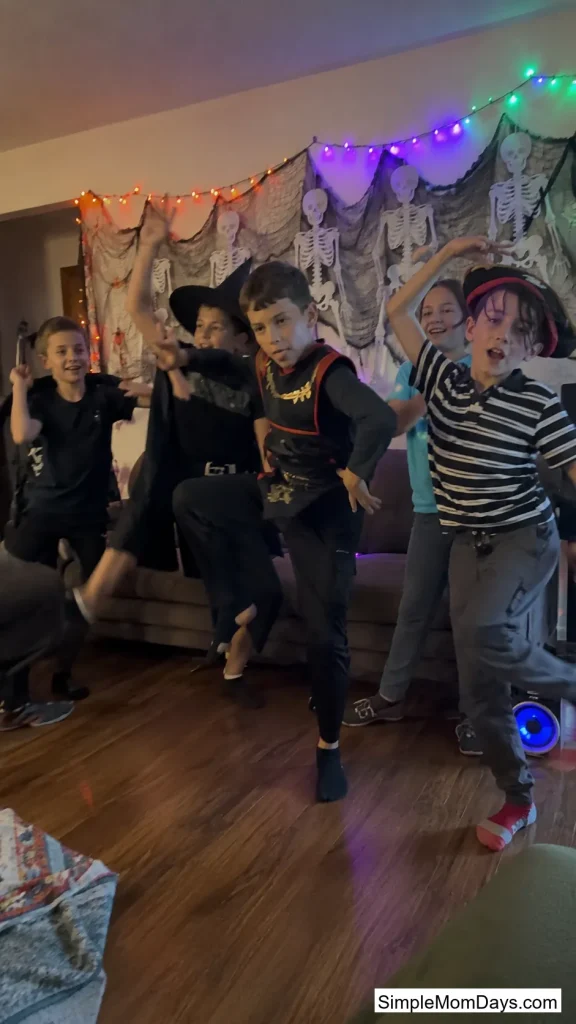
Play a Halloween playlist and have kids dance however they want — bonus points if you throw in a “Frankenstein walk only” or “float like a ghost” round partway through. When the music cuts off, everyone has to freeze in place, no matter how ridiculous the pose.
Anyone who wobbles or keeps moving sits out for one round, then rejoins for the next. It never really has a single winner, which keeps kids who got caught early from checking out — they’re back in the game a few seconds later.
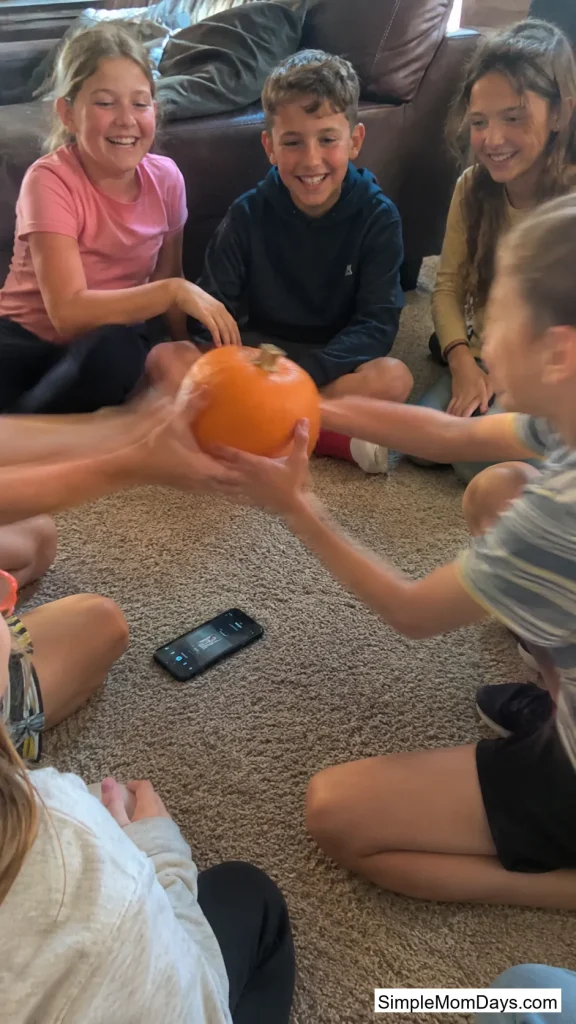
19. Musical Pumpkin Pass
Sit everyone in a circle and pass around a small pumpkin (real or plastic) while music plays, the same way you’d pass a hot potato. When the music stops, whoever’s holding the pumpkin does a quick silly task — three jumping jacks, a monster growl, a spooky pose — before the game starts back up.
Skipping elimination means no kid gets stuck watching from the sidelines, which makes this a solid choice for a mixed-age group where you don’t want anyone sitting out early.
Sixty-Second Showdowns
Short, timed challenges that work well back-to-back if you want a fast-paced stretch of the party without much setup between rounds.
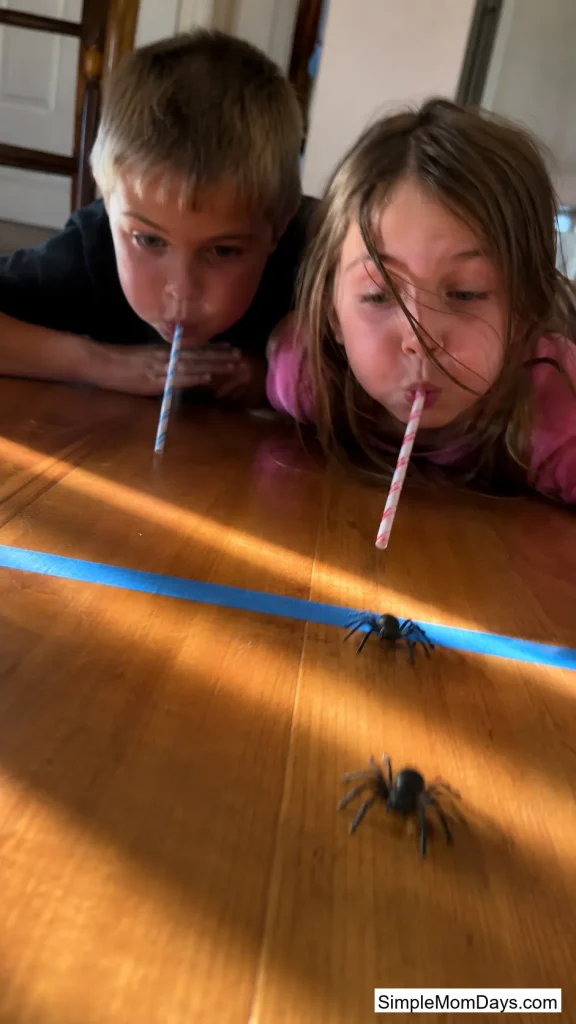
20. Straw Spider Race
Give each kid a drinking straw and a small plastic spider ring or pom-pom “spider.” Mark a start and finish line a few feet apart, and on “go,” everyone blows through their straw to push their spider across the finish line first.
No hands allowed, which turns something this simple into a surprisingly competitive scramble. It only takes a minute per heat, so you can run several rounds back to back until every kid’s had a turn to race.
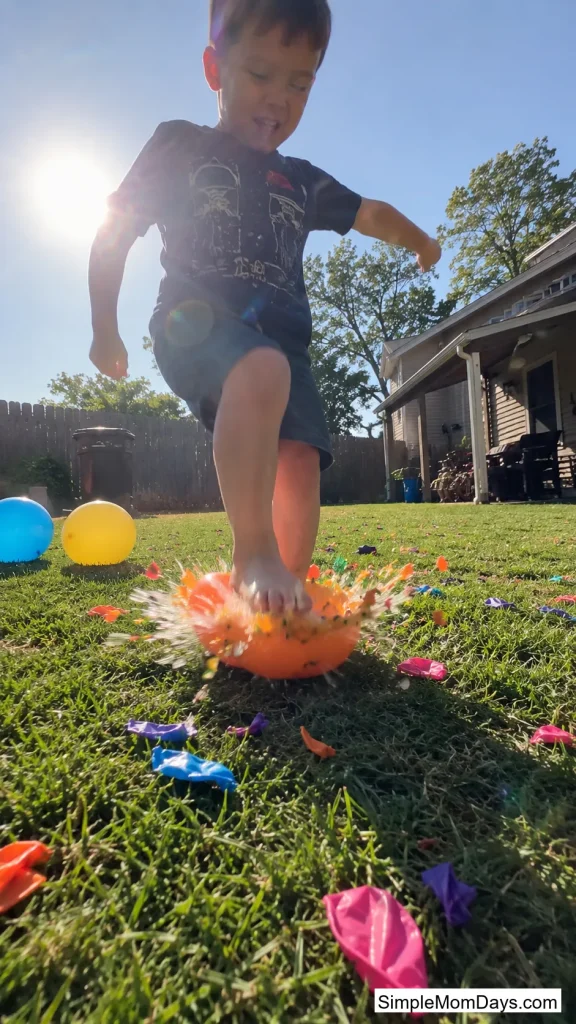
21. Balloon Pumpkin Stomp
Fill a batch of orange balloons with small toys, stickers, or wrapped candy before blowing them up, then scatter them across the yard or floor. On “go,” kids stomp to pop as many as they can in 60 seconds and collect whatever falls out.
The popping alone gets kids running around laughing before they’ve even noticed the prizes inside. Keep younger kids on a separate, smaller batch of balloons so they’re not competing directly against older, faster stompers.
Final Thoughts
You don’t need all 21 of these for one party — pick four or five that match your group’s energy and the space you’ve got, and keep one or two quiet options in your back pocket for when the sugar crash hits. Mixing a couple of active games with a sensory station and one quiet guessing game usually covers every kid in the room, from the ones who want to run around to the ones who’d rather sit and think.