
Most office Halloween parties run the same three plays: a costume contest, a pumpkin carving station, and a candy bowl parked by the coffee machine. Everyone shows up, takes one photo, and is back at their desk by 2pm. None of that is wrong exactly. It’s just been done in every conference room in America for a decade, and it shows.
This list skips the reruns. It covers costume twists that don’t require money or crafting skills, decorating ideas sized for an actual shared office instead of an event company’s photo shoot, food that works around dietary restrictions without singling anyone out, and a handful of options for teams that aren’t all in one building.
Pull two or three ideas from each section instead of trying to run all 23 in one afternoon. A party with six well-executed ideas beats one with twenty crammed into two hours.
Costume Ideas That Skip the Usual Contest
A straight costume contest is fine, but a small twist changes who actually shows up in costume. These four give people a reason to enter even if they never got around to buying anything.
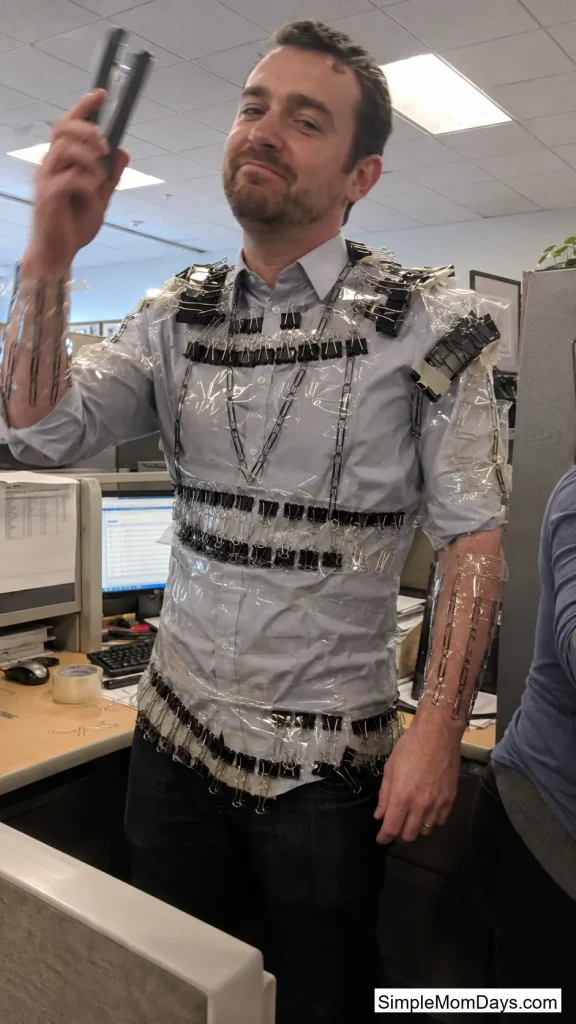
1. Office-Supply Costume Challenge
Give people fifteen minutes at lunch and access to the supply closet, then have them build a costume out of whatever’s on hand: paperclips, binder clips, sticky notes, packing tape, a stapler as a prop weapon. Nobody plans ahead, and that’s the point.
It removes the usual excuse of “I didn’t have time to figure out a costume,” and it tends to pull in the people who’d otherwise skip a contest entirely because store-bought costumes were never going to happen.
Stock a table with extra supplies — rubber bands, folders, printer paper, tape — so nobody has to raid their own desk to compete.
2. Department Decade Showdown
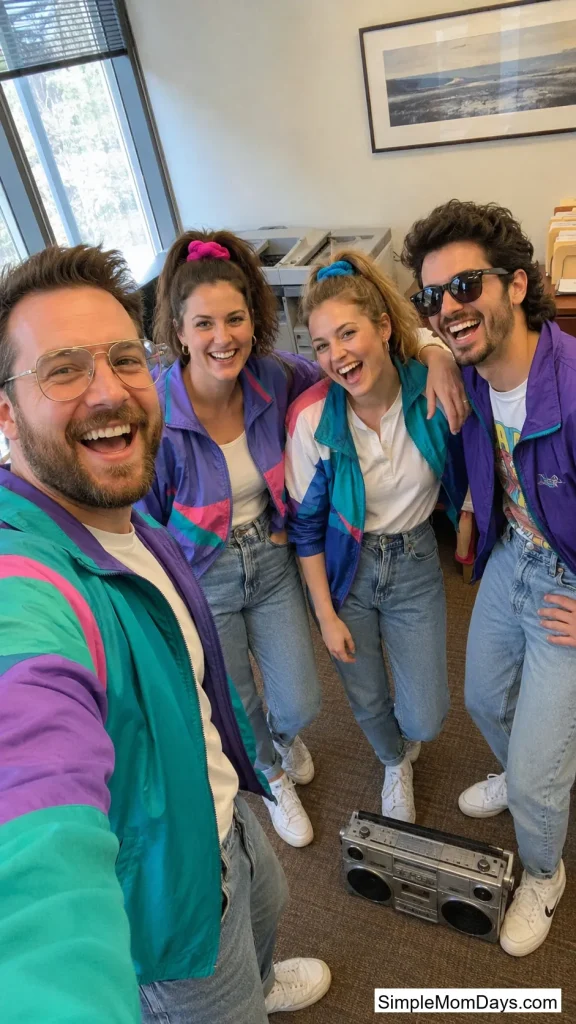
Instead of one office-wide contest, assign each department or floor a different decade. One team goes 90s, another goes disco, another goes Y2K.
This turns costumes into a team project instead of individual pressure, and it gives people who genuinely hate dressing up a way to contribute anyway — building props, picking music, handling the decor for their decade.
Post decade assignments two weeks out so people have time to thrift pieces instead of buying something new.
3. Charity Entry Fee Costume Contest
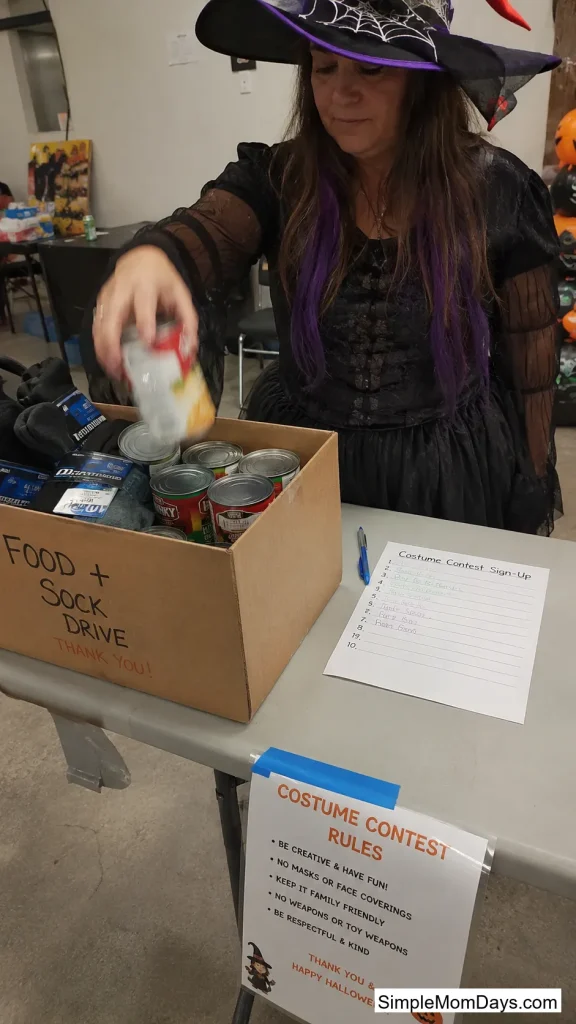
Instead of free entry, ask each contestant to bring one canned good, a pair of new socks, or a small toiletry for a local shelter. The prize stakes stay the same, but the whole thing points at something outside the building.
HR tends to favor anything that pairs a headcount event with a philanthropic angle, and contestants rarely mind a low-cost entry requirement attached to something they were doing anyway.
Line up a shelter or food bank ahead of time so someone can drop off the donations the next business day, while it’s still fresh.
4. Villain Debate Round
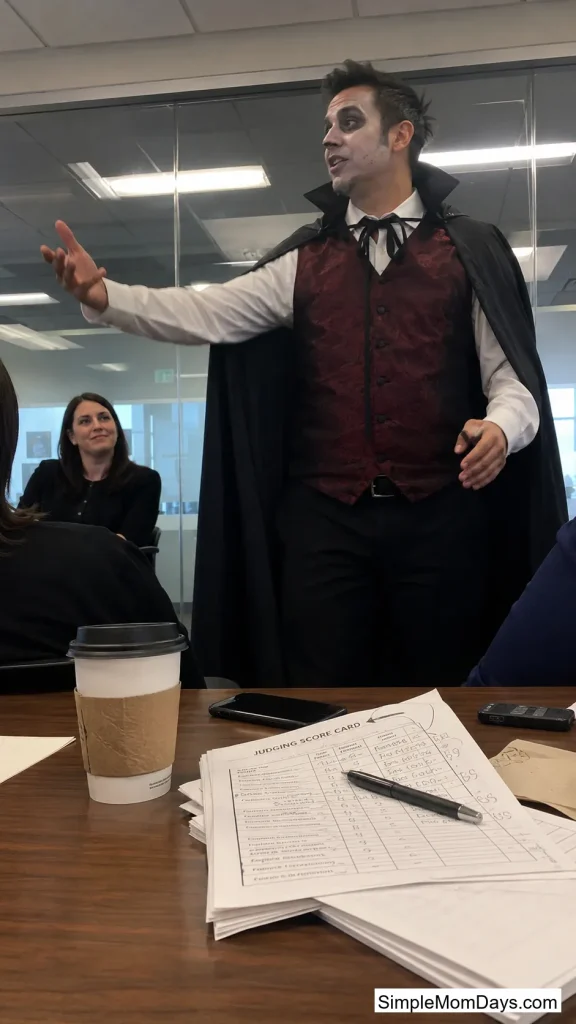
After costumes get judged, add a five-minute round where anyone dressed as a villain has to argue, in character, why their villain beats everyone else’s.
It gives quieter employees a script to work from — they’re performing a character, not themselves — and it turns a five-second judging walk into a bit people actually bring up months later.
Cap it at two minutes per person. Past that, even a good bit starts to drag.
Games That Aren’t Another Trivia Round
Trivia is the default because it’s easy to run, not because it’s the most fun option on the table. These five ask people to move, guess, or solve something instead of just answering questions off a screen.
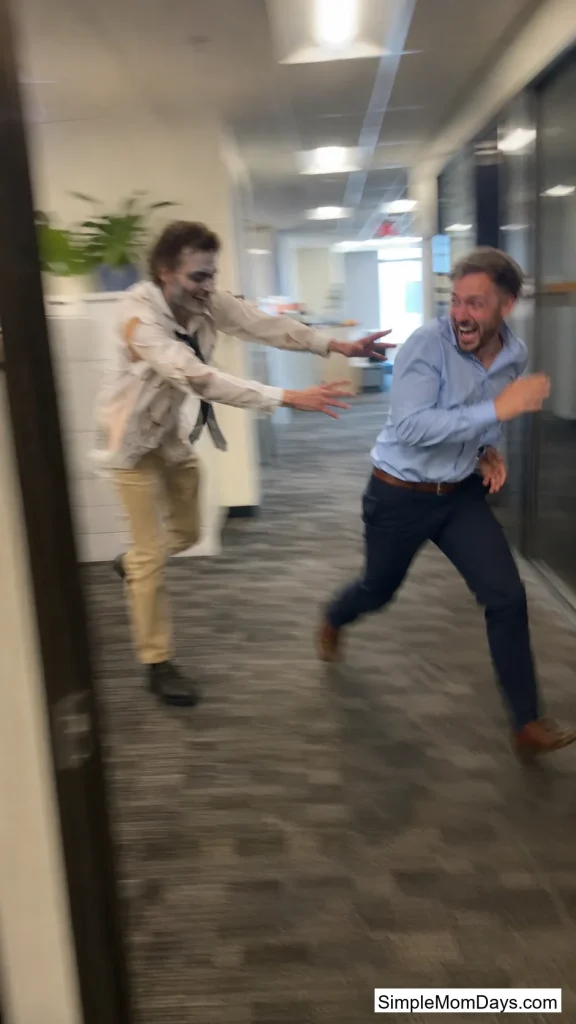
5. Zombie Tag Across the Floor
Pick two or three “zombies” to start. Everyone else has fifteen minutes to avoid getting tagged anywhere across the floor or open area.
It beats most party games because it needs zero setup and zero equipment, and half the office ends up playing by accident just walking to a meeting.
Rope off anything breakable beforehand and cap it at one round — people do need to get back to actual work eventually.
6. Guess Whooo Anonymous Q&A
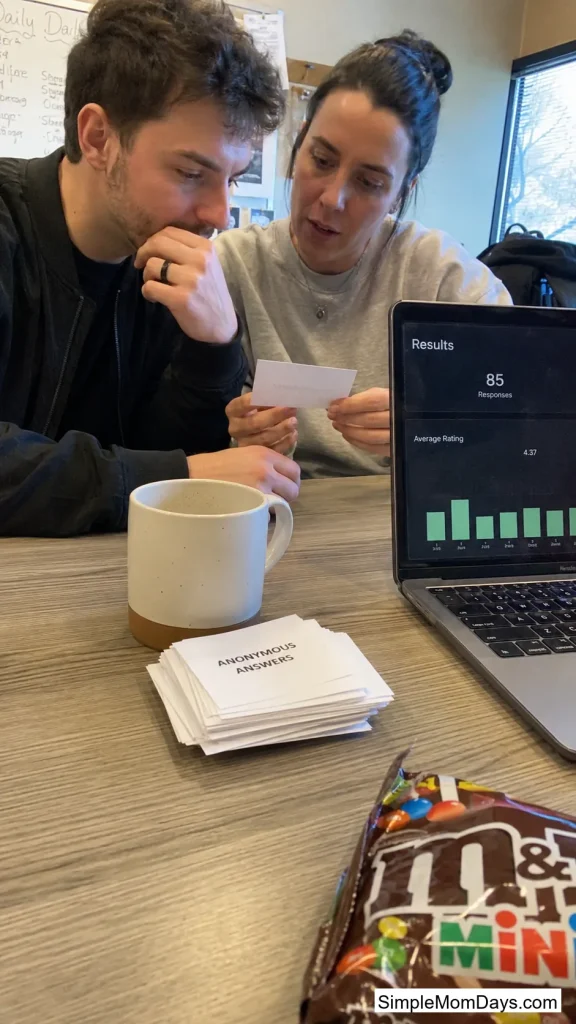
Everyone answers a Halloween-themed question anonymously — favorite childhood candy, worst costume they ever wore — and the group tries to match each answer to the person who wrote it.
It works especially well for teams that don’t know each other well yet, since it surfaces small personal details without forcing anyone into small talk they didn’t ask for.
Collect answers through an anonymous form so nobody feels pressure to write something clever under their own name.
7. Fifteen-Minute Murder Mystery
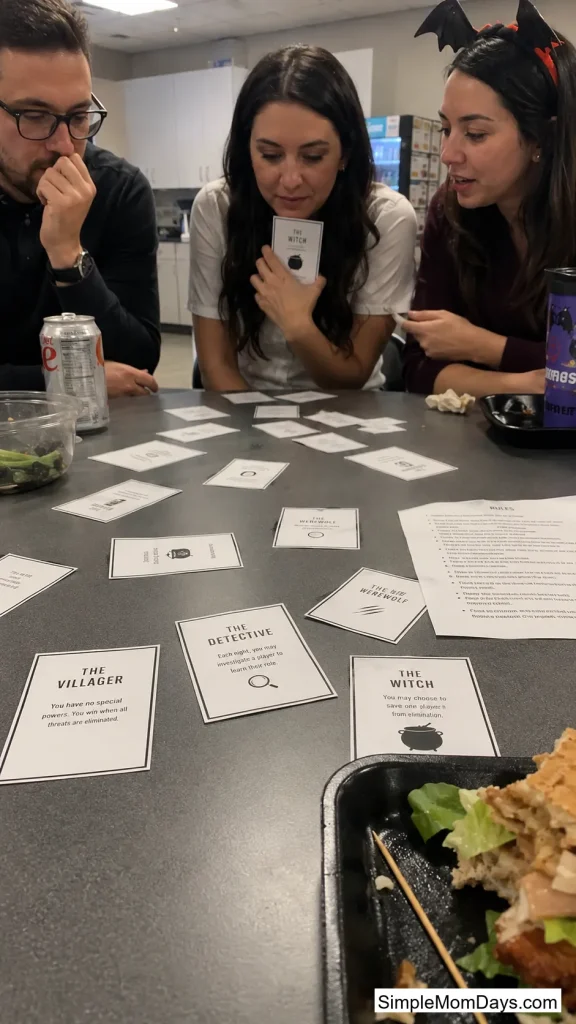
Skip the full evening murder mystery kit and run a stripped-down version during lunch instead: pre-assigned roles, one round of questioning, one reveal.
The short runtime is the whole appeal. A real murder mystery event needs two hours and a facilitator; a compressed version fits inside a lunch break and still gets people talking to coworkers they’d otherwise never sit near.
Print role cards ahead of time, or the first five minutes get eaten up by people figuring out their character.
8. String Bobbing for Apples
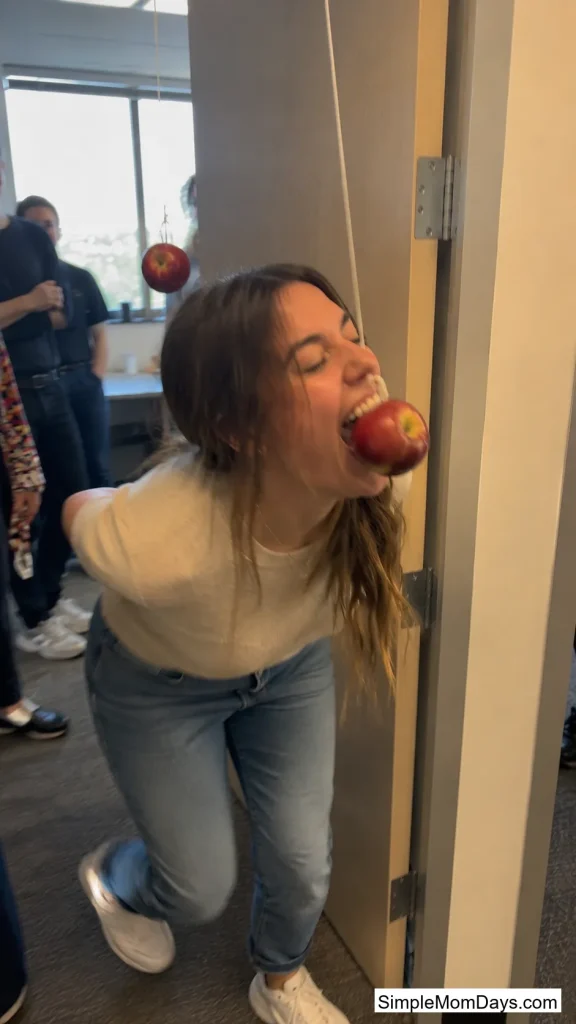
Hang apples from string at head height instead of using a water tub, and have people try to catch one using only their teeth.
Same idea as the classic version, minus soaking anyone’s hair or makeup before an afternoon of meetings — which matters a lot more at the office than it does at a backyard party.
Use small apples. Large ones are nearly impossible to bite into without hands.
9. Desk-to-Desk Riddle Hunt
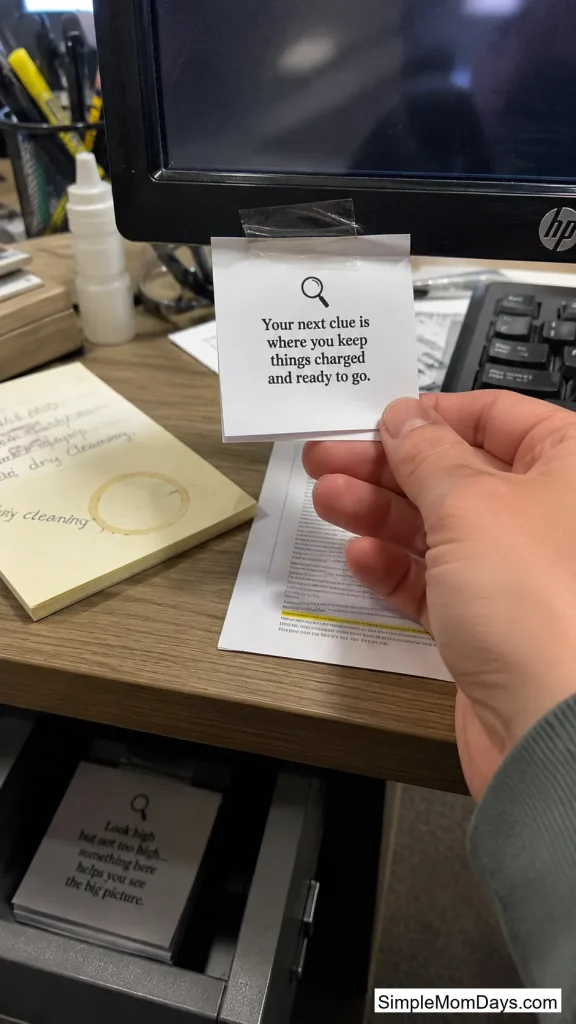
Hide small clues around the office that lead from one desk to the next, ending at a prize stashed in a coworker’s drawer or the break room cabinet.
Tying the clues to actual office landmarks — the printer nobody can figure out, the mug someone keeps stealing — gets a real laugh instead of the shrug a generic scavenger hunt usually earns.
Five or six clues is plenty. Longer hunts lose people halfway through.
Decorating a Small or Shared Office Without Overspending
A full office transformation looks great in an event company’s portfolio and takes a budget most in-house parties don’t have. These four scale down to what a shared space or open floor plan can actually hold.
10. Budget-Capped Desk Pod Takeover
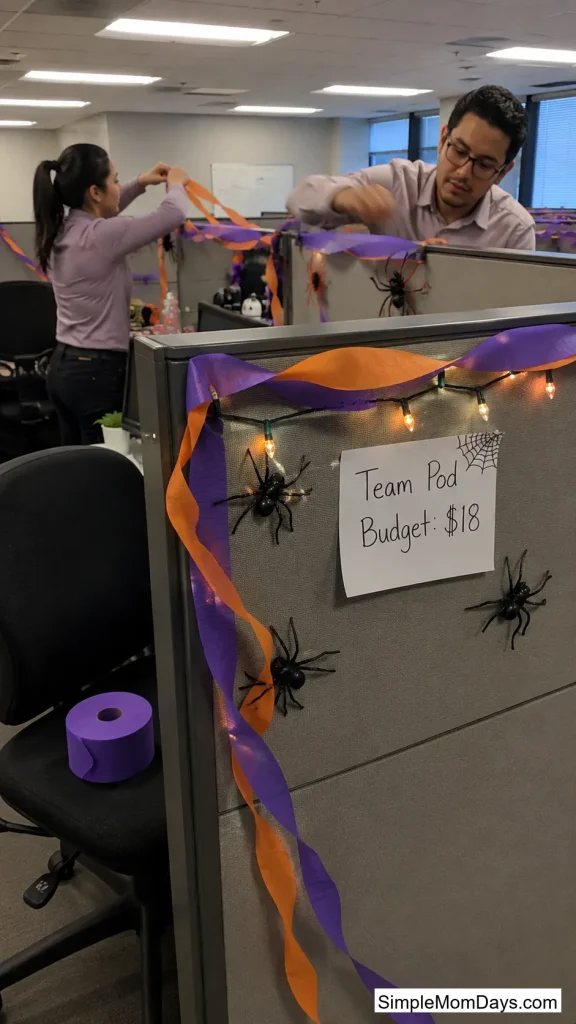
Give each team or pod a $15–20 budget and let them decorate their own section however they want — haunted, cute, sports-themed, whatever they land on.
The cap is what makes it fair. Without one, the team with the biggest company card wins by spending more, not by being more creative.
Judge from photos submitted to a shared channel so people outside the office, including remote teammates, get a vote too.
11. Haunted Break Room, Not Haunted Office
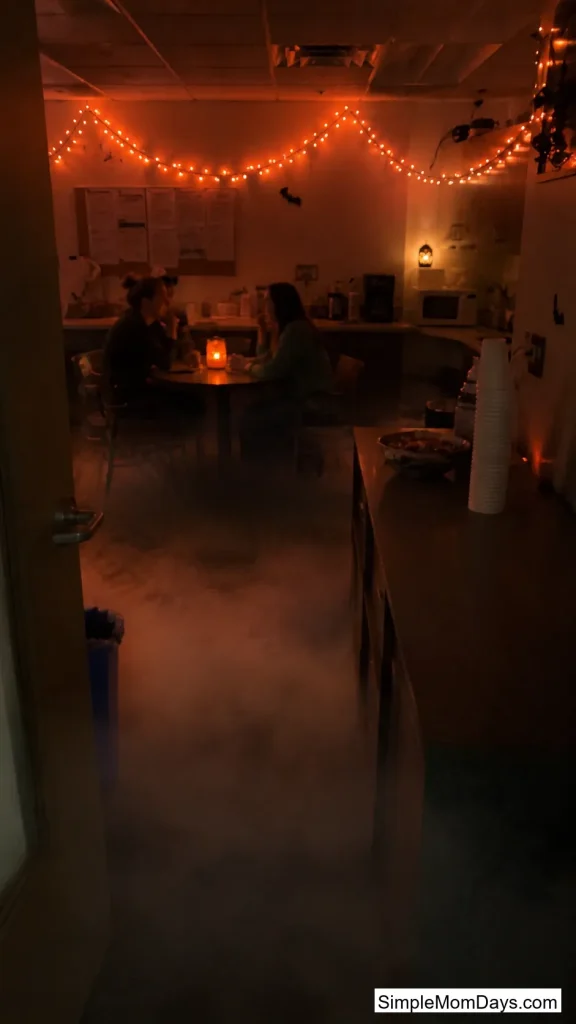
Instead of spreading decorations across every hallway and cubicle, put the whole budget into one room — string lights, a fog effect from a humidifier, warm lamps swapped in for the overhead fluorescents.
One well-done room reads as intentional. The same money spread across an entire floor reads as a few stray decorations nobody committed to.
Swap the lighting the morning of the party so the room is ready by lunch, not by 4pm.
12. Mess-Free Pumpkin Painting Instead of Carving
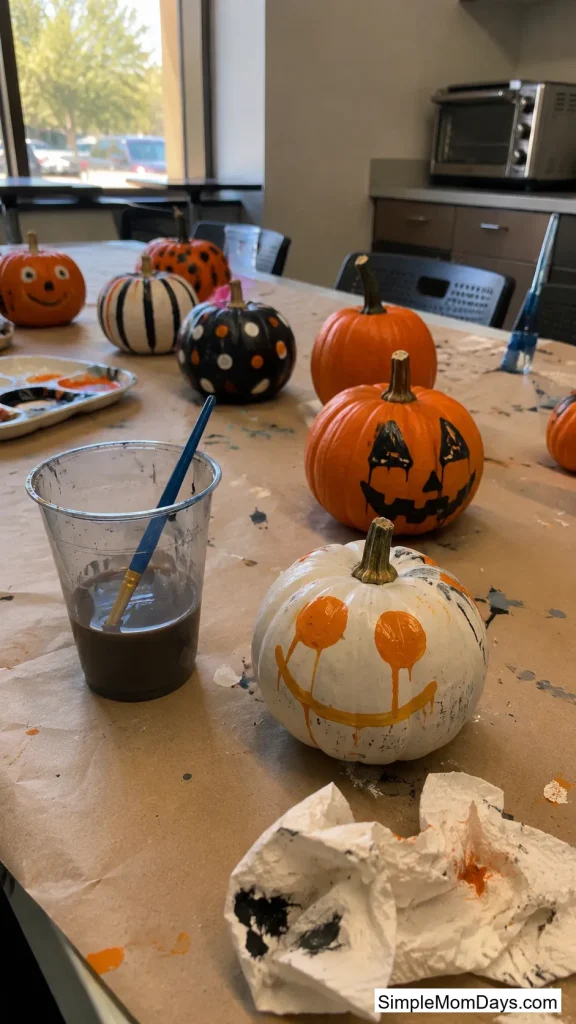
Set out small pumpkins, acrylic paint, and brushes instead of carving knives, and let people paint faces, patterns, or their department’s logo.
It skips the pumpkin guts and the knife-at-a-desk liability question entirely, and painted pumpkins last through the following week instead of collapsing in three days like a carved one.
Buy the small “pie pumpkin” size — cheaper, and easier to finish painting during a fifteen-minute break than a full-size one.
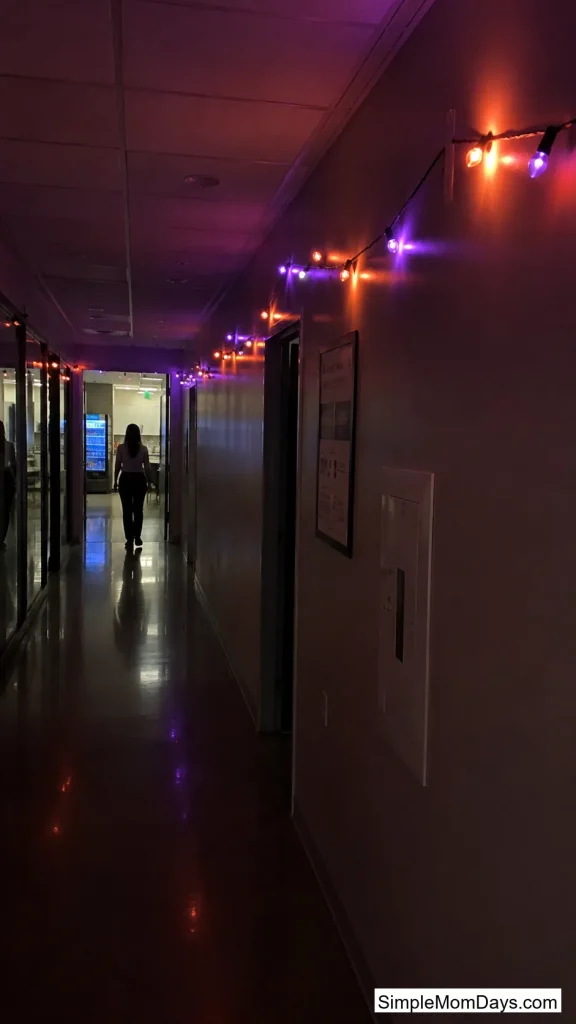
13. Orange and Purple String Light Corridor
Run a single strand of orange and purple string lights down one main hallway or the path to the break room.
It’s the lowest-effort item on this list, and it works precisely because it changes the light in the space instead of just adding more objects for people to look at.
Battery-operated strands skip the outlet-hunting problem that comes with older office buildings.
Food That Works Around Everyone’s Restrictions
The fastest way to flatten a party is one dish half the office can’t eat. These three keep the Halloween theme without needing a separate version for anyone.
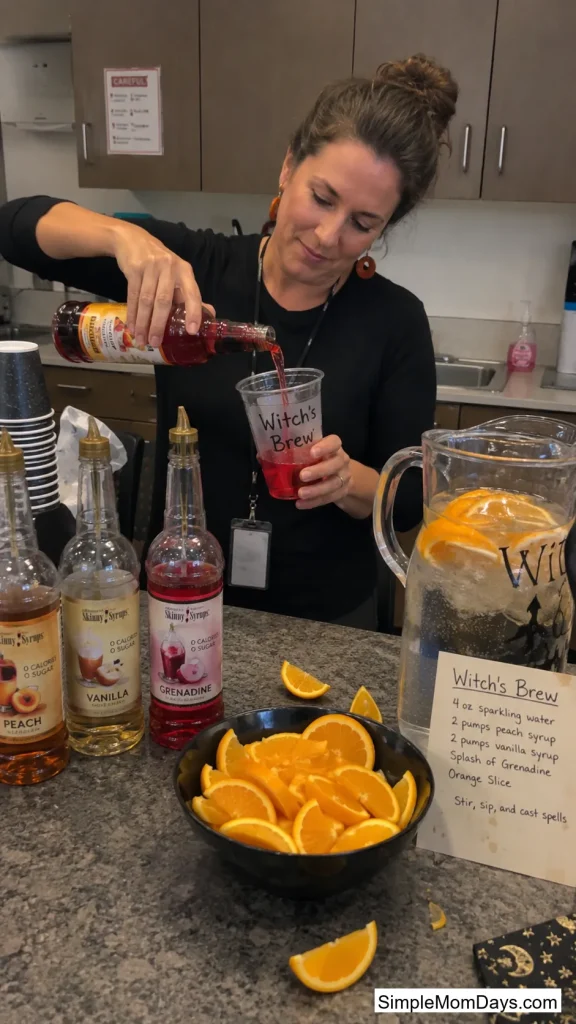
14. Mocktail Mixing Station
Set out a few syrups, sparkling water, grenadine, and garnishes, and let people build their own “witch’s brew” or “monster punch.”
It delivers the whole drink-station experience without a separate non-alcoholic table shoved off to the side, which usually reads as an afterthought instead of an actual option.
Print two or three simple recipe cards so people who’d rather not improvise still walk away with something that tastes intentional.
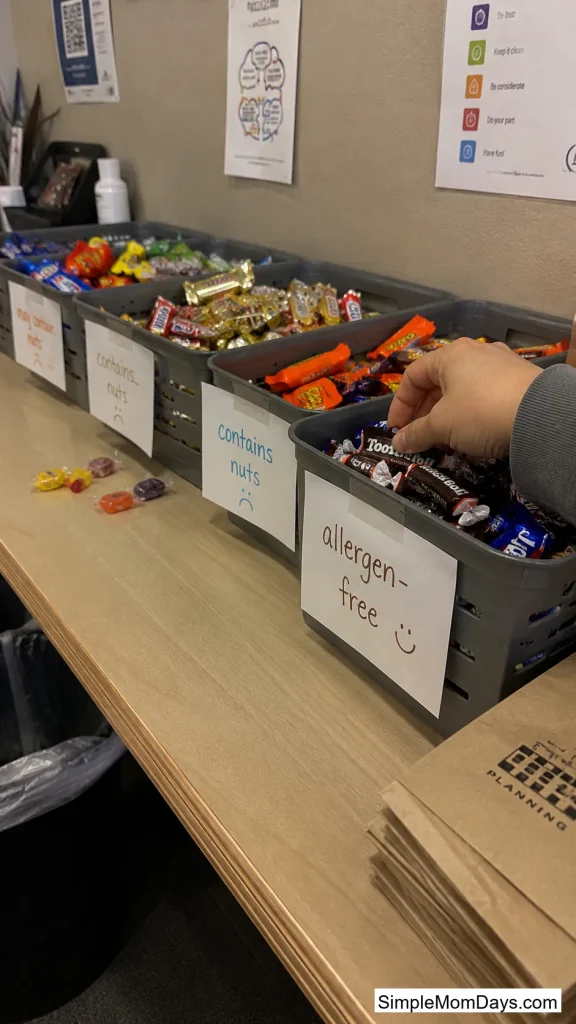
15. Labeled Build-Your-Own Candy Bar
Set out a mix of classic Halloween candy with small cards labeling common allergens — nuts, dairy, gluten — next to each bin.
The labeling takes five minutes to set up and saves people with restrictions from having to ask a coworker to read every ingredient list out loud in front of the group.
Keep one bin fully allergen-free and mark it clearly, so it’s the easy default rather than something people have to hunt for.
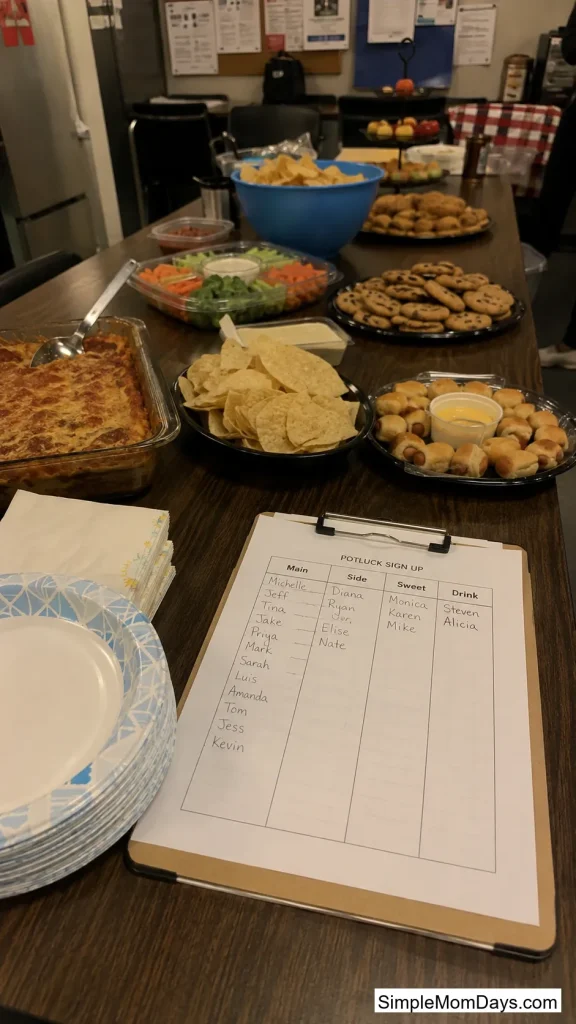
16. Sign-Up Sheet Potluck With Assigned Categories
Instead of an open potluck where six people bring chips and nobody brings a main dish, assign categories — main, side, sweet, drink — on a shared sign-up sheet.
It spreads the effort evenly and avoids the standard potluck problem where the spread skews entirely toward dessert by 11am.
Pin the sheet somewhere visible two full weeks out, so people have time to actually plan instead of grabbing a bag of candy corn on the way in.
Options for Remote and Hybrid Teams
A party that only works if everyone’s in the same building leaves out anyone working from home. These four give remote employees an actual seat at the table instead of a Zoom square watching everyone else have fun.
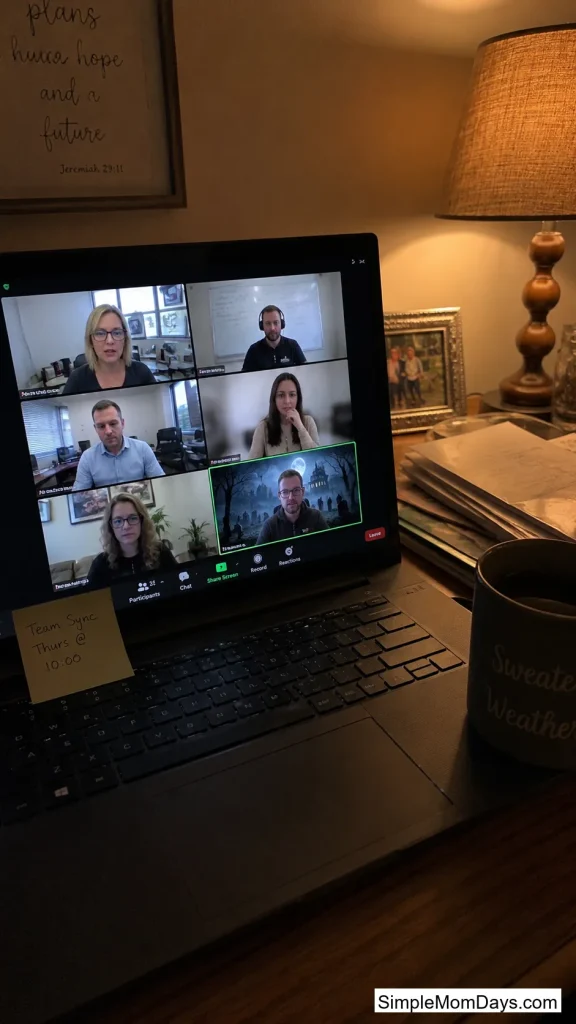
17. Zoom Background Costume Contest
Employees pick or design a Halloween-themed virtual background instead of a physical costume, and the group votes on a winner during a short call.
It’s an easy entry point for anyone who didn’t have time to pull together an actual costume, and a physical costume doesn’t translate over video anyway — this gives remote employees something to actually show off.
Post a shared folder of background templates a few days ahead for anyone who wants a head start.
18. Digital Halloween Art Gallery
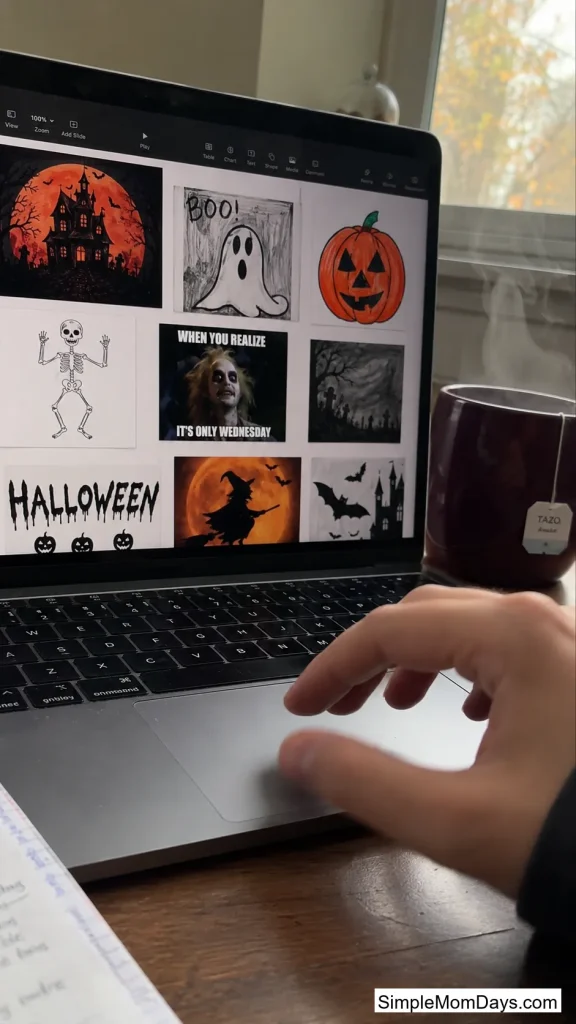
Ask everyone to make something Halloween-themed — a drawing, an edited photo, a meme about the team — and drop it into a shared folder or slide deck.
It works for people who’d never enter a costume contest but will happily spend ten minutes on something creative and low-stakes, and it gives the whole group something to scroll through together on a call.
Open the next team meeting with a five-minute “gallery walk” where a few people explain their piece before moving into regular business.
19. Mailed Treat Box Swap
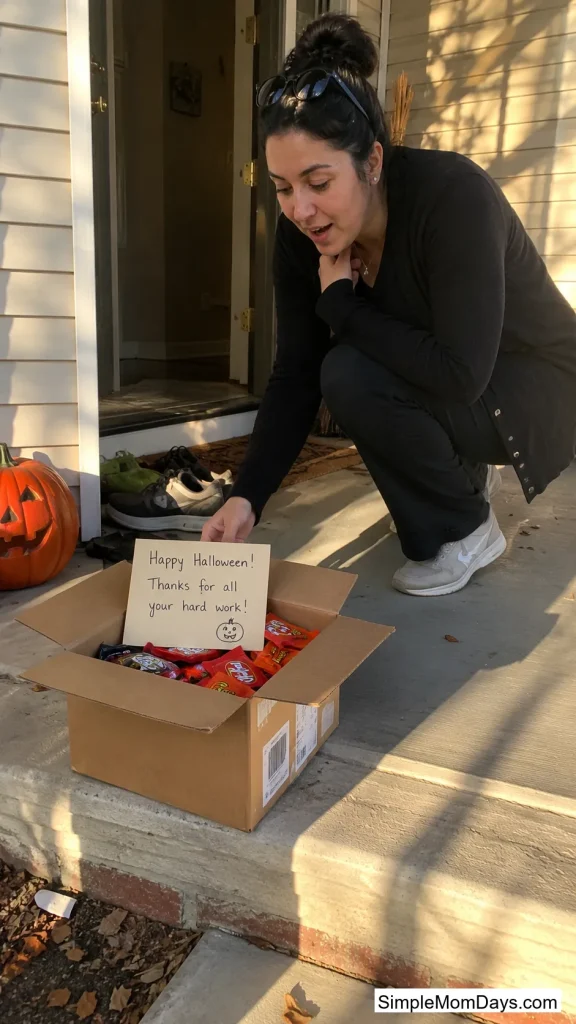
Send a small box of Halloween candy or a mini seasonal treat to each remote employee’s house ahead of the party date.
It’s a small gesture, but it’s the difference between remote employees watching a party happen on a screen and actually having something in front of them while it does.
Ask about allergies on the same form where people give their mailing address, so the box doesn’t need a last-minute substitution.
20. Hybrid Ghost Who
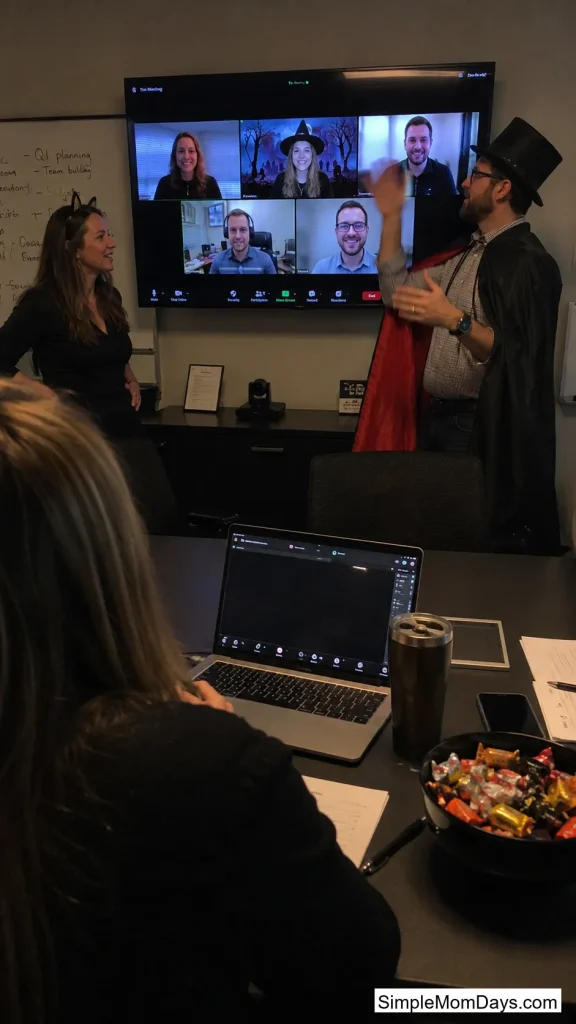
Play a Halloween version of Guess Who where in-person employees describe a mystery coworker’s costume details, and remote employees on screen have to guess who it is.
It’s one of the few games that genuinely needs both groups in the room and on the call at the same time, instead of running a separate in-person version and a separate remote version.
Keep the “mystery coworker” pool to people everyone actually knows, or the game turns into guessing about a stranger.
Give-Back and Low-Key Options
Not every office wants a full production. These three work for teams that would rather do one small, meaningful thing than run six activities back to back.
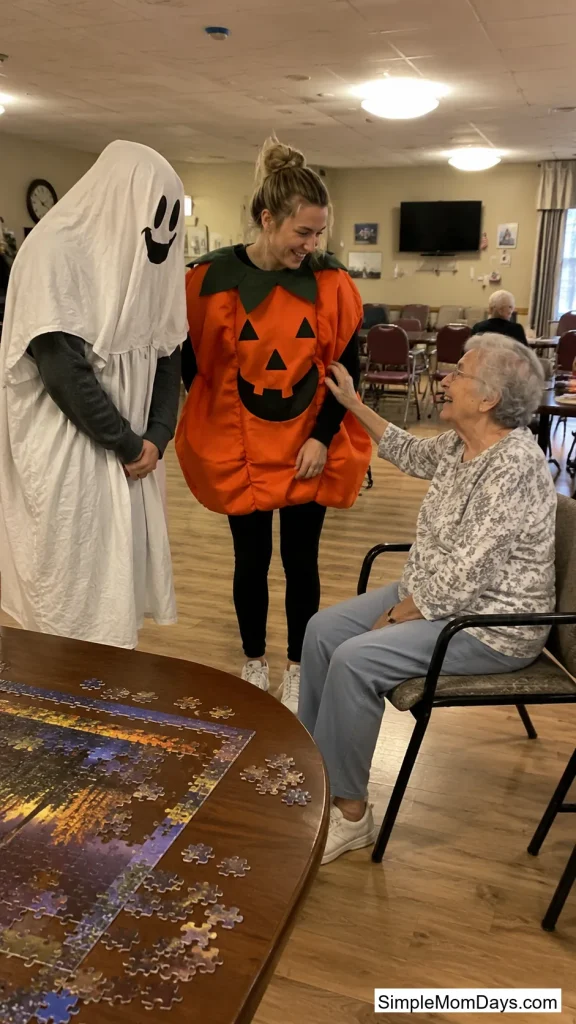
21. Costume Visit to a Senior Center
Instead of, or alongside, an in-office party, have a group dress up and spend an hour visiting a local senior center or children’s hospital.
It turns costumes into something other people get to enjoy too, and teams that try it once tend to bring it back the following year on their own, without anyone asking.
Call ahead — most centers run their own October schedule and can tell you the best time slot for a visit.
22. Sock and Supply Drive Tied to the Costume Contest
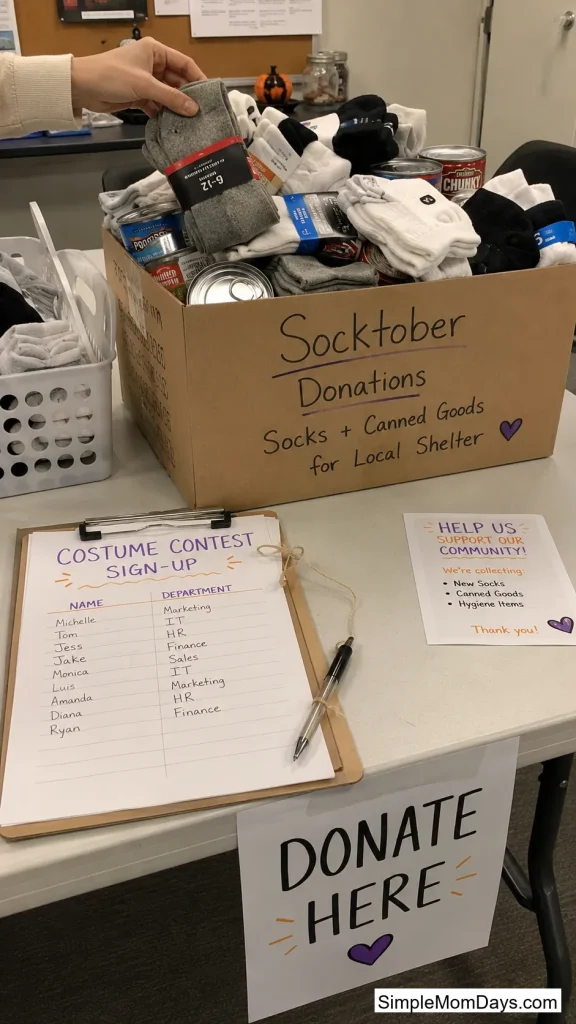
Require one small donation — new socks, canned food, travel-size toiletries — as the entry fee for the costume contest, instead of charging nothing at all.
It stacks a second good outcome onto an activity the office was already running, without adding a separate event to the calendar.
Set a collection box right next to the contest sign-up sheet so the donation and the entry happen in the same two minutes.
23. Early-Release Halloween Afternoon
Instead of adding another activity, let the party double as the reason to close early — two or three hours before the usual end of day, once the party wraps.
For anyone with kids trick-or-treating that night, this is worth more than any game or decoration on this list, and it costs the company nothing but a few hours of afternoon output.
Announce it the same week as the party invite, so people can plan their evening around it instead of finding out that morning.
Final Thoughts
Not all 23 of these are meant to happen in the same year, let alone the same afternoon. Pick the ones that fit your team’s size and the time you actually have to plan, and leave the rest for next October.