


Every party hits the same wall eventually. The cake is gone, the presents are opened, and there are still forty-five minutes before anyone’s ride shows up. That’s usually the moment someone grabs a phone and hands it to a kid, and the whole room goes quiet in the worst way.
None of the games below need a screen, a Wi-Fi signal, or a shopping trip. Most use what’s already sitting in the junk drawer or the backyard, and a few need nothing at all beyond the people in the room. They’re grouped by who’s playing and how much energy they burn, so you can jump straight to the section that fits your group instead of scrolling past forty ideas for a Twister mat you don’t own.
A few are the classics your own parents played, because some games earn their spot on every list for a reason. Most of the rest are twists on those classics or ideas that rarely make it onto the usual roundups, so there’s something here even if you’ve hosted a dozen parties already.
Low-Prep Games for Little Kids
These work for the youngest guests at a birthday party or a family gathering, and none of them ask a shy kid to perform solo in front of a crowd.
1. Freeze Dance Storytelling
Play music and let everyone dance. When you hit pause, call out a pose instead of just yelling “freeze” — “freeze like you smelled something stinky” or “freeze like a scared cat.” Kids strike the pose and hold it until the music starts again.
The narrated poses do the heavy lifting here. A plain freeze dance runs out of steam after two rounds, but adding a new scenario every time gives kids something to react to instead of just standing still, and nobody has to worry about doing it “right.”
All you need is a phone speaker and one adult calling out prompts. It works for groups from four kids to forty, since there’s no personal space required and no elimination to manage.

2. Riverbank
Mark a line on the floor or lawn — real tape or just an imaginary one everyone agrees on. One side is the “river,” the other is the “bank.” A caller shouts “River!” or “Bank!” and everyone jumps to the correct side. Anyone already there stays put; anyone who jumps the wrong way, or reacts too slowly, sits out that round.
Once the basic jump gets easy, add trickier calls like “swim” (everyone mimes swimming in place) or “float” (freeze completely). The extra commands force kids to actually listen instead of just watching their neighbor’s feet.
No equipment beyond a strip of tape if you want one. Best for five or more kids, ages five to eleven, and rounds run under five minutes so you can play it three or four times in a row.
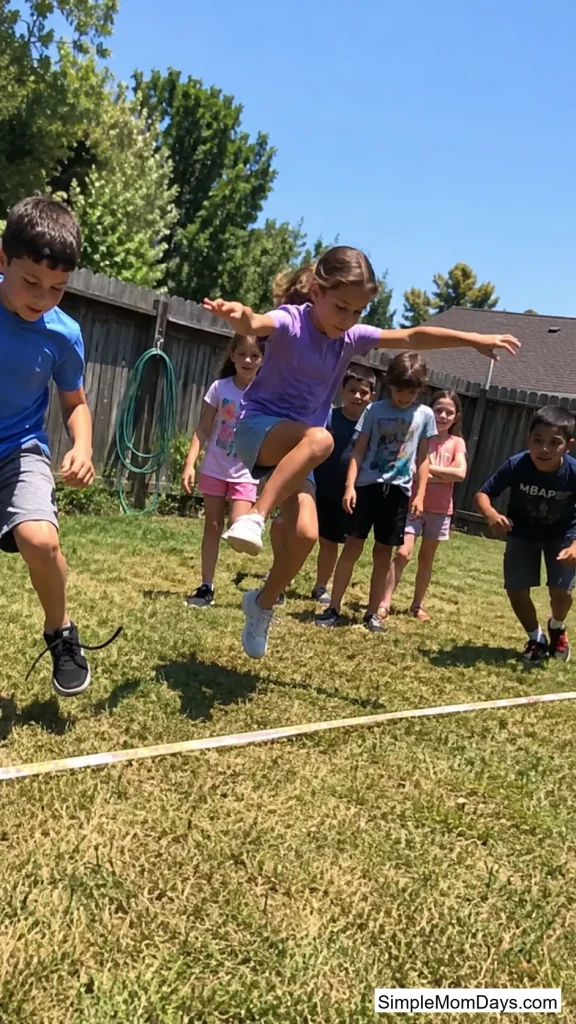
3. Character Says
Simon Says with a theme swap — Dinosaur Says, Superhero Says, whatever fits your party. The twist: instead of sending “out” kids to the sidelines for good, let them take a turn calling instructions for one round before rejoining as players.
That single change fixes the biggest problem with the original game, which is a pile of bored kids standing against the wall by round three. Everyone stays involved, and taking a turn as the caller is its own reward for the kids who usually get caught out first.
Works for any age three and up, needs zero props, and you can run a fresh round with a new character every few minutes without repeating yourself.

4. What’s the Time, Mr. Fox?
One player, the fox, stands with their back turned at one end of the yard or a long hallway. The group calls out “What’s the time, Mr. Fox?” and the fox answers with any time — “three o’clock” means everyone takes three steps forward. Eventually the fox answers “dinner time” and chases everyone back to the starting line.
The slow build of tension is what makes this one stick, especially with a mixed-age group where older kids can hang back and read the fox’s tone while younger ones just charge forward.
No equipment needed, works for ages six and up, and six to fifteen players is the sweet spot — enough for a real chase, not so many that half the group never gets close.

5. Indoor Color Scavenger Hunt
Call out a color and have everyone race to find and bring back an object matching it. Add a rule that no object gets reused twice in the same game, and the searches get more creative as the round goes on.
This one earns its spot because it needs literally nothing you don’t already own, and it works as a reset button — after a high-energy game like Riverbank, a scavenger hunt shifts kids from full sprint to focused searching without losing them to boredom.
Any age can play, it works indoors or out, and a single round takes two to ten minutes depending on how big your house is.
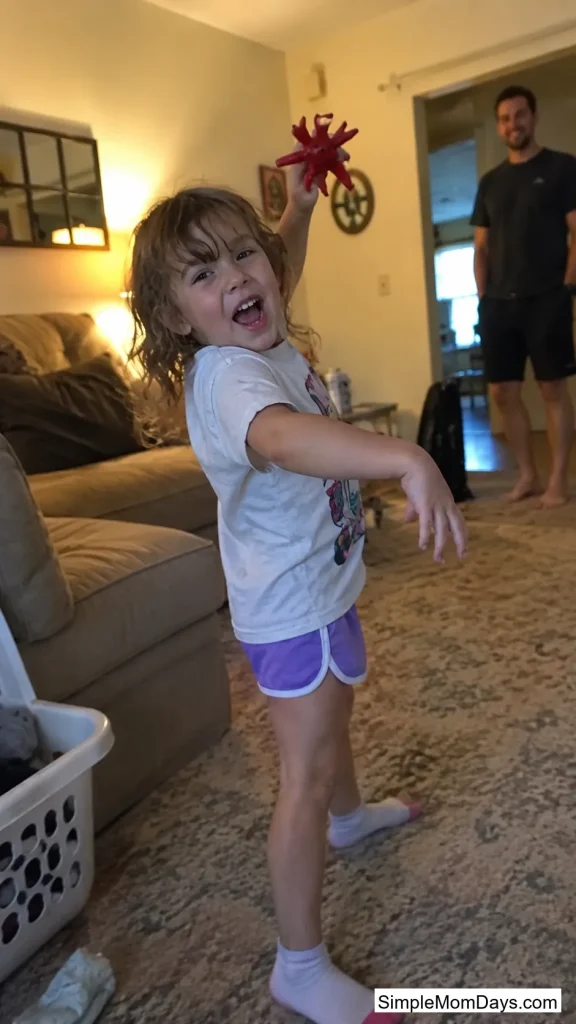
Big-Group Icebreakers for Mixed Ages
These are built for the moment grandparents, cousins, and a new brother-in-law are all standing in the same living room and nobody’s quite sure what to say to each other.
6. Human Bingo
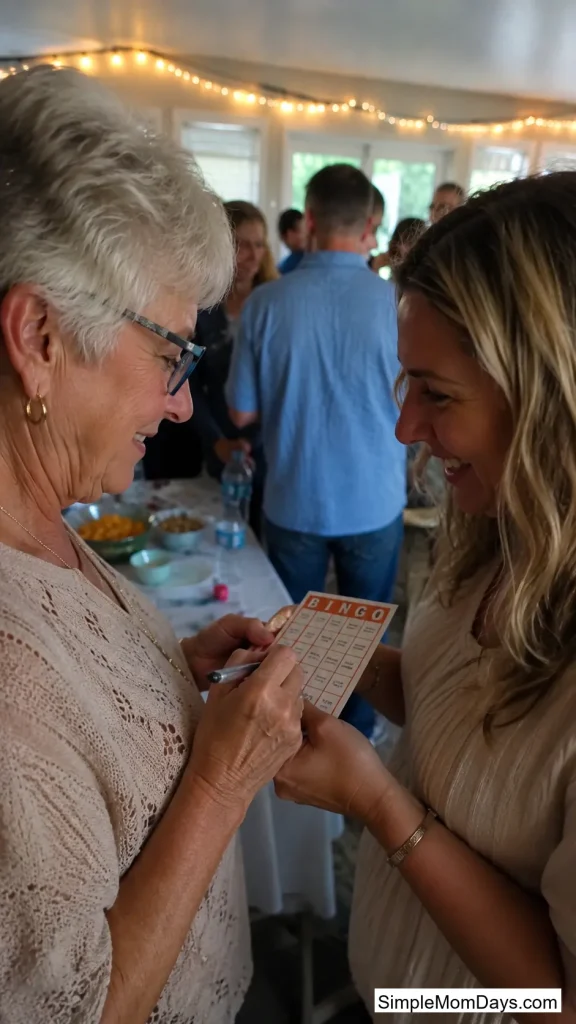
Before the party, sketch a simple five-by-five grid on paper for each guest, filling the squares with traits like “has lived in another country” or “can touch their nose with their tongue.” Guests mingle, find someone who matches each square, and get that person to sign it. First full row wins.
Customizing the squares to your specific group is what makes this work at a family gathering — build a few around inside family jokes or shared history, and it stops being generic icebreaker filler and starts being something only your group would laugh at.
Takes about ten minutes of prep with paper and a pen, and works best with fifteen or more guests who don’t all already know each other.
7. Two Truths and a Childhood Lie
The standard icebreaker, but every statement has to be about childhood specifically — a scar story, a childhood pet, an old fear. Everyone else guesses which one is invented.
Restricting the topic to childhood is what makes the answers land. “I’ve traveled to five countries” is a forgettable guess, but “I was convinced our attic had a dragon in it until I was nine” gets a real reaction, and it happens to be a topic every generation in the room can relate to.
No supplies required. Works best in a circle of six to twelve people, and a full round through the group runs fifteen to twenty minutes.

8. Escalating Would You Rather
Start with mild questions and get harder as you go. After each question, the group votes with a show of hands, and whichever side is smaller has to explain their reasoning before moving to the next round.
Plain Would You Rather tends to flatten out after five or six questions because every round feels the same. Building in escalation and a follow-up explanation keeps the energy climbing instead of leveling off.
No supplies needed — you can write questions on the fly. Works with any group size, and it holds attention for a solid twenty minutes if the questions keep getting stranger.

9. The Hot Seat
One person sits in the middle while the group fires off questions for ninety seconds, no passing allowed. Set a couple of ground rules ahead of time — nothing about exes, nothing about money — and it stays comfortable even with extended family in the mix.
The tight timer does the real work. It keeps any one guest from hogging the spotlight and it kills the awkward silence that usually follows a vague “so, tell us about yourself” moment.
All you need is a phone timer. Best with six to fifteen people, and it plays better later in a party once everyone’s already warmed up to each other.

10. Word Detective
Everyone but one player knows a secret word. Going around the circle, each person says a single clue word related to it. The one player who doesn’t know the word — the impostor — has to guess it from context while pretending they already know it. After a round of clues, the group votes on who seemed the most lost.
This plays like the deduction games sold as apps and card sets, minus the purchase. All it costs is someone willing to think up a secret word from whatever’s sitting in the room.
Works for four to ten players, ages ten and up, and a full round runs about ten minutes.
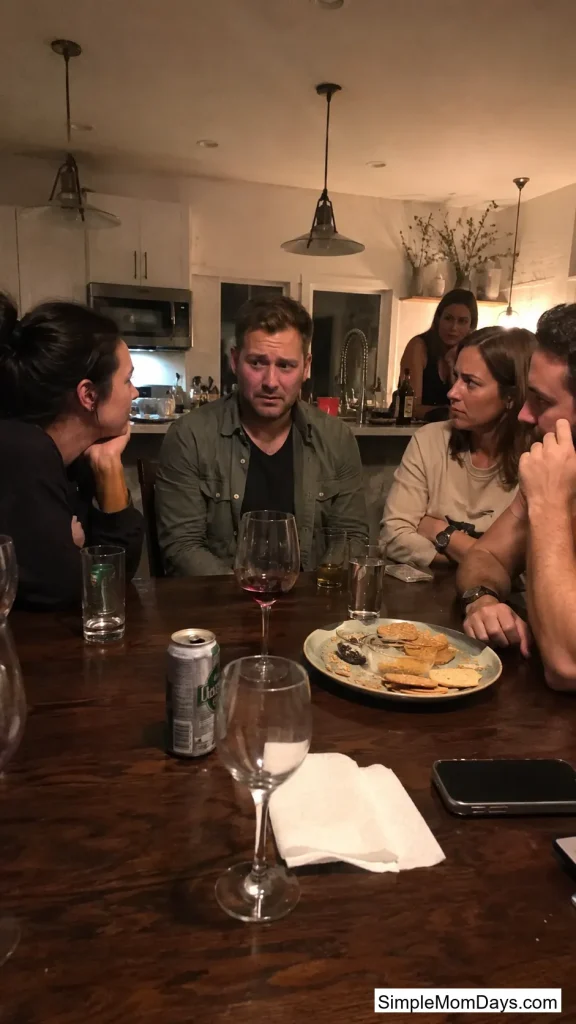
Sleepover & Teen Favorites
Built for the part of the night after the pizza’s gone and everyone’s sprawled across the living room floor with nowhere to be.
11. Movie Title Swap
Change one letter in a well-known movie or show title — “Shark Tank” becomes “Shark Tan” — and describe the new “plot” out loud. Everyone else has to guess the original title from the description.
The format snowballs on its own. One good pun sets off a chain reaction of worse ones, and the bad ones end up being funnier than a clever answer would’ve been.
No supplies needed. Works best for ages twelve and up in groups of four to ten, and it runs as long as people can keep coming up with titles.

12. Most Likely To
Read a scenario out loud — “most likely to end up famous,” “most likely to sleep through a fire alarm” — and on the count of three, everyone points at whoever they think fits. Keep the scenarios light and skip anything about looks or relationships.
There’s no elimination and no one has to answer for themselves, which keeps it low-stakes even for a group that doesn’t know each other that well yet.
No supplies. Works for any group of five or more, ages ten and up, and it’s a good check-in game to run in short bursts between bigger activities.
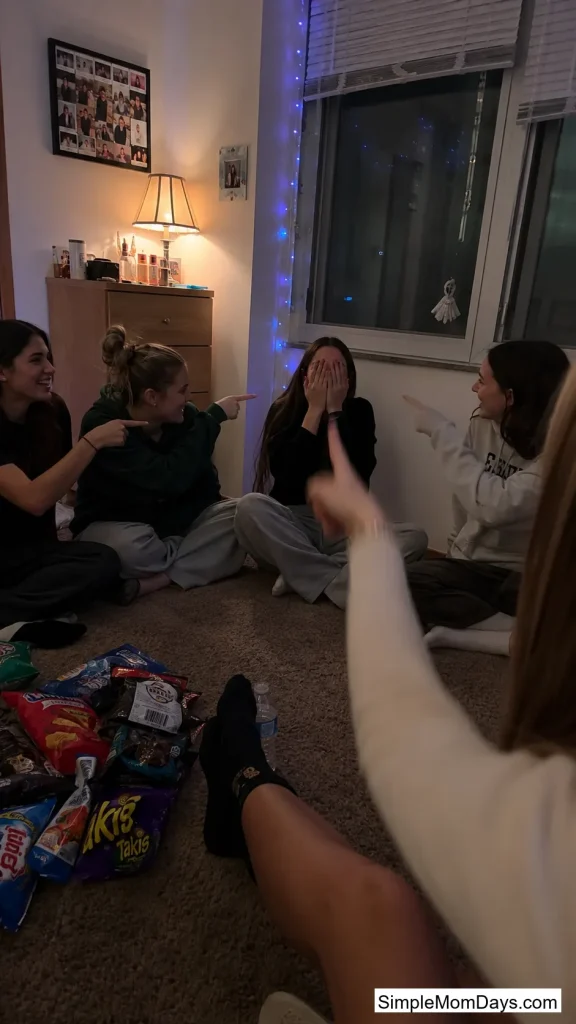
13. The Whisper Challenge
One player puts on headphones playing loud music (or just hums loudly to block their own hearing), while a second player silently mouths a phrase. The headphone-wearer has to guess the phrase by reading lips alone, then says their best guess out loud.
Lip-reading turns out to be much harder than anyone expects, and the guesses that come out sideways are usually the whole point of the game rather than a failure.
Needs headphones or earbuds and a phone for music — that’s it. Works for ages ten and up, any group size, playing in pairs while everyone else watches and laughs.

14. Fortunately, Unfortunately Story Chain
Go around the circle building one story, alternating who starts their line with “fortunately” and who starts with “unfortunately.” Each new line has to undo or complicate whatever just happened.
Plain collaborative storytelling tends to stall out once the plot runs dry, but forcing a twist on every single line guarantees the story keeps moving somewhere new, usually somewhere nobody saw coming.
No supplies. Works for ages eight and up in groups of four to twelve, and a story usually runs its course in ten to fifteen minutes.
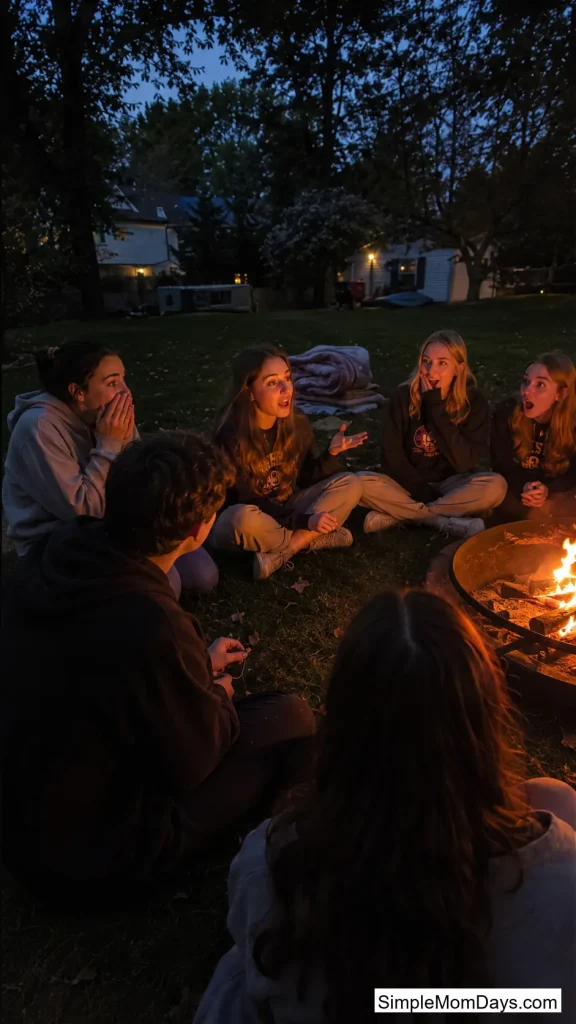
15. Telephone Sketch
The first player whispers a phrase to the second. That person draws it, no words allowed, on a piece of paper without showing anyone else. The next person only sees the drawing and writes a caption for what they think it shows, folds the paper to hide everything but their own caption, and passes it on. Keep alternating draw, then caption, all the way down the line.
Unfolding the full chain at the end is the payoff — the drift from the original phrase compounds twice as fast as regular Telephone, since both the interpretation and the drawing skill add their own distortion.
Needs paper and one pen per two people. Works best with six to fifteen players, ages ten and up, and takes about twenty minutes start to finish.
Word & Wit Games for Adults
Conversation-driven games for the adults who’d rather talk than run around the yard.
16. Wikipedia Bridge
Pick two completely unrelated things ahead of time — a snack food and a historical event, say — and hand both to one player. They have to deliver a straight-faced, on-the-spot explanation connecting the two, while everyone else tries to guess what the original two things were.
It rewards quick thinking over trivia knowledge, which keeps the game fair between the person who reads constantly and the person who’s just naturally funny under pressure.
No supplies beyond a short list of topic pairs jotted down beforehand. Best with five to ten adults, and a full round of turns runs fifteen to twenty minutes.

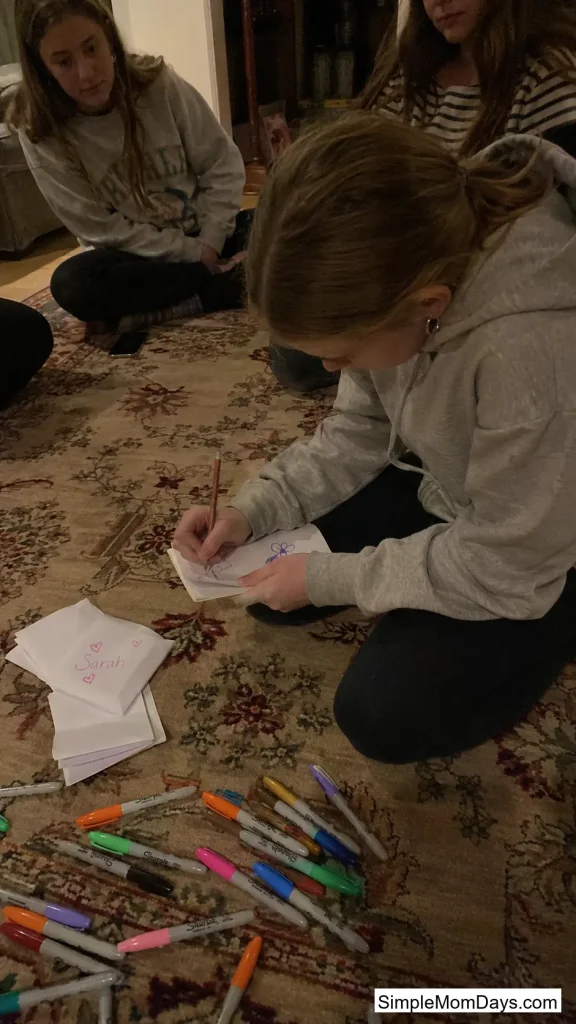
17. Fake Definition Bluff
Read the group an obscure but real word — think “gongoozler” or “snickersnee.” Everyone writes a fake definition that sounds plausible, the host reads all the fake ones alongside the real definition, and the group votes on which one is true. Points for guessing correctly, and points for anyone who fools someone else.
This rewards good writing and a straight face over luck, so it tends to be the game where the quietest person at the table suddenly wins the whole night.
Needs paper and a pen per player. Works for ages twelve and up, best with six to ten players, and runs twenty minutes or more across several rounds.
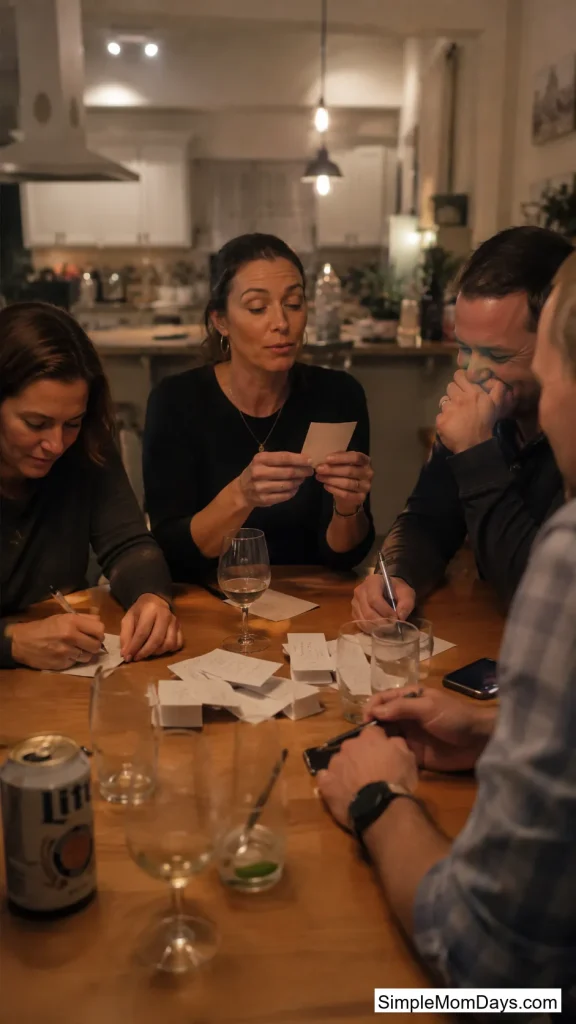
18. Object 20 Questions
One player secretly picks an object that’s physically in the room right now. Everyone else asks only yes-or-no questions, trying to guess the object within twenty questions.
Since the object is sitting in plain sight the whole time, this plays faster than the usual version where you’re guessing a person or a concept from memory, and it rewards strategic questioning over lucky guesses.
No supplies needed. Any age eight and up, any group size, and a round takes five to ten minutes.
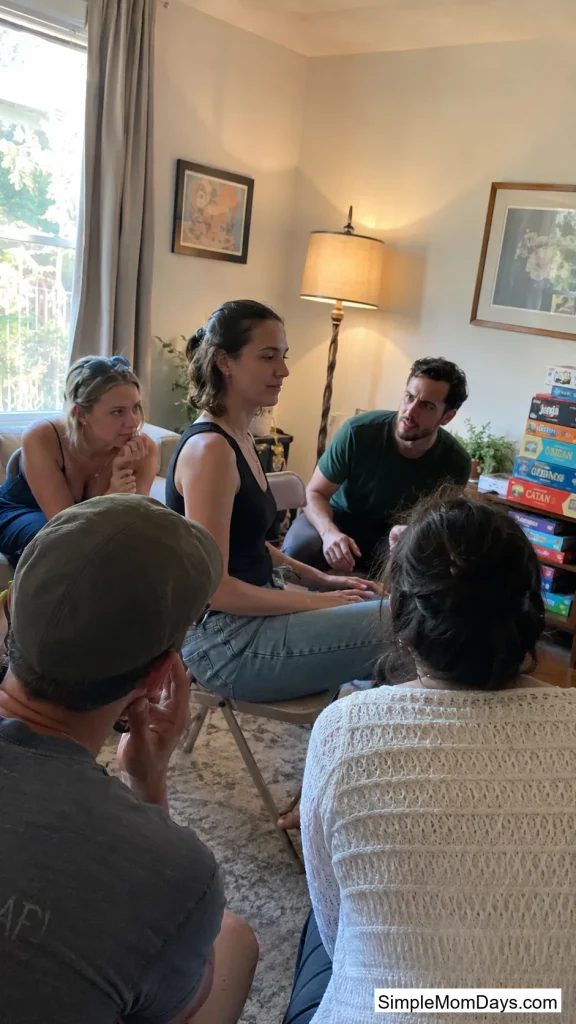
19. Stinky Pinky
The host gives a definition for a rhyming two-word answer — “an overweight feline” is a “fat cat.” Players call out guesses until someone lands the rhyme, then takes a turn giving the next definition.
It’s quick wordplay that warms up a group between bigger games without dragging the energy down, and it works whether people know each other well or just met an hour ago.
No supplies. Works for ages ten and up, any group size, and a round rarely takes more than ten minutes.
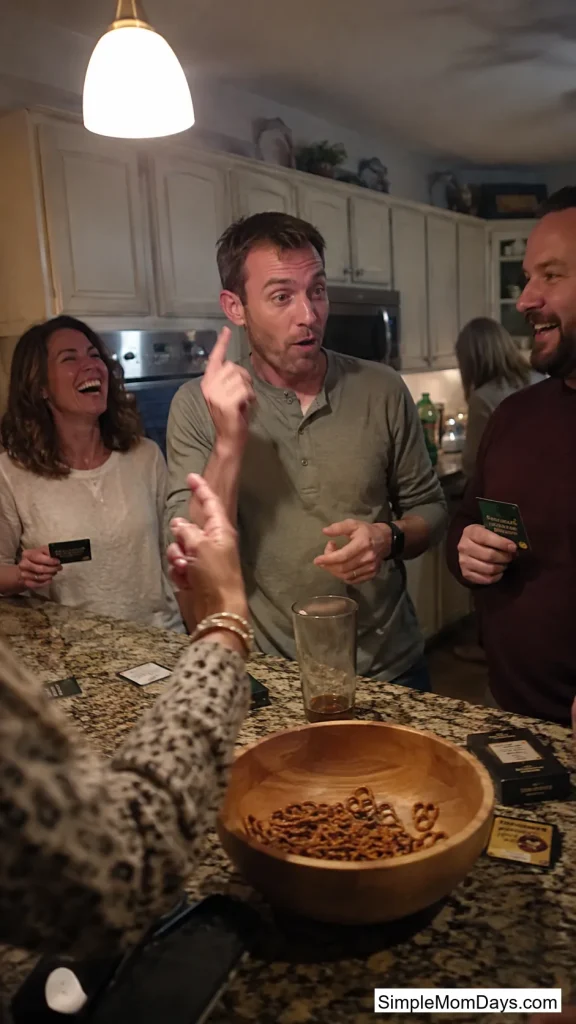
20. What Are the Odds
One player challenges another to a silly dare — “what are the odds you’ll [dare].” The challenged player names a number range. Both count down together and say a number in that range at the same time. If the numbers match, the dare happens.
The randomness takes the pressure off agreeing to something silly, since nobody actually chose to do the dare — the numbers did. The challenged player also controls the odds by picking the range, so nobody gets stuck with something they truly didn’t sign up for.
No supplies. Works best with teens and adults, and it tends to run in the background all night rather than as one set round.

Active Team Games for Backyards & Big Spaces
For whenever the group needs to burn off some energy and there’s a yard or open floor to do it in.
21. Egg-and-Spoon Relay
Each racer balances an egg on a spoon while walking or running about twenty feet to a finish line. Drop the egg, and you have to stop, pick it up, and balance it again before taking another step.
Hard-boil the eggs ahead of time to avoid a mess on the lawn, or swap in ping-pong balls for younger kids who aren’t ready for the real thing yet.
Best played outdoors on grass, works for teams of any size, and ages five and up can handle it with the right substitute for the egg.

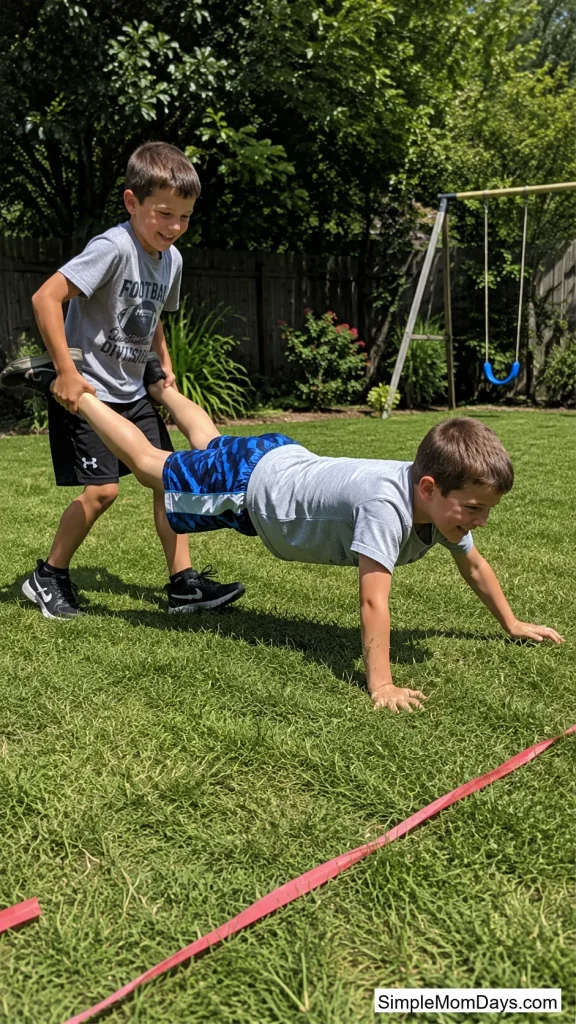
22. Wheelbarrow Race
Pair up players of similar height and strength. One gets down on their hands while the partner holds their ankles and lifts their legs off the ground. The “wheelbarrow” walks on their hands to the finish line while the partner steers.
Swapping positions for a return trip turns one race into two, so nobody feels like they only got the easy job or the hard one.
Needs grass or soft ground for safety, works for ages eight and up, and any number of teams can race at once if you’ve got the space.
23. The Human Knot
Stand in a circle, reach across, and grab the hands of two different people who aren’t standing next to you. Once everyone’s tangled together, the group has to work out the knot and end up back in a circle without anyone letting go.
This one levels the playing field in a way most team games don’t — it takes zero athletic skill, so the least coordinated person in the group can end up being the one who spots the way out.
No supplies. Works best with eight to fifteen people, ages eight and up, and untangling usually takes ten to fifteen minutes.

24. Balloon Stomp Relay
Tie a balloon loosely to each player’s ankle with a piece of string. Split into two teams and set them loose to pop the other team’s balloons while protecting their own. Last team with an intact balloon wins.
The chaos is the appeal here — there’s no way to plan a strategy that survives contact with fifteen people all stomping at once, so every round plays out differently.
Needs balloons and string. Works indoors or out, ages six and up, any team size, and a round rarely lasts more than ten minutes.

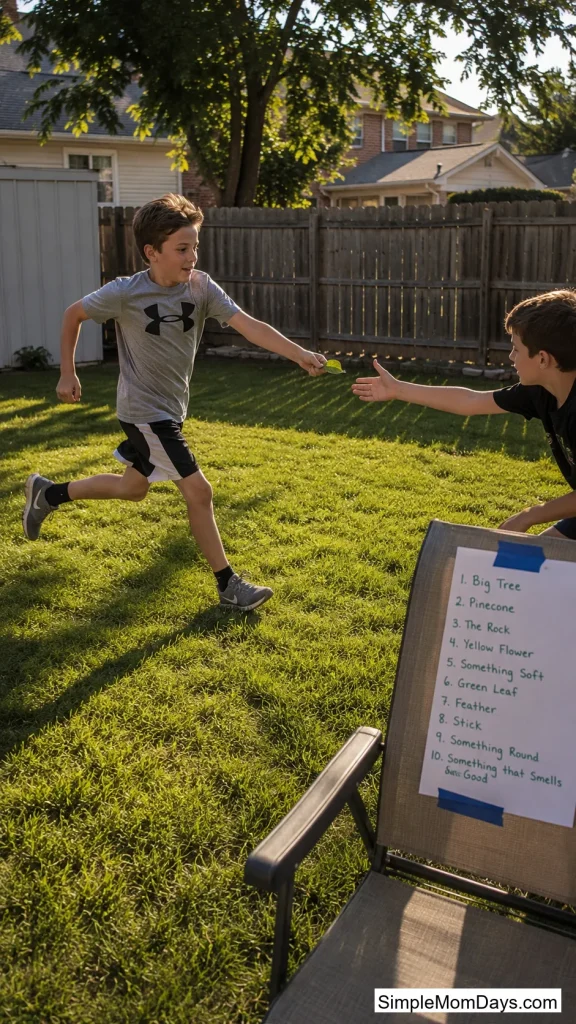
25. Team Object Relay
Give each team a short written list of items to find — something round, something the color of grass, something that makes noise. One runner at a time brings back a single item, tags the next teammate, and the next one heads out. First team to complete the whole list wins.
The one-item-per-trip rule is what keeps this from turning into every team just splitting up and grabbing everything at once — it forces actual teamwork instead of a free-for-all.
Needs only a scrap of paper for the list. Works indoors or out, any age, teams of three or more, and takes about fifteen minutes.
Quiet Wind-Down Games
For the last stretch of the party, when everyone’s tired but not quite ready to go home yet.
26. Silent Statue Challenge
Pair off and stare at each other, trying to make your partner laugh first without touching them or making a sound. Winners face off against other winners until one person is left standing.
Because it’s stationary and nearly silent, this naturally brings a room’s energy down without losing anyone’s attention, which is exactly what you want right before a party wraps up.
No supplies. Works for any age, any group size, and a full bracket usually wraps up in five to ten minutes.

27. I Spy
Sitting in one spot, one player picks something visible and gives only its color as a clue — “I spy something blue.” Everyone else guesses until someone gets it right, then takes the next turn.
Add a scoring twist for older kids and teens: the describer keeps a running tally of how many guesses each round took, and whoever needed the fewest guesses across the whole game wins bragging rights.
No supplies, works for ages four and up, any group size, and it’s the game that actually works for those last fifteen minutes before the pickup line starts forming outside.
Pick a Few and Keep Them Handy
You don’t need all twenty-seven in one afternoon. Pull two or three from whichever section matches your crowd, keep one quiet game in your back pocket for when energy crashes, and you’ve got a party that never needs anyone to reach for a screen.