


Search “Halloween party ideas” and the same dozen activities show up everywhere: mummy wrap races, spider deviled eggs, trunk-or-treat, a costume parade. None of that is wrong exactly, it’s just the same list rearranged.
This one skips the recycled staples and leans into ideas that need a genuine reaction to work: a flashlight chase in a dark yard, a drink that changes color at the table, a message that appears out of nowhere on a blank sheet of paper. Most still use things already sitting in a craft drawer or kitchen cabinet.
Pick a handful from each category instead of trying to run all 21 in one afternoon. A party built around five or six activities that actually land beats a checklist of twenty that nobody remembers by November.
Halloween Games With an Unexpected Twist
Classic backyard games get a second life with one small change: less light, a stopwatch, a grab bag of odd props. These four keep even older kids engaged instead of declaring themselves too cool for party games.
1. Mystery Bag Costume Relay
Fill several bags with a random assortment of items: an oversized shirt, a feather boa, rain boots, a pool noodle, a sequined scarf. Split kids into teams. On “go,” the first kid in line grabs a bag, puts on everything inside as fast as possible, runs to a marked spot and back, then strips it off for the next teammate.
The costume never matches, which is the entire point. Watching a kid sprint in oversized rain boots and a feather boa gets bigger laughs than anything overtly Halloween-themed. It’s a game built around the specific silliness of the pile, not a script anyone can predict ahead of time.
Raid the donation box or a dollar store for bag filler. Nothing here needs to be Halloween-themed; the mismatch is what sells it.

2. Flashlight Monster Tag
Turn off the porch and yard lights, hand one player a flashlight, and let that “monster hunter” chase everyone else in the dark. A beam of light lands on someone, and they’re frozen until a teammate taps them free.
Regular tag loses its edge once kids hit seven or eight. Take away the lighting and swap a hand for a flashlight beam, and the same chase feels like a different game entirely. The freeze-and-rescue rule keeps slower kids in play instead of getting tagged out early and standing on the sidelines.
Set clear yard boundaries before starting, and keep one adult stationed near any steps or uneven ground.

3. Glow-Stick Ring Toss in the Dark
Snap glow bracelets to activate them, loop them over cones or bottles spread across a dark yard, and let kids toss more glow bracelets to try landing a ring.
Ring toss on its own is nothing special. Doing it after dark with everything glowing turns a familiar backyard game into something that feels different, without adding a single extra rule to learn.
Buy bracelets in bulk online. A pack of 100 costs less than a single traditional ring toss set and doubles as a party favor once the game wraps up.

4. Candy Trading Market
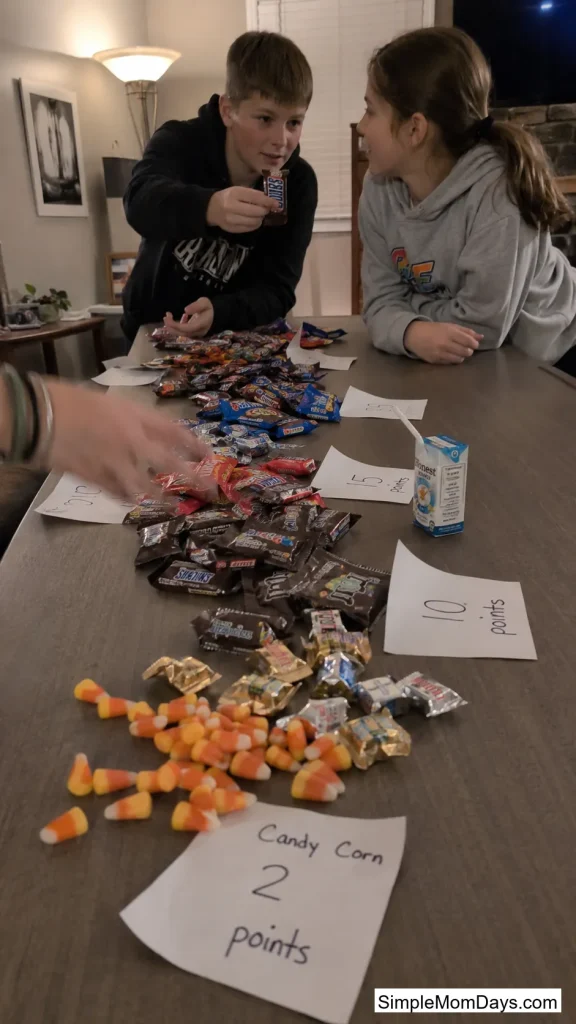
Once the trick-or-treat bags come home, set up a “market” table where kids trade candy using a simple point system: one full-size bar equals five point cards, a fun-size piece equals one. Let them negotiate trades with each other.
It turns a pile of candy nobody’s going to finish into its own activity, and it quietly teaches negotiation without anyone noticing they’re learning something. Kids who don’t like chocolate finally get to trade it away for the gummy stuff they actually want.
Write the point values on an index card and tape it to the table so there’s no arguing over exchange rates mid-trade.
Hands-On Science and Spy Missions
These four turn a corner of the party into its own mini mission, complete with a real chemical reaction, a real code, or a real lock to open. They work especially well for kids who’ve aged out of simple crafts but aren’t ready for anything too intense.
5. Mad Scientist Potion Lab
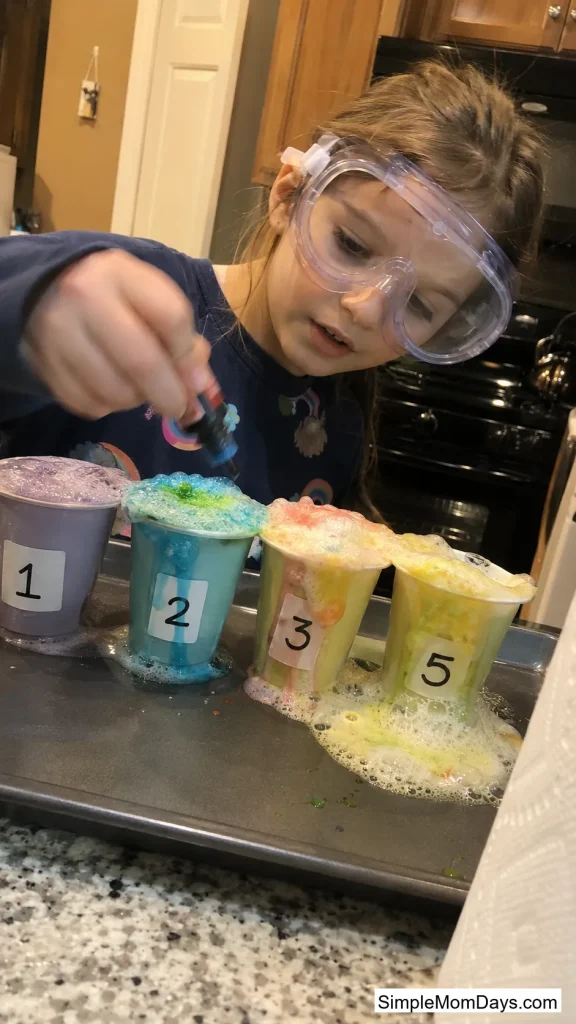
Line up small cups or beakers, number each one, and fill them with baking soda, food coloring, and a drop of dish soap. Give kids a dropper bottle of vinegar and a pair of goggles, then let them squeeze drops into each cup to trigger a different colored fizz.
The lab coat and goggles do most of the atmosphere-building on their own, and the actual reaction never gets old no matter how many times a kid triggers it. Numbering the cups instead of naming them keeps the focus on the experiment itself, which holds attention longer than pure theming does.
Set this up on a tray outdoors or over a washable table. Vinegar and baking soda foam further than expected once dish soap gets involved.
6. Invisible Ink Secret Messages
Write a message on paper using a cotton swab dipped in lemon juice, let it dry completely, then hand it to a kid along with a lamp or hair dryer. Holding the paper near the heat slowly reveals the hidden writing.
Kids expect glow-in-the-dark or slime the moment they hear “Halloween craft,” so a message that appears out of nowhere lands harder than expected. Write the messages ahead of time as clues pointing to a hidden treat, and the craft turns into a mini scavenger hunt at almost no extra cost.
Supervise the heat source closely with younger kids, and keep it a few inches from the paper rather than pressing it directly against a bulb or dryer vent.

7. DIY Spy Decoder Glasses and Treasure Hunt
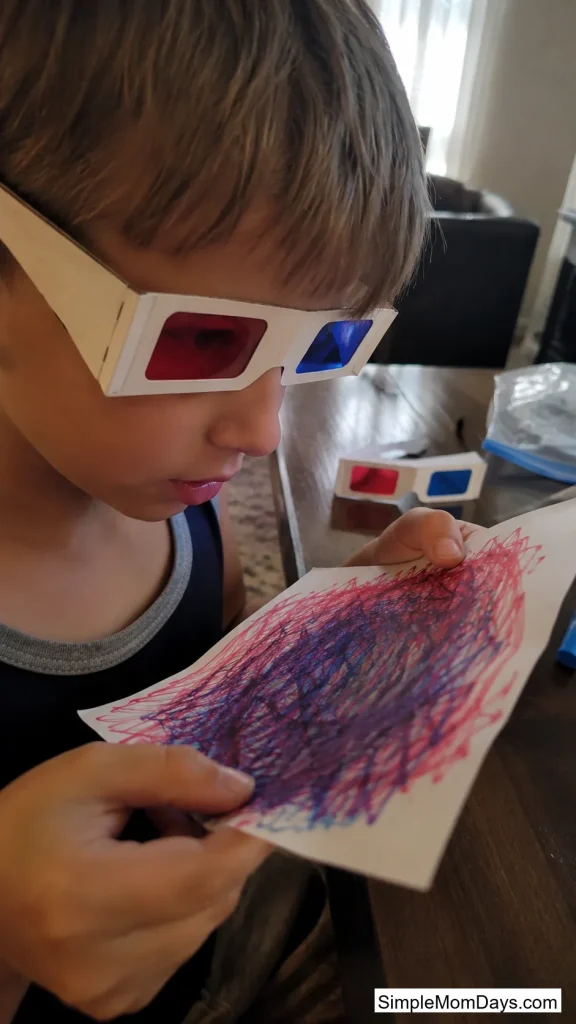
Cut simple glasses frames from cardstock and glue colored cellophane over the eye holes, one lens red, one lens blue. Hide clues written in overlapping red and blue marker so only one lens reveals each layer of text.
Kids get a wearable craft and a puzzle in the same activity, and the moment a hidden word appears through the right lens gets a bigger reaction than most pre-made games manage. Older kids can help write the layered clues for younger siblings to solve, which keeps a mixed-age group working together instead of splitting off by age.
Test each clue with the actual cellophane before the party. Some marker and cellophane color combinations hide text better than others.
8. Witch’s Curse Escape Mission
Pick one room, tell kids a witch has locked something they need (the candy bowl, a treasure chest, the party favors) behind a series of clues, and hide three or four simple puzzles around the space: a padlock with a number code, a riddle taped under a chair, a word scramble on the back of a picture frame.
A full escape room takes hours to build. Four connected clues in one room takes twenty minutes and delivers most of the same payoff: kids working together under a countdown, arguing over the answer, cheering when the last lock clicks open.
Use a cheap combination lock from the hardware store as the final clue’s payoff. Physically opening something beats just announcing “you solved it.”

Crafts Beyond the Paper Plate Mask
Skip the version of Halloween crafting that ends with twenty nearly identical projects lined up to dry. These four leave more room for each kid’s result to look different from the one next to it.
9. Design-Your-Own Monster Collage
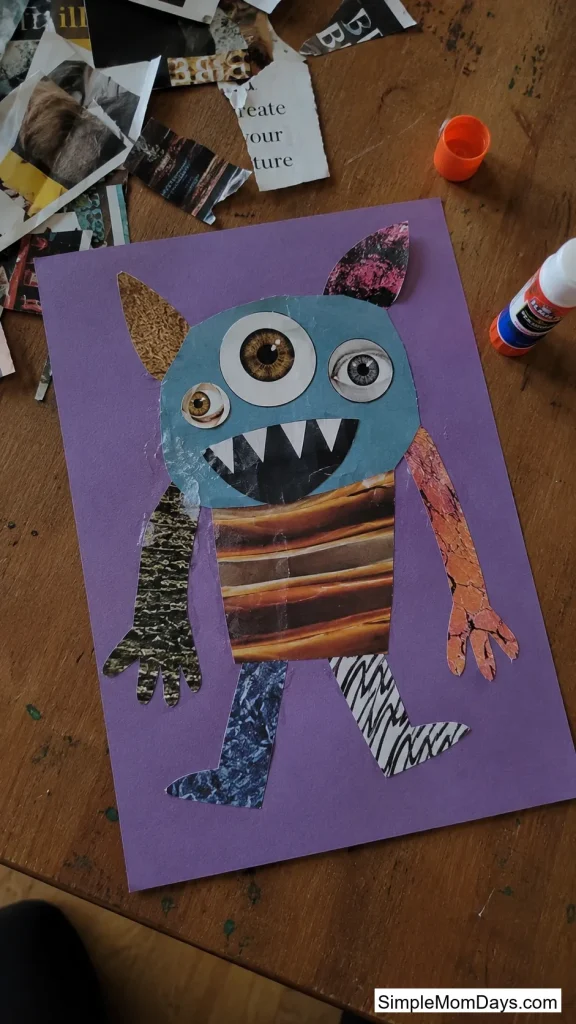
Cut out ears, eyes, mouths, and limbs from old magazines or printed animal photos, then let kids glue together their own invented monster from mismatched parts.
A blank monster-drawing page intimidates kids who don’t think of themselves as artists. Handing them pre-cut parts to arrange removes that barrier entirely, and the results are consistently stranger and funnier than anything a straightforward drawing prompt produces.
Give the finished monster a name and a made-up “weakness” as a bonus writing prompt for kids who want to keep going.
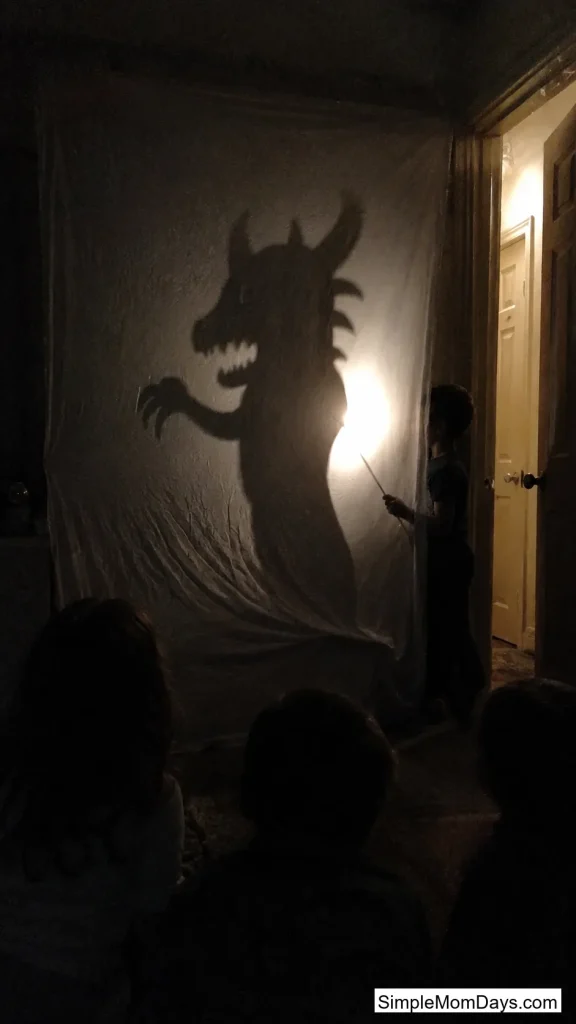
10. Shadow Puppet Monster Theater
Cut monster silhouettes out of black cardstock, tape them to skewers or chopsticks, hang a white sheet across a doorway, and shine a flashlight from behind so kids can act out a story using only the shadows.
This one works for a genuinely wide range of ages at the same time. Toddlers love just watching the shapes move, while older kids get invested in writing an actual plot for their puppet to perform.
Keep the light source a few feet back from the sheet. Too close and the shadows blur instead of staying crisp.
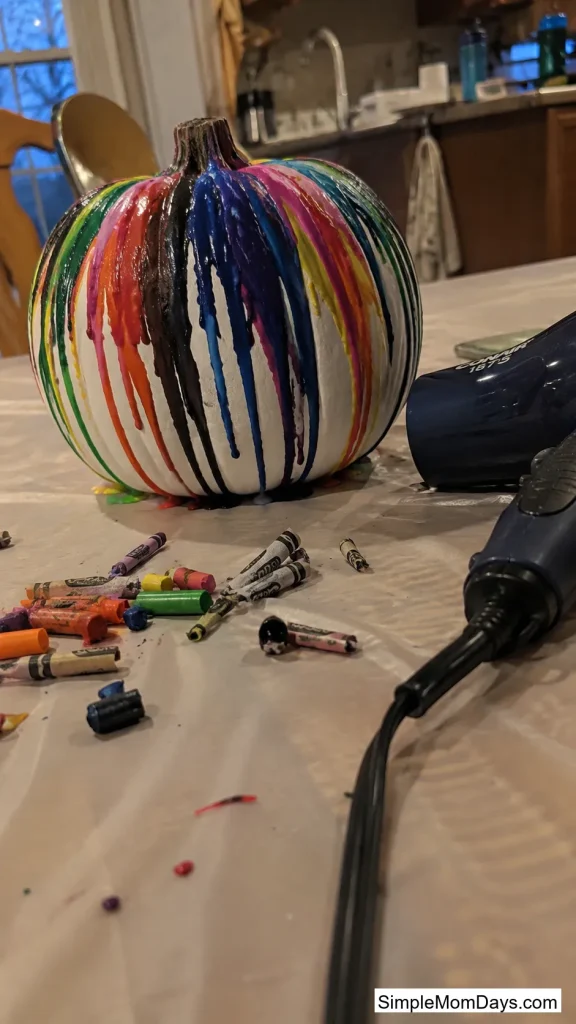
11. Melted Crayon Pumpkin Art
Peel the paper off broken crayon pieces, arrange them around the top rim of a small or foam pumpkin, then use a blow-dryer on low heat to melt the wax so it drips down the sides in streaks.
The drip pattern is different every single time, so there’s no “wrong” way to do it and nothing to compare between kids. Watching the wax melt and run is half the appeal, which keeps even kids who usually rush through crafts hanging around to watch.
An adult should run the blow-dryer for younger kids. The wax drips get warm on the way down.
12. Glow Jar Lanterns
Crack a glow stick, shake the liquid into a mason jar of water, then twist on the lid so kids can shake and swirl their own glowing lantern.
It takes under a minute per jar, and the glow lasts the whole party, so it works as both a craft and a piece of table décor once the sun goes down. Mixing different glow stick colors together produces shades that don’t come out of any bottle, which kids find more interesting than a single solid color.
Hot glue the lid shut if younger kids are attending, since the liquid inside isn’t meant to be handled directly.

Sensory Play With Real Payoff
Digging, melting, and reaching into the unknown hold a toddler’s attention longer than almost any toy on the market. These three lean into that instead of fighting it.
13. Pumpkin Guts Excavation Station
Cut the tops off a few small pumpkins, then let kids dig through the seeds and stringy insides with kitchen tools: ice cream scoops, spoons, small tongs, hunting for a handful of plastic bugs or coins buried inside beforehand.
Real pumpkin guts are cold, stringy, and genuinely strange to touch, which is exactly the reaction that makes this stick in a kid’s memory. Hiding small prizes inside turns a sensory activity into a mini treasure hunt without any extra setup.
Line the table with a plastic cloth. This is the messiest entry on this list, in a good way.

14. Mystery Touch Buckets
Fill a few opaque buckets with things that feel a little strange: cooked spaghetti standing in for guts, peeled grapes for eyeballs, dry beans for bugs. Let kids reach in without looking.
The reaction is almost always the same: a scream, a laugh, then the hand goes right back in for a second try. It costs almost nothing, resets instantly between guests, and works across a wide age range since older kids enjoy narrating the gross factor for the little ones.

15. Frozen Monster Ice Rescue
Freeze a few small plastic monsters or bugs inside ice cubes or a larger block, then give kids warm water in squirt bottles, salt, and small plastic tools to melt the ice and free the toys trapped inside.
It’s part science lesson and part rescue mission, and kids stay locked in far longer than a typical craft holds their attention, since there’s a clear goal driving the whole activity. Salt speeds up the melt dramatically, which kids notice and usually ask about, turning it into an accidental lesson on freezing points.
Freeze the block the night before in a loaf pan for one big group rescue, or use an ice cube tray for individual monster hunts.

Food With a Fresh Spin
A Halloween name and some orange food coloring only goes so far. These three change something about how the food is made or served, not just what it’s called.
16. Color-Changing Potion Drinks
Brew butterfly pea flower tea and let it cool. Serve it over ice, and let each kid add a few drops of lemon juice to their own cup and watch the drink shift from deep blue to purple to pink right in front of them.
The color change happens because of a pH shift, not a trick, so kids can genuinely ask how it works and get a real answer. It also gives every kid a hands-on moment at the drink table instead of just grabbing a pre-poured cup, which slows down the sugar rush a little.
Butterfly pea tea is caffeine-free and widely available online or at specialty grocery stores. No food coloring needed.

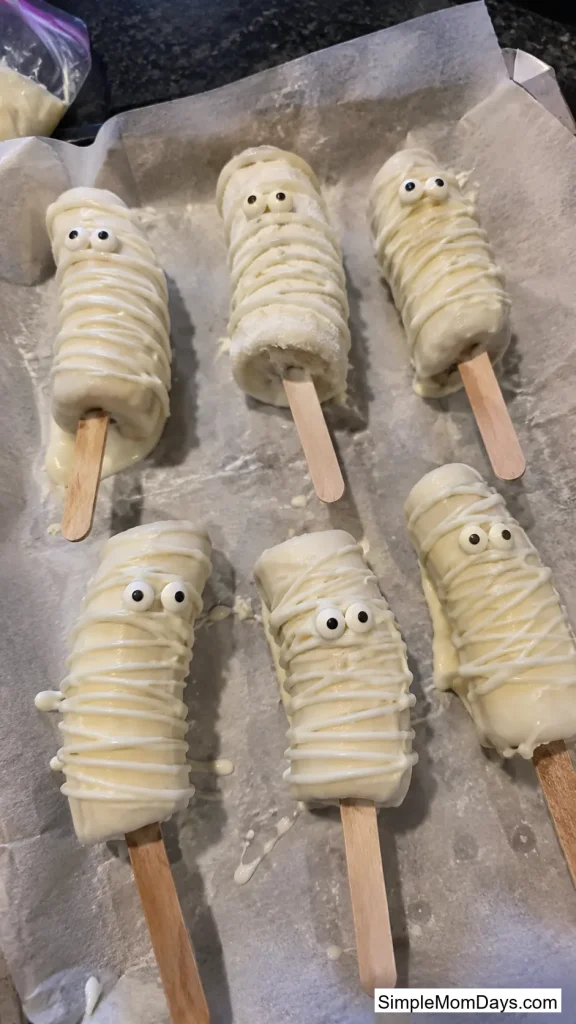
17. Mummy-Wrapped Banana Pops
Freeze peeled bananas on sticks, dip them in melted white chocolate, then drizzle thin white chocolate lines across each one at an angle to look like mummy wrappings. Add two candy eyes before the chocolate sets.
It’s a lighter option next to a table full of candy, and the frozen banana underneath means it holds up better in a room full of kids than most chocolate-dipped treats, which tend to soften and slide within the hour.
Freeze the bananas at least two hours before dipping, or the white chocolate won’t set properly against the cold surface.
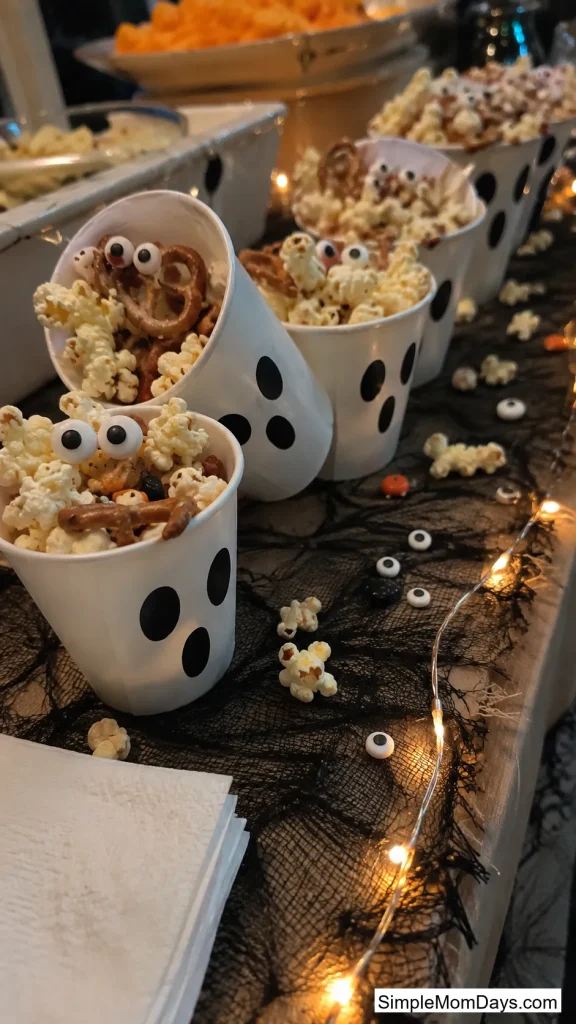
18. Snack Mix Eyeball Cups
Mix popcorn, pretzel sticks, and orange and black candy pieces in a bowl, then portion it into small paper cups and top each one with a few edible candy eyes pressed into the mix.
It solves the problem of a shared snack bowl getting picked through by twenty hands. Individual cups keep things sanitary, and the candy eyes turn an ordinary trail mix into something kids specifically ask for by name.
Skip nuts entirely in the mix if any guests have allergies. Popcorn and pretzels hold the eyes just as well.
Ways to Bring Everyone Together at Once
Save these for the moments when the party needs to pull back into one group: right at the start, in the mid-afternoon lull, or as the closing act before everyone heads home.
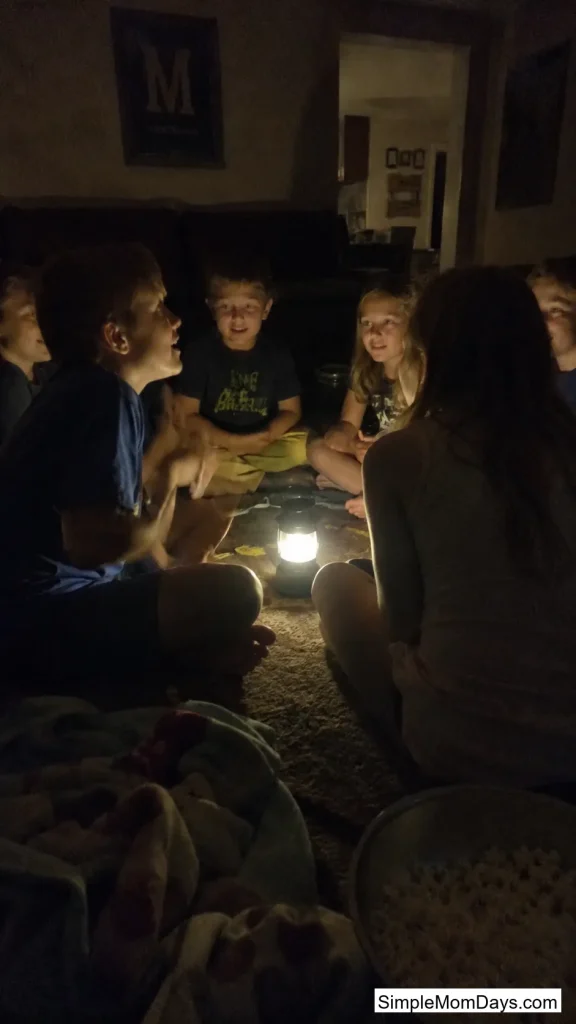
19. Collaborative Ghost Story Circle
Sit everyone in a circle, dim the lights, and start a ghost story with one sentence. Go around the circle and have each person add exactly one line, building the plot together with no planning ahead of time.
The story always goes somewhere nobody expected, and that unpredictability makes it funnier than any scary story read aloud from a book. It also works for a genuinely mixed-age group, since younger kids can add something silly and older kids build right on top of it.
Set a rule that nobody’s line is allowed to end the story early. It keeps the game going longer and avoids a flat ending five lines in.
20. Neighborhood Sound Scavenger Hunt
Record five or six spooky or unusual household sounds ahead of time: a creaking door, dripping water, footsteps on gravel, a distant howl. Play them one at a time from a hidden speaker and have kids guess what made each sound.
It’s a listening game in a category that barely gets used at parties, which makes it feel fresh even though the setup is simple. Kids naturally split into teams and start debating guesses out loud, so it turns into a group activity without anyone assigning teams on purpose.
Record the sounds on a phone a few days ahead of time. It takes longer to think of good sounds than to actually record them.

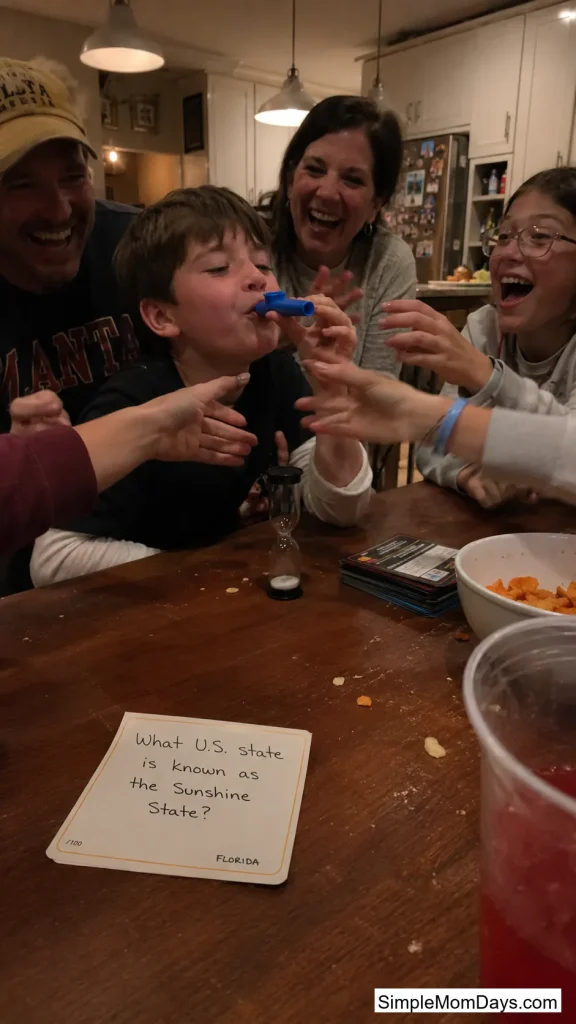
21. Family Trivia Countdown Finale
Close out the party with a short trivia round: five or six Halloween questions read aloud, teams answer using a kazoo honk or a bell instead of raising hands, and the fastest correct buzz wins the point.
A trivia round works as a natural closing activity because it pulls everyone back into one group right when the party’s energy starts scattering in different directions. Keep a couple of questions specific to your own family’s Halloween history, since those land better with kids than generic trivia facts ever do.
Final Thoughts
None of this needs a big budget or a weekend of prep. Pick two or three activities that fit the ages actually walking through the door, add one food idea and one group activity to close things out, and the party runs itself from there.