
Catering usually eats up more of a wedding budget than almost anything else once venue fees are locked in. A formal plated dinner for a full guest list can run past five figures before the cake even shows up, and that number climbs fast with every added course.
None of that means the food has to feel like a compromise. Some of the most talked-about receptions this year skipped the stiff plated dinner entirely in favor of something guests could build themselves, snack on all night, or actually remember the next morning.
These 25 ideas cover cocktail hour bites, full dinner replacements, and dessert alternatives to a tiered cake, all priced for a real budget and built to feed a crowd without anyone noticing corners got cut.
Build-Your-Own Bars That Do the Work For You
These don’t need a full catering staff. Set the ingredients out, hand guests a bowl or a bag, and let them build their own plate while you save on service costs.
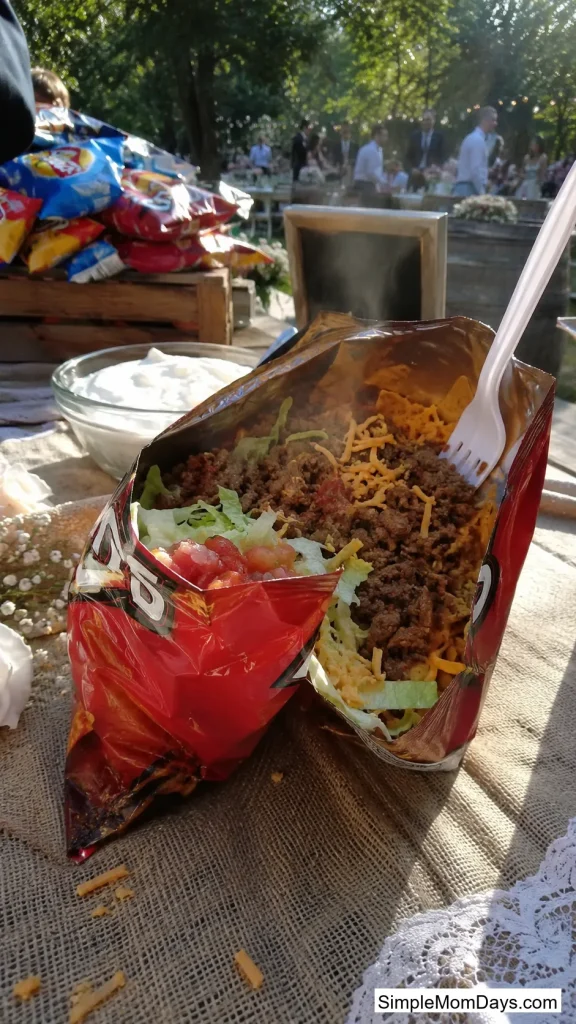
1. Walking Taco Bar
Split open individual bags of corn chips, spoon in seasoned beef, chicken, or a bean mix, then add cheese, lettuce, and salsa right into the bag itself. Guests eat straight out of the bag with a fork, no plate required.
This works because it kills three cost centers at once: no plates to rent, no serving staff beyond one person refilling toppings, and the “container” is the food packaging itself.
A case of chip bags from a wholesale club runs under $20 for 60 servings, and the fillings scale the same way ground beef or shredded chicken does for regular tacos.
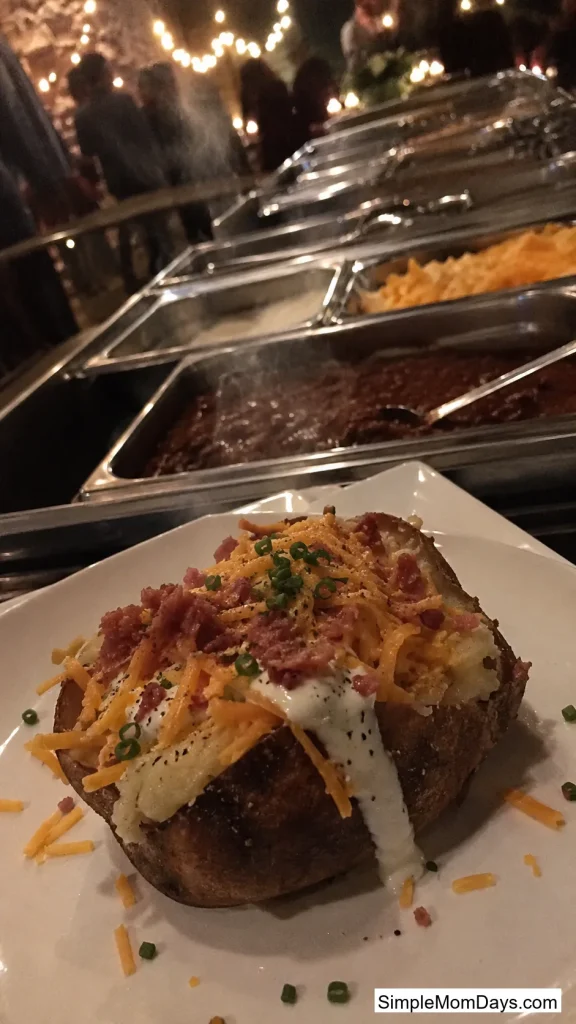
2. Loaded Baked Potato Bar
Bake trays of russet and sweet potatoes ahead of time, hold them warm in a chafing dish, then set out a toppings line: shredded cheese, turkey bacon bits, chives, broccoli, sour cream, and warm chili for anyone who wants a heartier plate.
Potatoes are one of the cheapest per-pound foods around, and a single case feeds far more people than the same money spent on meat would. The bar format also handles dietary restrictions on its own — a vegetarian guest just skips the chili instead of needing a separate dish cooked for them.
Plan on about 1.5 potatoes per guest, with total costs for potatoes and toppings landing around $150-200 for 100 people.
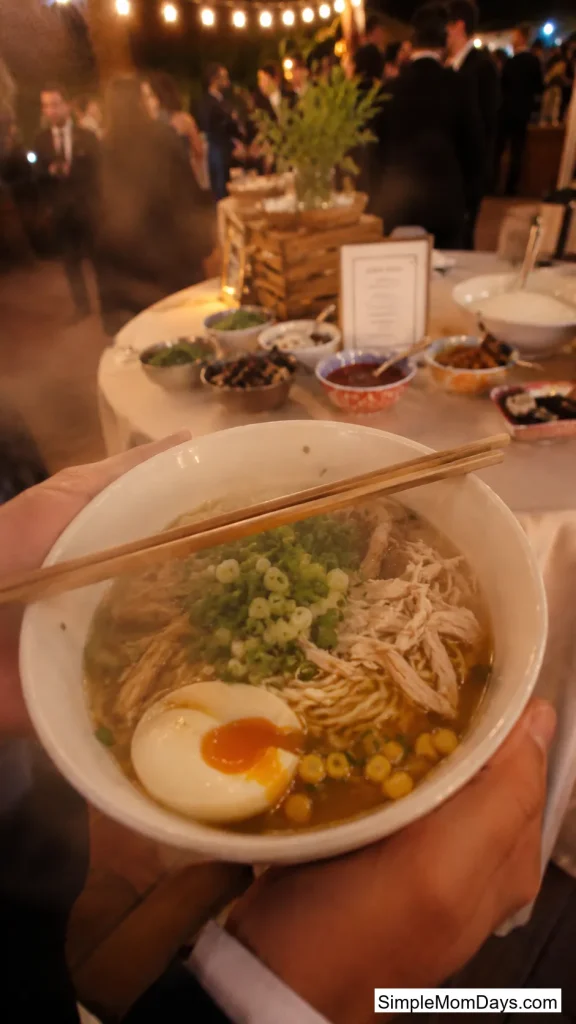
3. Build-Your-Own Ramen Bar
A stock pot of seasoned chicken broth stays warm on a burner while guests ladle it over noodles and pick toppings — soft-boiled eggs, green onion, corn, mushrooms, chili oil, and shredded chicken.
Ramen bars have started popping up at receptions because they photograph well and cost a fraction of what a plated Asian-fusion entrée would run through a catering company. Guests also tend to remember it specifically, since it’s not the wedding food they’ve already seen a dozen times.
Noodles and broth base bought in bulk from a restaurant supply store keep a full bar for 100 guests, toppings included, under $400.
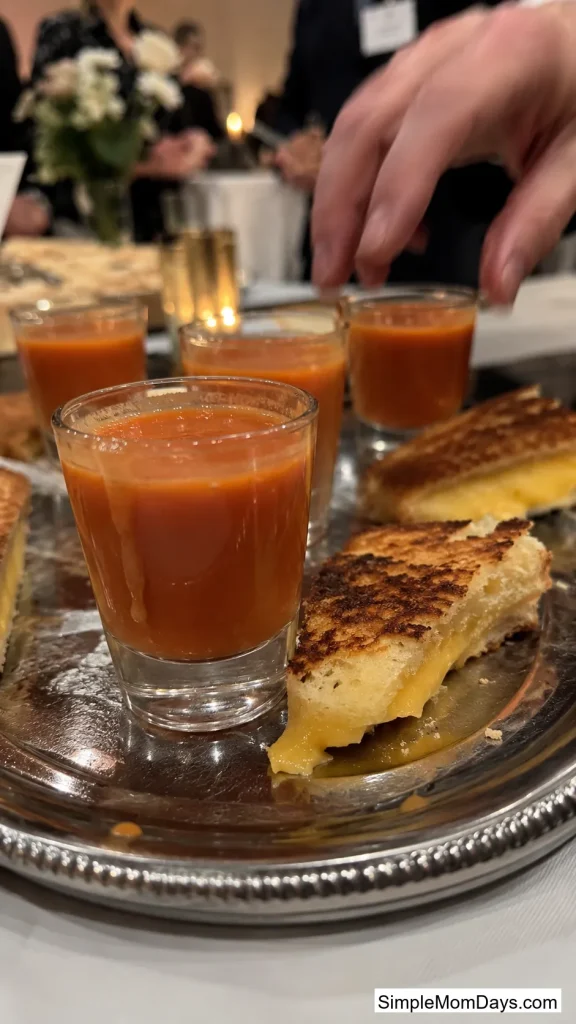
4. Grilled Cheese & Tomato Soup Shooter Bar
Small shot glasses of tomato soup pair with mini grilled cheese triangles cut into dippable strips, set out on a tray near the appetizer table.
It reads as a nostalgic pairing rather than a budget choice, and the shooter format keeps portions small enough that guests grab one on the way to their next conversation instead of committing to a full plate.
A loaf of bread, a block of cheese, and a few cans of tomato soup cover 50 shooters for well under $40.
Global Street Food, Cocktail-Hour Size
Cocktail hour is where a lot of couples default to the same cheese cubes and crackers. Bite-sized dishes pulled from different cuisines cost about the same to make but leave a much stronger impression.
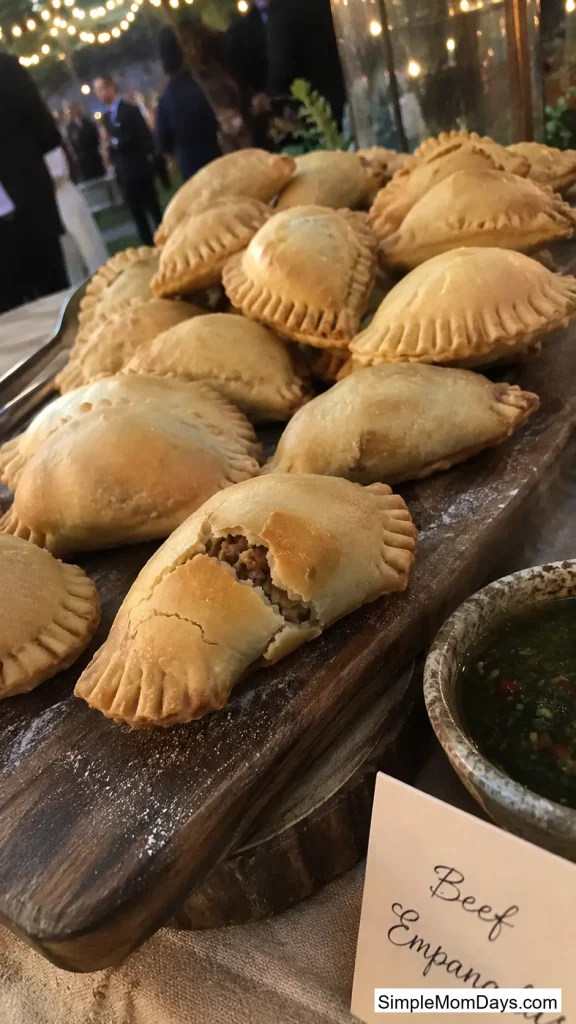
5. Mini Empanada Station
Hand-sized empanadas filled with seasoned beef, chicken, or spinach and cheese bake in trays and hold their heat well, making them easy to set out without a server standing by.
They travel and reheat better than most appetizers, so a couple willing to prep ahead can make several dozen at home a day or two early and freeze them raw until baking day.
A dozen runs about $15-20 to make from scratch, which keeps the per-guest math simple at one empanada each.
6. Samosa & Chutney Spread
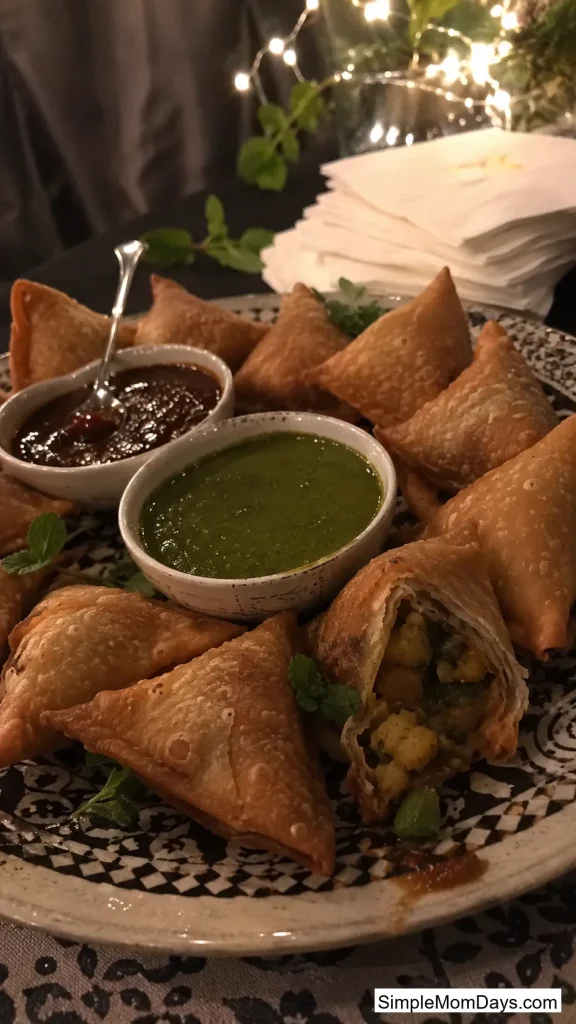
Crisp pastry triangles filled with spiced potatoes, peas, or ground chicken pair with a small spread of mint and tamarind chutney for dipping.
Samosas hold up at room temperature far longer than most fried appetizers do, which matters when cocktail hour runs long and nobody’s restocking the tray every ten minutes.
Frozen samosas from an international grocer bake up for well under $1 per piece, and homemade chutney costs next to nothing beyond a blender and ten minutes.
7. Dumpling & Spring Roll Platter
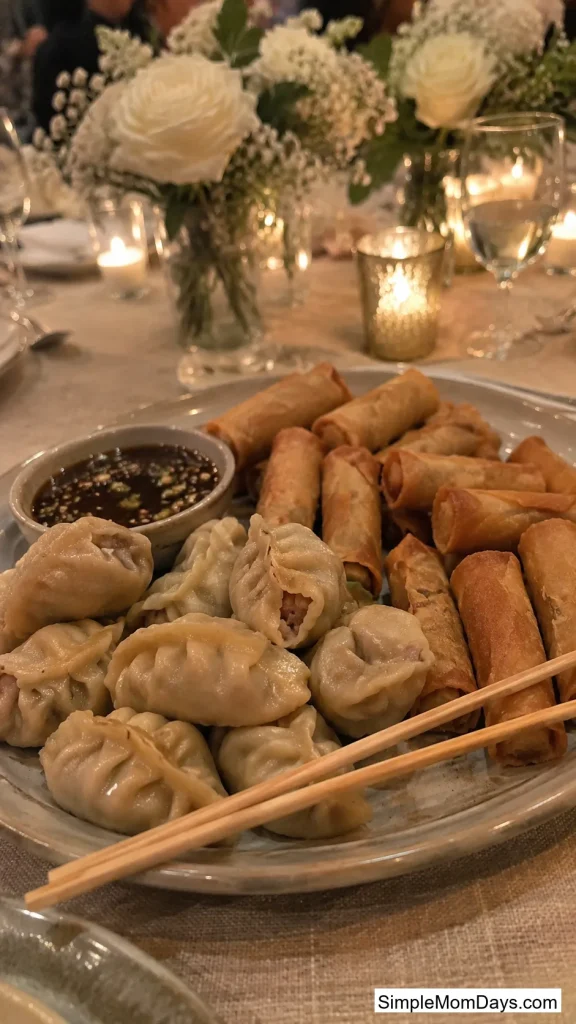
A mixed platter of steamed dumplings and crisp spring rolls, filled with chicken, vegetables, or shrimp, served with a simple soy-ginger dipping sauce on the side.
Both items steam or fry in batches, so a couple of home cooks — or one caterer working a single station — can keep a steady stream coming out without needing a full kitchen brigade.
Frozen versions from a wholesale club cost roughly $0.30-0.50 per piece, undercutting almost any other passed appetizer on this list.
8. Falafel Wrap Bar
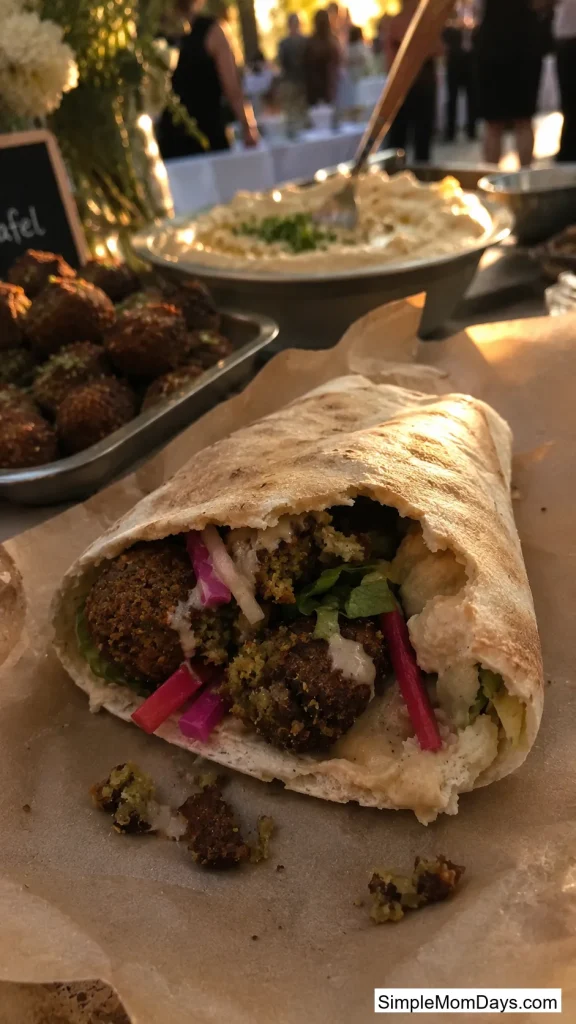
Warm falafel, hummus, pickled vegetables, and soft pita laid out so guests fold their own wrap or eat the pieces separately as a mezze plate.
It’s naturally vegetarian, which quietly solves a dietary problem most receptions handle by ordering one separate, pricier dish — here it’s simply part of the spread everyone already eats from.
Dried chickpeas and pita cost very little bought in bulk, putting a full falafel bar for 100 guests around $150-180.
Grazing Boards and Shareable Spreads
One long table loaded with food does double duty as both dinner and décor, and it needs almost no service staff once it’s set out.
9. Halal Grazing Board
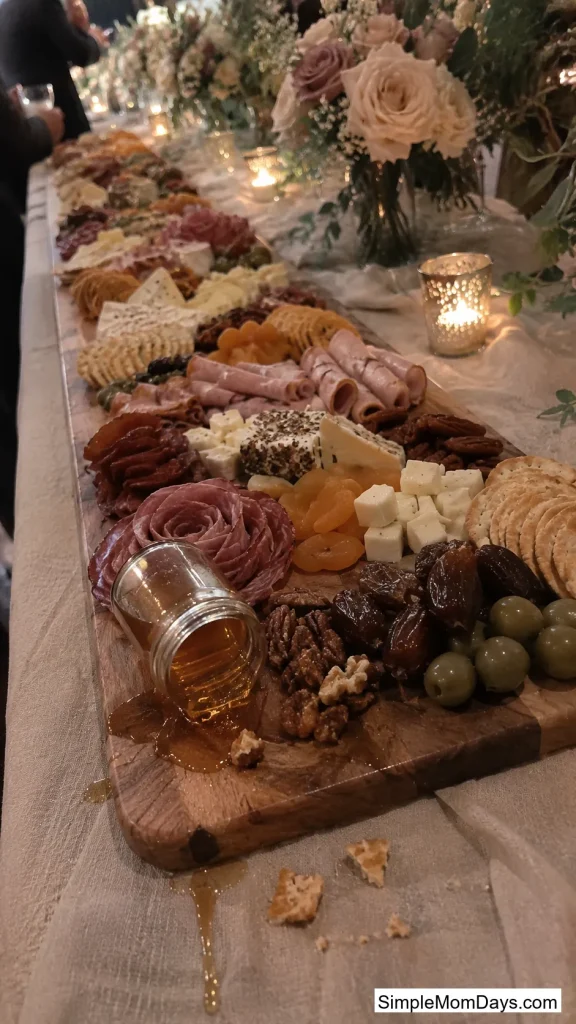
A long table or series of boards layered with halal-certified deli meats, a mix of cheeses, dried and fresh fruit, nuts, crackers, honey, and jam.
The visual weight of a fully-loaded board handles a lot of the decorating on its own, so a couple can skip a separate centerpiece budget for that stretch of the room entirely.
Built from wholesale club ingredients, a board feeding 100 guests typically runs $250-350 — well under the cost of passed hors d’oeuvres for the same headcount.
10. Crudité & Dip Board
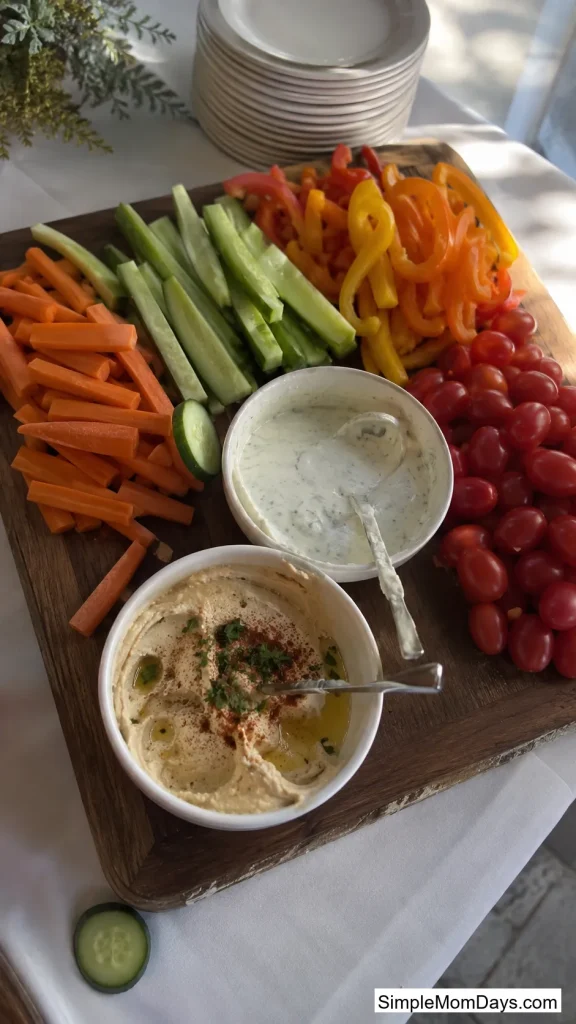
Fresh-cut vegetables — carrots, cucumbers, peppers, cherry tomatoes, snap peas — arranged around two or three dips like hummus, ranch, and a roasted red pepper spread.
It’s the lightest and cheapest board on this list, and it gives guests with dietary restrictions something to reach for without singling anyone out.
A board feeding 100 guests runs closer to $60-80 in produce, especially if vegetables are bought whole and cut in-house rather than pre-sliced.
11. Soft Pretzel & Flavored Butter Board
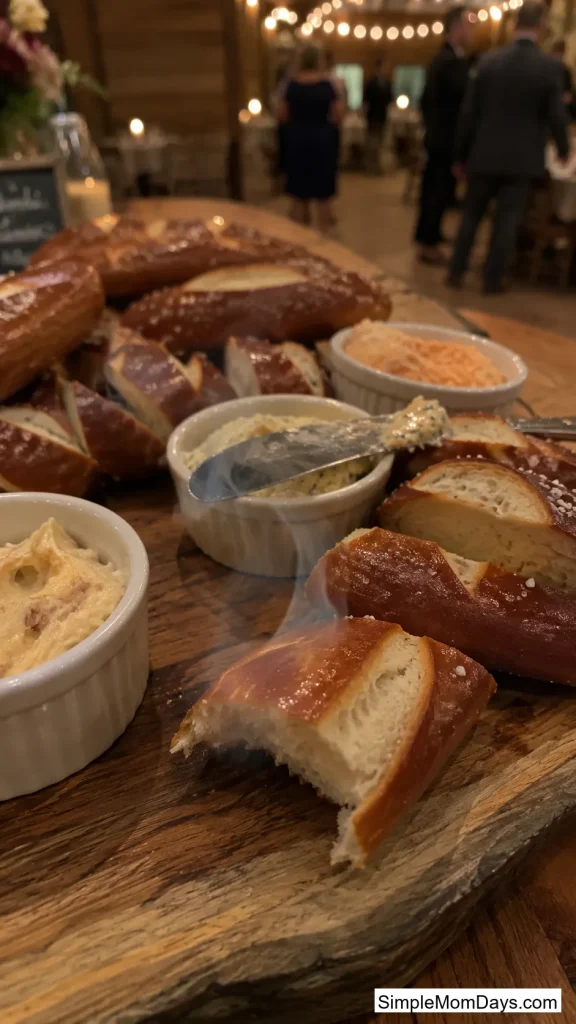
Warm soft pretzels, sliced and arranged around small bowls of flavored butter — honey, cinnamon sugar, garlic herb, and a sharp cheese dip.
Pretzels bake in batches and stay warm in a low oven, so there’s no need for a chafing dish setup or a dedicated server watching the table.
Frozen soft pretzels from a restaurant supply store cost under $0.75 each, putting a full board for 100 guests around $75-100 including the butters.
Mains That Feed a Crowd Without Plated-Dinner Pricing
Skipping a formal plated course doesn’t mean skipping dinner. Each of these uses one pan, one pot, or one buffet line to feed a full guest count.
12. Sheet-Pan Chicken Fajita Bar
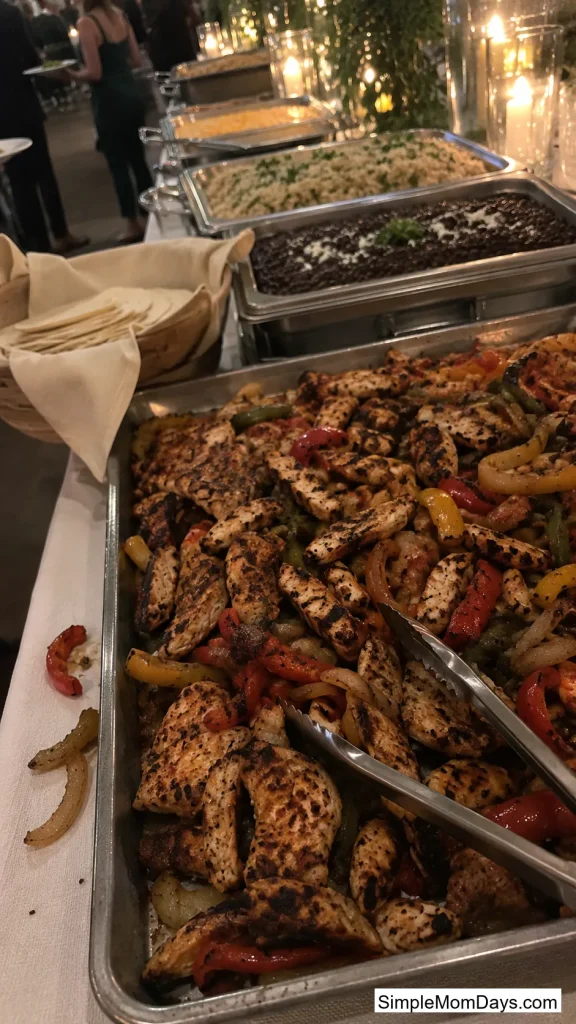
Chicken, peppers, and onions roast together on sheet pans, then move to a buffet line with warm tortillas, rice, beans, and toppings so guests build their own plate.
Everything cooks on the same pans in the same oven, which cuts prep time and labor costs compared to a dish that needs separate stations for each component.
A fajita bar for 100 guests, sides included, typically comes in around $350-450 — well under most catered chicken entrées at that headcount.
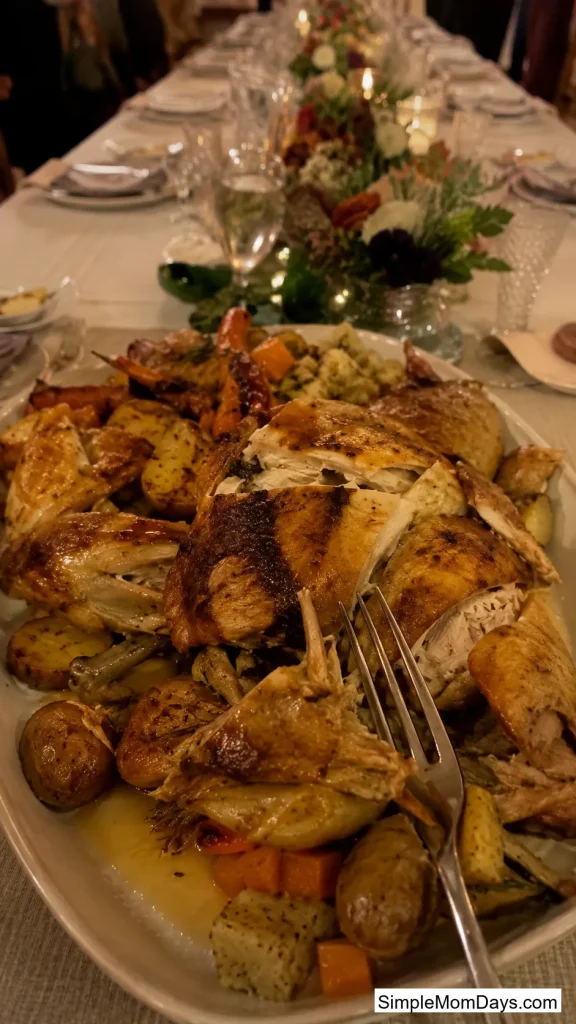
13. Family-Style Roast Chicken Dinner
Whole roast chickens, carved and arranged on large platters down the center of each table, alongside roasted vegetables and a starch like potatoes or rice.
Family-style service needs fewer servers than plated courses since guests pass dishes themselves, and it gives the tables a more relaxed, dinner-party feel than a formal course-by-course meal.
Whole chickens cost far less per pound than boneless cuts, keeping this main under $6-8 per person even with sides included.
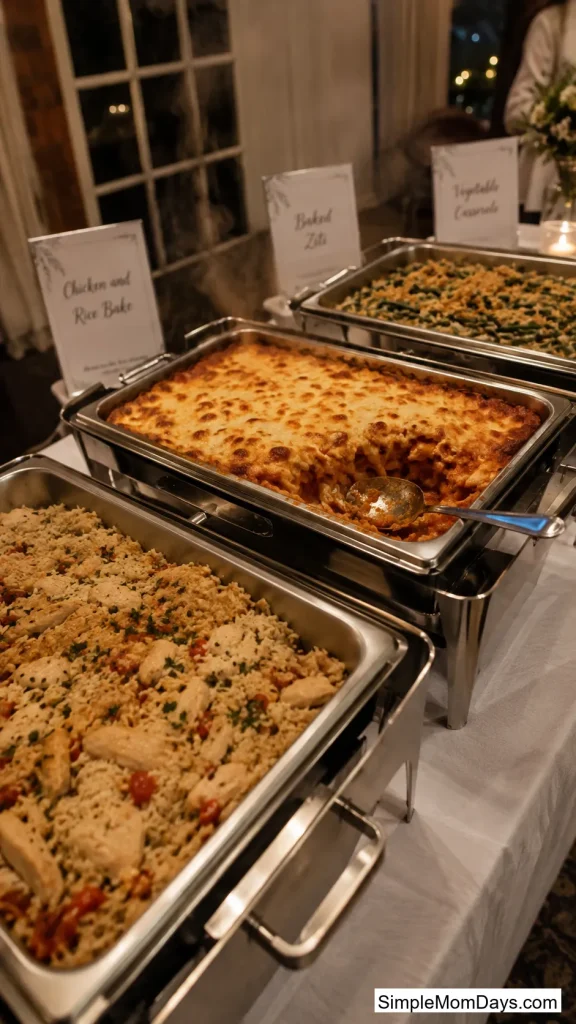
14. One-Pan Casserole Trio
Three casseroles — a chicken and rice bake, a baked ziti, and a vegetable casserole — cover the meat-eater, comfort-food, and vegetarian preferences in one buffet line.
Casseroles hold their temperature in a chafing dish far longer than most other mains, which matters at a reception where dinner doesn’t always start exactly on schedule.
Each pan feeds roughly 20-25 guests, and the ingredient cost per pan rarely climbs past $30-40.
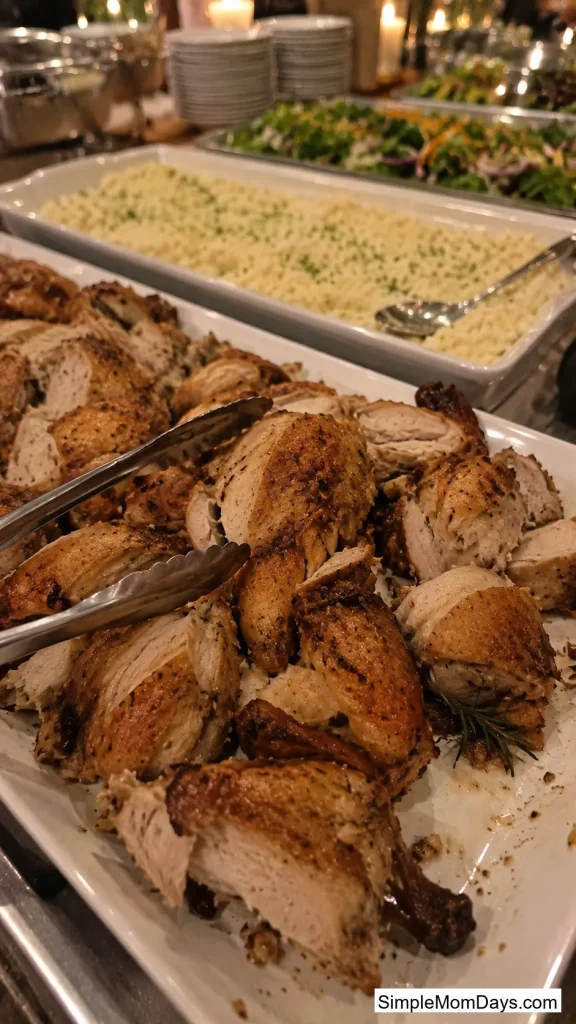
15. Rotisserie Chicken Buffet
Whole rotisserie chickens, bought pre-cooked from a grocery store or wholesale club, get carved and laid out buffet-style with a couple of simple sides like mashed potatoes and a green salad.
This skips the cooking labor entirely — someone picks up the chickens the morning of, and there’s no oven timing to coordinate around the ceremony schedule.
Rotisserie chickens run $5-8 each and typically serve 3-4 people, putting a full buffet for 100 guests around $250-300 before sides.
Budget Brunch and Breakfast-for-Dinner
A morning or early-afternoon reception opens the door to breakfast food, which costs a fraction of a dinner menu and still feels like an event.
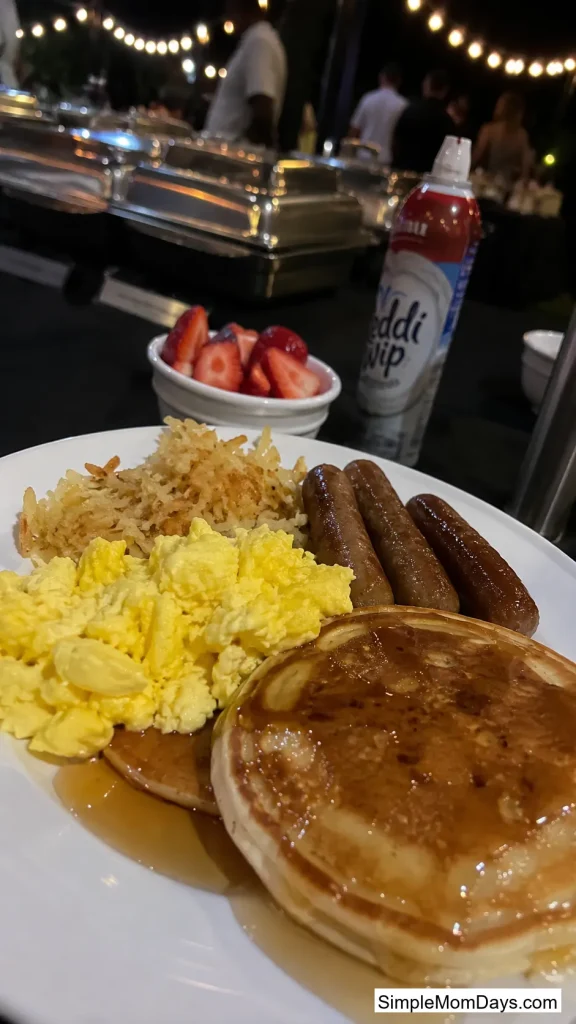
16. Breakfast-for-Dinner Bar
A buffet of pancakes, waffles, scrambled eggs, hash browns, and breakfast sausage (beef or chicken, no pork) laid out with syrup, fruit, and whipped cream on the side.
Breakfast ingredients cost noticeably less per pound than dinner proteins, and the format works at any time of day — plenty of couples now serve breakfast for dinner specifically because guests find it a fun change of pace from the usual.
A full breakfast buffet for 100 guests typically runs $400-500, roughly half of what a comparable dinner buffet would cost.
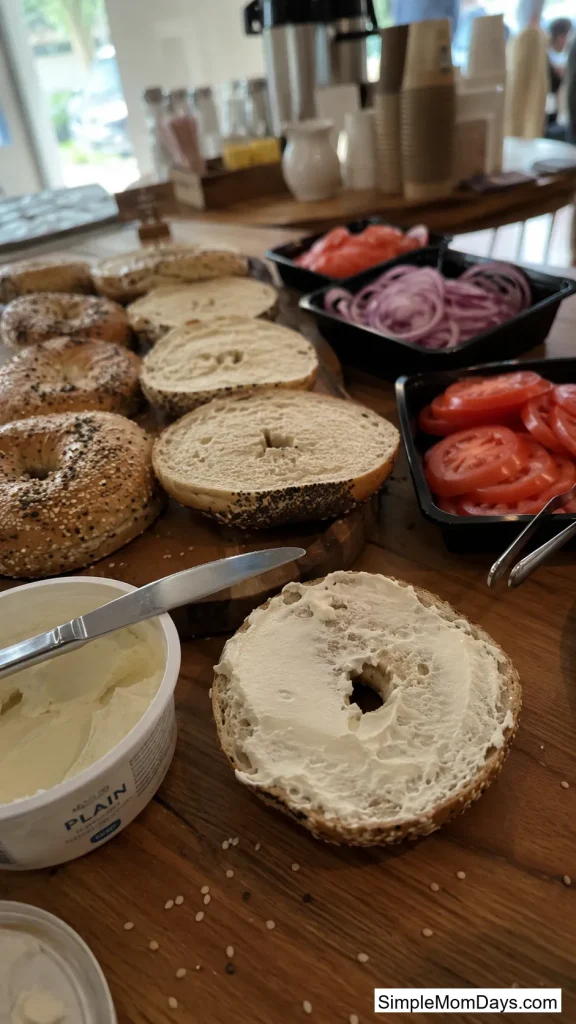
17. Bagel & Shmear Bar
A spread of bagels in several flavors alongside cream cheese variations — plain, herb, veggie, and a sweet honey-walnut option — plus smoked salmon, tomato, and red onion for anyone who wants to build a full bagel sandwich.
This needs zero cooking equipment on-site, which matters for venues that charge extra for kitchen access or don’t have one at all.
A bagel bar for 100 guests, salmon included, lands around $200-250.
Snack Stations Guests Actually Line Up For
These work best alongside a main dish or during a late-night lull, and they cost almost nothing compared to what they add to the room.
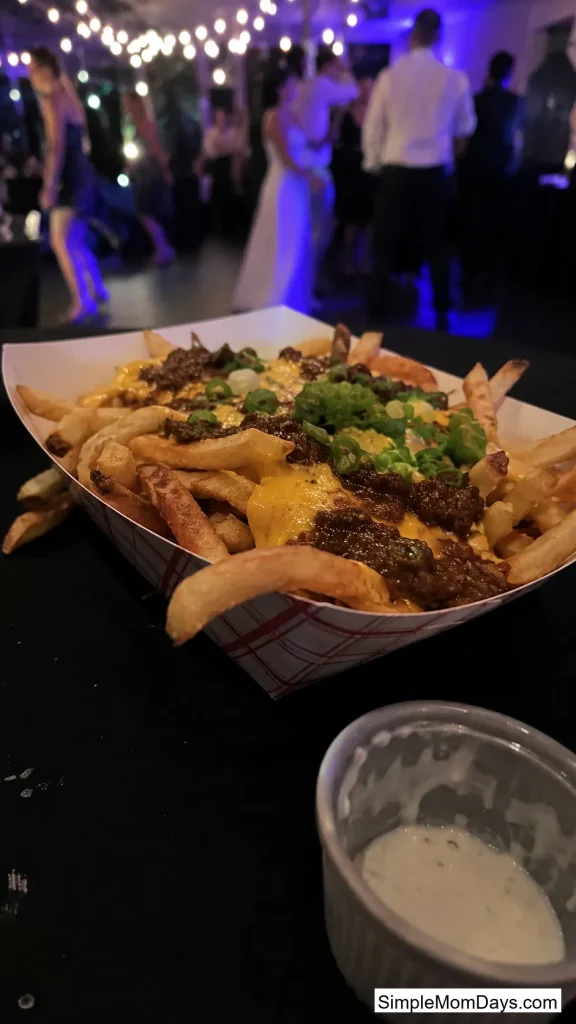
18. Loaded French Fry Bar
A tray of crispy fries with a toppings line — shredded cheese, chili, green onion, ranch, and a couple of dipping sauces — set out as a late-night snack once the dancing slows down.
Late-night snacks have become a standard part of the reception timeline because guests get hungry again a few hours after dinner, and fries are one of the cheapest ways to solve that without reopening the kitchen for a full second meal.
A fry bar for 100 guests costs around $150-200, mostly in bulk frozen fries and toppings.
19. Gourmet Popcorn Bar
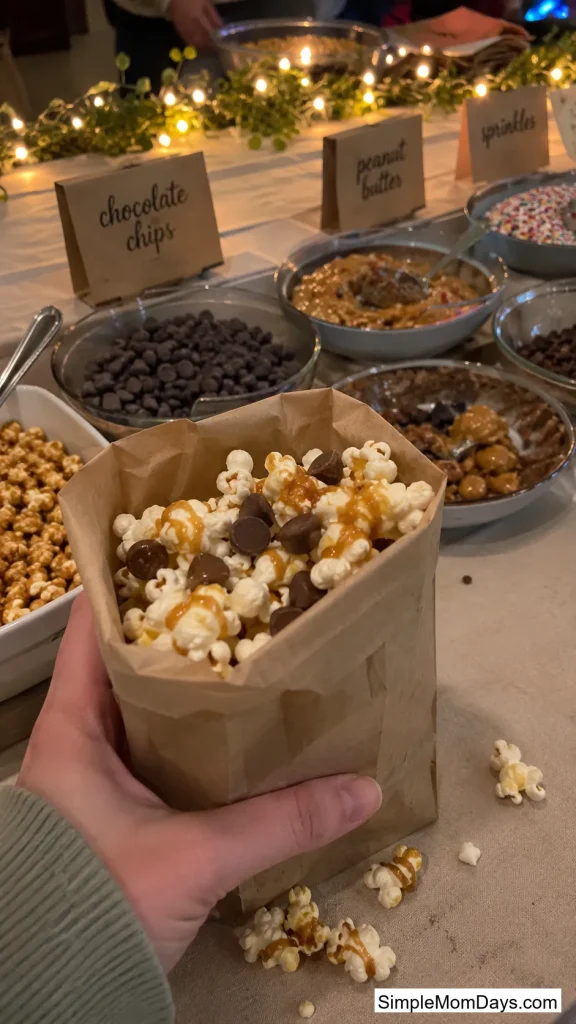
Plain popped popcorn in large bowls next to mix-in stations — caramel drizzle, chocolate chips, seasoned salts, and dried fruit — so guests build their own bag.
Popcorn costs pennies per serving even at wedding-day markup, and small paper bags or boxes double as a party favor guests take home at the end of the night.
A full popcorn bar for 100 guests, bags included, typically costs under $100.
20. Chip, Salsa & Queso Spread
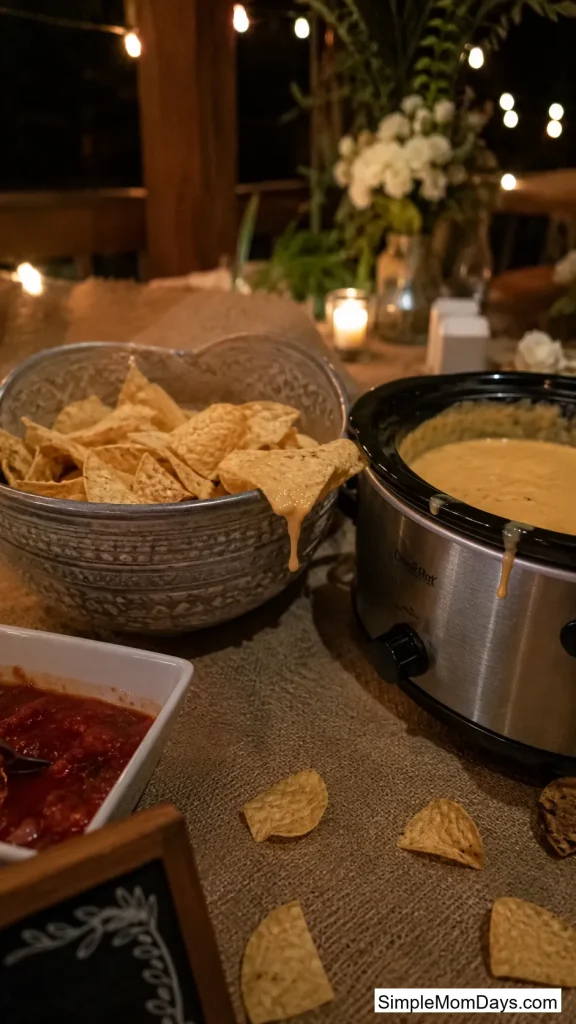
Tortilla chips with a few salsa options ranging from mild to spicy, plus a warm queso dip kept going in a small slow cooker.
This is one of the simplest stations on the list to set up and needs no attention once it’s out — no chafing dish, no server, just a refill every so often.
A spread for 100 guests costs $60-90 depending on how many salsa varieties are offered.
Sweet Endings That Cost Less Than a Tiered Cake
A single elaborate wedding cake from a specialty bakery can run well into the double digits per slice. These alternatives spread that same budget across a lot more variety.
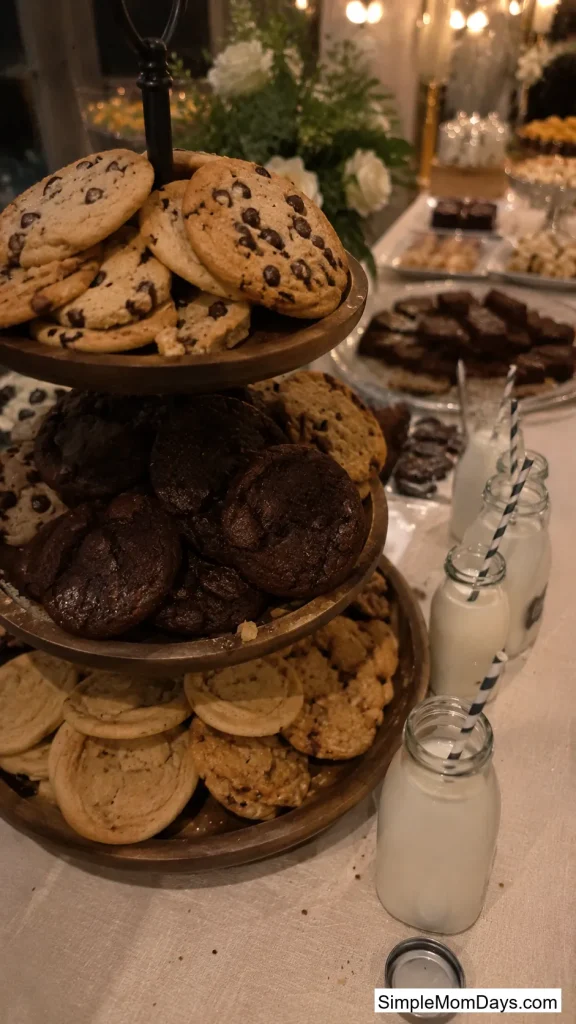
21. Cookie & Milk Station
A tiered display of assorted cookies — chocolate chip, sugar, oatmeal — next to small glass bottles of milk, both regular and chocolate.
It leans into a specific nostalgic feeling most guests connect with right away, and cookies are one of the least expensive desserts to make or buy in bulk.
A cookie station for 100 guests, milk bottles included, runs $150-200.
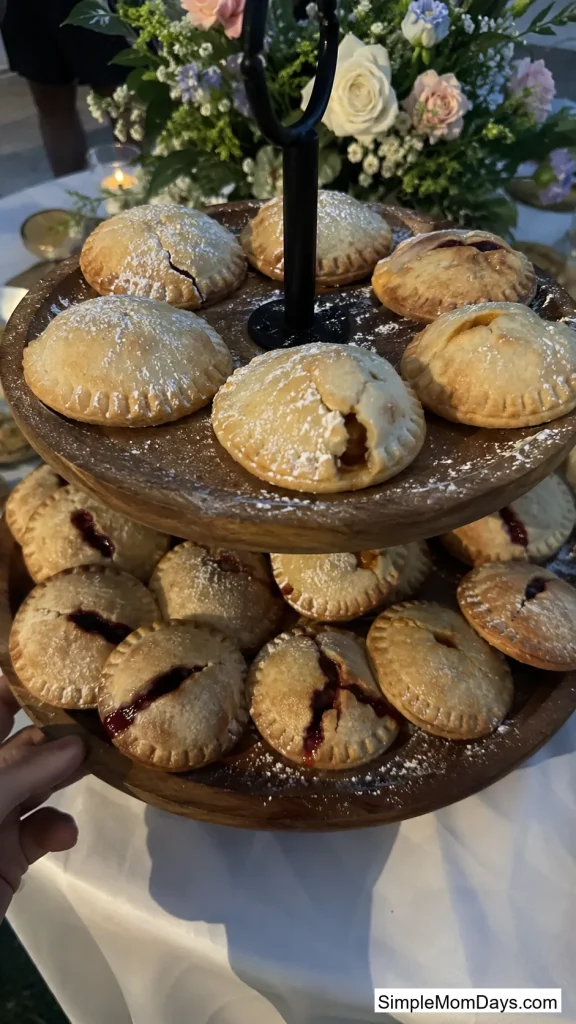
22. Mini Pie & Hand Pie Bar
Individual hand pies or mini pie slices in a few flavors — apple, cherry, or pumpkin depending on the season — set out on tiered stands.
Pie ingredients cost less than most cake components, and a couple can bake a large batch of hand pies in the weeks before the wedding, then freeze them unbaked until the day itself.
A mini pie spread for 100 guests typically costs $200-250, well under a comparably-sized tiered cake.
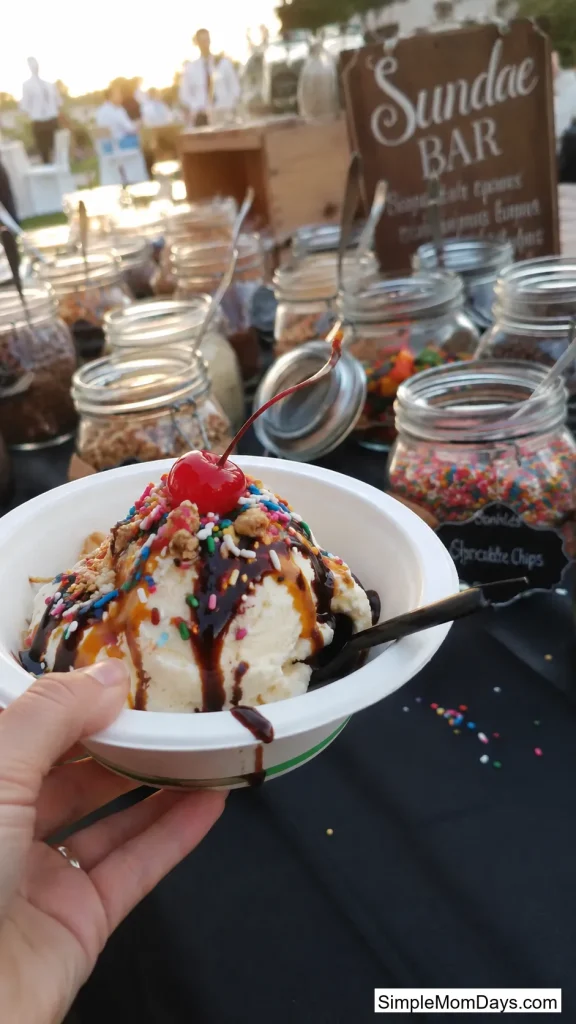
23. Build-Your-Own Sundae Bar
A few flavors of ice cream with a toppings line — hot fudge, caramel, sprinkles, crushed cookies, whipped cream, and cherries — so guests scoop and build their own bowl.
This works especially well for warm-weather receptions, and the interactive format gives guests something to do during the lull between dinner and dancing.
A sundae bar for 100 guests, ice cream and toppings included, runs $200-300.
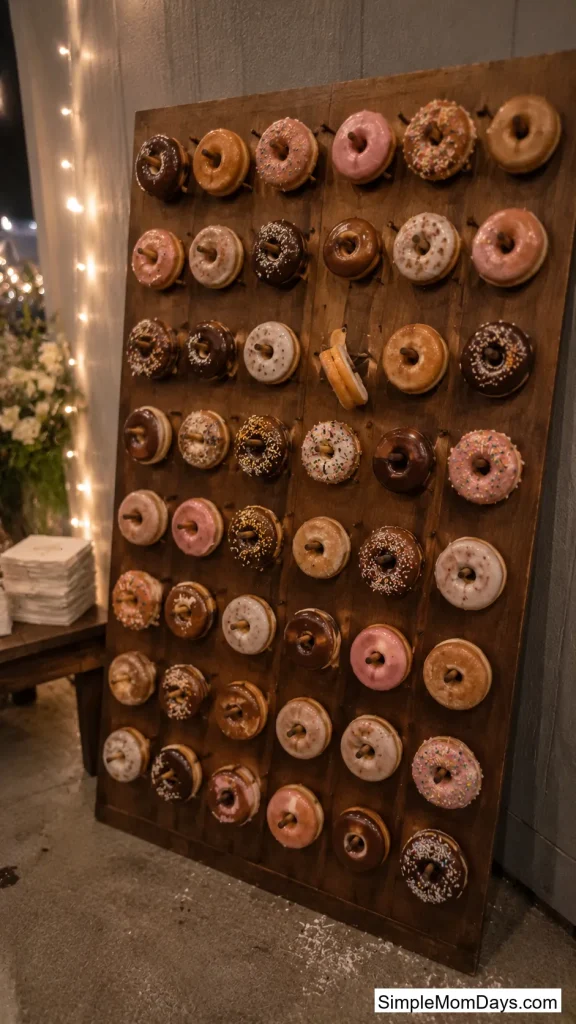
24. Donut Wall
A wooden pegboard mounted with dozens of donuts in a mix of flavors and glazes, arranged so guests pull their own off the wall.
A donut wall does the job of a dessert table and a piece of décor at the same time, at a fraction of what a specialty wedding cake runs per slice.
A wall holding 100-120 donuts typically costs $150-250 depending on where the donuts come from, plus a one-time cost for the board itself, which many couples rent or borrow from a friend’s wedding.
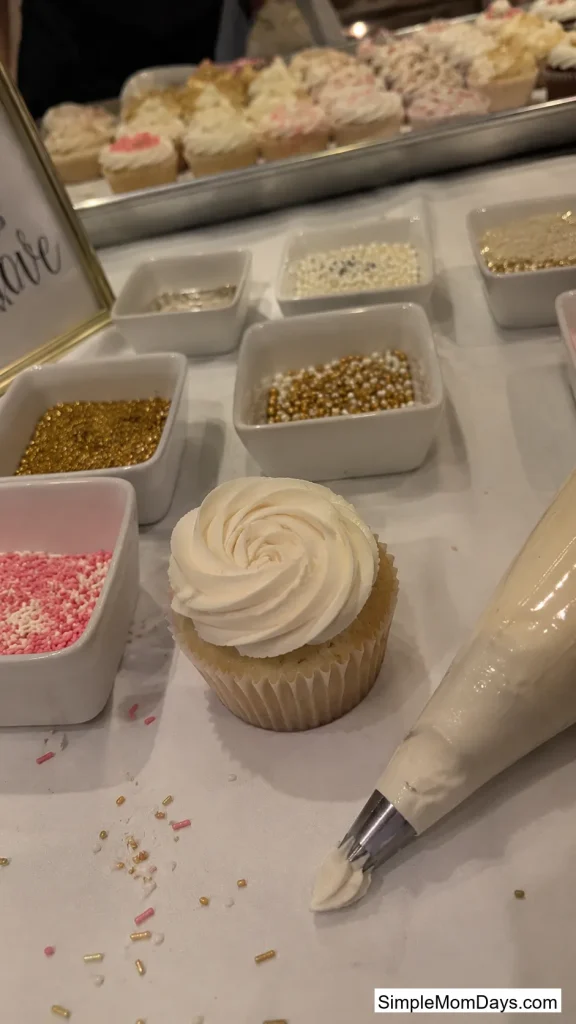
25. Cupcake Decorating Station
Plain frosted cupcakes set out alongside bowls of sprinkles, edible glitter, small candies, and piping bags of extra frosting so guests decorate their own before eating it.
It turns dessert into a few minutes of entertainment instead of a five-second grab-and-go, which matters at receptions with a lot of kids or a younger guest list overall.
A decorating station for 100 guests costs about the same as plain cupcakes would — roughly $150-200 — since the toppings add almost nothing to the total.
Final Thoughts
None of these need a big catering contract to pull off well. Pick two or three formats that match how the reception should actually feel — relaxed and grazing all night, or one big shared meal — and build the rest of the menu around that. The couples who stress the least about reception food are usually the ones who stopped trying to impress anyone and just fed their guests well.