Rain on a Wednesday night, a gym that’s booked, or a group that’s already tired of the same five games — every youth leader hits this wall eventually. The fix isn’t a bigger budget or a fancier prop box. Most of the best indoor games run on chairs, balloons, paper cups, and a room with enough floor space to move around in.
The list below skips the ones every group already knows by heart and leans into games that still surprise a room that’s seen it all. They’re grouped by what you need from a given night — high-energy movement, team relays, quick dexterity challenges, problem-solving, and a couple of quieter closers for when the energy needs to come back down before everyone heads home.
Icebreakers That Get Everyone Moving
These work best in the first ten minutes, before small talk has a chance to stall out. No teams, no elimination pressure — just a reason for people to swap seats and notice who else is in the room.
1. Change Seats If
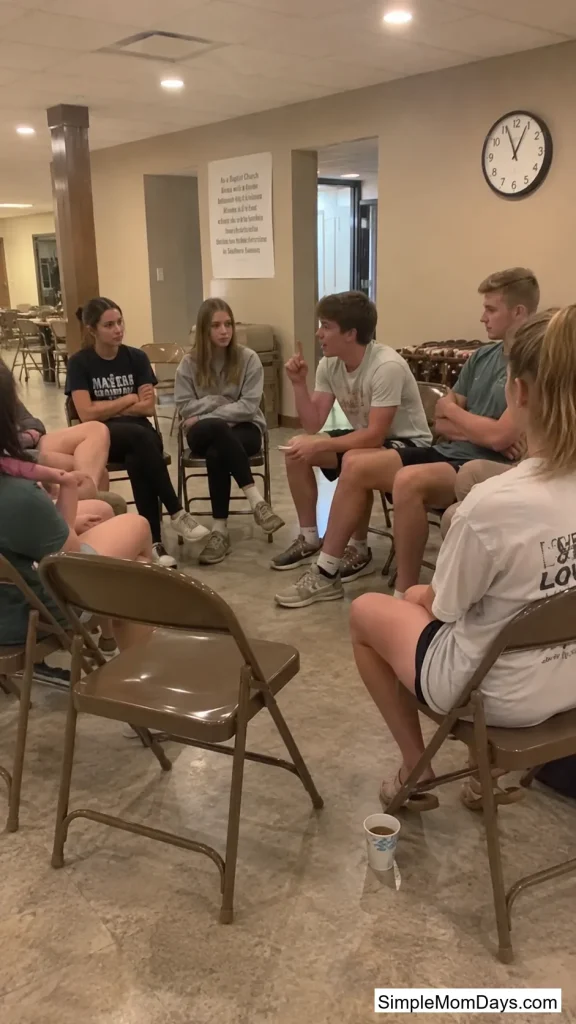
Set chairs in a circle, one fewer than the number of players, with one person standing in the middle. That person calls out something true about themselves — “change seats if you’ve never broken a bone” — and anyone it applies to has to get up and find a new seat, including the caller. Whoever’s left standing calls the next round.
It works because the categories start silly and end up revealing. By round eight or nine, people are calling out things like favorite movie genres or which sibling spot they hold in their family, and the group learns more about each other than a straight introduction round ever pulls out of them.
Runs well with 10 or more players and needs nothing but chairs, so it’s an easy opener while stragglers are still walking in.
2. Boppity Bop Bop Bop
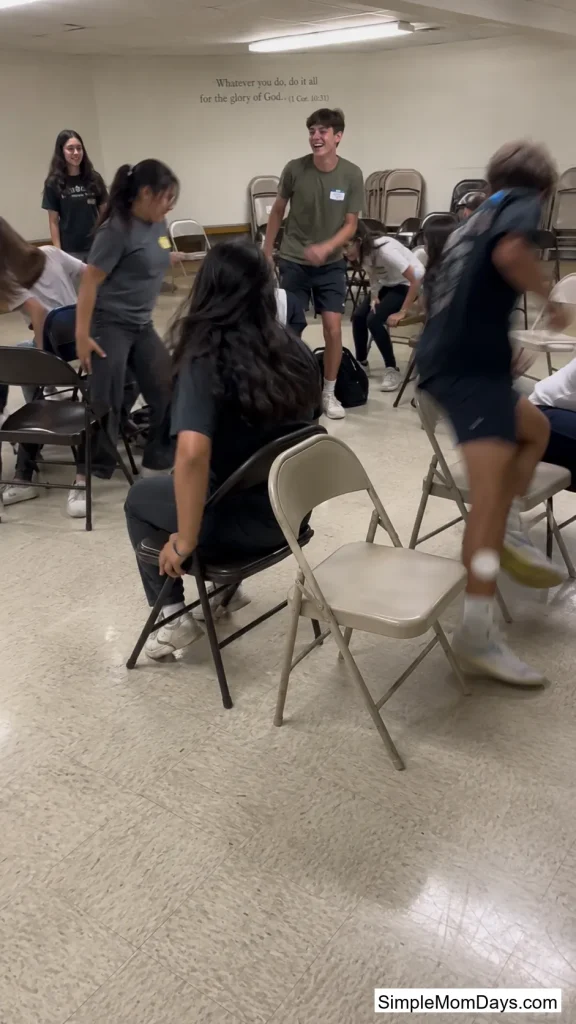
One player stands in the center of a circle and points at someone while saying “boppity bop bop bop” out loud. That person has to say “bop” before the phrase finishes or they swap into the middle. Add a twist after a few rounds: pointing and saying just “bop” once means the person on either side of them has to react instead, not the person being pointed at.
The reaction-swap twist is what keeps this from going stale after round three. It forces people to actually watch the middle player instead of zoning out until it’s their turn, and mixing up who has to respond keeps a group of 15 or more locked in instead of drifting.

3. Would You Rather Corners
Label two sides of the room A and B, then read a would-you-rather question out loud. Players run to the corner matching their answer, and once everyone’s settled, a couple of people from each side get 15 seconds to defend their pick. Then the next question hits.
This one’s a good fit for a group that talks over each other in a normal circle discussion — moving their whole body to answer forces a decision instead of a shrug. Keep questions light for the first few rounds, then work in a couple tied to your lesson topic so the game bridges straight into the discussion that follows.
Chase and Tag Games for Big Open Spaces
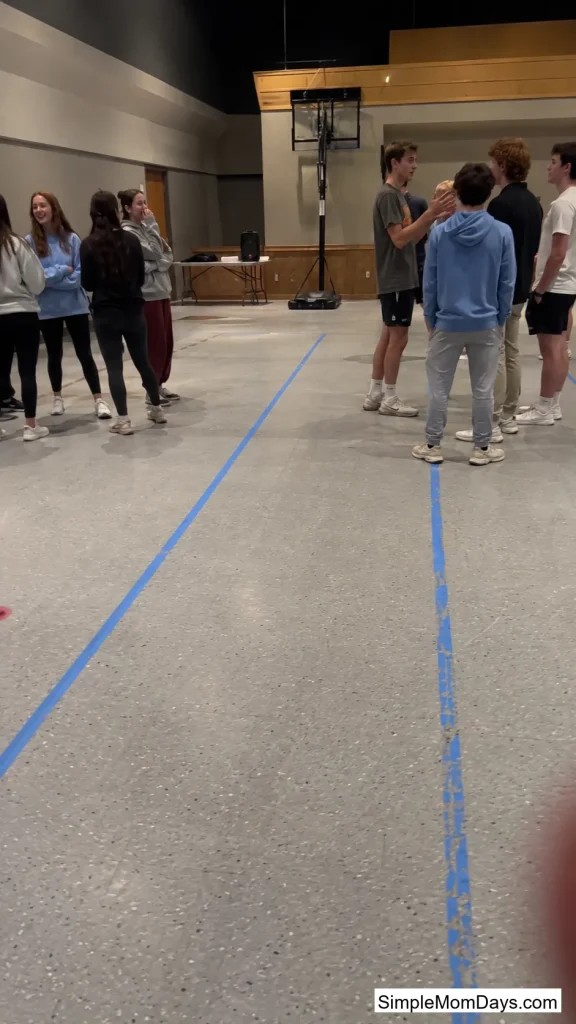
Anything with a gym, fellowship hall, or big carpeted room to spare can handle these. They burn energy fast, which makes them a solid fit right after a long car ride or a stretch of sitting.
4. Blob Tag
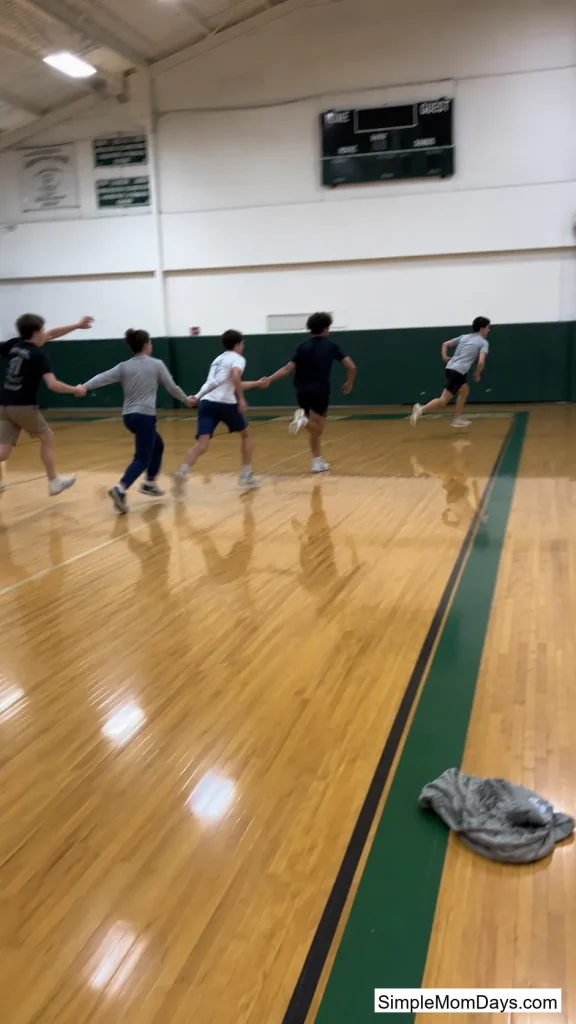
One player starts as the blob. Anyone they tag joins hands with them and becomes part of a growing chain that has to stay linked while chasing everyone else. The last person caught becomes the blob for the next round.
The chain is the whole appeal — a blob of six people moving together has to coordinate turns and stops as a unit, which turns tag into something closer to a group puzzle by the third or fourth capture. Split a blob of ten or more into two separate blobs partway through so no single line gets unmanageable.
5. Rock-Paper-Scissors Elimination Tag
Pair everyone up for rock-paper-scissors. The loser joins the winner’s cheering section, chanting their name, and the winner finds a new opponent from the crowd. Lose again and you switch allegiance to whoever beat you. Eventually two massive crowds face off in one final match, each one screaming for their champion.
What starts as a quiet one-on-one game turns into a room full of shouting within five minutes, and even players who’ve been eliminated early stay locked in because they’re now invested in someone else winning. No equipment, no setup, and it scales from 10 players to 100 without changing the rules at all.
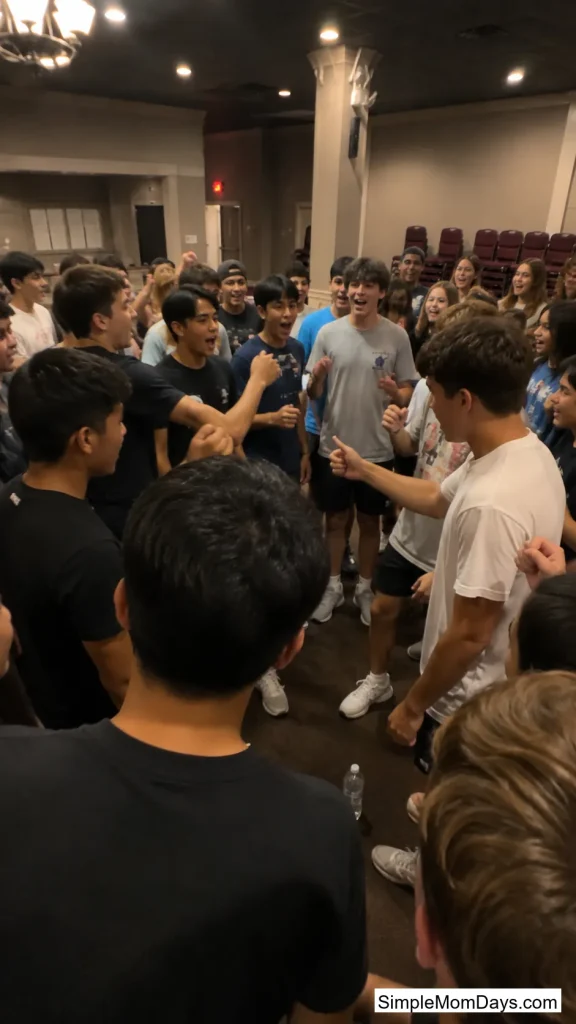
6. Balloon Ankle Stomp
Tie an inflated balloon loosely around each player’s ankle with a short piece of string. On go, everyone tries to stomp and pop other people’s balloons while keeping their own intact. Last balloon standing wins.
Keep it to a defined boundary — taped lines on the floor or a rug’s edge — so it doesn’t turn into a full sprint around the building. Grab extra balloons ahead of time since a few always pop early from the string tying alone, and nobody wants to sit out round one over a bad knot.
Relay Races for Teams
Split the group into teams of four to six for these. They’re built for a gym floor or any room with a clear runway, and they work as a set — run three or four back to back with a running scoreboard.
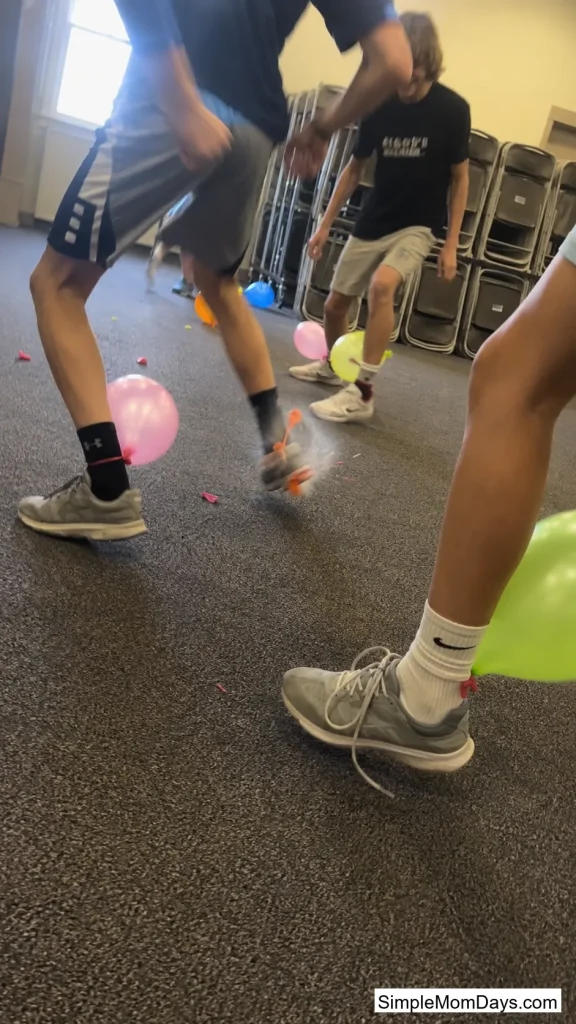
7. Towel Sled Pull
One teammate sits on a beach towel while another grabs the corners and drags them across the floor to a finish line, then swaps roles for the trip back. Whichever team gets every member across and back first wins.
A gym floor with some slide to it makes this genuinely fast, and the size mismatches are half the fun — watching a smaller teammate haul someone twice their size across the room gets the sideline as loud as the runners themselves. Skip carpet unless it’s low-pile; anything thick turns the sled into dead weight.
8. Cotton Ball Blindfold Scoop Relay
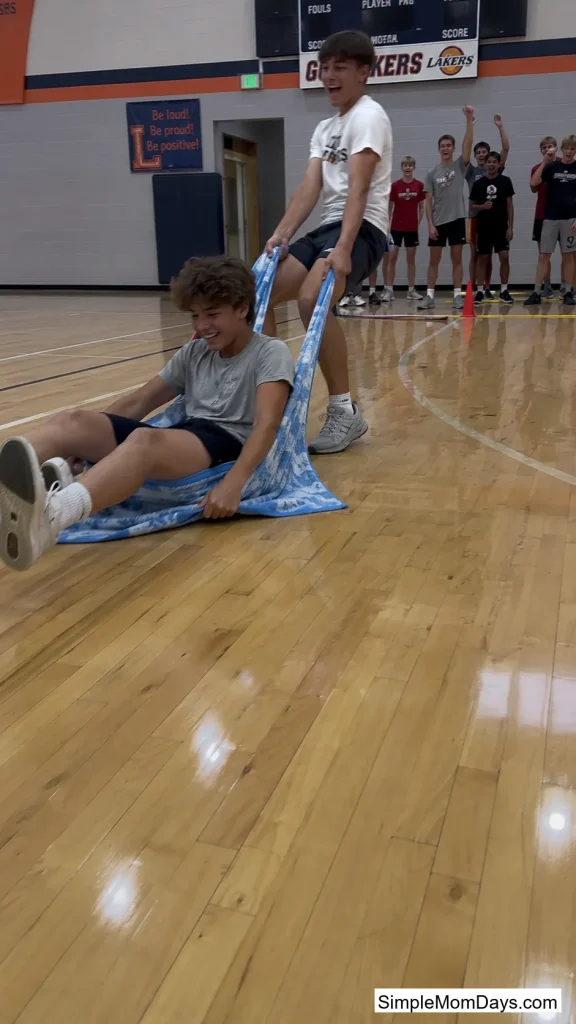
Blindfold the first runner on each team and hand them an ice cream scoop. Their job is to move as many cotton balls as they can from one bowl to another before tagging the next teammate, who takes the blindfold and repeats it.
Losing your sight turns a five-second task into a minute of fumbling, which is exactly why it works as a group watches — there’s nothing funnier than someone confidently scooping at empty air two feet from the bowl. Set a shared timer instead of racing to finish, and count total cotton balls moved per team when time’s up.

9. Straw Blow Cup Race
Tape a start and finish line a few feet apart on a smooth table or floor. Each racer gets a lightweight paper cup on its side and a drinking straw, and has to blow it across the finish line without touching it.
The cup never travels in a straight line, so half the challenge is correcting course mid-blow instead of just blowing hard. It’s quiet compared to most relays here, which makes it a good palate-cleanser to drop between two loud, high-movement games.

Minute-to-Win-It Dexterity Challenges
These run one player at a time against a 60-second clock while everyone else watches and counts down out loud. Two or three of these mixed into a night gives quieter kids a chance to compete without needing to be the fastest runner in the room.
10. Cup Pyramid Stack-and-Collapse
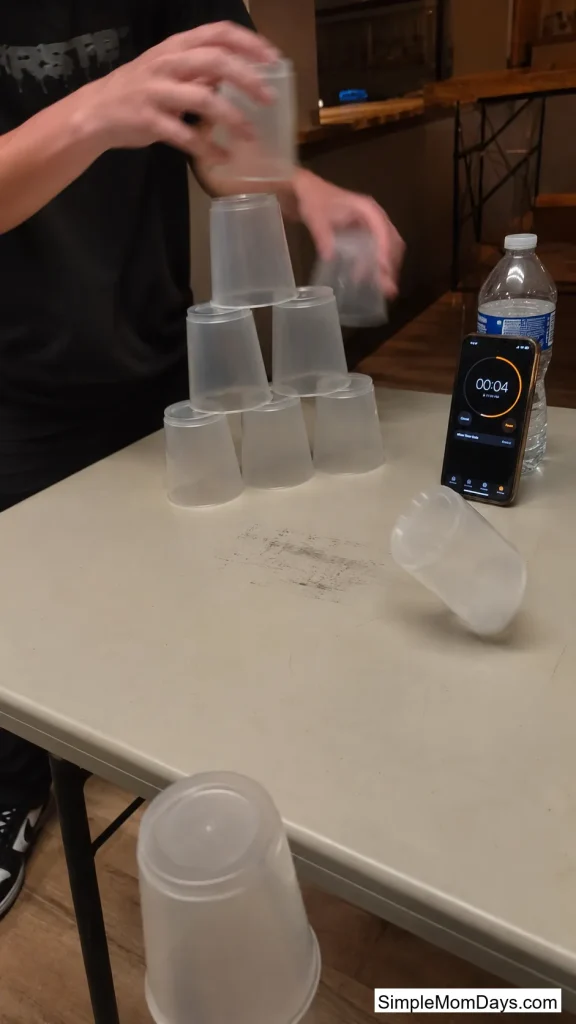
Give each player six plastic cups. In one minute, they have to build a pyramid — three on the bottom, two in the middle, one on top — then flatten it back into a single stack. Whoever finishes the full stack-and-collapse first, or gets closest before time runs out, takes the round.
It looks easy from the sideline until someone’s hands start shaking under a countdown, and running it as head-to-head pairs instead of one person at a time doubles the tension without adding any setup.
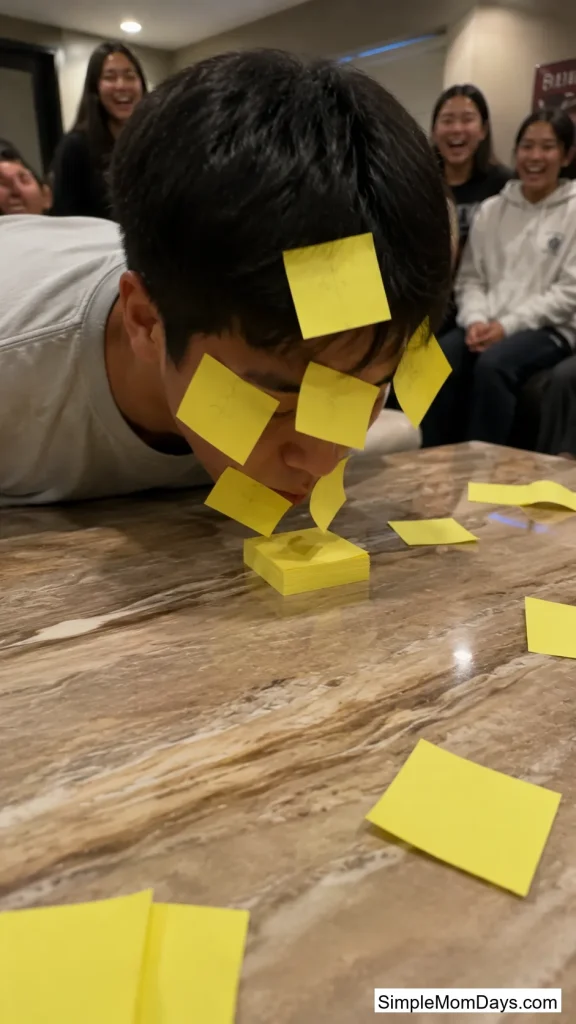
11. Sticky Note Face Grab
Stack a pile of sticky notes on a table. Using only their face — no hands — each player has to pick up as many notes as possible and stick them to their forehead within a minute.
This one turns even the most composed teenager into a mess of scrunched expressions trying to suction a sticky note off a table with their nose, and it photographs well if your group posts recaps anywhere. Swap in slightly damp notes if the room is dry, since bone-dry sticky notes barely cling to anything.
Team-Building and Problem-Solving Games
Slower, quieter, and built around a group figuring something out together rather than running or racing. Good fit for a night when the goal leans more toward connection than pure chaos.
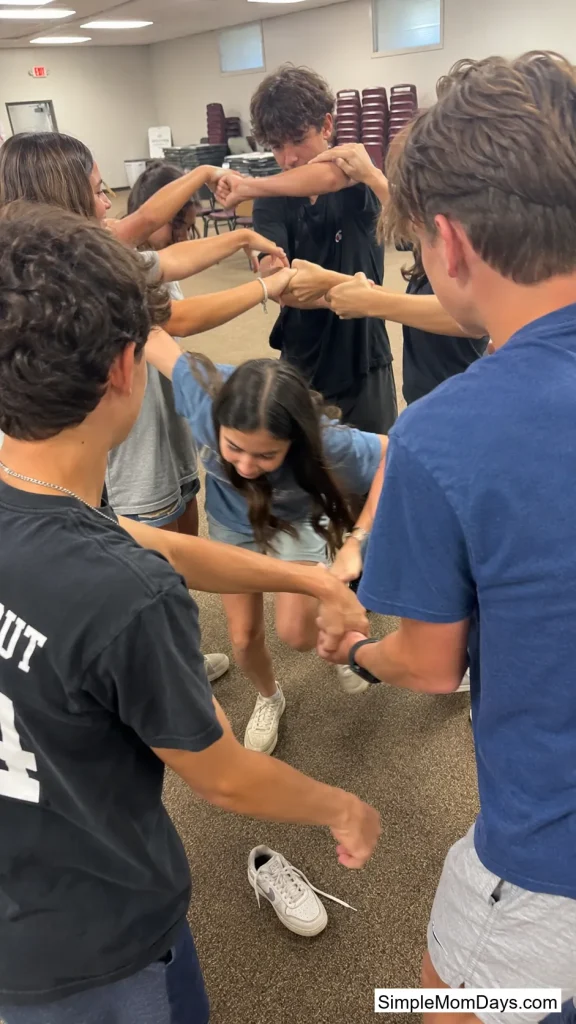
12. Human Knot
Groups of six to ten stand in a tight circle and each person grabs two different hands across the circle, never their own neighbor’s. Without letting go, the group has to work its way back into a single unbroken circle.
Somebody always ends up bent double under someone else’s arm halfway through, and there’s no way to solve it without actual verbal coordination — pointing and vague gesturing never gets a knot untied. Cap groups at ten; past that point the tangle gets too dense to solve in a reasonable time.
13. Human Battleship
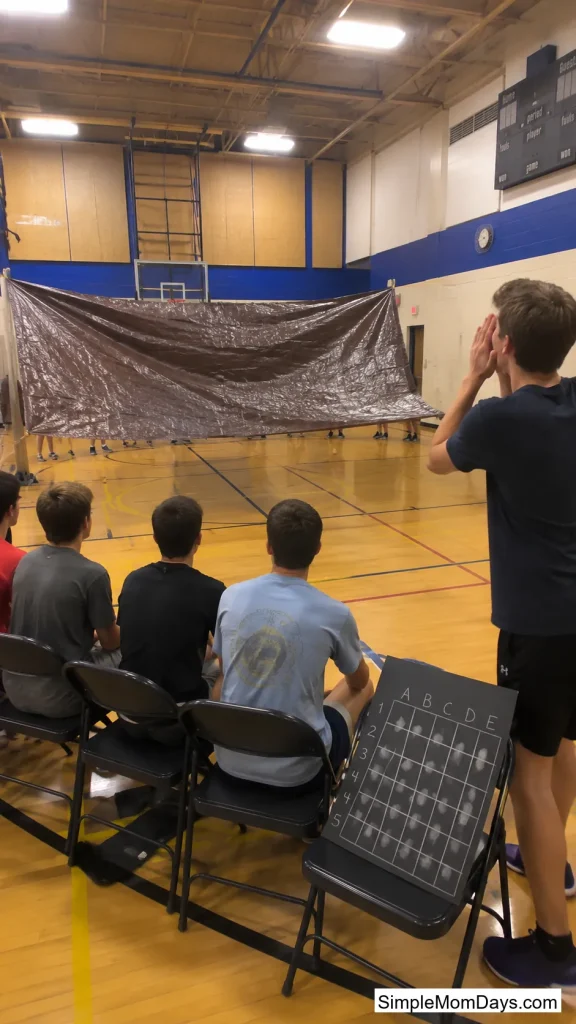
Hang a tarp or sheet over a rope strung across the middle of the room so neither team can see the other side. Each team sets up “ships” using rows of chairs behind their side of the barrier, then calls out grid coordinates to try to sink the other team’s setup.
Turning a board game into a full-room version means the whole team has to agree on strategy out loud instead of one player quietly guessing, which pulls in kids who’d normally sit out a game like this. It takes a bit more setup than most games on this list, but it holds attention for a full 20 minutes once it gets going.
14. Clue Hunt
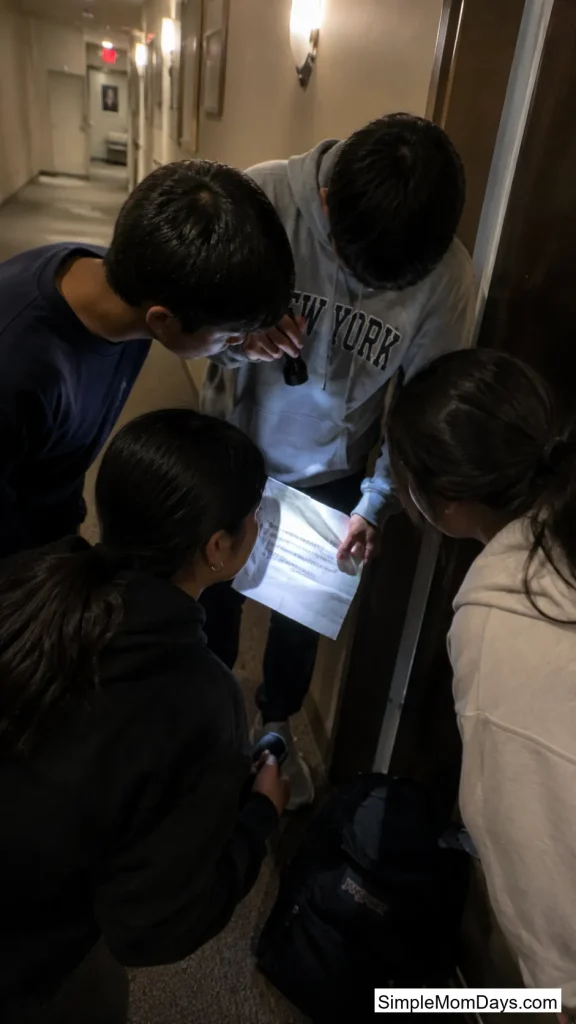
Hide a sequence of clues around the building ahead of time, each one leading to the next and ending at a small prize or a final challenge. Split into teams of three or four and send them off with the first clue, timing how long each team takes to reach the end.
Writing clues that tie into whatever topic the group’s been studying turns a scavenger hunt into something with an actual throughline instead of just a room search. Keep the trail inside rooms you’ve already checked for safety, and have a leader stationed near anything involving stairs.
Guessing and Communication Games
Lower on physical movement, higher on laughing at each other’s attempts to explain things. These work in a smaller room or even seated, which makes them useful when the group’s winding down from something more physical.
15. Reverse Telephone
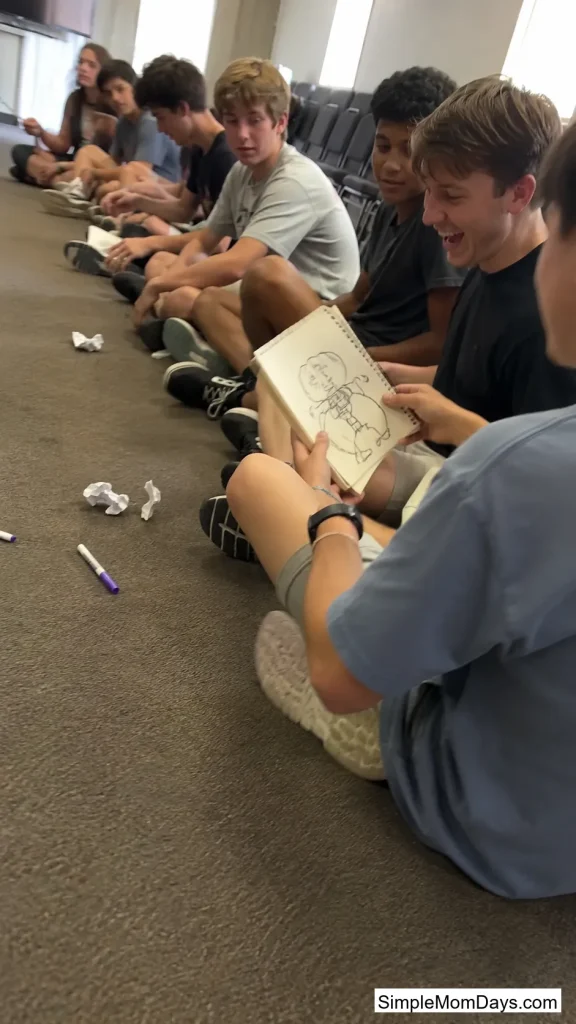
Split into two lines. The person at the front of each line gets a short phrase and has to draw it, silently, for the next person in line — who then has to guess the phrase from the drawing, draw their own guess for the next person, and so on down the line.
By the time it reaches the last person, the phrase has usually mutated into something unrecognizable, and reading the chain of drawings back out loud at the end is often the funniest five minutes of the whole night.
16. Emoji Charades
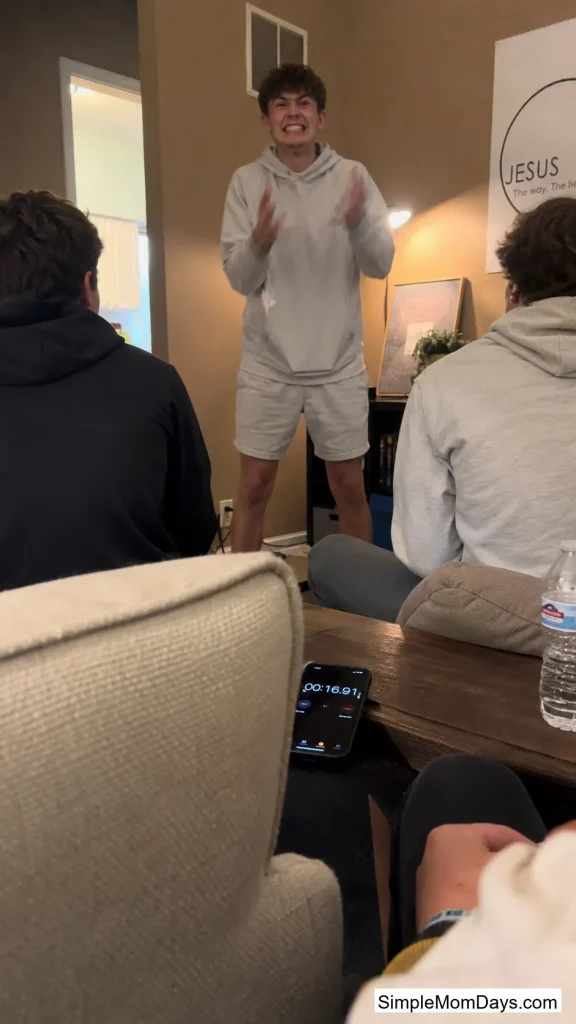
One player gets a movie title, song, or phrase and has to act it out using only emoji-style gestures and expressions — no words, no letters spelled in the air, nothing that would work in regular charades. The rest of the team calls out guesses until someone lands it or time runs out.
Cutting out standard charades signals forces players to get creative with facial expressions instead of relying on the usual “sounds like” hand motions, and it plays especially well with a group that’s grown up texting in emoji shorthand already.
17. Name Swap Mixer
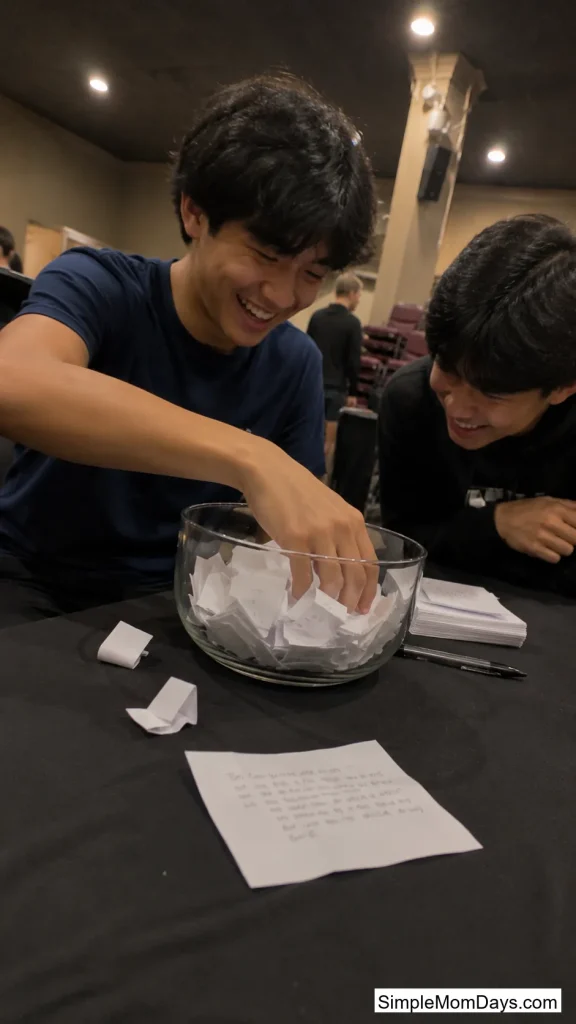
Everyone writes their name on a slip of paper, drops it in a bowl, and draws a different name back out without showing anyone. For the rest of the game — a round of trivia, a scavenger hunt, whatever’s next — each player answers and reacts as if they were the person whose name they drew.
It’s a strange kind of icebreaker because people end up describing their friends’ habits and opinions out loud, which gets a room laughing at how well (or badly) people know each other. Skip it with brand-new groups where nobody knows anyone yet; it needs at least a little shared history to land.
Low-Key Closers
Save these for the last ten minutes, when the group’s had its energy burned off and needs something that winds down instead of ramping up further.
18. Silent Line-Up
Without speaking a single word, the whole group has to line up in order — by birthday month, height, or shoe size, picking a different rule each round. Hands, gestures, and mouthed numbers are fair game; talking isn’t.
Taking away the easiest tool a group has — just asking each other — makes a simple sorting task oddly tense in a good way, and it’s quiet enough to run right before announcements or a closing devotion without breaking the mood.
19. Categories Countdown
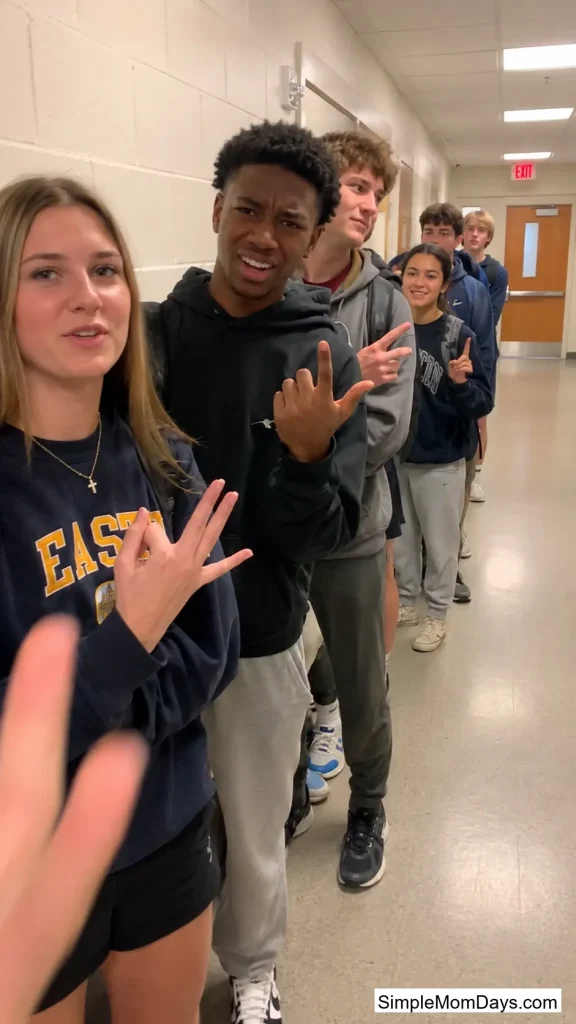
Call out a category — types of pizza toppings, superhero names, states that start with a vowel — and go around the circle with each person naming one example within a few seconds. Miss your turn or repeat something already said and you’re out, until one person’s left.
It needs zero setup and works seated in a circle, which makes it the easiest game on this list to drop in whenever a transition runs long or a room needs five minutes of low-key fun before wrapping up for the night.
Nineteen games is more than enough to get through a full semester without repeating the same lineup two weeks running. Rotate a couple from each category so a given night has movement, a relay, one dexterity challenge, and something quieter to land on — that mix is usually what keeps a group asking when the next game night is.