

Preschoolers want to be part of Halloween, not just watch you decorate for it. The trouble is most craft ideas online assume steady scissor hands, a tolerance for glitter, and thirty free minutes — none of which describe a typical three- or four-year-old on a Tuesday afternoon.
These 17 crafts skip that gap. Every one uses a handful of supplies you probably already have, takes a preschooler-sized attention span into account, and leaves room for a wobbly cut line or a lopsided face without ruining the finished piece.
They’re grouped by type so you can pick based on your afternoon — five minutes with paper and glue, or a slower stretch with paint and a drop cloth.
No-Mess Paper Crafts
These need nothing wetter than a glue stick, so they work anywhere — the kitchen table, the car seat tray, five minutes before dinner.
1. Paper Chain Halloween Countdown
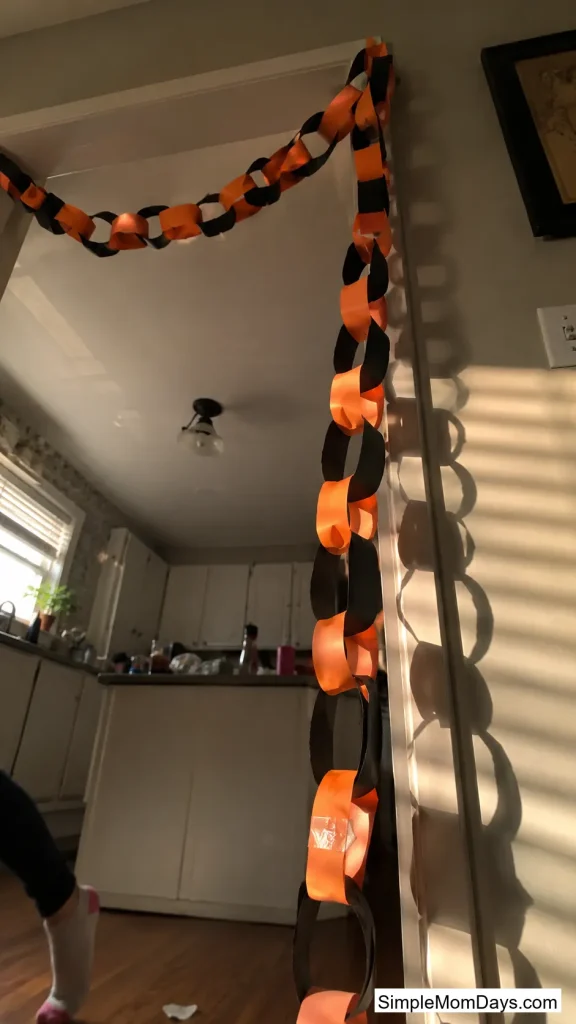
Cut orange and black construction paper into strips, loop them into a chain, and let your preschooler add one link a day until Halloween. Counting down gives the whole month a sense of progress a kid can actually see.
The looping motion is good scissor-and-glue practice, but the real win is the ritual. Tearing off a link each morning turns “how many more days” into something they can check for themselves instead of asking you.
Hang the finished chain across a doorway or the fridge — it doubles as October’s easiest decoration.
2. Beaded Pipe-Cleaner Spider
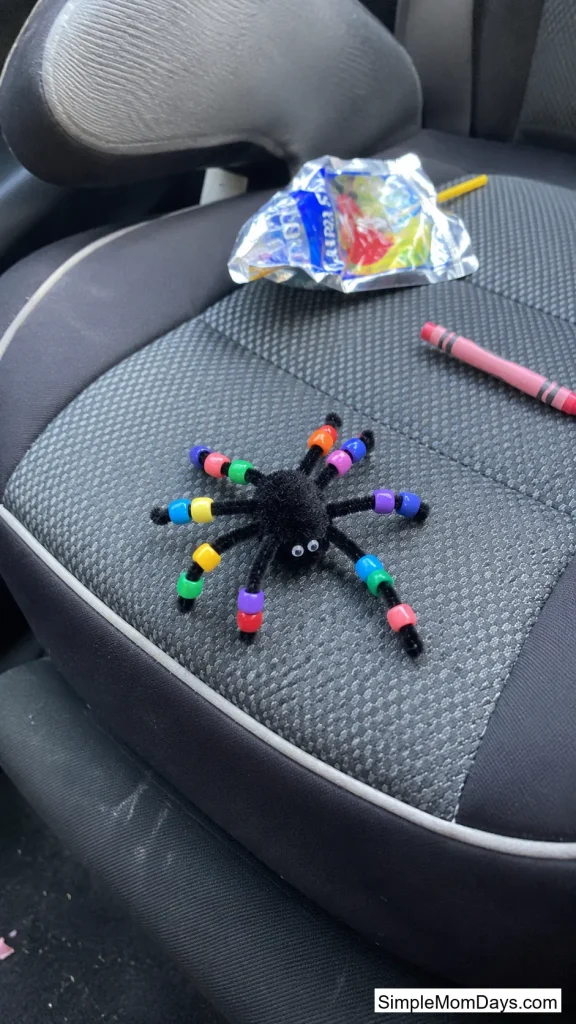
Thread pony beads onto four black pipe cleaners, twist them together in the middle, then bend the ends into legs. No glue, no drying time, no mess to clean up before you head out the door.
Threading beads is exactly the kind of small, repetitive motion that builds the pincer grip preschoolers need for holding a pencil later. It also holds their attention longer than a lot of one-step crafts, since there’s a satisfying rhythm to it.
Add googly eyes with a dab of glue if you want a face, or leave the spider as is and let it ride along in a backpack or a car cupholder.
3. Torn-Paper Mosaic Pumpkin
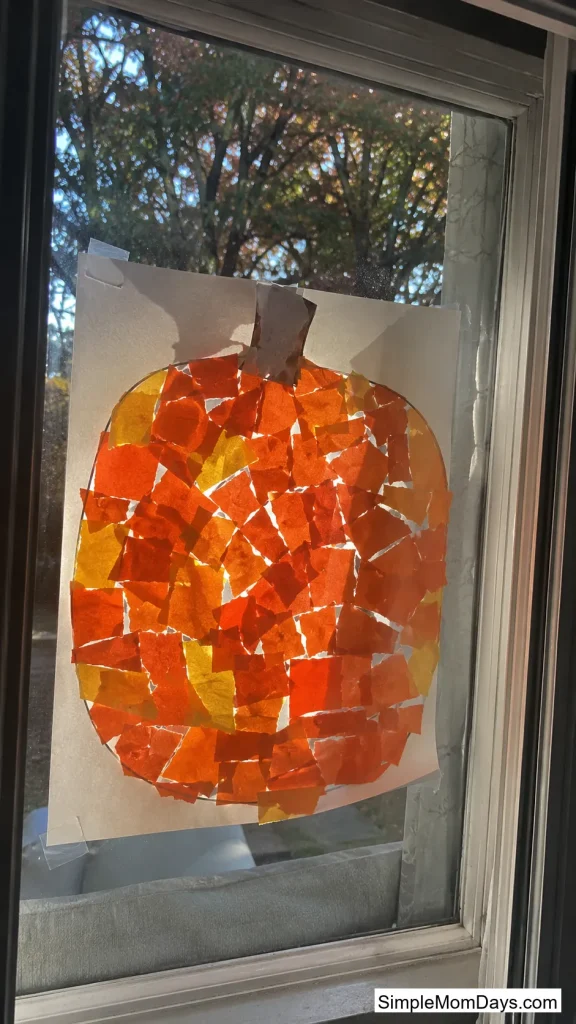
Draw a pumpkin outline on cardstock, then have your preschooler tear (not cut) orange and yellow paper into small pieces and glue them inside the lines. Tearing sidesteps scissors entirely, which makes this one of the easiest crafts on this list for younger three-year-olds.
The torn edges give the pumpkin real texture once it’s filled in, closer to a stained-glass look than a flat coloring page. Kids also tend to stay with this one longer than a painting project, because tearing paper is its own small, satisfying activity.
A finished mosaic pumpkin holds up well taped to a window, since light coming through the gaps between pieces adds a bit of glow.
4. Paper Plate Monster Mask
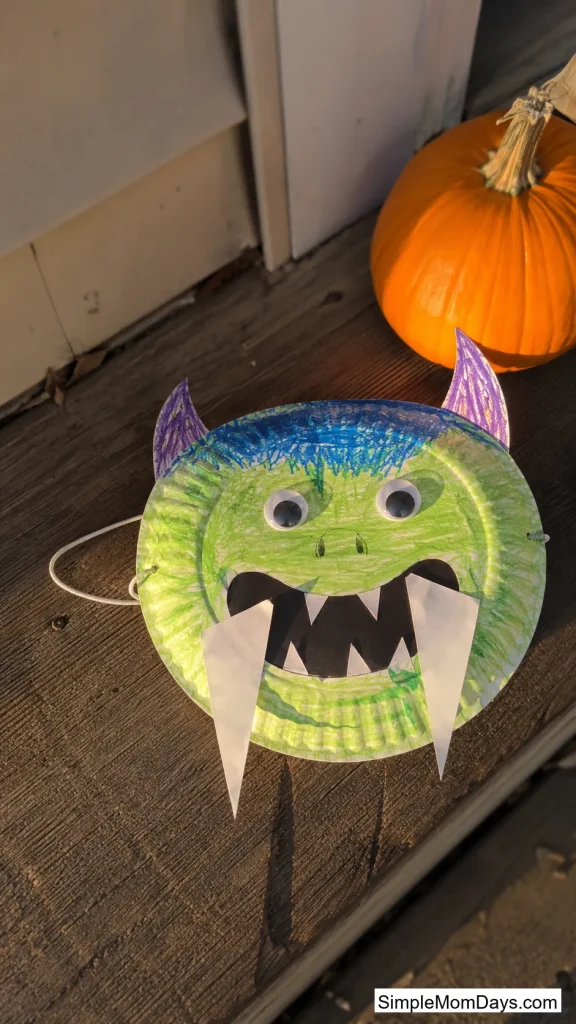
Cut eye holes into a paper plate, then let your preschooler cover it in crayon, marker, googly eyes, and whatever construction-paper horns or fangs they invent. Punch a hole on each side and tie on elastic or ribbon to wear it.
Because there’s no “correct” monster to copy, this craft leans entirely on their own ideas — one kid’s monster might have seven eyes and another might have none. That open-endedness makes it a good pick when you want less directing from you and more decision-making from them.
It also becomes an instant costume prop, which saves you a step if trick-or-treating is still on the calendar.
Paint and Print Projects
Lay down newspaper first — these get a little messier, but the payoff is art that actually looks intentional.
5. Q-Tip Dot-Painted Bats
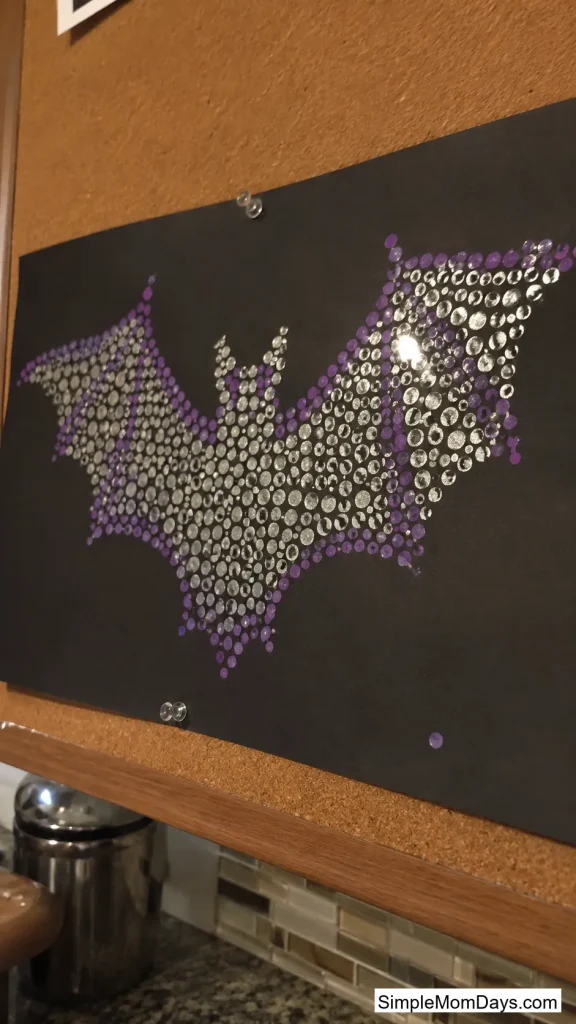
Draw a bat outline in white chalk marker on black paper, then have your preschooler dip cotton swabs into paint and fill it in dot by dot. The dotting motion works different small muscles than a paintbrush does, and it’s harder for a preschooler to mess up than a brushstroke.
Try two paint colors — silver and purple work well against black — so the bat has some depth instead of one flat color. Kids tend to get genuinely absorbed in the dotting rhythm, which buys you a solid ten or fifteen minutes of quiet focus.
The finished bat looks more polished than the process suggests, since the dots blend visually from a few feet away.
6. Sponge-Stamped Ghost Parade
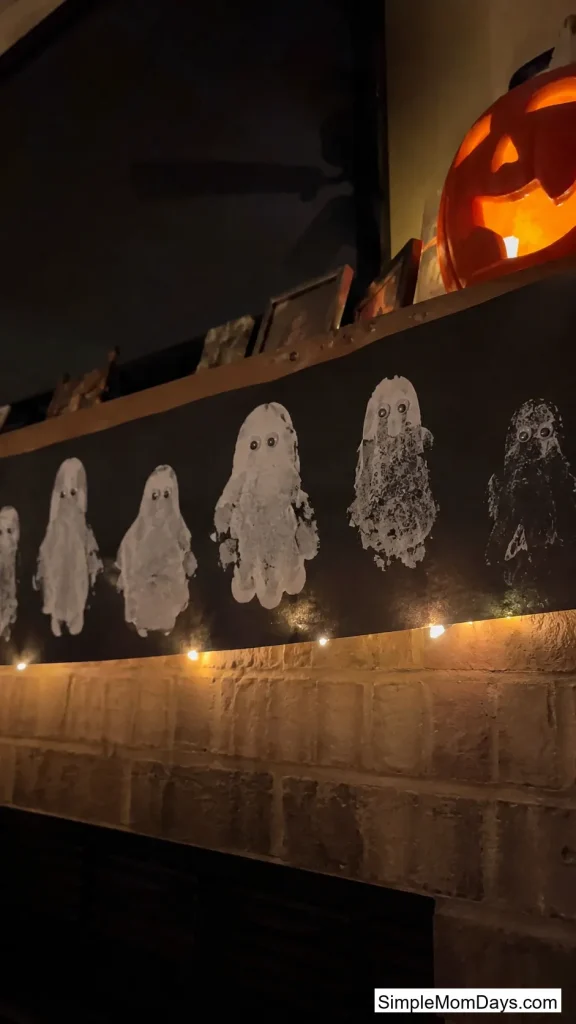
Cut a ghost shape out of a kitchen sponge, dip it lightly in white paint, and press it onto black paper to build a whole parade of ghosts across the page. Stamping is more forgiving than free painting — there’s no wrong way to press a sponge down.
Keep the paint layer thin; a sponge loaded with too much paint blurs the shape instead of leaving a crisp print. Once the ghosts are dry, add googly eyes and a black-marker mouth to give each one its own expression.
A full page of ghosts, all a little different from each other, makes a fun Halloween banner once you trim and string a few together.
7. Straw-Blown Ghost Art
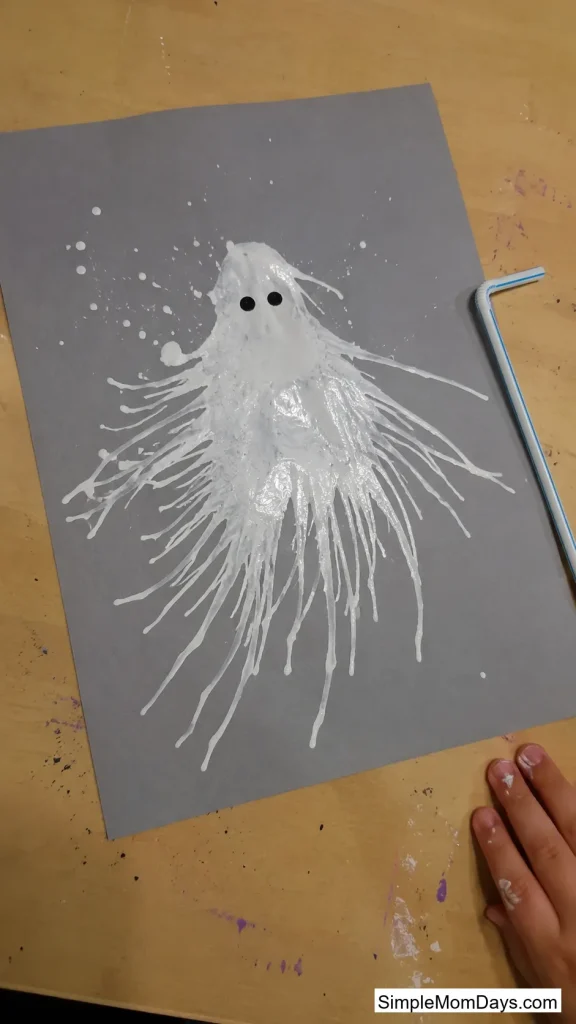
Drop a small puddle of white paint onto black or gray paper, hand your preschooler a straw, and have them blow the paint outward into wispy, ghost-like shapes. There’s no drawing skill involved — the air does the work, and every result comes out looking a little eerie in a good way.
This one also sneaks in some breath control practice, since a slow steady blow spreads the paint differently than a short puff. Kids usually want to try it more than once to see how the shape changes.
Finish by adding two dot eyes once the paint dries, and the wispy shape reads instantly as a ghost.
8. Potato-Stamped Pumpkin Patch
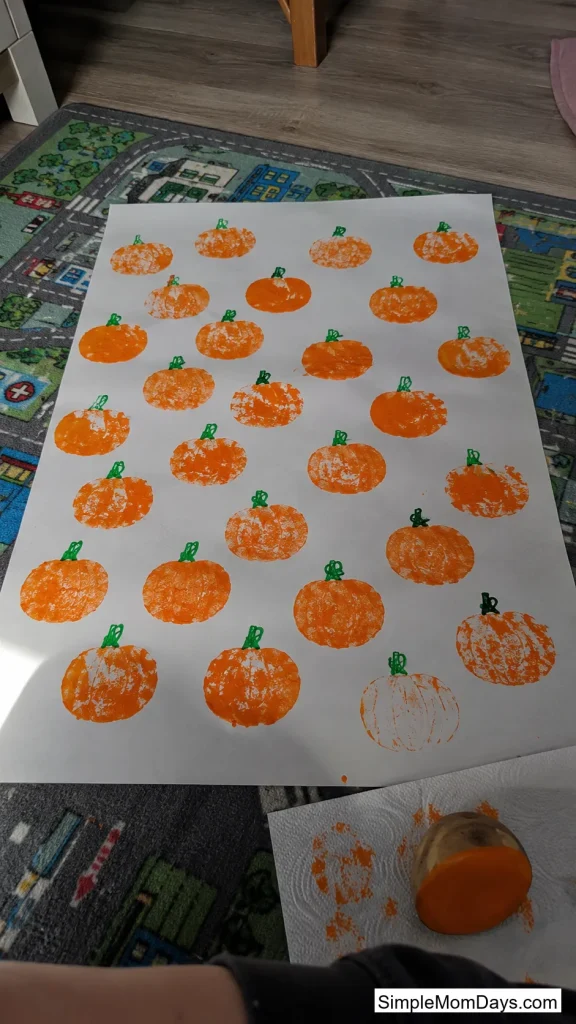
Cut a potato in half, carve a simple circle into the flat side, dip it in orange paint, and let your preschooler stamp a whole patch of pumpkins across a large sheet of paper. The stamp does the shape work, so a preschooler with limited scissor skills still ends up with a clean, recognizable pumpkin.
Add green marker stems and a curly vine once the paint dries, and the page turns into a full pumpkin patch scene rather than one isolated shape. Repeating the stamp also builds a sense of pattern and spacing, since kids naturally start leaving gaps between pumpkins as they go.
Save the potato stamp in the fridge overnight if you want to spread this across two shorter sessions instead of one long one.
Sensory and Squish Crafts
These lean into hands-on play more than a finished product, which makes them a good choice on a day when your preschooler needs to move and touch more than sit and color.
9. Monster Playdough Tray
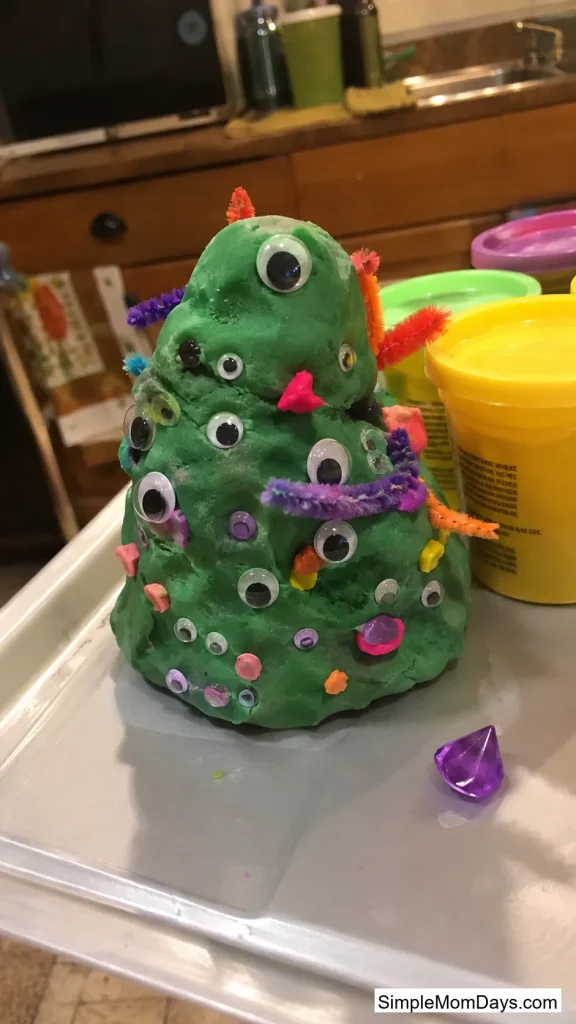
Set out a few colors of playdough alongside googly eyes, plastic gems, and pipe cleaner scraps, and let your preschooler build their own monster with no set shape in mind. Squeezing and rolling playdough is quiet strength-building work for little hands, even though it looks like pure play.
Because nothing gets glued down, the tray resets in seconds — smoosh the monster back into a ball and start over. That makes it one of the few crafts on this list you can pull out again the next day without any prep.
Keep the tray out on the table during a rainy afternoon and it’ll hold attention far longer than most one-and-done crafts.
10. No-Mess Jack-o-Lantern Squish Bag
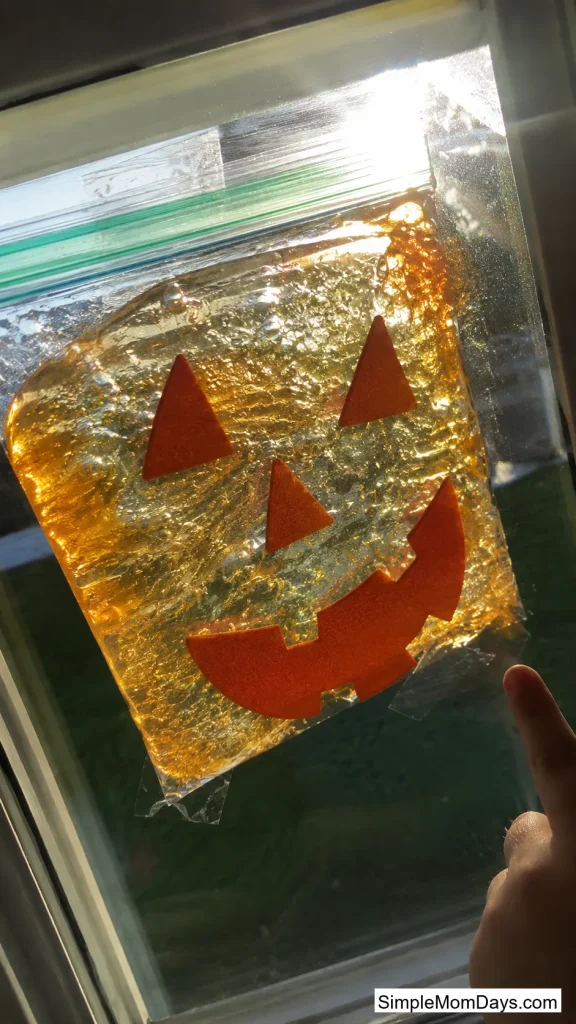
Cut simple eyes, a nose, and a mouth from craft foam, seal them inside a zip-top bag with a little hair gel, and let your preschooler push the pieces around to build different pumpkin faces through the plastic. The bag stays sealed the whole time, so there’s zero mess despite the squishing.
Watching the face rearrange under their fingers holds attention in a way flat paper crafts don’t, and it’s genuinely calming for kids who need a slower activity between more active ones. Tape the seams shut with packing tape for extra insurance against leaks.
Tape the bag to a window and the light coming through makes the pumpkin face glow a little, which is a nice bonus for zero extra effort.
11. Spider Web Rescue Basket
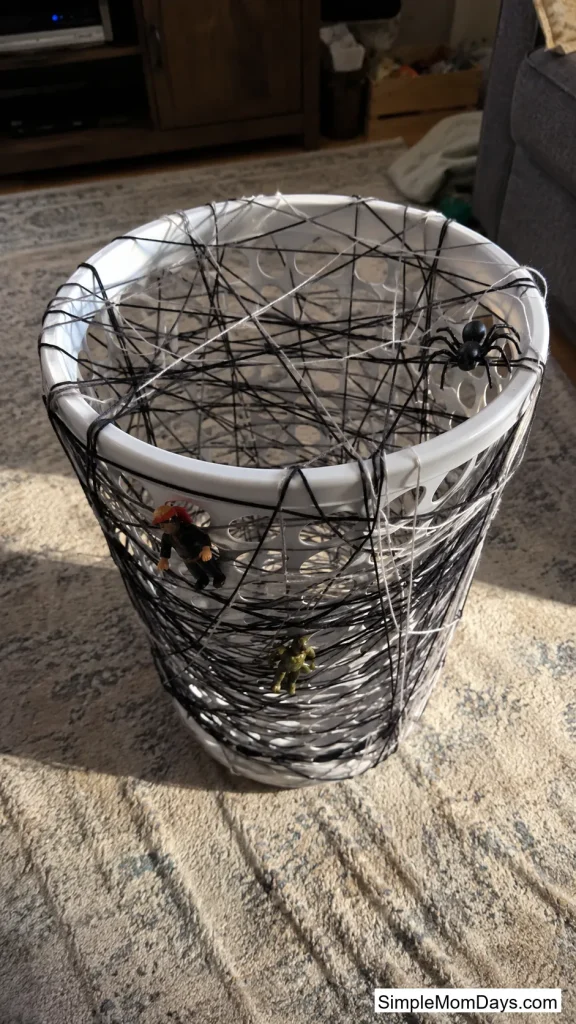
Wrap yarn back and forth across a laundry basket to build a rough web, tuck a few small toys inside the strands, and let your preschooler “rescue” them by pulling the toys free. It plays like a game more than a craft, but it’s genuinely good for hand strength and problem-solving.
Adjust the difficulty by how tightly you wrap the yarn — looser for a younger preschooler, tighter and more layered for a four- or five-year-old who wants more of a challenge. Swap in small plastic spiders or mini pumpkins instead of toys to keep it on theme.
Since nothing is glued or painted, the basket resets instantly for a sibling’s turn or a second round the next day.
12. Pumpkin Stress Ball
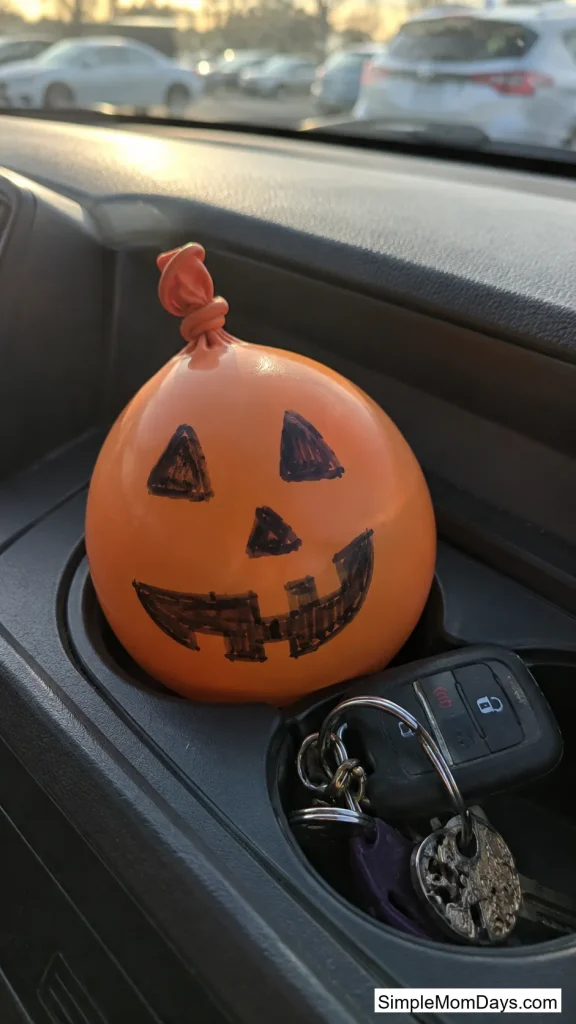
Stretch an orange balloon over a funnel, fill it with flour or rice, and tie it off, then draw a simple jack-o-lantern face on the front with permanent marker. Squeezing it gives preschoolers a physical outlet that’s genuinely useful beyond craft time — plenty of parents keep one in the car for meltdown moments.
Filling the balloon is the trickiest part and usually needs an adult’s hands, but the drawing and squeezing afterward is all preschooler territory. The texture underneath the balloon skin is oddly satisfying, somewhere between a stress ball and a squishy toy.
It holds up for months after Halloween, long after most paper crafts have been recycled.
Nature and Recycled Finds
These use what’s already lying around the house or the backyard, which makes them an easy pick on a week you don’t want to run to the craft store.
13. Painted Leaf Ghosts
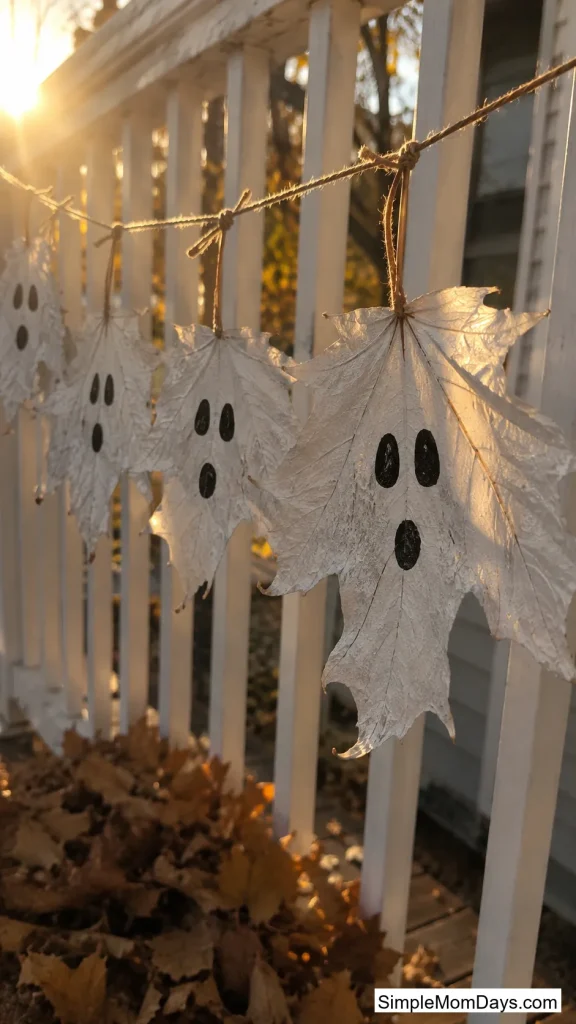
Take a walk to collect a handful of fallen leaves — maple leaves work especially well because of their size — then paint them white and add a simple black-marker face once they’re dry. It’s a fall craft and a Halloween craft rolled into one afternoon.
Collecting the leaves outside is half the fun for most preschoolers, and it gives the craft a built-in warm-up before the painting even starts. Every leaf dries into a slightly different shape, so no two ghosts in the batch look quite alike.
String a handful together with twine for a garland, or scatter them across a windowsill for a quick seasonal display.
14. Egg Carton Spiders
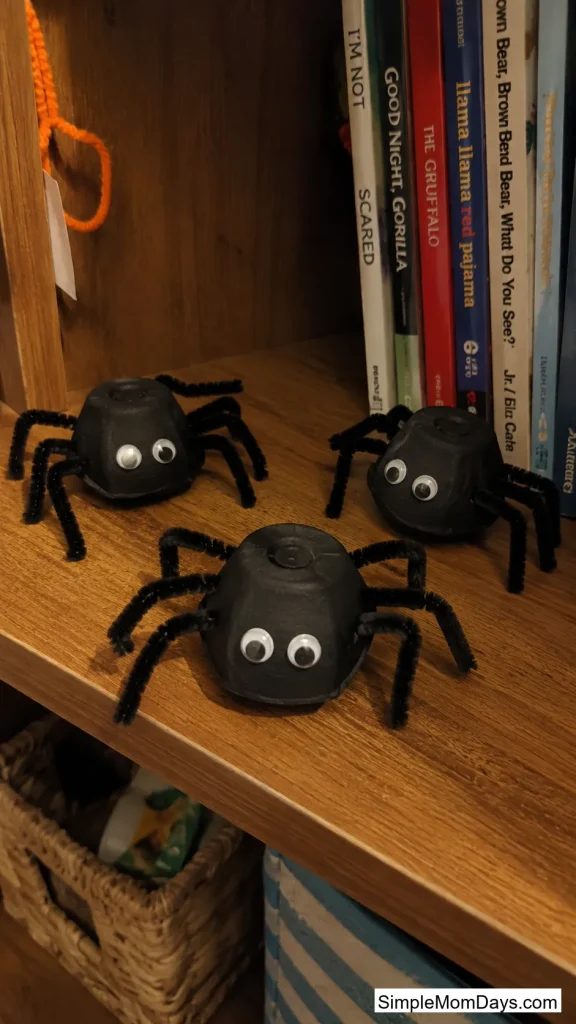
Cut a single cup from a cardboard egg carton, paint it black, and poke four pipe cleaners through the sides to make eight bent legs. It’s one of the more classic Halloween crafts out there, but it earns its spot because the finished spider genuinely stands up on its own — no propping required.
Cutting the carton ahead of time keeps this preschooler-safe, since the tough cardboard is hard for small hands to manage with safety scissors. Once the legs go in, kids can bend and reshape them however they like, so every spider ends up with its own posture.
A few finished spiders scattered across a shelf or mantel go a long way for very little cost.
15. Toilet-Paper-Roll Owl in Costume
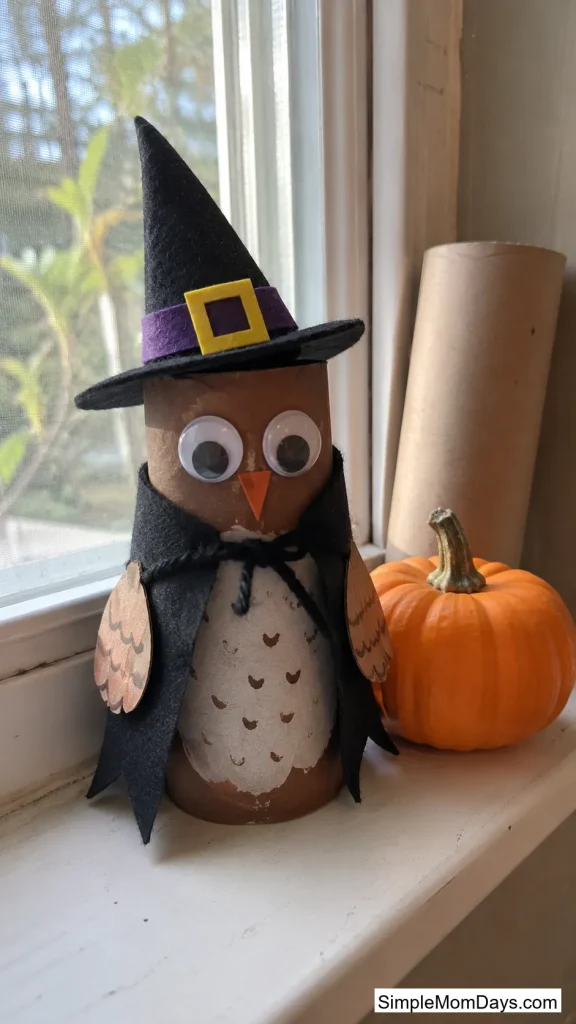
Paint a cardboard tube brown, glue on paper wings and eyes, then dress the owl up in a tiny Halloween costume made from felt or paper scraps — a witch hat, a cape, a pair of bat wings. The costume layer is what sets this apart from a plain owl craft, since your preschooler gets to decide who their owl wants to be for Halloween.
This is a good one for kids who already have a favorite Halloween character in mind, since the tube shape is simple enough to dress up as almost anything with a hat or cape added on top.
Line up a few tubes dressed as different characters, and you’ve got a tiny trick-or-treating crew standing on a shelf.
Pretend Play and Wearables
These two turn straight into playtime the moment the glue dries, which stretches the fun well past the actual craft session.
16. Paper Bag Monster Puppet
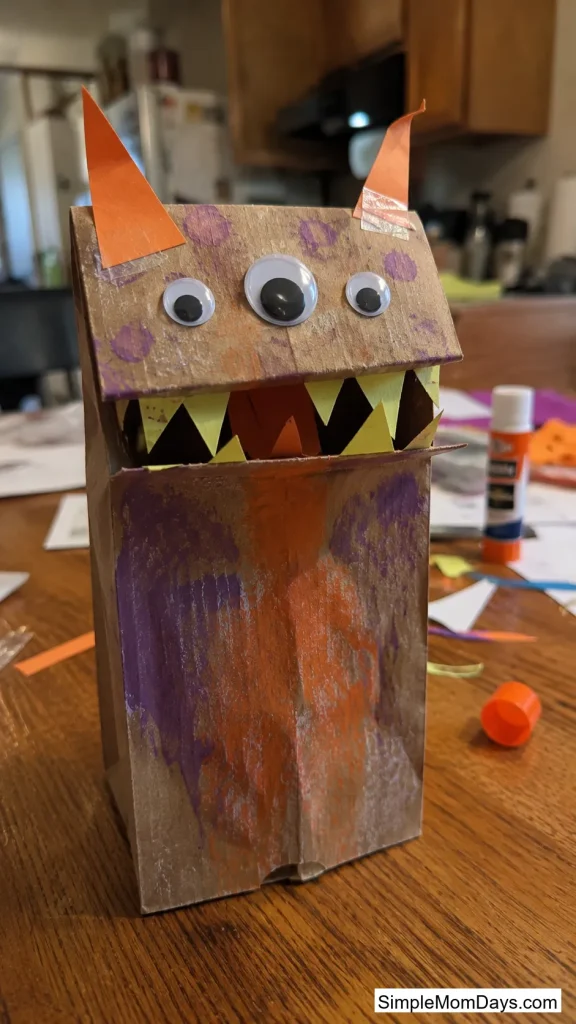
Paint a brown paper lunch bag, then glue on construction-paper teeth, eyes, and horns around the folded bottom flap so the mouth opens and closes when a hand goes inside. Once it’s dry, the puppet becomes its own toy, not just something to display.
Preschoolers tend to get more talkative with a puppet on their hand than without one, so this craft often turns into an impromptu puppet show right at the kitchen table. Encourage them to give their monster a name and a growl — it adds a layer of pretend play most crafts on this list don’t offer.
A handful of these made by different kids in a classroom or playgroup turns into an instant monster cast for a group story.
17. Halloween Straw Necklace
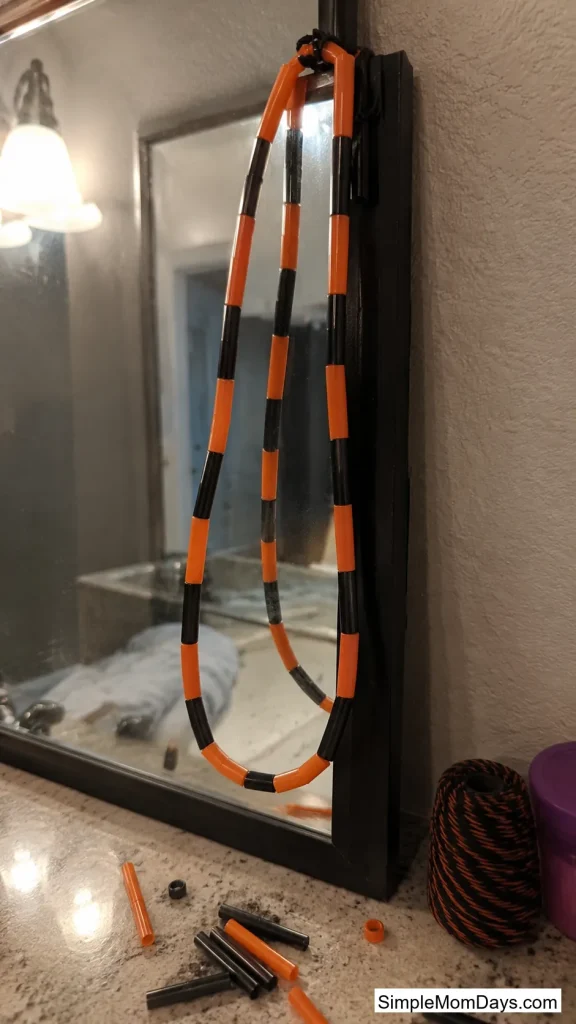
Cut orange and black plastic or paper straws into short segments, then have your preschooler thread them onto a piece of yarn or string to build a wearable necklace. Threading is excellent fine motor practice, and unlike beads, straw segments are big enough that a three-year-old can manage them without much help.
Mix in a few Halloween-shaped beads or pony beads between the straw pieces if you want more variety in the pattern. The repetitive threading motion tends to hold attention longer than you’d expect from something this simple.
Kids can wear the finished necklace around the house right away, which gives the craft an immediate payoff most projects don’t have.
Wrapping Up
Not every craft on this list needs to happen this month — pick two or three that match the mess level you’re up for on a given day, and save the rest for next year’s list. A preschooler doesn’t need a Pinterest-perfect result to feel proud of what they made; a lopsided spider or a ghost with three eyes is exactly the kind of thing worth keeping.